Police Searched a Children's Emergency Room. At the Audit They Would Say Only That It Was 'Unfortunate' — and Seven of Nine Doctors Said They Would Go
On 30 September, police from Gyeonggi searched the paediatric emergency centre at Ajou University Hospital, one of fourteen in Korea, over a negligence complaint. Asked at the National Assembly to apologise, the head of the investigating unit would say only that it was 안타깝다, unfortunate. That night seven of the centre's nine specialists said they would resign. The police apologised two days later. That same day, three resignation letters were filed.
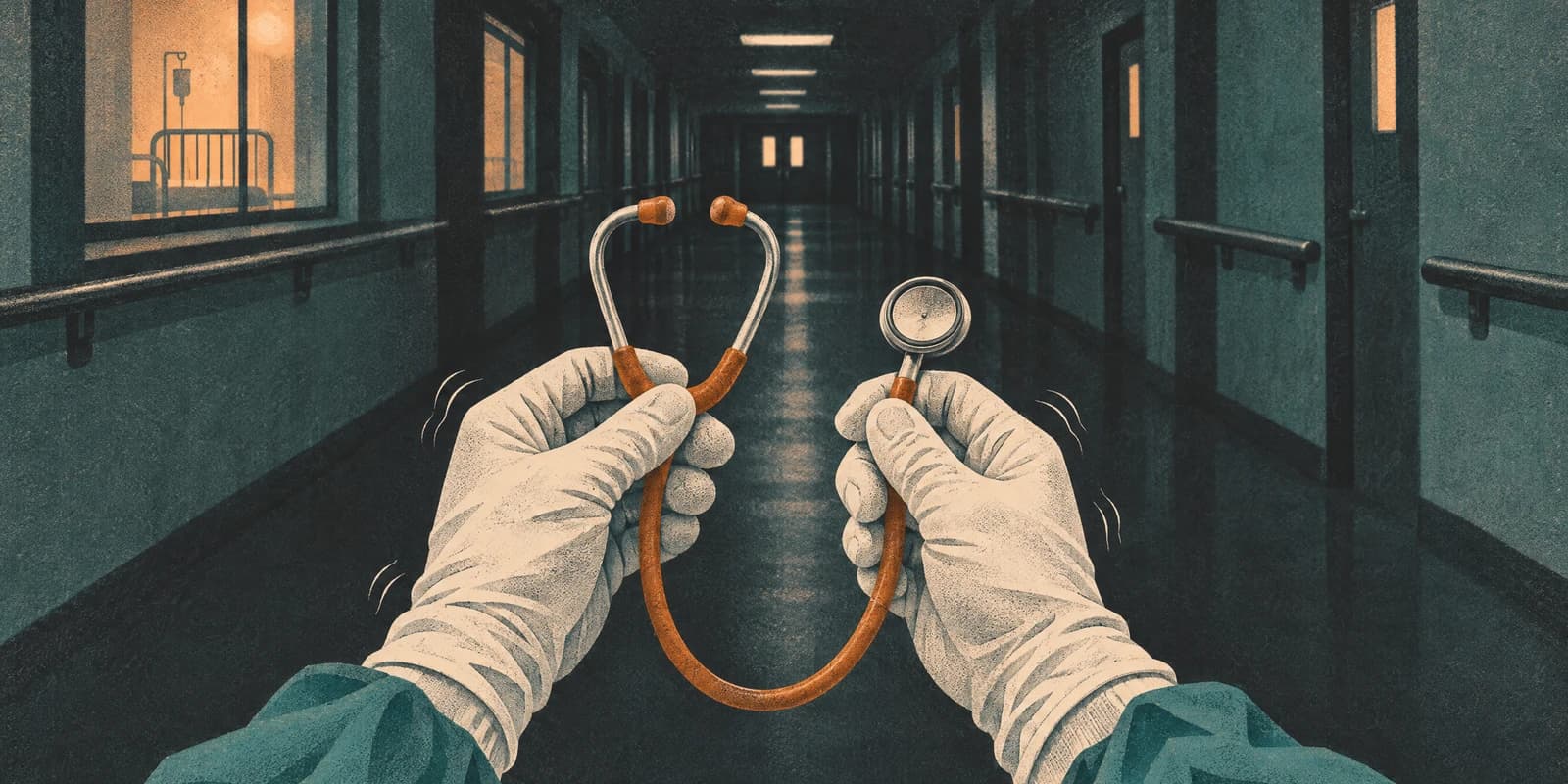
Late on the evening of Tuesday 27 October, as the National Assembly's health committee audit ran on, the People Power lawmaker 한지아 passed on some news. "방금 아주대병원 소아응급센터장과 소통을 했다. 오늘 국감을 보고 아주대병원 소아응급센터 교수 7명이 사직을 하기로 결정했다고 한다." I have just spoken with the head of Ajou University Hospital's children's emergency centre. After watching today's audit, seven of the centre's professors have decided to resign.
At the audit, 한지아 described asking them to stay: "그만 두지 마십시오 부탁을 했습니다. 그랬더니 손이 떨려서 그 경찰청 관할 안에서는 진료를 못하겠다고 합니다." I begged them: please don't quit. They said their hands were shaking, and that they could not practise within that police agency's jurisdiction.
The centre has nine specialists. What had happened at the audit that day came down to a single word.
The search
On 30 September, officers from the Gyeonggi Nambu Provincial Police Agency, 경기남부경찰청, executed a search warrant at Ajou's 소아전문응급의료센터, the paediatric emergency centre in Suwon, and at its paediatrics department. They were investigating a complaint of professional negligence causing death, over the death of an infant at the centre in July. The case had gone to the provincial police's medical-accident team, and a court had issued the warrant about two weeks before it was used.
The police did not first ask the hospital to hand over records voluntarily; they have confirmed that themselves. They examined computers in two consulting rooms and a treatment room, and wanted the electronic medical records. No full list of what was taken has been published. Accounts of the search differ: one report says four investigators went in, another says eight; the police logged seventeen minutes inside, while the centre's head, 이지숙, says care was disrupted for about an hour and a half.
Searches like this are rare. The Democrat 윤건영, citing police data, says there has been one earlier search of an emergency room, intensive-care unit or operating theatre in ten years — the neonatal intensive-care case at 이대목동병원 in December 2017.
Doctors' groups protested within days. The health minister, 정은경, told the Assembly on 7 October that the ministry and the police had agreed to write an investigation guideline. At the interior committee on 13 October the head of the provincial police's investigation unit, 함영욱, defended the method: "수사하는 입장에서는 임의제출보다 강제수사가 이후에 발생할 수 있는 모든 의혹을 해소하지 않을까라고 판단했다" — as investigators, we judged that a forced search would do more than voluntary submission to clear up any doubts that might arise later.
The word
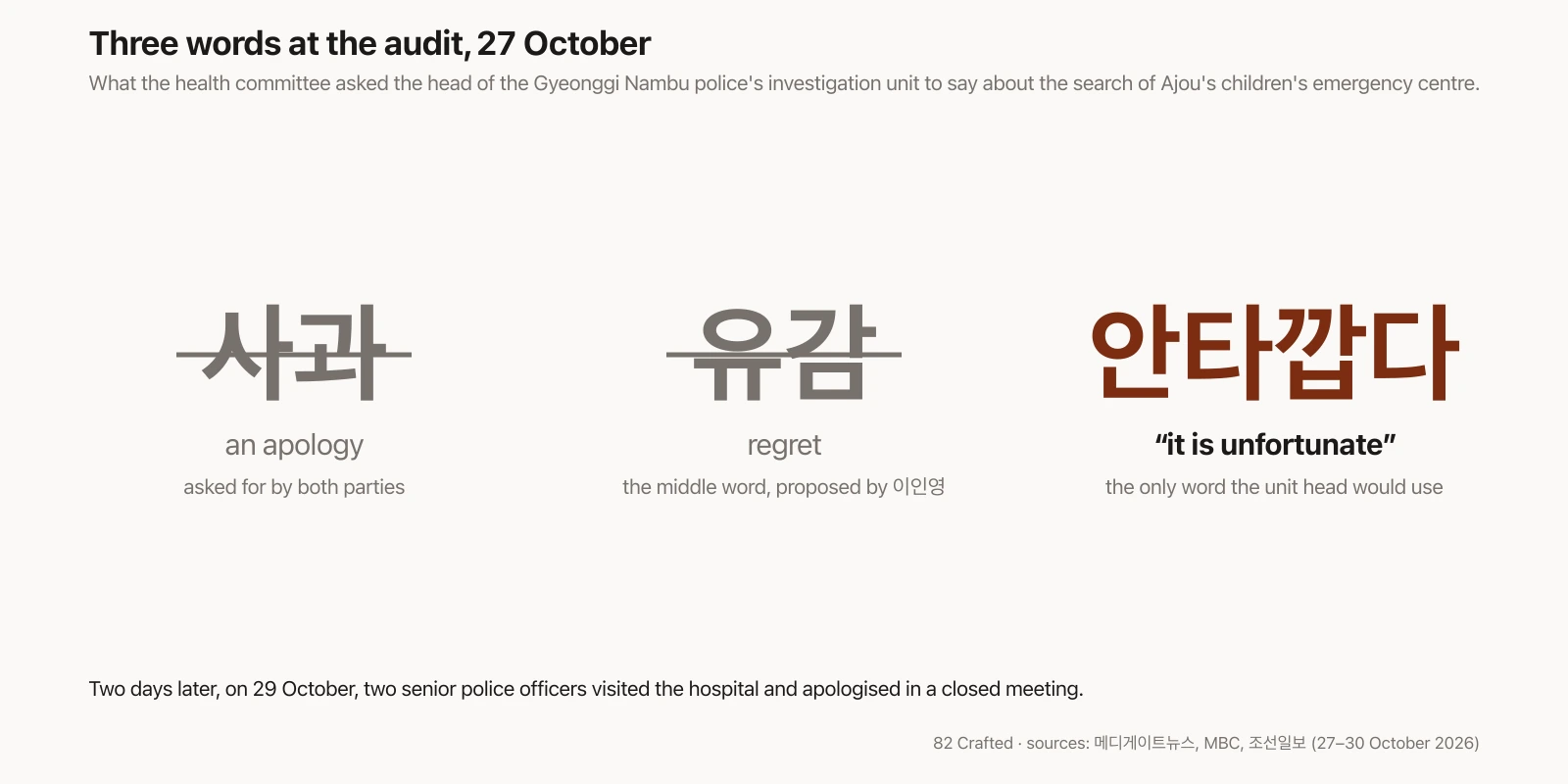
On 27 October 함영욱 came to the health committee as a witness, and both parties asked for an apology. The People Power lawmakers 한지아 and 백종헌 asked, the Democrats 김윤 and 이인영 asked, and so did the committee's chair, 이만희.
There are, in Korean, three ways of saying something like sorry in a case like this, and they are not the same. 사과 is an apology. 유감 is regret — formal, and short of admitting fault. 안타깝다 means that something is unfortunate, or a pity. 이인영 offered the police a way through: "사과와 안타깝다 사이에 유감이 있다" — between "apology" and "unfortunate", there is "regret".
함영욱 would not take it. "사과, 유감, 안타깝다 등 여러 표현이 있지만 수사기관 입장에서는 병원 법무팀과 수간호사 등 병원 관계자들과 사전에 협의했고 비어 있는 공간에서 영장을 집행했다… 그렇게 진행했기 때문에 안타깝다는 말씀을 드린다." There are several expressions — apology, regret, unfortunate — but from the investigators' standpoint, we consulted the hospital's legal team, the head nurse and others beforehand, and executed the warrant in an empty space… Because that is how it was done, I say that it is unfortunate.
And: "의료진들이 겪었을 그런 아픔과 또 환자분들의 불편함 이런 부분에 대해서는 진정으로 안타깝게 생각합니다" — I truly find it unfortunate, the pain the medical staff must have felt and the inconvenience to patients.
The chair closed by saying the committee could take the matter up again. Later that evening 한지아 relayed the professors' decision. The paediatric emergency medicine society, 대한소아응급의학회, put it bluntly the next day: "사과와 유감 대신 내놓은 '안타깝다'는 말은 현장 의료진에 대한 모욕" — offering "unfortunate" instead of an apology or regret is an insult to the doctors on the front line.
Two days later
On 28 October the hospital confirmed that seven of the nine had said they would resign, though no letters had yet been submitted. The society demanded an apology and a guideline on police call-outs to emergency rooms by November, and warned of a "자진 대거 이탈", a large voluntary exodus.
On the afternoon of the 29th two senior officers — 정상진, head of the National Police Agency's criminal affairs bureau, and 김홍근, acting chief of the Gyeonggi Nambu agency — met the hospital's director, 조재호, and 이지숙 behind closed doors for forty minutes. "경찰이 단순히 유감을 표명한 것이 아니라 '죄송하다'는 말을 여러 차례 했다", 조재호 said afterwards: the police did not just express regret; they said "we are sorry" several times. 이지숙's account is that the police acknowledged a lack of understanding of emergency care, and apologised.
That same day, three of the specialists, 이지숙 among them, filed resignation letters. 조재호 has said the hospital will try to persuade them to stay rather than accept them, and those who have signalled they will leave are still seeing patients.
The apology did not answer everything. "설명을 듣고 싶었지만 안타깝게도, 정말로 안타깝게도 저는 납득할만한 답변을 듣지 못했습니다", 이지숙 said on 30 October: I wanted an explanation, but unfortunately, truly unfortunately, I did not get an answer I could accept — about why the warrant was sought and carried out without notice. And of the letter: "저는 어제 병원장께 사표를 제출한 바 있고, 거기엔 저의 많은 고민과 고충이 있었음을 이해해주시길 부탁드립니다" — I submitted my resignation to the director yesterday, and I ask you to understand how much agonising went into it.
이지숙 also asked for one thing from everyone writing about it: "집단 사의, 집단행동과 같은 표현은 환자·보호자를 불안에 떨게 하므로 자제해 달라" — please refrain from words like "mass resignation" or "collective action", because they frighten patients and parents. We have not used them.
What is at stake
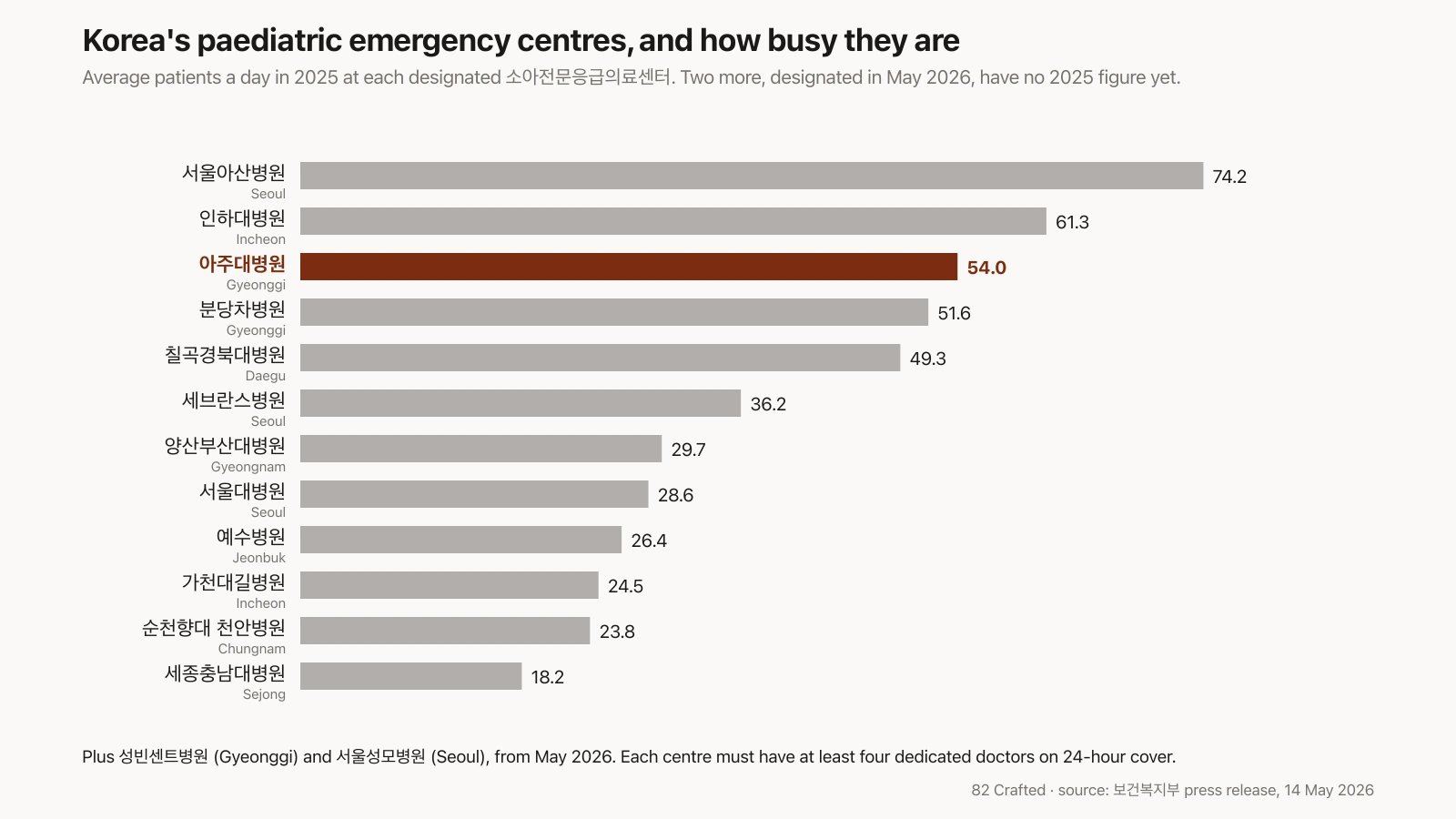
Korea has fourteen designated paediatric emergency centres, up from five in 2020, according to the health ministry. Each must have at least four dedicated paediatric emergency doctors covering twenty-four hours, and the state pays ₩100 million a year towards each dedicated specialist, up to ₩1 billion a centre. Ajou's, designated in December 2024, was the third busiest in 2025, with an average of 54 patients a day — behind 서울아산병원 and 인하대병원. (Some papers have called it the second busiest; the ministry's figures put it third.) The fourteen are in eight of the country's seventeen provinces and major cities. Busan, Ulsan, Gwangju, Daejeon, Gangwon, North Chungcheong, South Jeolla, North Gyeongsang and Jeju have none.
The Democrat 김윤 had warned on 7 October how thin that is: "아주대병원에서 1~2명만 사직해도 소아응급센터는 24시간, 365일 운영을 못한다" — if even one or two resign at Ajou, the centre cannot run twenty-four hours a day, 365 days a year.
The timing worries the specialists' societies most. "11월 말부터 12월까지는 신규 전문의와 전임의가 지원하고 인턴들이 전문 과목을 선택하는 시기", said 김도균, who chairs the national council of paediatric emergency centres: late November to December is when new specialists and fellows apply and interns choose their specialty. "소아응급의료 참여를 설득해 온 노력이 이번 사태 하나로 무너질 수 있다" — years of persuading people into paediatric emergency care could collapse over this one affair. MBC reported that paediatrics residencies at 69 large hospitals drew 36 applicants for 166 places in the first round this year, and two applicants when 119 places were advertised again in August.
The rules
The law on doctors' criminal liability is already changing. On 23 April the Assembly passed an amendment to the Medical Dispute Mediation Act, 의료분쟁조정법, that bars prosecution over accidents in "고위험 필수의료행위", high-risk essential care, if four conditions are met: no gross negligence, liability insurance in place, the duty to explain fulfilled, and full compensation paid. Which acts count, and the twelve kinds of gross negligence excluded, are left to decrees; the provision takes effect around May 2027. Patients' groups call it unconstitutional, and the Korea Alliance of Patients Organizations has threatened a challenge.
What the doctors want now is narrower: rules for searches. On 30 October the paediatric emergency society and the centres' council asked for a published guideline by the end of November: searches of emergency rooms, intensive-care units and delivery rooms restricted in principle, expert input when warrants are reviewed, and limits on warrants for records a hospital could hand over voluntarily. The Korean Medical Association's president, 김택우, began a one-person protest outside the National Police Agency. 정은경 met the society the same day, promised a guideline for essential-care settings, and is to meet the acting police commissioner, 김종철, next week; no date has been set. "의료진이 안심하고 일할 수 있는 환경을 조성하기 위하여 계속 노력하겠다", the minister said — we will keep working to create an environment where medical staff can work without fear.
Update, 9 November: a guideline in outline
The health minister, 정은경, met the acting police chief, 김종철, on 3 November, and the two agreed the outline of a police guideline on investigating medical accidents in essential care. As reported, it would limit searches to cases with grounds and relevance, take non-treatment spaces first, seize only the minimum, and consult hospital administrators and IT staff. It is not final. On 9 November 김종철, now the nominee for police chief, said in a written briefing that it was still being drafted, that the Ajou search had been lawful and minimal, and that the apology had been for the psychological burden on the doctors. 머니투데이 noted criticism that the criteria are vague.
Three letters of resignation remain filed, out of the seven doctors who said they would go. We have found no report that any has been accepted. On 2 November a civic group filed a complaint against eight people, police commanders and two ministers among them.
Sources for this update: 인천일보 and 쿠키뉴스 (2–3 November); 머니투데이 (9 November); 시사저널 and 중앙일보 on the letters.
What it says
An infant died, and a complaint about that death deserves to be investigated properly. Nothing in this row changes that. The investigation goes on, and we are not describing it beyond what the police have said.
What went wrong was the method and then the language. The police did not ask for the records first. They went into a working children's emergency room — one of fourteen in the country, in a province with three — with a warrant they had held for two weeks. Asked by lawmakers of both parties for a word that costs nothing to say, the officer in charge chose the one that concedes nothing, and explained the choice on the record. The apology came two days later, in a closed room, on the day the first letters were filed.
A guideline can fix the method. The language was a choice, and it has a price that falls due in December, when young doctors decide whether this is a specialty they want. 함영욱 called the doctors' pain unfortunate. Their word for what it did to them, passed on by a lawmaker who had asked them to stay, was that their hands shook.
Images. The cover, listing and homepage images are AI illustrations (generated with Higgsfield, GPT Image 2.6): a doctor's gloved hands shaking around a stethoscope, an empty children's treatment bay at night, and a nurses' station with an evidence box. They are not of Ajou University Hospital and depict no real person. The two graphics in the text are ours: the centre figures are from the health ministry's press release of 14 May 2026, and the words from the audit as reported. We have used no photograph of the people involved.
Sources. The search, the warrant and the absence of a voluntary request are from 조선일보, 한겨레, 시대일보 and 메디게이트뉴스; the earlier search count from 윤건영 as reported by 시대일보 and 메디게이트뉴스. The audit of 27 October is from MBC, 메디게이트뉴스, 닥터스뉴스 and the Korea Herald; the resignations from 연합뉴스, 동아일보, 메디게이트뉴스 and MBC; the police visit of 29 October from 조선일보, 메디게이트뉴스 and 한겨레; 이지숙's words from YTN, MBC and 조선일보 (30 October). The societies' demands are from 동아일보, 뉴시스, 한겨레 and 조선일보; the minister from 연합뉴스 and 메디게이트뉴스; 김윤 from 메디게이트뉴스 (7 October); the residency figures from MBC. The liability amendment is from 경향신문, 메디게이트뉴스 and 조선일보.
Stated rather than smoothed. Accounts differ on how many officers carried out the search (four or eight) and how long it disrupted care (seventeen minutes by the police log, about ninety minutes by the centre's account); we have given both. One report has the police saying only "유감" on 29 October; the hospital director and 조선일보 say "죄송하다", and we have used the centre head's on-record account. A report that one specialist filed a letter earlier, on 19 October, conflicts with the hospital's statement on 28 October that none had been filed, and we have left it out. A vice-minister's visit on 28 October and a claim that police guidelines are nearly drafted each rest on one source, and are not used. The residency figures are from a single MBC report. We have deliberately left out every detail of the infant and the family, though some outlets have printed them.
Keep Reading
More Stories

98 Candidates Were Caught With Devices at the 수능 by the End of the Fourth Period. None Has Yet Been Shown to Have Used AI
Korea sat its college entrance exam on 19 November under rules brought in two days earlier, after a tax-exam top scorer admitted using a hidden camera and AI. By the end of period 4, on a provisional count of smart-device cases only, the ministry had 98: mostly ordinary phones, five counted as use during the exam, and no confirmed use of AI. The ten-year ban the government promised is still a bill.
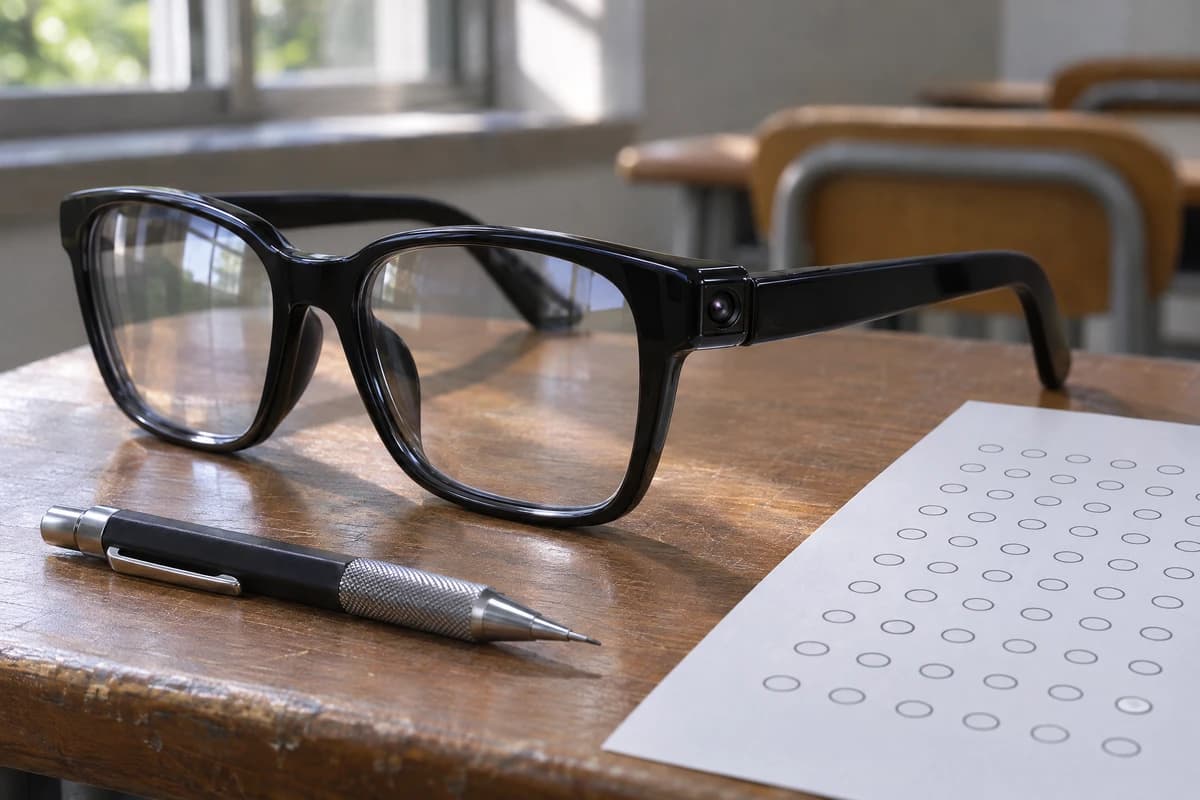
Two Candidates Wore AI Glasses Into Korean University Exams This Month. Five Weeks Later, 550,000 People Sit the 수능
At the University of Seoul on 3 October and at Yonsei a week later, proctors spotted AI smart glasses on candidates sitting essay exams for admission. Both had passed the glasses check in ordinary frames and switched once the exam began. The 수능 on 19 November already bans the devices; the question is whether anyone can see them.
The Fisherman Hid It Under His Floorboards. The Reward He Eventually Got Set Off a Decade of Looting.
Korea marked fifty years of underwater archaeology in Mokpo in September 2026. The official story starts with a net and a report. The documented one starts with six pieces of Chinese porcelain given away as presents, a schoolteacher brother who had to get them all back, and officials who did not want the paperwork. Then the state paid a reward, a diver worked out how much of it went in tax, and for the next ten years people stole the wreck faster than the government could raise it — until the navy's own divers could not find the ship, and the excavation hired the looters.
The Weekly Dispatch
Korea, curated. Every week.
The best of K-culture, straight from Seoul. Written by people who actually live here.
Free, no spam, unsubscribe whenever.