98 Candidates Were Caught With Devices at the 수능 by the End of the Fourth Period. None Has Yet Been Shown to Have Used AI
Korea sat its college entrance exam on 19 November under rules brought in two days earlier, after a tax-exam top scorer admitted using a hidden camera and AI. By the end of period 4, on a provisional count of smart-device cases only, the ministry had 98: mostly ordinary phones, five counted as use during the exam, and no confirmed use of AI. The ten-year ban the government promised is still a bill.
At 08:30 on Thursday 19 November, ten minutes before the first paper of the 수능 (the national college entrance exam), an emergency alert went out of the kind that cannot be switched off. The point was to make any hidden phone ring. In one case a phone went off inside a bag left in a corridor, and the candidate was sent out.
Two more alerts followed that afternoon. At 19:47 the vice-minister of education, 최은옥, gave the day's count. It was taken at 16:37, at the end of the fourth period, and covers smart-device cases only: 98 of them. Most were ordinary phones. Five candidates were counted as using a device during the exam, one with smart glasses. No use of AI had been confirmed anywhere.
The figure is provisional and leaves out ordinary breaches, such as writing after the bell. A final national count, expected on the morning of 20 November according to 연합뉴스, had not appeared by mid-morning.
In English, 연합뉴스's English service and the Korea Herald reported the count on the night of 19 November; before the exam, Al Jazeera, the South China Morning Post, The Star and TNW had written about the smart-glasses threat. Korean coverage has moved on: to the count, to blame for measures that came so late, and to Korea as an exam republic.
The trigger: a tax exam
On 15 November, the person who topped this year's 세무사 (licensed tax accountant) exam said on a lawyer's YouTube channel that the result had not been earned honestly. By the candidate's account, a micro camera photographed the questions, generative AI worked out the answers and a smartphone showed them, in both rounds. There were two proctors in each room. The candidate said no smart glasses were used.
The scores, 397.5 out of 400 in the first round and 663 out of 800 in the second, had drawn suspicion when the results came out on 28 October, and the candidate had denied cheating. On the night of the confession the lawyer lodged a written statement of surrender with Seoul police. The candidate is a private individual; we leave out the personal details some outlets print.
The government moved within hours. An emergency meeting at the Blue House ordered a survey of suspected AI cheating across national qualification exams, and on 16 November the prime minister, 한성숙, set up a pan-government emergency team for the 수능. The October cases in our piece on smart glasses at university exams had involved glasses. This one, as the candidate told it, needed none, and nobody in the room saw it.
The rules on the day
On the afternoon of 17 November, two days before the exam, the prime minister read a statement to the nation. 배경훈, the deputy prime minister and science minister, and 최은옥 took questions.
- Every electronic device was banned, smart rings and camera pens included, and a device not handed in counted as cheating whether or not it was used.
- Phones were collected, switched off, before period 1, and bags stayed in the corridor.
- An emergency alert (위급재난문자, a disaster text) went out before the exam so that hidden phones would ring.
- Glasses were checked on the desk before period 1 and again every period, and stickers went over clothing buttons.
- 8,400 extra staff joined about 75,000 proctors at 1,312 sites: 1,800 for smart devices and 6,600 in the corridors.
On 18 November candidates were told to bring only black pencils; sign pens, correction tape, erasers and leads were handed out at the sites. Public and carrier Wi-Fi within 100 metres of every site was switched off from 18:00 that evening to 18:00 on exam day.
Mobile signals were not blocked. 배경훈 said on 17 November: "통신 차단 자체 그리고 전파 차단 이런 거는 지금 현재 기술상으로는 불가능합니다". Blocking communications, or radio signals, is not possible with current technology.
The penalties went further. The government said it would raise the ban for cheating from one year to ten and ask the Assembly to apply it to this year's exam; that needs a change in the law (see below). Serious cases would go to police as 위계에 의한 공무집행방해 (obstruction of official duties by deception). Investigators would ask phone companies for records of AI-service use, and global tech firms had agreed to cooperate after the exam.
What the count is made of
These are the ministry's figures at the end of period 4 (연합뉴스; 한겨레; Edupress).
- 49 were caught by the three alerts: 31 at 08:30, 11 at 14:21 after the English paper, and 7 at 14:57, seven minutes into the Korean history paper. Seoul had 16 of them, Gyeonggi 7 and Incheon 6.
- 44 were caught with other devices: phones, wireless earphones, smartwatches and tablets. Two, in Seoul, were found by detecting Wi-Fi signals.
- 5 were counted as using a device: smart glasses in South Chungcheong; a camera and earphones in Gyeonggi; a phone used to photograph the question paper in Seoul; and a phone used in a toilet, once in Seoul and once in Gyeonggi.
한겨레, alone, compares the figure with 61 smart-device cases in 2024 and 83 in 2025; this year's figure is provisional.
Gyeonggi's count is a different thing. Its education office is the only one we found with a full count by type: 108 cases, of which 42 were for marking answers after the bell, 32 for breaking the procedure in the period-4 elective papers, 26 for carrying devices, 5 for books kept in desks, 2 for using a device and 1 judged by a proctor (연합뉴스; 뉴스1). It includes ordinary breaches the national count leaves out, and some cases, such as the Gyeonggi camera, sit in both, so the two figures should not be added.
No AI, so far
No use of AI has been confirmed in any case. The ministry says it is checking, and the cheating deliberation committee will decide on the evidence and statements (한겨레; Edupress). Two cases involve cameras: the Gyeonggi candidate, and the Seoul candidate who photographed the paper with a phone.
The Gyeonggi camera. In period 2, maths, a proctor noticed odd movements. The candidate, a graduate, had a camera hidden under clothing and Bluetooth earphones; a tablet turned up later in the bag in the corridor. The camera was slightly smaller than a palm, not a micro camera (파이낸셜뉴스; 헤럴드경제). Whether it was used is not established. The education office filed the case under use because the devices were on the candidate during the exam, while saying actual use is unconfirmed. The ministry counts it as use, citing planned, deliberate intent (한겨레).
Police were called at 15:29, and the Gyeonggi Nambu police cyber-crime unit took the case. It brought the candidate in voluntarily after the exam, and received the devices, handed over voluntarily, for forensic analysis. It is also checking whether the devices were used in period 1 and whether anyone helped. On 20 November police booked the candidate (입건, formally registered as a suspect) for obstruction of official duties by deception, according to 연합뉴스, and said forensic analysis would show whether the devices were actually used. 연합뉴스 alone points to a legal catch: neither likely offence can be charged as an attempt, so prosecutors would have to prove the cheating actually began. 파이낸셜뉴스 reports that police see possession itself as a concrete risk.
The smart glasses. In South Chungcheong the exam site reported suspected smart-glasses use at 13:56; 한겨레 says a proctor raised it. The candidate, also a graduate, was questioned on 19 November and sent home. On 20 November police booked this candidate too (입건) for obstruction of official duties by deception, over the suspected use of smart glasses in period 2. They are checking whether anyone helped, and say they are considering an arrest warrant (연합뉴스; 뉴스1).
The ten-year ban is a bill
Under the law now, carrying a device voids that year's exam, and serious cases, such as using one, also bar the candidate from the next year's exam.
On 18 November 한정애 of the Democratic Party filed a bill to raise the ban from one year to up to ten. It would cover anyone notified of a committee decision after the law takes effect, which is meant to bring in this year's candidates; its backers cite the Framework Act on Administration and Constitutional Court precedent in support. It goes to the education committee next week, with passage aimed for December at the earliest (MBC; 법률신문; 파이낸셜뉴스).
Scores come out on 11 December. The ministry and KICE, the exam board, will set each penalty by severity through the 부정행위심의위원회 (the cheating deliberation committee), and say every case, appeals included, will be closed before then.
This is our inference, not a report. If the notices go out before 11 December, and the bill passes in December at the earliest, they may arrive before the law takes effect. This year's cases would then fall under the one-year rule.
Where the tax case stands
Police questioned the candidate as a suspect on 17 November for about 13 hours, by the count of 경향신문 and 뉴시스; 조선일보 and YTN say nearly 14. On 18 November they searched the candidate's home, under a warrant citing obstruction of official duties by deception and 업무방해 (obstruction of business). Police have requested a travel ban. The candidate says there were no accomplices; police have not ruled them out.
Accounts of the method differ. Three outlets say the camera was hidden in a correction tape, and 뉴시스 and 뉴데일리 add a modified calculator; 조선일보 instead describes a small monitor fixed to clothing at the abdomen, and a laptop at home. That HRDK, the agency that runs the exam, has lodged a complaint rests on SBS alone. The finance ministry said on 15 November that it would suspend the pass certificate; we found no decision since.
On 19 November the labour ministry's task force, chaired by the minister, 김영훈, said the ban for the 541 national technical qualifications would rise from three years to ten, and planned radio detectors at every HRDK exam site from around March 2027.
According to 연합뉴스 alone, the office of the Democratic Party lawmaker 황정아 gave the paper to Anthropic's Claude Opus 4.7 after the exam, and it got every question right in 회계학개론 (introduction to accounting). 연합뉴스 adds that no link to cheating has been shown.
What teachers say
교총 (the Korean Federation of Teachers' Associations) says eyes and extra proctors cannot stop high-tech cheating, and that rules changing by the hour the day before caused chaos. It wants a national exam-security centre under the prime minister, and calls for the minister to be dismissed.
전교조 (the Korean Teachers and Education Workers Union) says surveillance cannot fix a system that ranks students on picking set answers fast; the 수능 explainer describes that system. 교사노조연맹 (the Korean Federation of Teachers' Unions), before the exam, welcomed the government taking liability for proctors, but said dedication cannot replace technical preparation.
윤인진 of Korea University wants detection equipment and trained operators (연합뉴스). 전제상 of Gongju National University of Education warns that a hurried switch to essay-type exams could cost fairness and push up tutoring costs (Edupress). For the ministry, 이해숙, head of higher and lifelong education policy, said it did the best current tools allow.
What it says
This is our reading. The rules did what rules of this kind can do: they found phones. Half the cases counted by the end of period 4 came from three alerts that made hidden phones ring. That is not nothing.
But the threat that produced the rules was a camera and an AI, and on that the count says little yet. Two cases involve cameras, one candidate is suspected of using smart glasses, and nobody has shown that AI was used. The Gyeonggi camera was found because a proctor noticed odd movements, the oldest check there is.
The ten-year ban is a bill whose timetable may miss this year's cases, and all three teachers' groups say, in different ways, that people watching rooms are not enough. On 20 November the honest summary is a lot of phones, two 수능 candidates booked, and no confirmed AI.
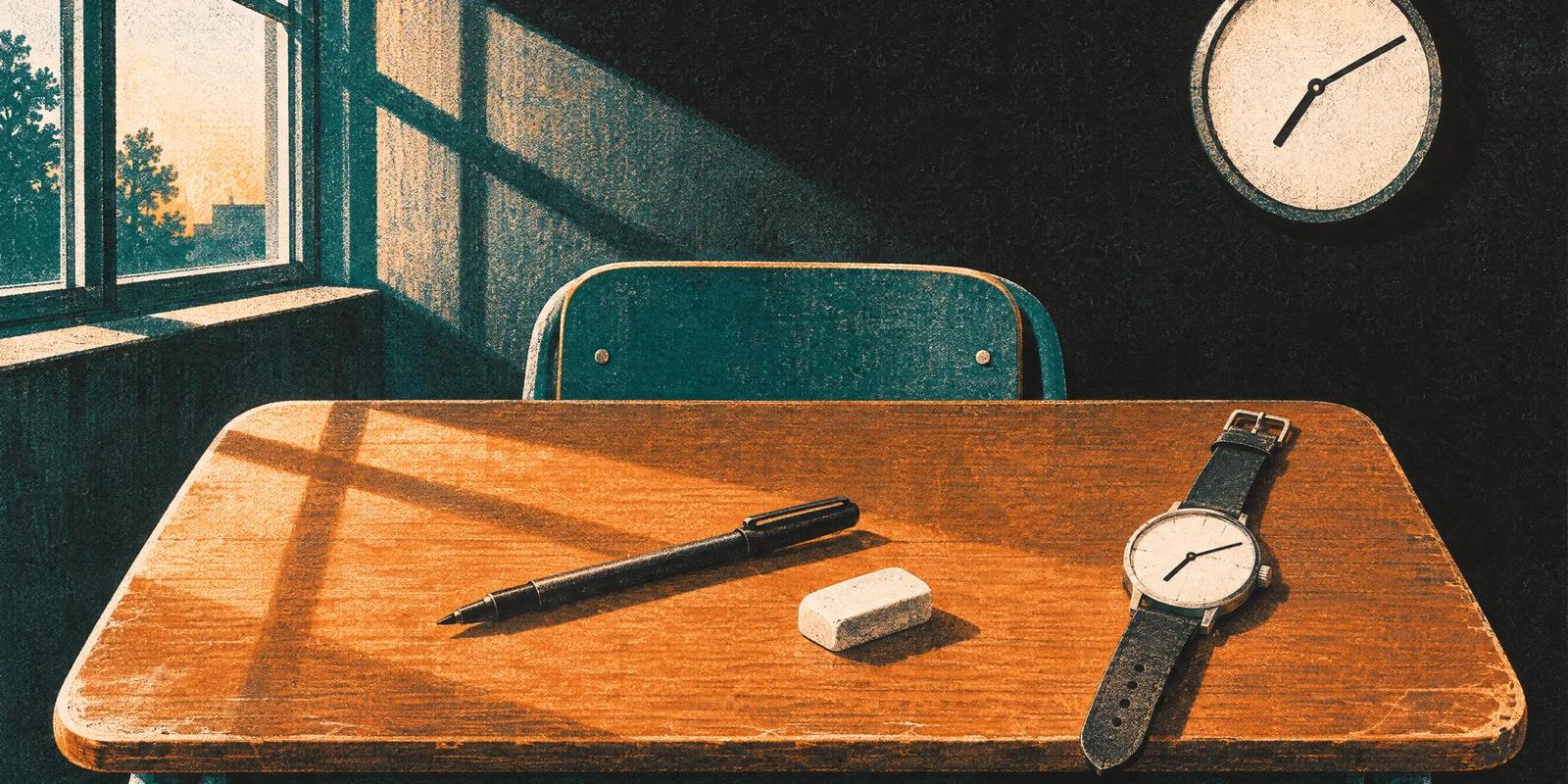
Images. The cover, listing and homepage images are AI illustrations (generated with Higgsfield, GPT Image 2.6): an empty exam desk with a computer sign pen, an eraser and an analogue watch, with a wall clock behind; a tiny camera lens lying on a bare desk beside a pencil; and a hand-held metal detector on a corridor table outside closed classroom doors. They depict no real person or place. The only photographs of this story are agency press photos.
Sources. The count, the alerts and the ministry's statements are from 연합뉴스, 한겨레 and Edupress. The measures of 17 November are from the korea.kr transcript, YTN, 뉴스1 via 파이낸셜뉴스 and 노컷뉴스; the pencil rule from 연합뉴스 and 매일경제; the Wi-Fi cut from 연합뉴스 and 한겨레; the corridor phone from 연합뉴스 and 뉴시스. Gyeonggi's count is from 연합뉴스 and 뉴스1. The Gyeonggi camera case is from 파이낸셜뉴스, 헤럴드경제, 연합뉴스, 뉴스1 and 한겨레; the South Chungcheong case from 연합뉴스, 뉴스1 and 한겨레. The bill is from MBC, 법률신문 and 파이낸셜뉴스; the scores and penalty process from 연합뉴스 and 한겨레. The tax case is from 경향신문, 미디어오늘, 법률저널, 세계일보, 뉴스핌, 뉴시스, 이데일리, 아시아경제, SBS and KBS for the confession and the first responses, and from 경향신문, 뉴시스, 뉴데일리, 조선일보, YTN and SBS for the investigation since; the labour ministry's task force from 경향신문 and 뉴시스; the lawmaker's test from 연합뉴스. The teachers' groups and academics are from 연합뉴스, Edupress, kgnews and Newsclaim. English coverage is from 연합뉴스's English service, the Korea Herald, Al Jazeera, the South China Morning Post, The Star and TNW.
Stated rather than smoothed. The count of 98 was taken at the end of period 4, covers smart-device cases only and is provisional; the final national count had not appeared by mid-morning on 20 November. The 08:30 alert figure was first reported as 22 and rose to 31. The Gyeonggi office and the ministry give 9 and 7 for that province's alert cases. Early reports called the Gyeonggi camera a micro camera; later ones say it was slightly smaller than a palm. The office and the ministry both count that case as use, though the office says use is unconfirmed. 연합뉴스 says neither likely offence can be charged as an attempt, while 파이낸셜뉴스 reports police treating possession as a risk in itself. 뉴시스 wrote that the 98 cheated with AI glasses or small cameras, which the ministry's breakdown does not support. One 연합뉴스 analysis of 19 November still gives the planned ban as one year to three, which is out of date. Outlets disagree on the tax candidate's method and on whether the questioning ran 13 hours or nearly 14. Single-source items are named in the text: the timing of the final count, the legal catch and the Gyeonggi booking (연합뉴스), the 2024 and 2025 comparison (한겨레), HRDK's complaint (SBS) and the lawmaker's AI test (연합뉴스). The effect of the bill's timing on this year's cases is our inference. 연합뉴스's English report puts the five use cases inside the 44, which would not add up to 98; we follow the ministry's Korean breakdown. We found no tax-service decision on the pass and no statement from a parents' group. We give no candidate's name, age, school or town.
Keep Reading
More Stories
Police Searched a Children's Emergency Room. At the Audit They Would Say Only That It Was 'Unfortunate' — and Seven of Nine Doctors Said They Would Go
On 30 September, police from Gyeonggi searched the paediatric emergency centre at Ajou University Hospital, one of fourteen in Korea, over a negligence complaint. Asked at the National Assembly to apologise, the head of the investigating unit would say only that it was 안타깝다, unfortunate. That night seven of the centre's nine specialists said they would resign. The police apologised two days later. That same day, three resignation letters were filed.
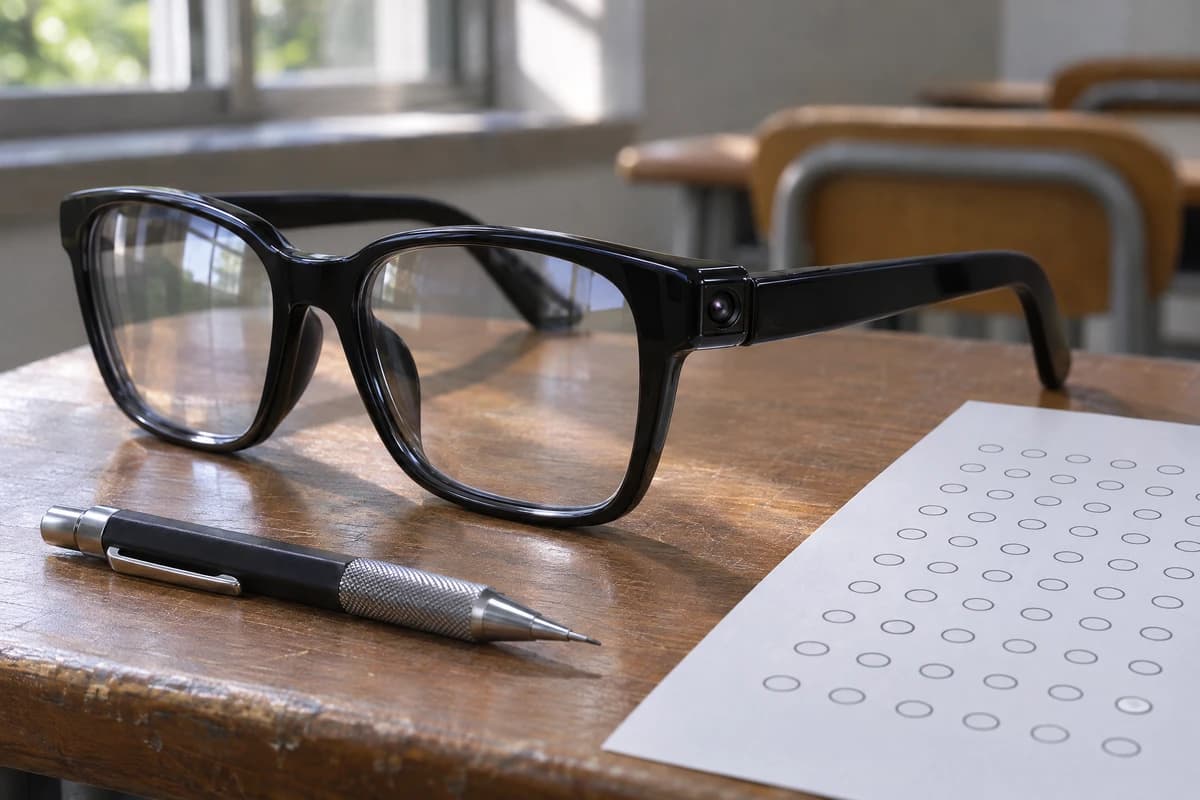
Two Candidates Wore AI Glasses Into Korean University Exams This Month. Five Weeks Later, 550,000 People Sit the 수능
At the University of Seoul on 3 October and at Yonsei a week later, proctors spotted AI smart glasses on candidates sitting essay exams for admission. Both had passed the glasses check in ordinary frames and switched once the exam began. The 수능 on 19 November already bans the devices; the question is whether anyone can see them.
The Fisherman Hid It Under His Floorboards. The Reward He Eventually Got Set Off a Decade of Looting.
Korea marked fifty years of underwater archaeology in Mokpo in September 2026. The official story starts with a net and a report. The documented one starts with six pieces of Chinese porcelain given away as presents, a schoolteacher brother who had to get them all back, and officials who did not want the paperwork. Then the state paid a reward, a diver worked out how much of it went in tax, and for the next ten years people stole the wreck faster than the government could raise it — until the navy's own divers could not find the ship, and the excavation hired the looters.
The Weekly Dispatch
Korea, curated. Every week.
The best of K-culture, straight from Seoul. Written by people who actually live here.
Free, no spam, unsubscribe whenever.