In 2018, Korean Baseball Lost Its Walk-Up Songs
A KBO crowd sings non-stop for nine innings, with a different fifteen-second anthem for every batter. Then the composers noticed, sued — not over money — and all ten clubs switched off their walk-up music overnight. Nexen replaced twenty-six of its twenty-seven chants with public-domain art songs and fans said they sounded like funeral music. Busan didn't get its anthem back for five years.
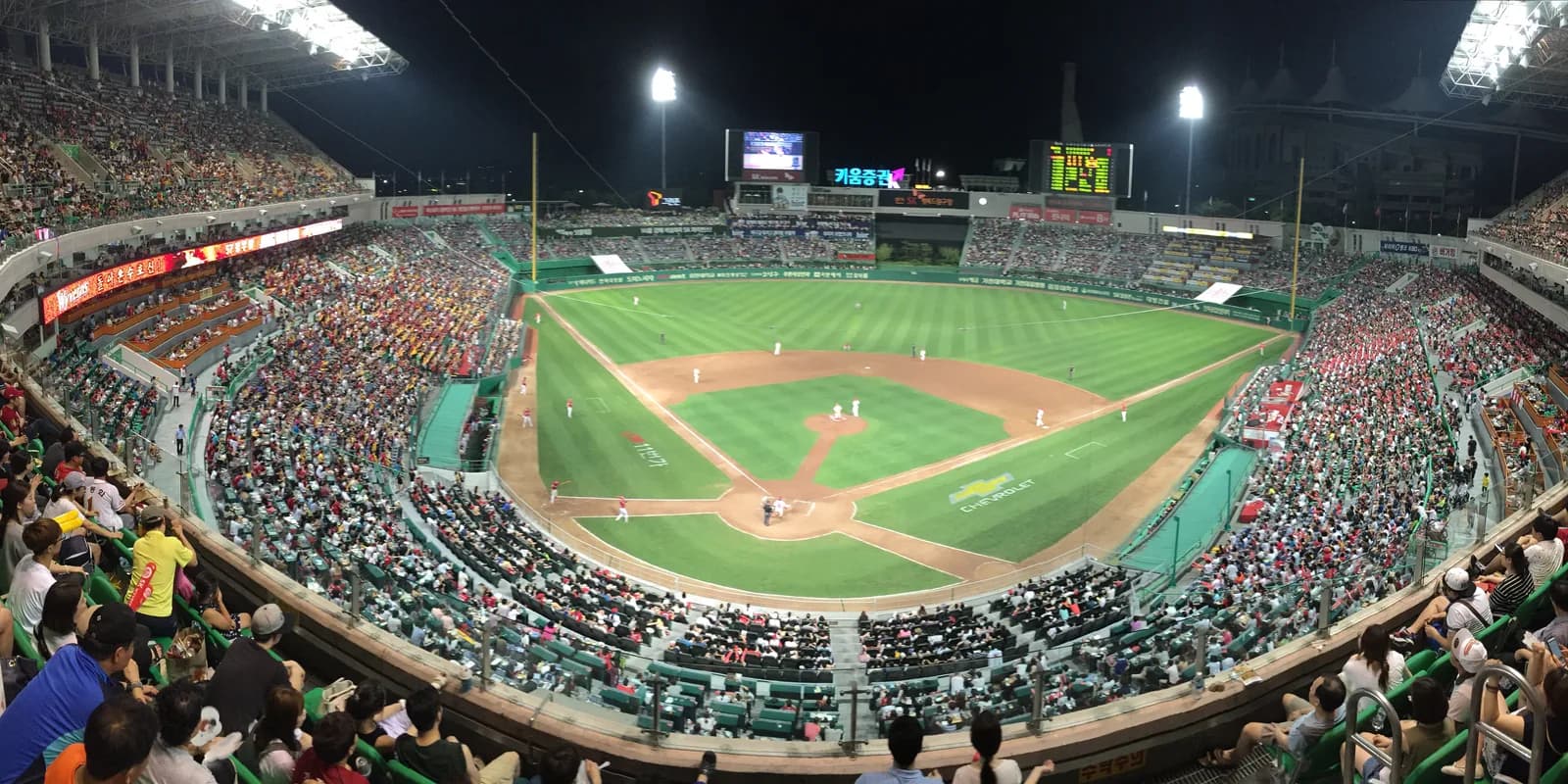
On 30 April 2018, the Korea Baseball Organization and all ten of its clubs announced that from the following day there would be no more walk-up songs — not for a single player, at any club in the league. Every batter's chant whose rights had not been settled went silent alongside them. A league whose defining feature is that twenty thousand people sing continuously for three hours began deleting its own soundtrack.
Some of it stayed off for years. Busan's Lotte Giants did not get 《부산 갈매기》 — the song their entire identity is built on — back until April 2023.
Nobody had done anything wrong, exactly. Korean baseball had simply built its whole sonic culture out of other people's pop music, for thirty years, without anyone thinking too hard about it. Then the composers thought about it.
To understand why that was a catastrophe rather than an inconvenience, you have to know what a Korean baseball crowd actually does.
It Is Not Cheering. It Is a Performance With a Cast.
Every KBO club employs a 응원단장 — a cheer captain — and a squad of roughly four to six 치어리더. They work from a raised platform, the 응원단상, positioned in front of one section of the stand.
They face the crowd. Not the game.
This is the detail that reorganises everything else. The cheer captain is not watching baseball; he is conducting an audience, for 144 nights a year, as a full-time salaried job. The cheerleaders are professionals with careers measured in decades — one told AFP in 2022 she had spent nearly twenty years at Incheon. "We are the flowers of the game," she said.
We know they normally face away from the field because of what happened when nobody was there. 2020 was the first season since 1982 to open without fans, who were not admitted until 26 July. The squads kept performing to twenty thousand empty seats — because the players asked them to, finding it unbearable otherwise. And the cheerleaders noticed something: with no crowd to face, they turned around. "We usually performed facing the players not the empty seats," one said, "so we were really able to watch the game and cheer in earnest."
They had been at the ballpark for two decades with their backs to the baseball.
The Rule That Makes It Strange
Here is the part that disorients every foreign visitor, and it is not the volume.
You sing only when your own team is batting. When the other side bats, your half of the stadium goes quiet and theirs stands up. The noise alternates, cleanly, all night. Two crowds taking turns.
And it is granular to an absurd degree. Each batter has his own chant — roughly fifteen seconds, mostly repetition, composed for him specifically. (Pitchers get entrance music rather than sing-alongs; Hanwha, characteristically, is the exception that gives its pitchers chants too.)
The cheer captains build these in the off-season. One, then at Nexen, described the method to Yonhap: he listens to enormous volumes of music, screening for anything that triggers 떼창 — mass singing — and then matches the song to the player. "발 빠른 선수한테는 빠른 노래를 붙여주고, 거포는 웅장한 곡을" — a fast song for a fast runner, something grand for a slugger.
Players have opinions. One demanded that his chant actually contain his team's name in it.
So: hundreds of individually commissioned fifteen-second songs, indexed to specific human beings, sung by half a stadium in strict alternation, conducted by a professional facing the wrong way.
Now consider where the melodies came from.
ABBA, Indiana Jones, and Céline Dion
Doosan had a chant built on ABBA's Honey Honey. Hanwha had one on the Indiana Jones theme. Lotte used Boney M's Rivers of Babylon. KIA had My Heart Will Go On. Elsewhere in the league: 4 Non Blondes' What's Up?, the Gipsy Kings' Volare, the Vengaboys.
The league was paying for this, in the sense that it was paying something. In 2015 the KBO paid a total of ₩300 million to three collecting societies — ₩30 million per club, split evenly. Against league gate revenue of roughly ₩73 billion, that is about 0.4%.
From late 2016, composers began arguing that this missed the point entirely. The issue was not the licence fee. It was 저작인격권 — moral rights — and specifically 동일성유지권, the right of integrity: the right of an author not to have their work altered. Korean baseball chants do not merely play a song. They rewrite the lyrics to be about a shortstop and re-arrange the music to be shoutable by twenty thousand people.
That is not a usage question. That is an alteration question, and it is not one a blanket licence covers.
The framework collapsed. Every club had to go and negotiate, song by song, with individual rights holders.
The Comedy of the Aftermath
Nexen was the poorest club in the league and had the least room to negotiate. It replaced twenty-six of its twenty-seven chants, switching to arrangements of Western art songs roughly ninety years old and safely in the public domain. Fans revolted. The new chants, they complained, sounded like funeral music.
kt gave up on licensing altogether and started composing everything in-house.
Lotte had around thirty songs blocked and coped by playing instrumental backing tracks with no melody anyone could sing.
Hanwha ran the league's first "클린 응원가 캠페인" — a clean-chant campaign. Its cheer captain pulled all-nighters for two weeks before Opening Day rewriting the entire repertoire. The Indiana Jones chant died because the rights holder's price was too high. He replaced another player's song with something built on Beethoven's Fifth.
And then the fans in the stands simply kept singing the banned version anyway, a cappella, while he stood on his platform and conducted nothing. He has described it as the most awkward situation of his working life.
Then on 30 April 2018 the league stopped trying and switched everything off.
Five Years Without the Seagull
The single greatest casualty was in Busan.
《부산 갈매기》 — "Busan Seagull," recorded by 문성재 in 1982 — is not a club song in any ordinary sense. It is the reason Lotte fans are called 부산갈매기. Sajik Stadium's reputation rests on twenty thousand people singing it in unison, a phenomenon that prompted Lotte's American manager Jerry Royster to call the ground "the world's biggest noraebang." He promised he would sing it himself if the club made the playoffs, and in September 2008 he did, on the field, next to the mayor of Busan. The local paper's headline the next morning: "로이스터 커닝해가며 부산갈매기 열창" — Royster belts out Busan Galmaegi while cribbing the lyrics.
It was last played on 29 March 2018. Then it was gone.
Lotte announced the deal on 6 April 2023, having reached an agreement with 신동훈, the composer who holds the rights to a song 김중순 wrote and composed in 1982. The ceremony came the next day, 7 April, before the home opener against KT Wiz at Sajik: the CEO present, the song formally designated an official club song, a singer performing it during the fifth-inning cleaning time, and the whole stand singing it in the seventh. Lotte lost 1–7. Money Today's headline: "5년 만에 '부산갈매기' 돌아오자, 사직구장은 다시 노래방이 됐다" — after five years, Sajik is a noraebang again.
One more thing about that song, since we are here. 문성재 has said in interviews that it was written to order — commissioned by a nightclub owner in Daejeon, a 건달, who wanted "a song for the fists."
The unofficial anthem of Busan was a commission from a Daejeon gangster.
Three Things the Guidebooks Have Wrong
The orange bags are bin liners, and they are gone. Lotte fans were famous for wearing inflated orange plastic bags on their heads. Those bags are 종량제 봉투 — South Korea's official volume-rate municipal rubbish bags, which happen to come in Lotte orange. The club began handing them out in the mid-2000s for the unglamorous reason that Sajik was drowning in litter, with a request not to throw rubbish on the floor. Fans inflated them, knotted them and made hats, then Mickey Mouse ears, then Batman, then ribbons. Litter dropped. Then Busan's single-use-plastic rules caught up with it, and the practice was phased out around 2020–21. It has not returned. Neither has the newspaper waving — and the newspapers were never a designed prop either. In the semi-pro era, 신문지 was simply what people sat on.
You can bring your own beer. English guides still say you can't. The KBO's own safety page sets the current league-wide rule: no glass, nothing frozen, and per person one unopened PET bottle and two unopened cans. Cans were banned from 2015 on safety grounds — which is the era that produced 알콜팝, a single cup engineered to hold boneless fried chicken and beer with a straw in it — and re-allowed from the 2023 season on environmental ones. Individual clubs still vary, so check yours.
And "아주라" is not as wholesome as it sounds. The Busan dialect shout means give it to the kid, yelled at any adult who catches a foul ball. It is charming in the retelling. In practice, Korean coverage has documented it curdling into something coercive — balls taken off teenagers, adults pressured into handing them over, the phrase used as leverage. SBS covered it in 2017 under the framing 훈훈 vs 민폐: heartwarming, or a public nuisance. Some Busan fans now complain that the ball gets surrendered before anyone can even shout, which ruins the ritual in the other direction.
What the Bat-Flip Story Gets Wrong
The tidy version, told endlessly in English: Korea celebrates the 빠던 — the bat flip — while joyless Americans consider it disrespectful.
It does not survive contact with Korean players. When ESPN investigated in 2016, several KBO hitters denied flipping deliberately at all; one said he does not realise he is doing it. Park Chan-ho, returning after seventeen years in the majors, said the Korean league "needs to show more respect." A Korean cable network staged a televised debate about whether the practice violates etiquette. A scout's observation was the sharpest: Korean players will not admit any of this to American reporters.
What is true is that Korea polices a different set of unwritten rules — and by American standards they are stricter. A young pitcher who hits a veteran batter is expected to remove his cap and bow. In April 2019 an eighteen-year-old Lotte pitcher bowed ninety degrees to an NC veteran he had struck. An LG pitcher was publicly criticised for failing to bow to a Doosan batter.
So the accurate version is less flattering to everyone: Korea does not punish bat flips, plenty of Korean baseball people privately dislike them, and Korea enforces a code of deference that would baffle an American clubhouse.
The Audience Nobody Describes
The other thing English coverage misses is who is actually in the stands.
The KBO drew a record 12,312,519 spectators across 720 games in 2025 — up 13.1% on the previous record, with 331 sellouts, and nine of the ten clubs setting franchise attendance records.
And the crowd has flipped. The female share of KBO attendance went from 42.9% in 2016 to 55.5% in 2024. Among people booking tickets online in their twenties in 2025, 63.6% were women.
There is a word for the other half of what they came for: 야푸, from 야구 + food, ballpark eating as a hobby in its own right. A Doosan fan in his fifties told the Korea Times what the 1990s were like: "pretty much just dried squid and boiled eggs." Now it is regional and specific — 납작만두 in Daegu, 삼겹살 at Sajik, 불족발 at Jamsil, 가락국수 in Daejeon. At one Incheon ground you can grill pork at your seat.
A league founded in 1982 by a military government as part of a deliberate strategy to occupy the public's attention is now, forty years later, majority-female, sold out half the time, and at least partly about the noodles.
What the country still does not have is anywhere for those women to play it professionally — which is how a cable variety show came to field Korea's most-watched women's baseball team.
Korean crowds get written about mostly in one register — the street cheering of a World Cup summer, a nation briefly becoming one thing. Baseball is the opposite and the more revealing of the two: ten cities performing their differences at each other in dialect, on a Tuesday, for eight months a year, with a paid conductor and a licensing department.
Photographs, all via Wikimedia Commons and cropped by us: a packed Doosan stand at Jamsil by Christophe95, CC BY-SA 4.0; Munhak Baseball Stadium by Jeffrey Tripp, CC BY 2.0; and the Nexen Heroes cheer platform at Gocheok Sky Dome by Trainholic, CC BY-SA 4.0 — the last GPS-confirmed to Gocheok and shot in 2018, the season this article is about. One honest gap: the emotional centre of this piece is Sajik and 부산 갈매기, and no photograph of Sajik exists under an acceptable licence at usable resolution. We would rather say so than substitute a stadium that isn't Busan. A licence-clean image of Hanwha cheerleaders was declined because it centred identifiable children and was framed in a way that would have undercut this article's own argument about skilled work.
Verified against Korean-language sources: KBO's own B SAFE rules page for current stadium items; 연합뉴스 (2016) and OSEN (2017) on how chants are composed; 세계일보 (30 April 2018) on the league-wide suspension; 머니투데이 and SBS (April 2023) on the return of 부산 갈매기; OSEN (2020) and 부산일보 (2024) on the orange bags; SBS (2017) on 아주라; ESPN (2016) on bat flips; AFP (2022) on cheerleading as a profession; and KBO attendance data. Deliberately omitted: a widely repeated claim that ABBA personally intervened over Doosan's chant, which we could source only to a wiki; a specific incident said to have prompted the 2015 can ban, which appears only in a later opinion column; a reported transfer fee for a named cheerleader moving to Taiwan, which the club declined to confirm; and the disputed origin of the Korean thundersticks, where sources give three different inventors. Dates for the orange-bag scheme's start and end are given as ranges because Korean sources disagree by a year at each end.
Keep Reading
More Stories
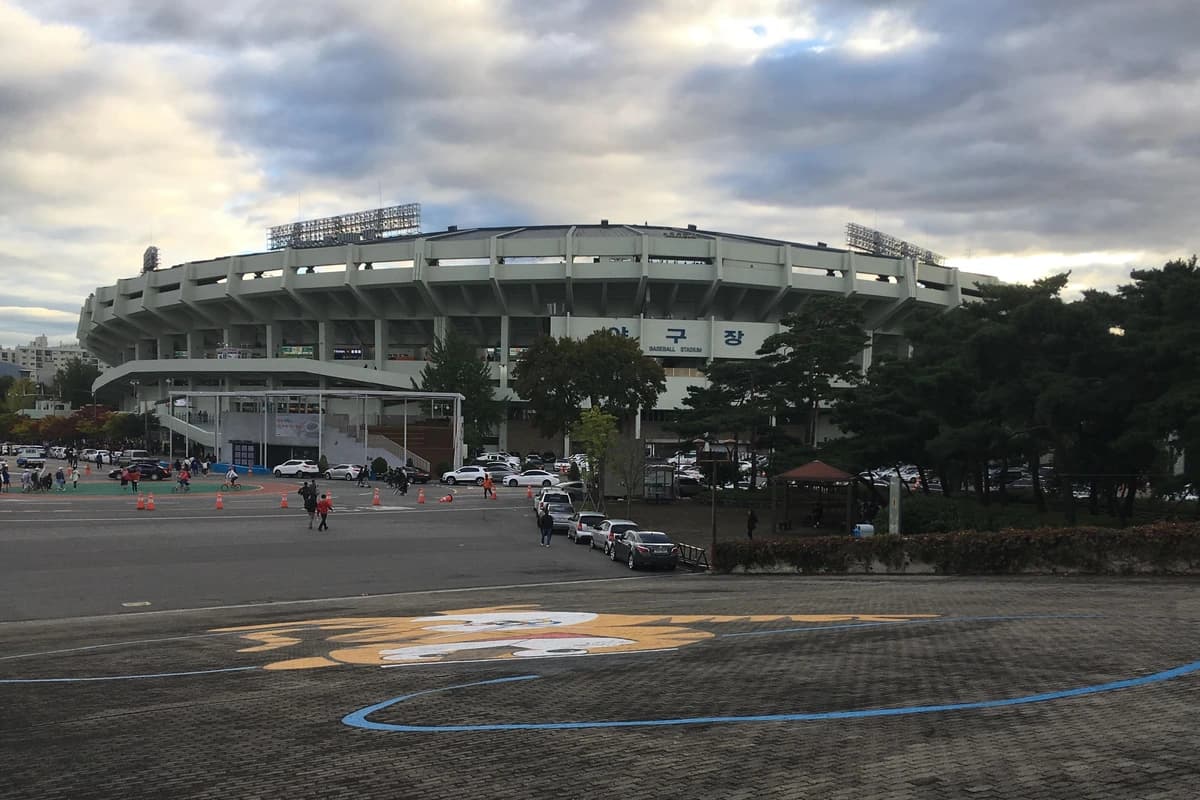
The Lights Went Out at Jamsil on Monday Night. Korea's Most Famous Ballpark Isn't Quite Finished Yet
On 12 October, after the last regular-season game at 잠실야구장, four Doosan legends stood at the bases in the dark and lifted home plate. LG had said its own goodbye five days earlier. The 44-year-old stadium is due to come down for a domed replacement — but the postseason, starting tonight with LG against Doosan, will keep it open for at least two more games.
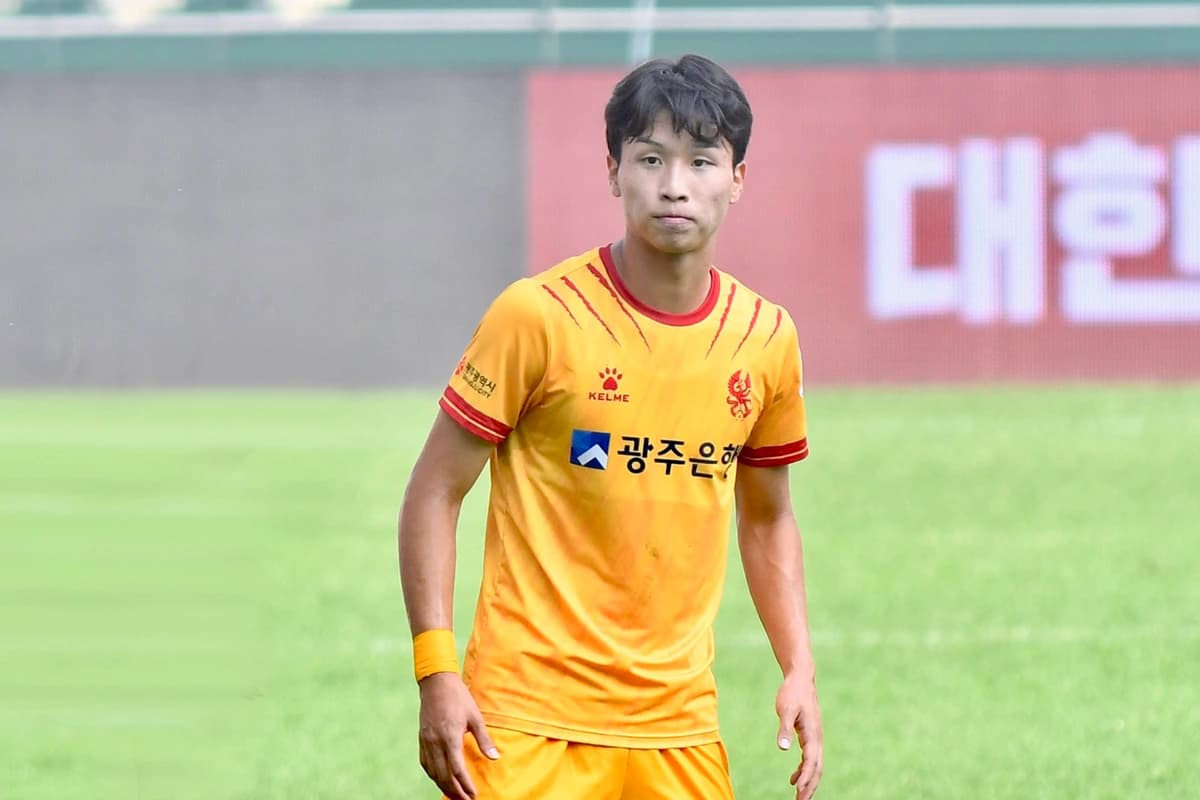
Korea Beat Japan for a Fourth Straight Asian Games Football Gold. Then Its Captain Held Up the Medal and Said, 'I'm Not Going to the Army'
엄지성's 61st-minute goal at Toyota Stadium made Korea the first side to win the men's tournament four times running, and exempted 20 of its 23 players from active military service. Within a day three of them were apologising for saying what the medal was for — and the argument about the exemption itself had started again.
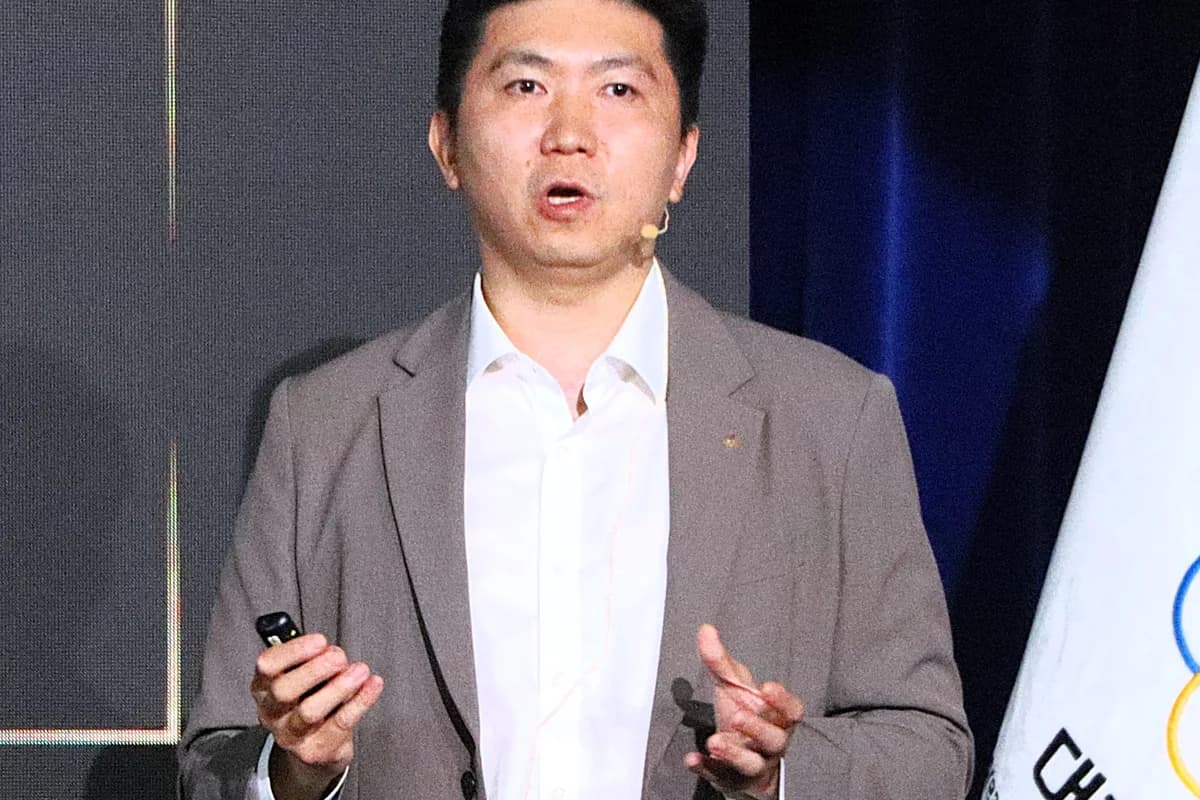
Korea's Sports Chief Gave Japan's Asian Games an F. Then the Organisers Apologised — to Japanese Spectators — for a Sign Saying the Rising Sun Flag Was Banned
The hosts of Aichi–Nagoya 2026 played North Korea's anthem for South Korea's hockey team, introduced Korea as the Republic of China at a medal ceremony, put Hideyoshi on the welcome stage, lost the basketball team's bus before the final, and housed athletes in leaking containers. Then a ballpark sign listed the Rising Sun flag among banned items, and the organising committee said sorry — in Japanese only, to its own crowd — because the flag was 'naturally' allowed. Its own rulebook bans flags that suggest political claims. It chose not to read it.
The Weekly Dispatch
Korea, curated. Every week.
The best of K-culture, straight from Seoul. Written by people who actually live here.
Free, no spam, unsubscribe whenever.