Son Heung-min: The Nicest Man Carrying a Nation
How a boy drilled in the basics by his father in Chuncheon became Korea's greatest export in cleats — a Premier League Golden Boot, a military exemption won on a football pitch, a trophy at last, and now a record-breaking new life in Los Angeles.
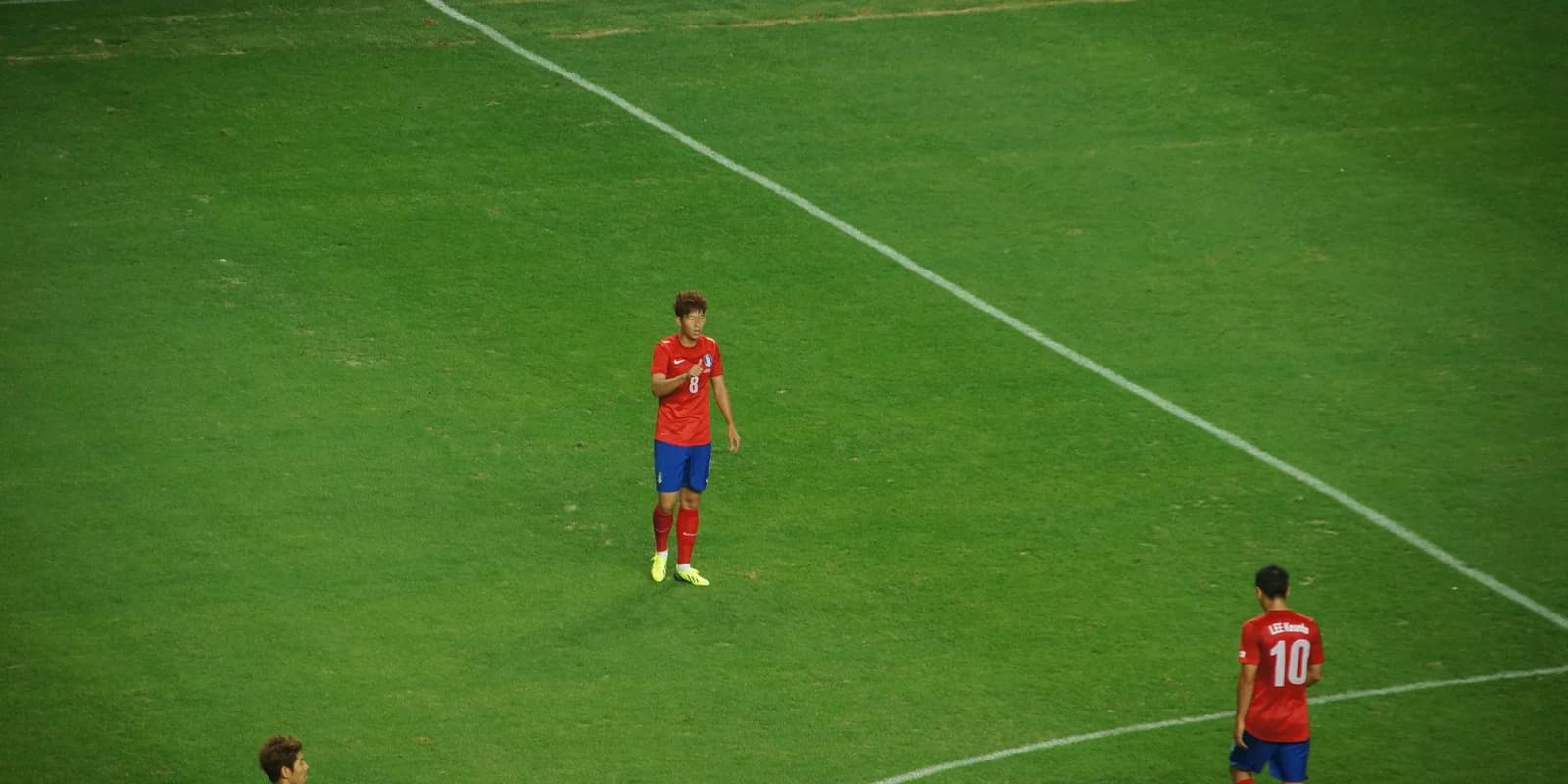
When South Korea plays a big match, a country of 51 million watches one man. Not the goalkeeper, not the manager — Son Heung-min (손흥민), the forward who for a decade has been the country's face, its captain, and its proxy in every tournament that matters. He is that rare global sports star who is beloved as much for how he carries himself as for what he does with a ball: relentlessly cheerful, endlessly gracious, the "nice guy" of world football. He is also, quietly, one of the best forwards of his generation. This is who he is, and why a nation rides on his shoulders.
A note on where he plays now: for ten years Son was Tottenham. But in August 2025 he left North London for Major League Soccer, signing with Los Angeles FC (LAFC) for a reported fee around $26.5 million — an MLS record (LAFC, MLSsoccer). So this is a profile of an LAFC forward and former Tottenham captain — a man in the California chapter of a very long story.
Chuncheon, and a Father's Obsession
The story starts not with Son but with his father. Son Woong-jung (손웅정) was a promising Korean footballer whose own career was cut short — and who poured everything he'd learned, and everything he wished he'd been taught, into his son. In their hometown of Chuncheon, he built an academy and a philosophy that has become legend in Korean football: the basics, endlessly, before anything else (Wikipedia). Years of ball control and fundamentals, the story goes, before the boy was allowed to play competitive matches — the idea being that technique drilled young becomes permanent. Whatever the exact regimen, the result is a footballer who is genuinely two-footed, technically flawless, and able to finish with either foot from anywhere. His father built that.
The Quiet Apprenticeship in Germany
Son left Korea as a teenager for the Hamburger SV academy, breaking into the first team and scoring 20 goals across 2010–2013 (Wikipedia). A move to Bayer Leverkusen in 2013 (for a reported ~€10 million) sharpened him further — 29 goals in 87 appearances across two seasons — and marked him as one of the Bundesliga's brightest attackers. He was already very good. He was about to become great.
Ten Years in North London
In August 2015, Tottenham Hotspur signed Son for about £22 million, and he stayed for a decade (LAFC). It took a season to settle; then he exploded. Alongside Harry Kane he formed one of the Premier League's most productive attacking partnerships, and the honors piled up. By the time he left, he had scored 173 goals with 101 assists across all competitions for Spurs — one of the great goalscoring records in the club's history.
The individual milestones are staggering, and they carry an extra weight because of where he's from. In 2021–22, Son won the Premier League Golden Boot with 23 goals (shared with Mohamed Salah) — the first Asian player ever to win it (Wikipedia). In April 2023 he became the first Asian player to reach 100 Premier League goals. His solo goal against Burnley in 2019 — collecting the ball near his own box and running the length of the pitch — won the FIFA Puskás Award for the best goal in world football. He was named AFC Asian International Player of the Year four times. For a continent long told its players couldn't lead the line at the highest level, Son was the rebuttal.
The Gold Medal That Changed Everything
But the single most consequential match of his life wasn't in England. Like every South Korean man, Son faced roughly 18 months of compulsory military service — an obligation that can freeze a European career at its peak. The law grants one major escape: win a gold medal at the Asian Games, and you're exempt (Olympics.com).
At the 2018 Asian Games in Indonesia, Son — as an overage star on the under-23 team — dragged South Korea to the final and beat Japan 2–1 after extra time, assisting both goals (Forbes). The gold medal meant he owed only a few weeks of basic training instead of two years in uniform, and his career in Europe was saved on a pitch in Jakarta. It's the same mechanism that later freed the esports icon Faker — a reminder that in Korea, sport and national duty are wired together in ways outsiders rarely grasp.
Captain, and the Burden of Hope
Since 2019, Son has worn the South Korea captain's armband (Wikipedia), with well over 130 caps and more than 50 goals for the national team — a tally that keeps climbing, and that has since passed the national record (see the update at the end). The armband is heavier than it looks. In a country where a single tournament can become a referendum on national pride, the captain absorbs the hope and, when it goes wrong, the blame.
The image that captured it: the 2022 World Cup in Qatar, which Son entered having fractured his eye socket in a Champions League game weeks earlier. He played anyway, in a black protective face mask, and captained a battered Korea into the knockout rounds — a masked man carrying a nation, literally holding his own face together to do it (Wikipedia). That same weight is the subject of our piece on Korea's 2026 World Cup meltdown: when the team fails, the grief and the fury land on the men who carry the shirt — and no one carries it like Son.
One Trophy, at Last — Then California
For all the individual brilliance, one thing eluded him for a decade: a team trophy. Tottenham are famous for not winning things, and Son's career risked becoming a monument to near-misses. Then, in his final act in North London, it broke. In May 2025, as captain, Son lifted the UEFA Europa League — Tottenham beating Manchester United 1–0 in Bilbao — the club's first major trophy in 17 years, and his first (Tottenham, Korea Times). Months later he took the record move to LAFC — voted, together, Korea's top sports story of 2025.
What Son Means to Korea
It would be easy to reduce Son to his numbers — the goals, the Golden Boot, the transfer fees. But that misses why Koreans love him. He is, in the national imagination, the good son: humble, hard-working, respectful, a global superstar who never stopped bowing to elders or crediting his father. In a culture that prizes exactly those virtues, he is not just an athlete but an argument — proof that a Korean kid, drilled in the basics in a small city, can go out into the world and beat everyone while staying, recognizably, one of your own.
He carries all of that every time he pulls on the red shirt. It is an absurd weight to put on one man. Son Heung-min has carried it, mostly smiling, for a decade — and now he carries it under the lights of Los Angeles, still the nicest man in the game, still a nation's heart in cleats.
Update, 14 October: the record
On 6 October, in a friendly against Uzbekistan at Yongin Mir Stadium that Korea won 2–0, Son scored directly from a free kick in the sixth minute — the fifth, by 한국일보's account. It was a 59th goal for the national team, in a 151st appearance, and it took Son past 차범근's 58 in 136 — the record, on the Korea Football Association's count, that had stood for nearly forty-eight years. The association's own homepage carried the headline: "손흥민 '59호' 최다골 경신" — Son breaks the scoring record with his 59th.
FIFA's records count 차범근's appearances differently, and the association revised its own figures in 2014; the record above is the association's.
Sources for this update: the Korea Football Association; 조선일보, OSEN and 한국일보 (6 October); 일간스포츠 (7 October).
Homepage/hero: Son in action for Tottenham Hotspur (2017) — photo by dom fellowes, Wikimedia Commons, CC BY 2.0. Listing card: Son with the Best Footballer in Asia trophy — photo by Ujishadow, Wikimedia Commons, CC BY-SA 4.0. Cover: Son (no. 8) playing for South Korea, 2013 — photo by Manri Cheon, Wikimedia Commons, CC BY 2.0. Career figures are drawn from the linked sources; his current club (LAFC, since August 2025) is verified as of this writing.


Keep Reading
More Stories
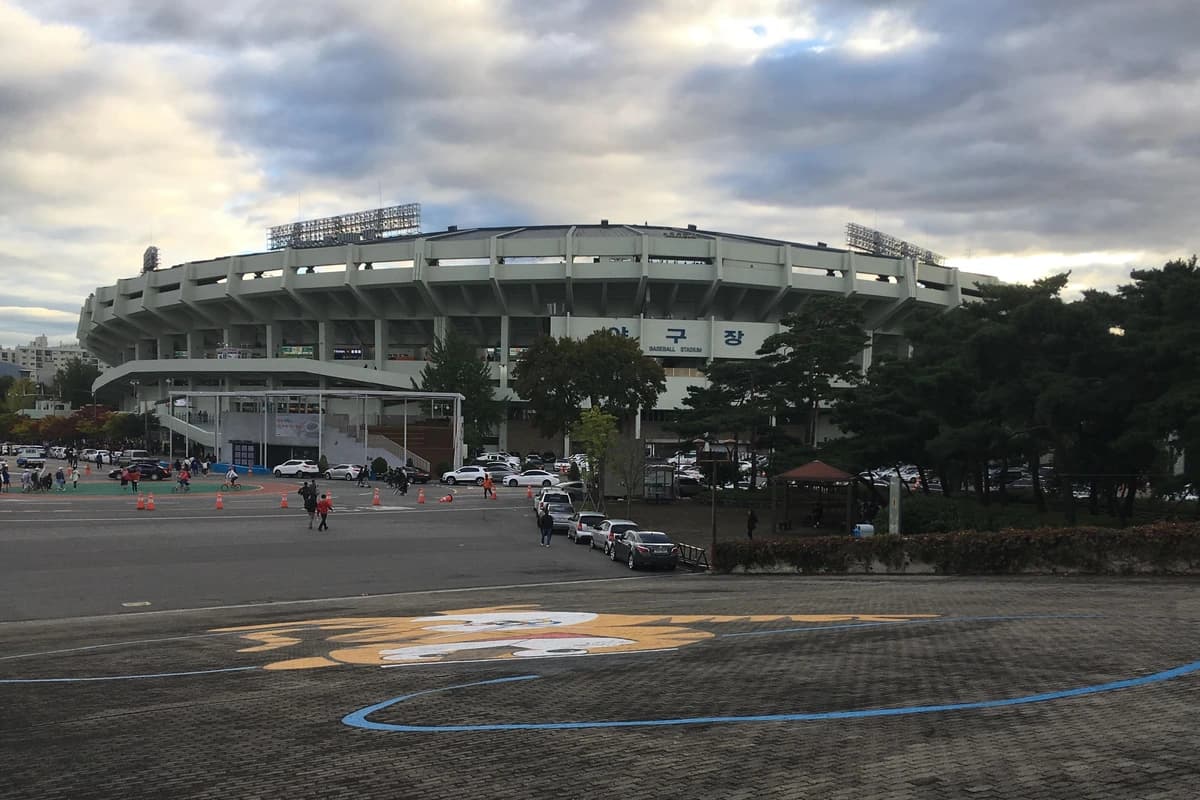
The Lights Went Out at Jamsil on Monday Night. Korea's Most Famous Ballpark Isn't Quite Finished Yet
On 12 October, after the last regular-season game at 잠실야구장, four Doosan legends stood at the bases in the dark and lifted home plate. LG had said its own goodbye five days earlier. The 44-year-old stadium is due to come down for a domed replacement — but the postseason, starting tonight with LG against Doosan, will keep it open for at least two more games.
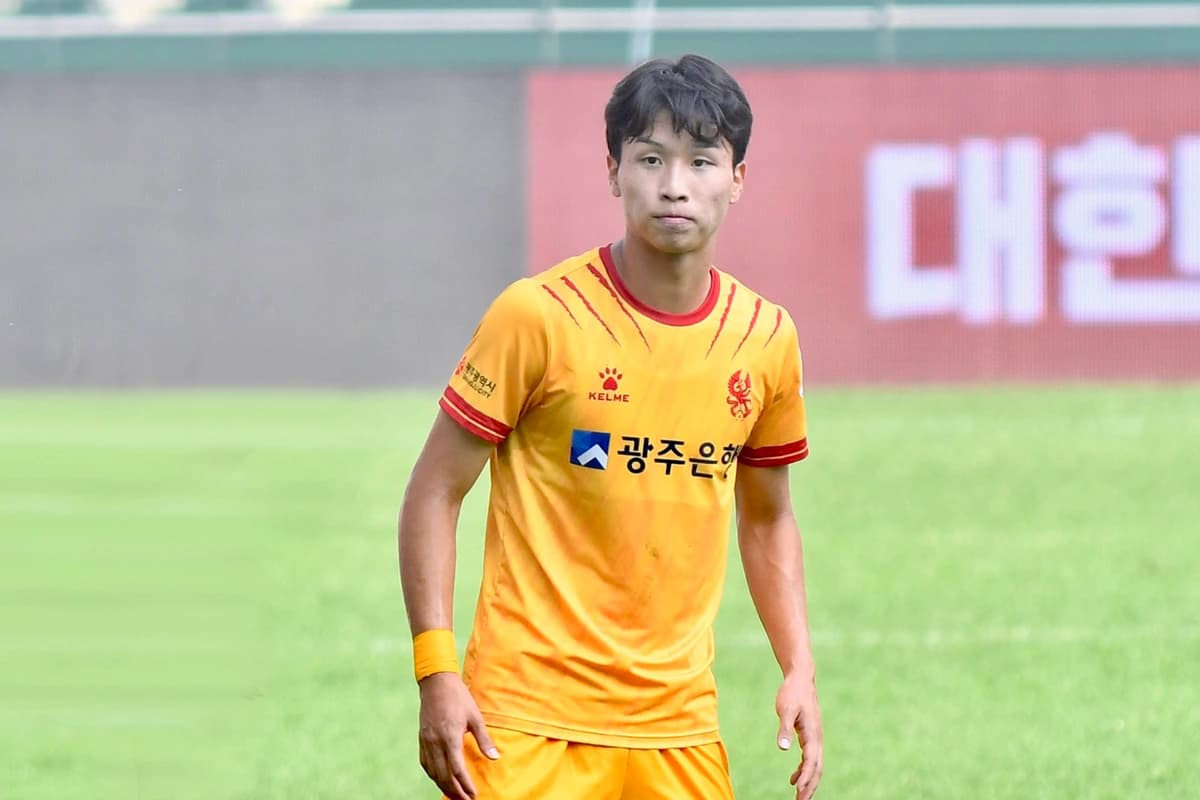
Korea Beat Japan for a Fourth Straight Asian Games Football Gold. Then Its Captain Held Up the Medal and Said, 'I'm Not Going to the Army'
엄지성's 61st-minute goal at Toyota Stadium made Korea the first side to win the men's tournament four times running, and exempted 20 of its 23 players from active military service. Within a day three of them were apologising for saying what the medal was for — and the argument about the exemption itself had started again.
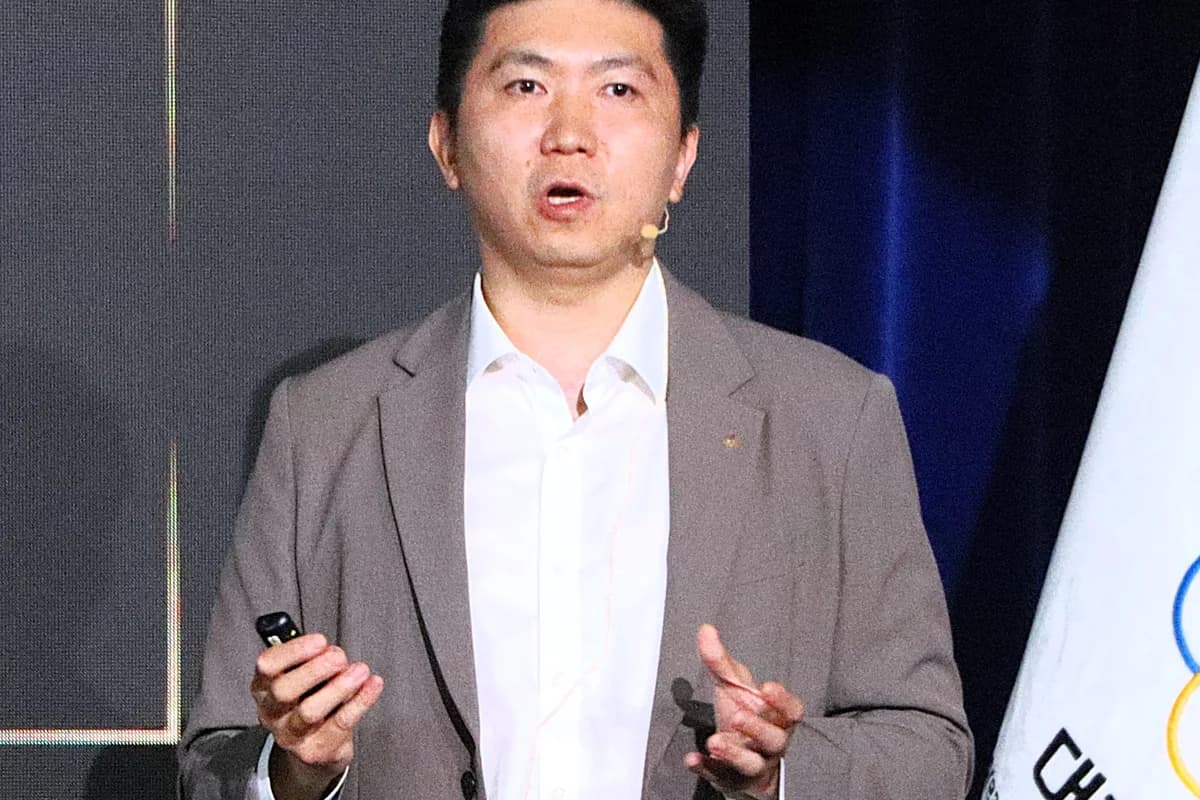
Korea's Sports Chief Gave Japan's Asian Games an F. Then the Organisers Apologised — to Japanese Spectators — for a Sign Saying the Rising Sun Flag Was Banned
The hosts of Aichi–Nagoya 2026 played North Korea's anthem for South Korea's hockey team, introduced Korea as the Republic of China at a medal ceremony, put Hideyoshi on the welcome stage, lost the basketball team's bus before the final, and housed athletes in leaking containers. Then a ballpark sign listed the Rising Sun flag among banned items, and the organising committee said sorry — in Japanese only, to its own crowd — because the flag was 'naturally' allowed. Its own rulebook bans flags that suggest political claims. It chose not to read it.
The Weekly Dispatch
Korea, curated. Every week.
The best of K-culture, straight from Seoul. Written by people who actually live here.
Free, no spam, unsubscribe whenever.