Coupang: How Korea Turned 'Hurry-Hurry' Into a Logistics Empire
South Korea has a word for its national impatience — 빨리빨리, 'hurry-hurry.' Coupang, the country's answer to Amazon, industrialized it: order at midnight, and a box is on your doorstep before you wake up. Here's how a Harvard dropout's daily-deals site became a next-day-everything machine — and what that speed costs.
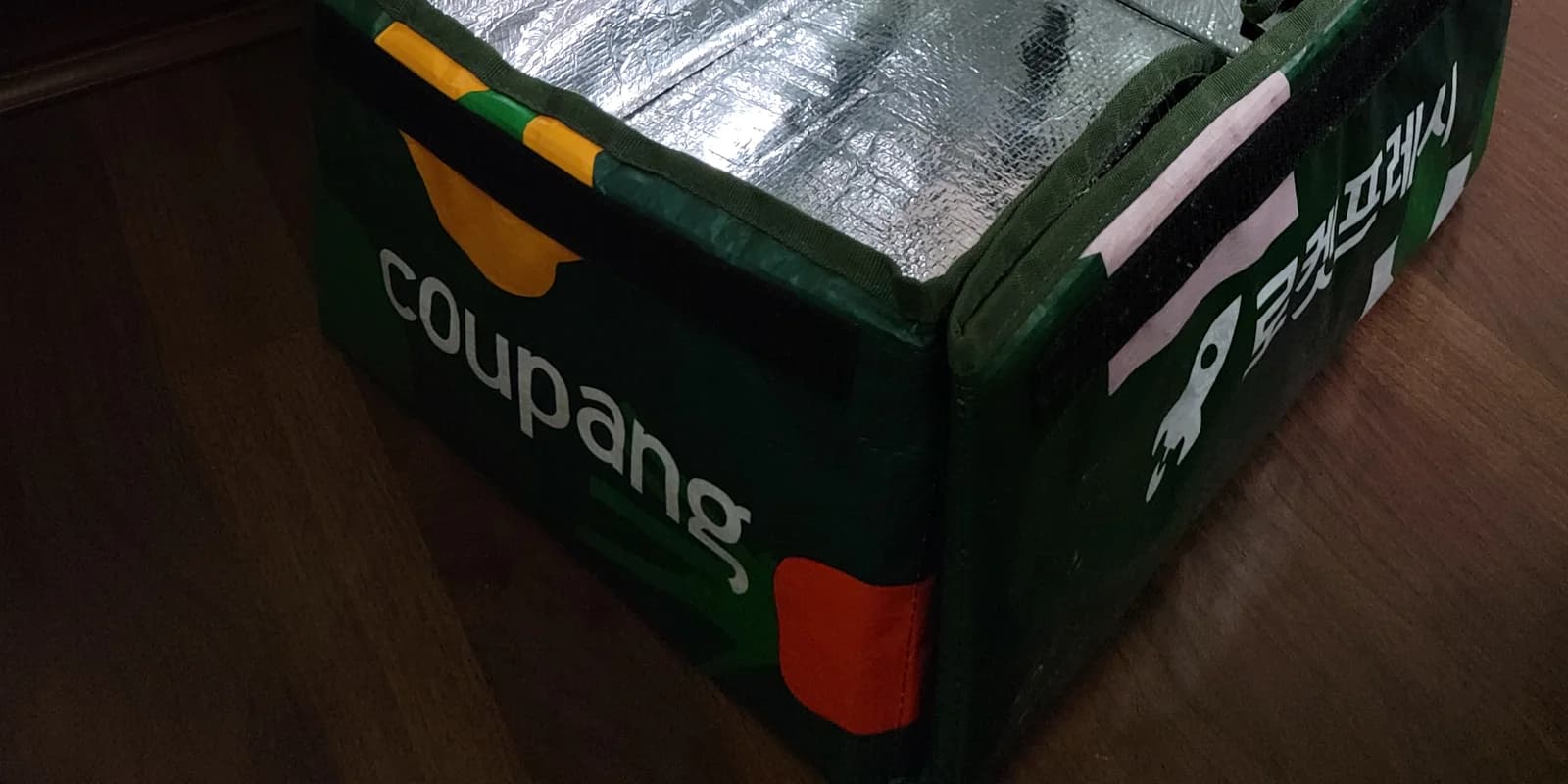
Order a bag of apples in Seoul at 11:50pm. Go to sleep. By the time you wake up — often before 7am — the apples are in a chilled bag outside your door. No delivery window, no "your driver is 12 stops away," no surcharge. Just there. This is Rocket Fresh (새벽배송), Coupang's dawn-delivery service, and for millions of Koreans it is not a luxury but the baseline expectation of what shopping is.
Coupang is routinely called "Korea's Amazon" (Forbes), and the comparison is fair as far as it goes. But the more interesting story is cultural. Korea has a famous word for its own restlessness — 빨리빨리 (ppalli-ppalli), "hurry-hurry" — the national impatience that shows up in everything from how fast elevators close to how quickly a country rebuilt itself. Coupang took that impulse and turned it into infrastructure. This is how, and what it cost.
From Daily Deals to a Logistics Machine
Coupang was founded in Seoul in 2010 by Bom Kim (김범석), a Korean-American who had moved to the US as a child, earned a degree at Harvard, enrolled at Harvard Business School — and dropped out about six months in to build it (CNBC, Wikipedia). It started unglamorously, as a Groupon-style daily-deals site, then became an eBay-style marketplace.
The pivotal decision came next: rather than just connect buyers and sellers, Coupang chose to own the inventory and build its own delivery network — the capital-intensive, Amazon-style path that burns cash for years before it pays. It is the choice that made everything else possible. Kim remains Coupang's founder, chairman, and CEO today (Wikipedia — Bom Kim).
How Rocket Delivery Actually Works
The flagship is Rocket Delivery (로켓배송): order most items before midnight, get them the next day — and Coupang reports that the overwhelming majority of its orders arrive same- or next-day (Coupang). Rocket Fresh extends that to groceries and perishables with the by-7am dawn drop.
What makes it possible is less a delivery service than a pre-positioning system. Coupang built its own dense network of fulfillment and logistics centers — enough that, as of 2020, an estimated 70% of Koreans lived within about 10 minutes of one (Wikipedia). Machine-learning models forecast demand and forward-deploy inventory close to where it will be ordered before the order exists; automated sorters handle the volume; the "Coupang Friends" couriers run optimized routes (Coupang Careers). And Korea helps: one of the most densely urbanized countries on earth, with tall apartment blocks and short distances, is the ideal terrain for making a delivery van efficient. The 빨리빨리 instinct met a country built to satisfy it.
The SoftBank Bet
Owning the whole stack meant years of losses, and that required a particular kind of investor: patient, enormous, and comfortable with red ink. Enter SoftBank and its founder Masayoshi Son. SoftBank put in about $1 billion in 2015, then a further $2 billion in 2018 through its Vision Fund, at a reported valuation around $9 billion (Global Venturing, Wikipedia). By the time Coupang went public, the Vision Fund and SoftBank together owned roughly a third of it. It was one of the Vision Fund's genuine winners — the money that let Coupang keep building the network while it lost money on almost every order.
The $4.6 Billion Morning on the NYSE
The bet paid off in public on March 11, 2021, when Coupang listed on the New York Stock Exchange under the ticker CPNG. Priced at $35 a share, it raised about $4.6 billion — the biggest US IPO of the year and the largest listing by a foreign company on a US exchange since Alibaba in 2014 (CNBC, Forbes). The stock jumped on debut and closed valuing the company around $84 billion — a Korean delivery company, born of daily deals, briefly worth more than most of the country's storied chaebol.
The Cost of Speed
A machine built to move faster than seemed possible ran on human beings, and this is the part of the story Coupang would rather you skipped. Beginning around 2020, labor advocates and unions raised alarms about overwork among the workers who make next-day delivery real.
The case that crystallized it: Jang Deok-jun (장덕준), 27, died of a heart attack in October 2020 after an overnight shift at a Coupang logistics center; in February 2021 the South Korean government ruled his death work-related — an industrial accident (MIT Technology Review). By April 2021, labor groups had linked roughly nine deaths of Coupang employees and subcontractors to overwork and grueling overnight shifts (UPI, Wikipedia). Coupang has consistently disputed the framing, pointing to its safety record and contesting how the deaths are attributed (Coupang Newsroom). The disputes have not gone away: as recently as November 2025, a delivery-workers' union claimed a cumulative 27 Coupang-linked workplace deaths over the years, a figure Coupang rejects (Korea Times).
The tension is the honest heart of the Coupang story. The convenience is real, and so is the cost of producing it at that speed — and the second is easy to forget precisely because the first is so frictionless. A box that appears while you sleep hides the shift that put it there.
The Everything-App
Coupang's answer to holding customers has been to make leaving expensive. Its Wow membership — free shipping, free returns, and more — had about 14 million paid members by the end of 2023, roughly one in four Koreans (Korea Times, Wikipedia). Bundled into it: Coupang Play, a streaming service launched in December 2020 that has bought live sports and originals; and Coupang Eats, its food-delivery arm. In 2024 it acquired the luxury e-commerce platform Farfetch. The strategy is Amazon's, ported: wrap a country's daily life into a single subscription it can't quit.
And it finally turned a profit. After a decade of deliberate losses, Coupang posted its first full year in the black in 2023 — $24.38 billion in revenue and $1.36 billion net income — and grew revenue to about $30.3 billion in 2024 (Wikipedia, TipRanks). The parent company moved its headquarters to Seattle in 2022 and has begun exporting the model abroad, launching Rocket Delivery in Taiwan (KED Global).
What Coupang Says About a Country
There's a temptation to read Coupang purely as a business — a well-executed Amazon clone with patient capital and good timing. But the reason it worked in Korea specifically is cultural. This is a country that turned "hurry-hurry" into a point of identity, that rebuilt itself from war to wealth in a single lifetime on the strength of doing things fast. Coupang didn't invent Korea's impatience; it industrialized it, poured concrete for it, wrote algorithms for it, and put it on a doorstep by 7am.
It sits, in that sense, alongside the other companies rewiring Korean daily life — KakaoTalk for talking, Naver for searching, Baemin and the delivery apps for eating — each one taking a national habit and turning it into infrastructure. Coupang's habit just happened to be the most Korean one of all: the refusal to wait. The open question it leaves is the one under all convenience economies — who pays for the speed, and whether a country notices the shift behind the doorstep. For now, most Koreans are asleep when the box arrives.
Homepage/hero & listing card: a Coupang "Rocket Delivery" (로켓배송) truck on a Seoul street — photos by Bonnielou2013, Wikimedia Commons, CC BY-SA 4.0. Cover: a Coupang "Rocket Fresh" (로켓프레시) dawn-delivery bag — photo by Kl0518, Wikimedia Commons, CC BY-SA 4.0. Financial, valuation and scale figures are dated in-text and drawn from the linked sources; worker-death figures are described as reported/disputed.


Keep Reading
More Stories
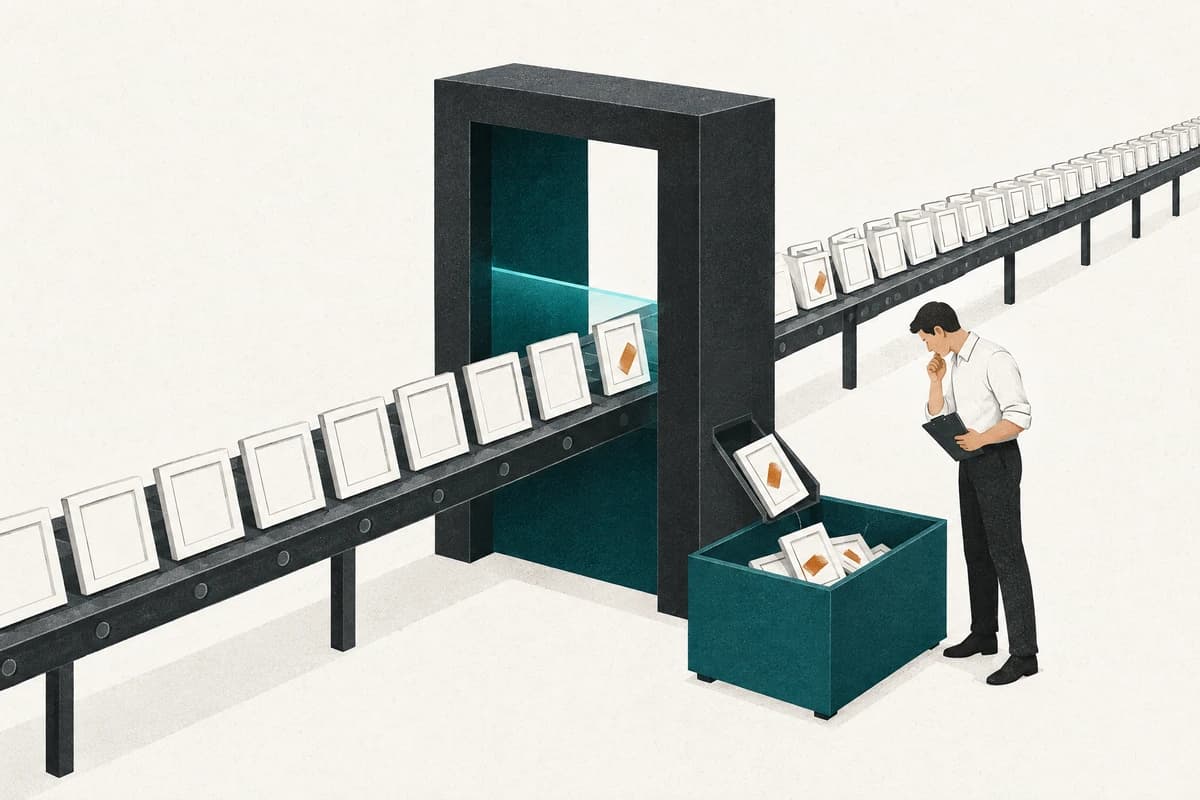
Korea Now Scans Every Image Uploaded to Its Big Forums. The Man Running One of Them Can't Tell You If It Has Ever Worked.
Since 1 July, Korean platforms above a size threshold must run every uploaded image through an AI filter that checks it against a government database of illegal recordings and blocks it before it posts. One operator published his own logs. Over a full year of the earlier video version, 1,615 blocks resolved down to about 33 that might have been real — and he cannot tell you whether any of them were, because keeping the files in order to check them would break a different law.
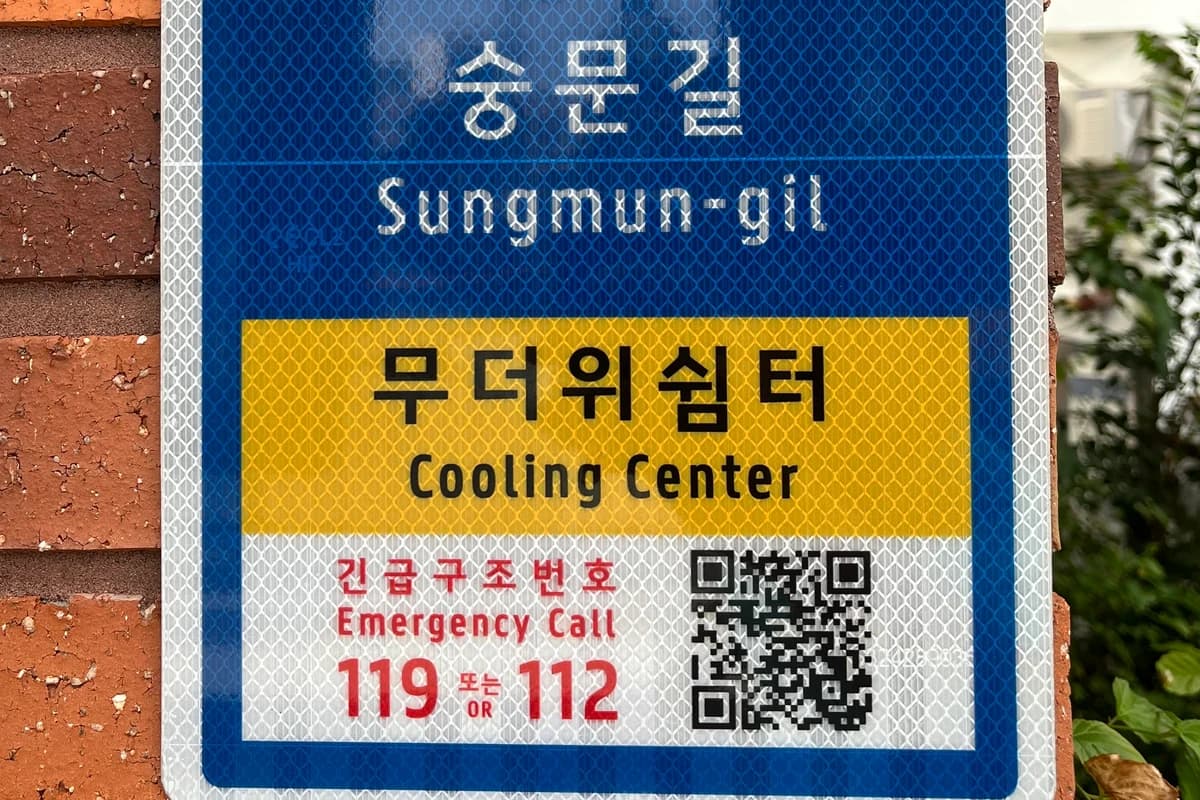
A 23-Year-Old Built an App That Routes You Through Shadows. It Hit No. 1 in a Week.
Yoo Min-jun made it because his walk to campus was unbearable. It calculates the sun's angle and the shadows thrown by buildings and street trees for the minute you'll actually be walking, and tells you which side of the bus to sit on. It cost him about ₩2 million of his own money. Meanwhile the state has 93,375 cooling shelters — and on the hottest Sunday of the summer, four in five of Seoul's were locked.
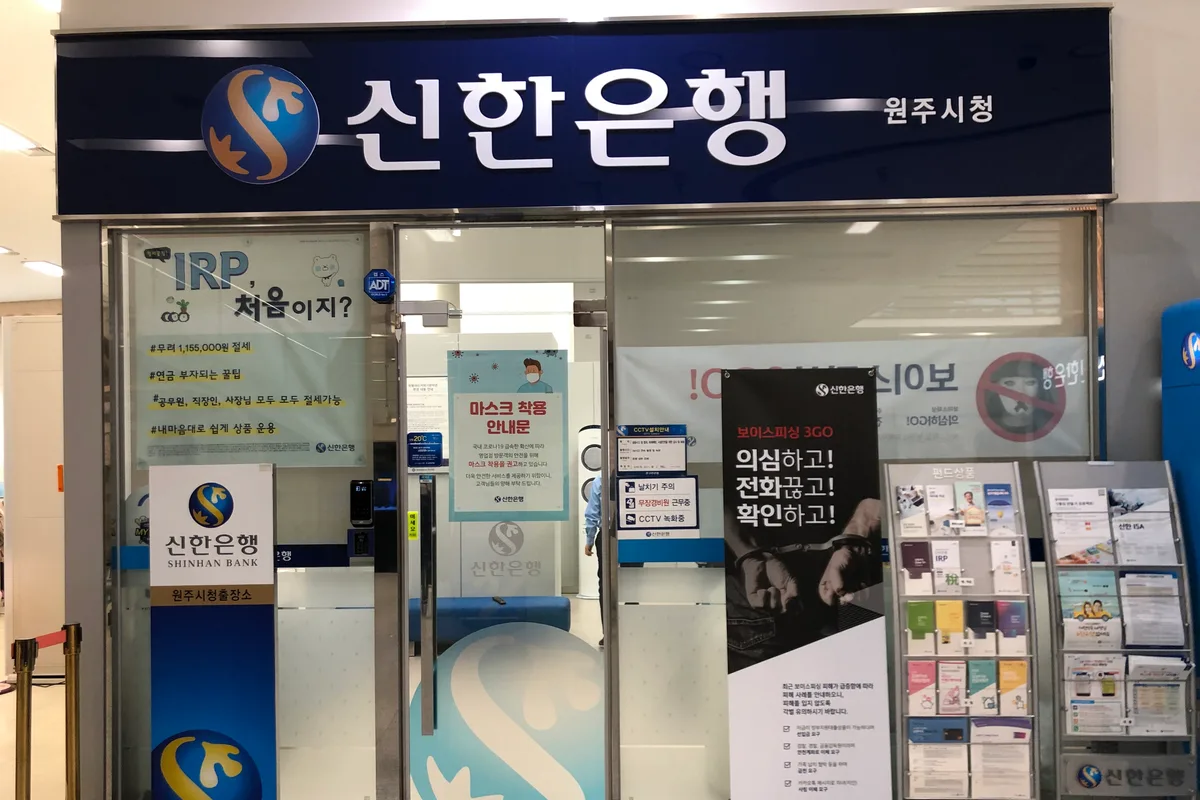
Korea Has Until December to Uninstall Twenty Years of Its Own Banking Software
In October 2025 the government finally ordered the security programs off your computer, and banks have until year-end to comply. Along the way: a cipher whose famous justification expired before it shipped, a mandate that was never in the law everyone blames, and a bank page that still uses a legal term abolished five and a half years ago.
The Weekly Dispatch
Korea, curated. Every week.
The best of K-culture, straight from Seoul. Written by people who actually live here.
Free, no spam, unsubscribe whenever.