The Bagaji Problem in Korean Tourism, Honestly: Why Even Koreans Are Walking Back, and Why Foreigners Face the Sharper Version (2026)
Gwangjang Market just got a four-strikes vendor blacklist. Yeosu's night-pojangmacha row is sitting empty. The Korean press is finally naming the structural reason their own small-city tourism boom is collapsing — and why, as a foreigner, the standard 'go off the beaten path' advice doesn't save you.
A Korean tourist who'd just come back from Mukho, quoted in Seoul Shinmun this week:
"1~2시간이면 동네 구경도 끝나고, 오징어회는 비싸서 현지인도 안 사…" "An hour or two and the town is over. The squid sashimi is so expensive even the locals don't buy it."
The line ran on May 19 in a Seoul Shinmun piece about why Korea's small-city tourism boom — the one every English-language travel guide has been telling you to ride — is suddenly being walked back by the Koreans driving it.
This article is about what's actually happening, why the Korean press is finally naming it out loud, and why — if you're flying in from outside — the standard "find the real local spot" advice doesn't save you. It saves a Korean sometimes. Not you.
One word before we start. 바가지 (bagaji — literally "gourd dipper," idiomatically "to be ripped off") is the Korean shorthand for getting overcharged because the vendor knows you're a one-time customer. You "wear the bagaji" — 바가지를 쓰다. The word predates tourism, but in May 2026 it is how Korean reporters describe the entire structural problem with their domestic-tourism industry. Get used to it. Every article ahead of us uses it.
The squeeze that created this
The starting point isn't the markets. It's geopolitics.
The Middle East war has pushed international fuel prices high enough that Korean airlines have stacked on fuel surcharges that, in some cases, now cost more than the base ticket itself. The won–dollar exchange rate is running stubbornly high. For Korean 2030 — the 20s and 30s set who would normally be Tokyo- or Osaka-bound this spring — the math broke. International travel got priced out. Jeju got priced out too: even Jeju itself, according to a May 5 Maeil report, has launched a discount program offering ₩20,000 local-currency vouchers and 30%-off rental cars on its public tourism platform, because demand is visibly softening.
So the pivot happened. Korean travelers turned to small inland and coastal cities they'd never seriously considered: 묵호, 여수, 통영, 소래포구, 강릉.
The small cities weren't ready.
Three named collapses
Yeosu. Kukmin Ilbo, May 18: the southern-coast city that once recorded 15 million annual visitors and turned its 낭만포차 — its waterfront pojangmacha row — into a Korean Instagram landmark, is now watching its night-market alleys sit empty even on weekends. The Kukmin headline ran "주말 밤도 텅 빈 낭만포차." The collapse, the paper says, traces back to a wave of SNS posts about 바가지 요금 and 불친절 (rudeness) at the seafront restaurants. The market built itself on social media; it's being dismantled on social media too.
Soraepogu. A coastal fish market on Incheon's southern flank, perpetually accused of overcharging. On May 14, congressman Park Chan-dae, running for Incheon mayor, publicly pledged "one-strike-out" — a single bagaji violation, the vendor is permanently out. That a major-party candidate is making this a campaign issue tells you where the political temperature is.
Mukho. Our cold-open quote — a Donghae-coast harbor town small enough to walk in an hour but with squid sashimi priced like Cheongdam-dong. The Seoul Shinmun reporter framed it as the new template: small-town tourism, big-city pricing, no follow-up customers required.
The names are different. The mechanism is the same.
The structural cause nobody tells foreigners
Most English-language Korea coverage of bagaji blames bad vendors. The Korean coverage is more honest, and the most-cited explanation right now comes from 양승훈, a sociology professor at Kyungnam University, in a Kyunghyang op-ed on May 18:
"피서철 관광지에서 바가지요금을 내본 경험은 흔하다. 뜨내기손님을 다시 볼 이유가 없으니 한철 장사로 이익을 남겨야 한다는 상인들의 전략 때문이다."
The plain-English version: every customer the vendor will never see again is a one-shot. The math forces gouging. It is not a moral failure of individual vendors; it is what happens when a business's customer base is structurally one-time.
This is the part you need to hold in your head for the rest of the article: a foreigner is the platonic ideal of a one-shot customer. You will never come back to that one specific kalguksu shop in Mukho. The vendor knows this before you've sat down. The same dynamic that lets Koreans get bagaji'd at a small-town fish market lets you get bagaji'd at the most-recommended food market in Seoul.
Which brings us to Gwangjang.
The Gwangjang Market case
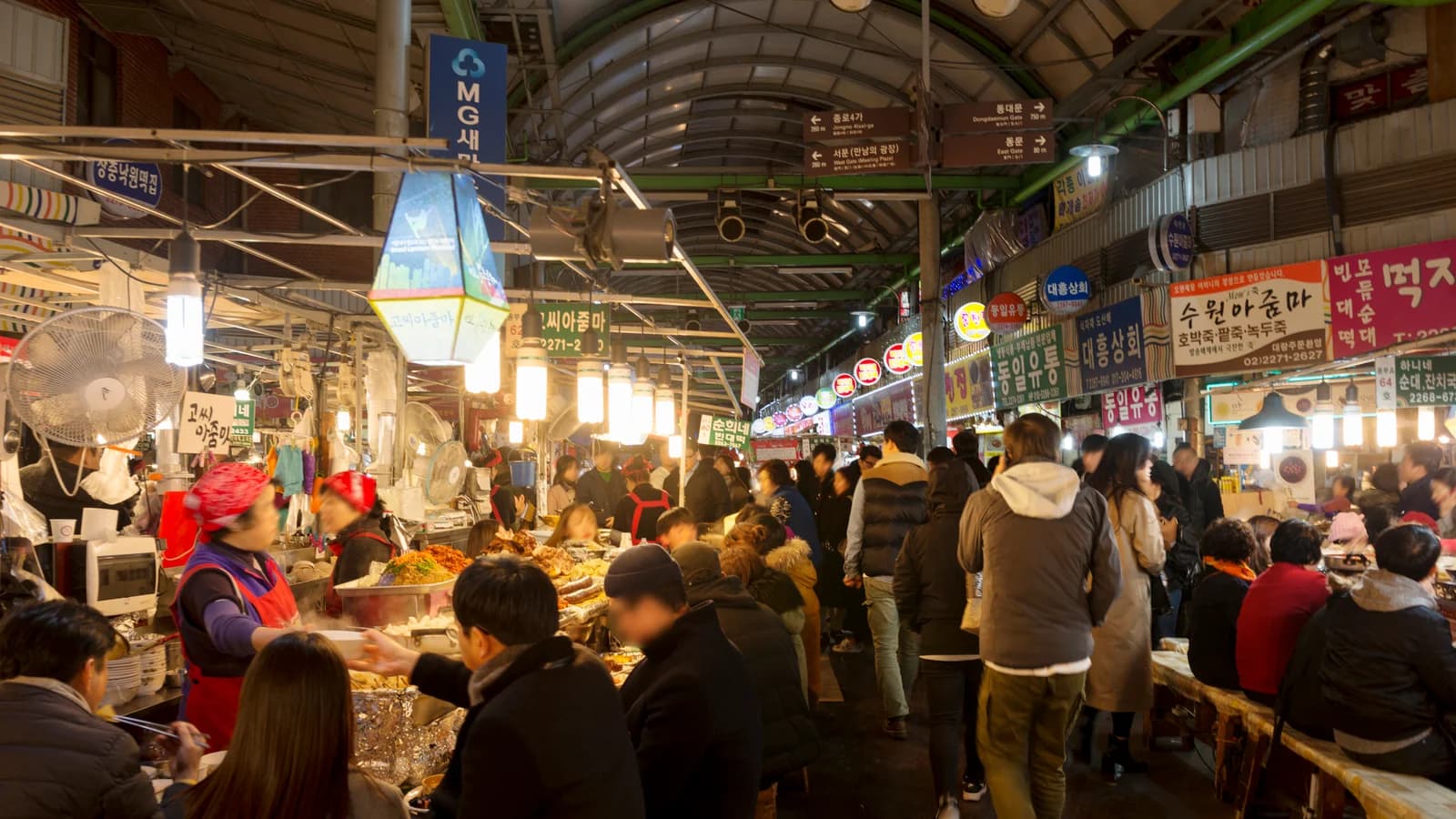
Gwangjang Market, in Jongno, Seoul, is the most-named Korean food destination in English-language travel writing. The 2019 Netflix series Street Food: Asia turned it into a K-tourism anchor; every English travel guide we've seen — including, until this article, our own implicit recommendations — sends foreign visitors there for bindaetteok, mayak gimbap, and 육회 (yukhoe — Korean steak tartare).
It is also, right now, the most-publicly-troubled tourist food destination in Korea. Three things happened in the last two months.
Last weekend (May 18), Jongno-gu announced a four-strikes blacklist. Starting June 1, 2026, every food stall at Gwangjang will operate under a 노점 실명제 — a vendor real-name system. Bagaji pricing, cash-only coercion, food reuse, and other violations carry fines and penalty points; four violations in one year and the vendor's road-occupation permit is permanently revoked. The announcement was carried in multiple outlets over the same 24 hours — including a Segye Ilbo "설왕설래" column that explicitly framed the 2019 Netflix episode as the original trigger for the present mess. (Twelve days from publication of this article, the rule turns on.)
The QR-code admission. Buried in MBC's report on the rollout is the detail that tells you who Jongno-gu thinks the protected class is. The district is adding a QR-code reporting system specifically so that foreign tourists can flag incidents directly — Korean isn't required. This is a government admission, in writing, that the bagaji problem at Gwangjang is foreigner-targeted by structure, not by accident.
The card-payment trick. A Seoul Economy reporter walked the market in early March and found that vendors were physically concealing the card-payment QR codes — covering them with sticky notes, turning the screens away, claiming the reader was "broken" — to push foreign customers onto cash payments, where the bagaji is easier to apply. No paper trail, no algorithmic price-check, and the vendor can quote a number after the food is in your hand. The four-language price boards mandated by the market's standardization program were up on the walls. The card readers were "out of order."
This is the Gwangjang story right now. It is in mid-fix. It is not fixed.
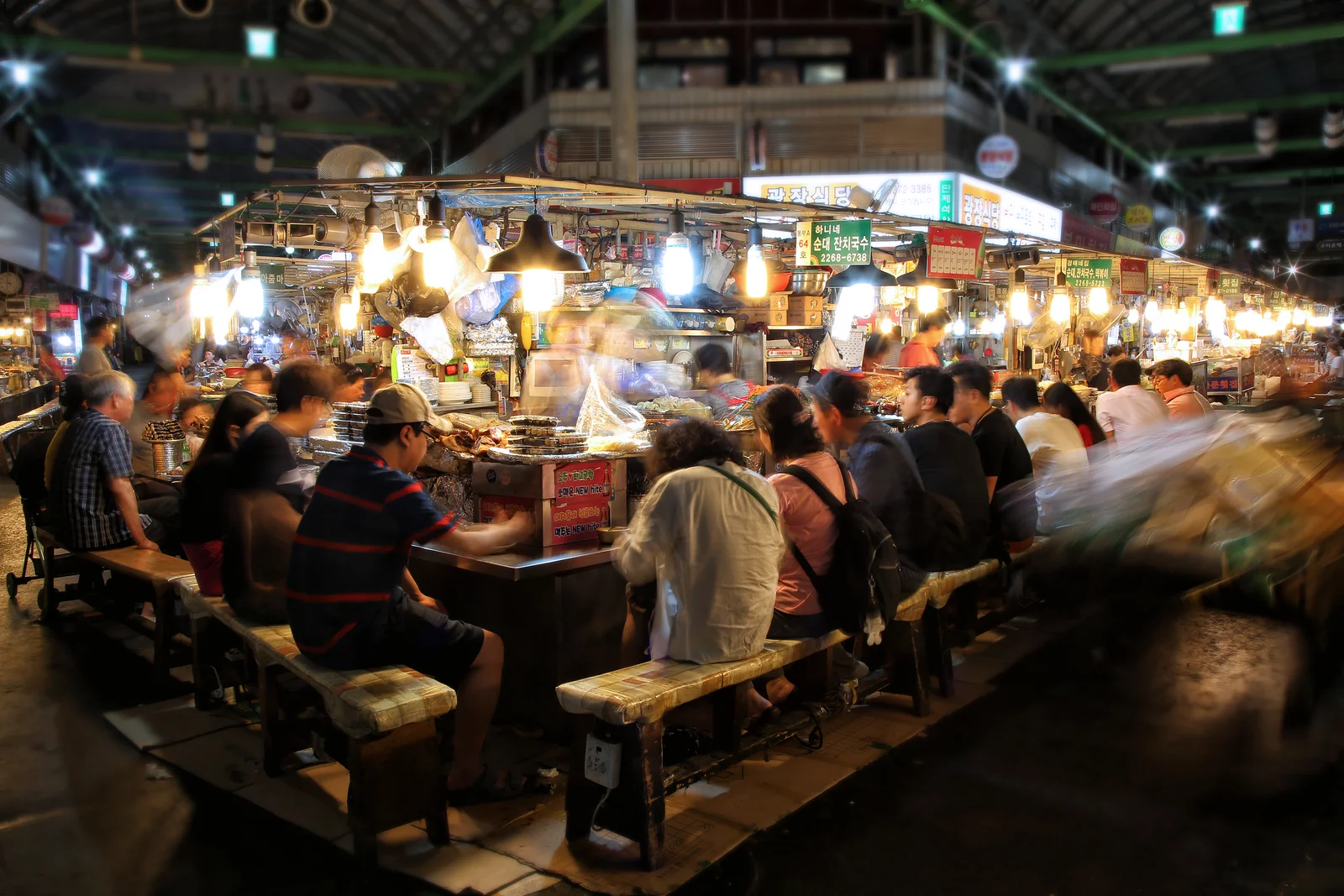 Gwangjang Market's central food-stall bar, Seoul Jongno-gu. The hanging menu boards the market standardized last year are visible above the counter. ⓒ Korea Tourism Organization — IR Studio, November 2017. Licensed under KOGL Type 1.
The KTO has admitted the problem on the record
In case anyone wants to argue this is overstated, the Korea Tourism Organization itself has now published the diagnosis. On May 15, KTO launched its "K-관광마켓 Smile Campaign" across 11 traditional markets — Mangwon, Haeundae, Gwangjang included — explicitly to address what its own press release calls "외국인 관광객들이 전통시장에서 자주 겪는 바가지요금, 현금 결제 강요, 위생 문제" ("the bagaji pricing, cash-payment coercion, and hygiene problems that foreign tourists frequently experience in traditional markets").
When a country's tourism authority names a phenomenon in the foreign-tourist-experience category, it has crossed from rumor to platform.
The Kakao Taxi proof point
It isn't only markets. On May 11, Chosun Biz reported that the WeChat mini-app routing Chinese tourists into Korea's Kakao T taxi system was generating systematically higher fares than the same ride booked directly through the Korean Kakao T app. Same car. Same driver. Different number on the screen depending on whether you came in coded as a foreign customer.
This is the small detail that matters most. Even the app-priced, algorithmic, fixed-fare system has a differential when you arrive looking like a one-shot.
What actually works, given you can't pass
The standard travel-blog advice — "find the real local spot," "go off the beaten path," "eat where the locals eat" — is written for Koreans who can pass. You can't. Your accent gives you up before the menu is on the table. Even fluent Korean-Americans get coded as 교포 (gyopo, overseas Korean) and bagaji'd at much the same rate as visibly foreign customers. The advice doesn't fail because it's wrong in spirit; it fails because the mechanism it proposes — blend in, become repeat-coded — is not available to you.
Here is what actually does work.
A. Stick to chain density and posted-price systems. Chain restaurants — Kimbap Heaven (김밥천국), Bonjuk (본죽), Paris Baguette, Tous Les Jours, Olive Young, Isaac Toast — have national pricing. Structurally they cannot bagaji you. The same is true of app-ordered food on 배달의민족 (Baedal Minjok / Baemin) or Catch Table: the price is fixed in the app before the food is made. Department-store basements — the food halls at Shinsegae, Hyundai, Lotte, AK Plaza — are the highest concentration of fixed-price, photographed-menu Korean food anywhere in the country, and they cover most of what you'd want to try on a first trip.
B. The four-syllable trap: 시가. On a menu, 시가 (si-ga, literally "market price") means "the price will be quoted to you after you sit down." This is the linguistic marker of bagaji infrastructure. If you cannot get a 정확한 가격 (jeong-hwak-han ga-gyeok, "exact price") confirmed in advance — ideally in writing, or via Naver Map's posted menu — walk away. This is non-negotiable for live seafood, 회 (raw fish), 해산물탕 (seafood stew), and most 횟집 (raw-fish restaurants on the water).
C. Pay by card and pre-research with Naver Map, not Google. Korean reviewers are direct about bagaji on Naver Map; the word 바가지 appears in plain text in low-star reviews, and you can search it. Google Maps' English-language reviews of Korean restaurants average two years stale and miss the local signal entirely. And pay by card: card transactions leave a paper trail vendors don't want to fight, and the price is on the receipt, not in the vendor's spoken quote. If a vendor's card reader is mysteriously broken at your stall and working at the next one, that is the bagaji infrastructure in operation. Walk to the next stall.
The typology, condensed:
| Foreigner-safe | Risky | Avoid |
|---|---|---|
| Chains, app-orders, dept-store food halls | Markets, even good ones | Anywhere with 시가 on the menu |
| Olive Young / drugstore chains | Solo small-town 식당 with no posted prices | Live-seafood 횟집 without a written price |
| Posted Korean menus with numeric prices | Boardwalk seafood | "Recommended by your driver" |
| Card-accepted, receipt-issued | "Card reader is broken" | Pojangmacha with no menu board |
| Naver Map–reviewed by Koreans | Hidden card-payment QR | Anything priced after you sit down |
What to do at Gwangjang specifically
Don't avoid Gwangjang. It's worth going, and it's about to be substantially safer.
Wait, if you can, until after June 1 — the four-strikes 실명제 turns on and the QR reporting system gives you a recourse Korean-language tourists have never had. When you go, order only what is posted in won on the green standardized menu boards the market installed last year. Refuse anything quoted as 시가. Insist on the card reader — and if it is mysteriously broken at that specific stall, walk to the next one. If something happens anyway, use the QR. The whole point of the new system is that you do not need to speak Korean to use it.
The bindaetteok and mayak gimbap will still be there. So will the 육회 alley. The market was never the problem; the price structure was.
The honest close
Korea's tourism industry is mid-correction. The Jongno-gu blacklist, the KTO Smile Campaign, the Busan pre-BTS-concert crackdown on hotel and restaurant pricing — these are not PR. They are the visible part of a real internal reckoning, driven by Korean travelers loudly refusing the bagaji on their own soil. The Korean press, normally cautious about naming structural problems with the K-tourism brand, has spent the last month writing some of the bluntest reportage we have seen on it.
Come back in six months and we will tell you whether the 실명제 worked.
—The Editors
Cover photo: Gwangjang Market food stalls, Seoul Jongno-gu Yeji-dong, November 2017. ⓒ Korea Tourism Organization — IR Studio. Licensed under KOGL Type 1.
Keep Reading
More Stories
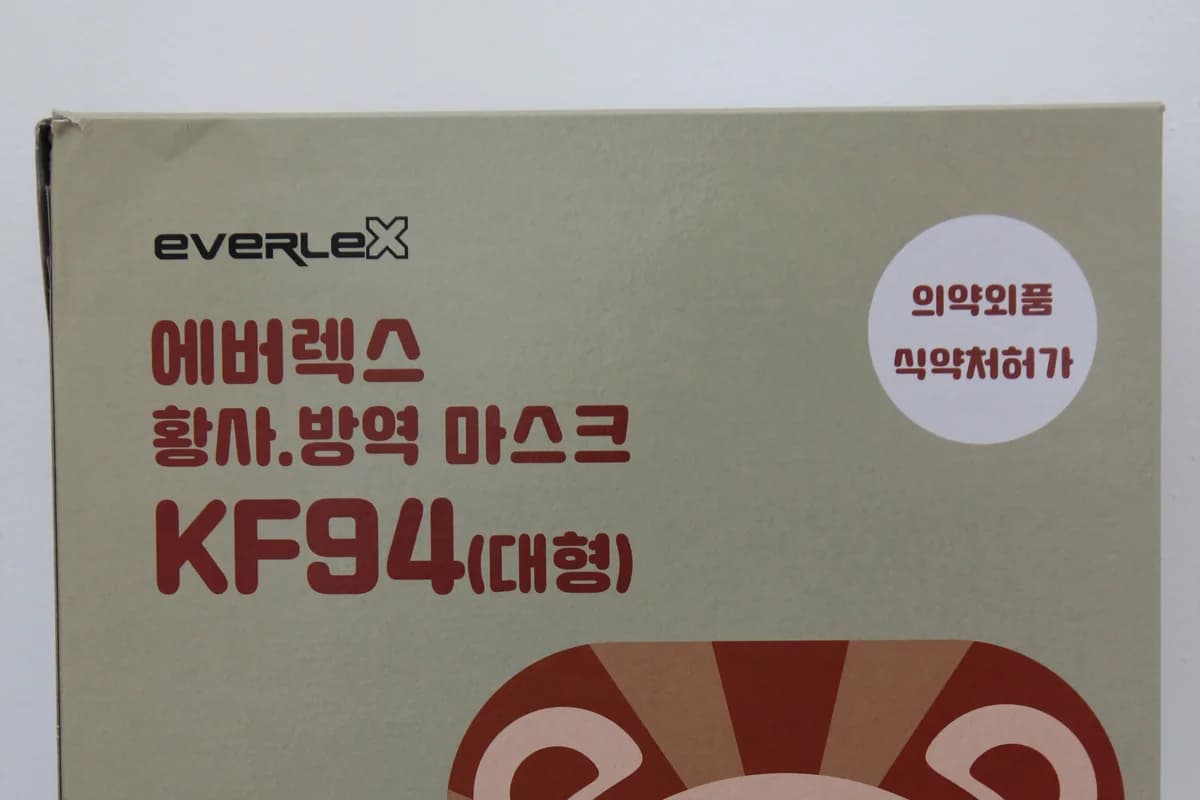
황사 Is Not 미세먼지: What Korea's Air Quality Alerts Actually Mean
English coverage treats yellow dust and fine dust as the same problem. Korea's own forecasters subtract one from the other before publishing. A guide to the two seasons, the alert thresholds, what KF94 actually certifies, and why 'it all comes from China' is a number swap.
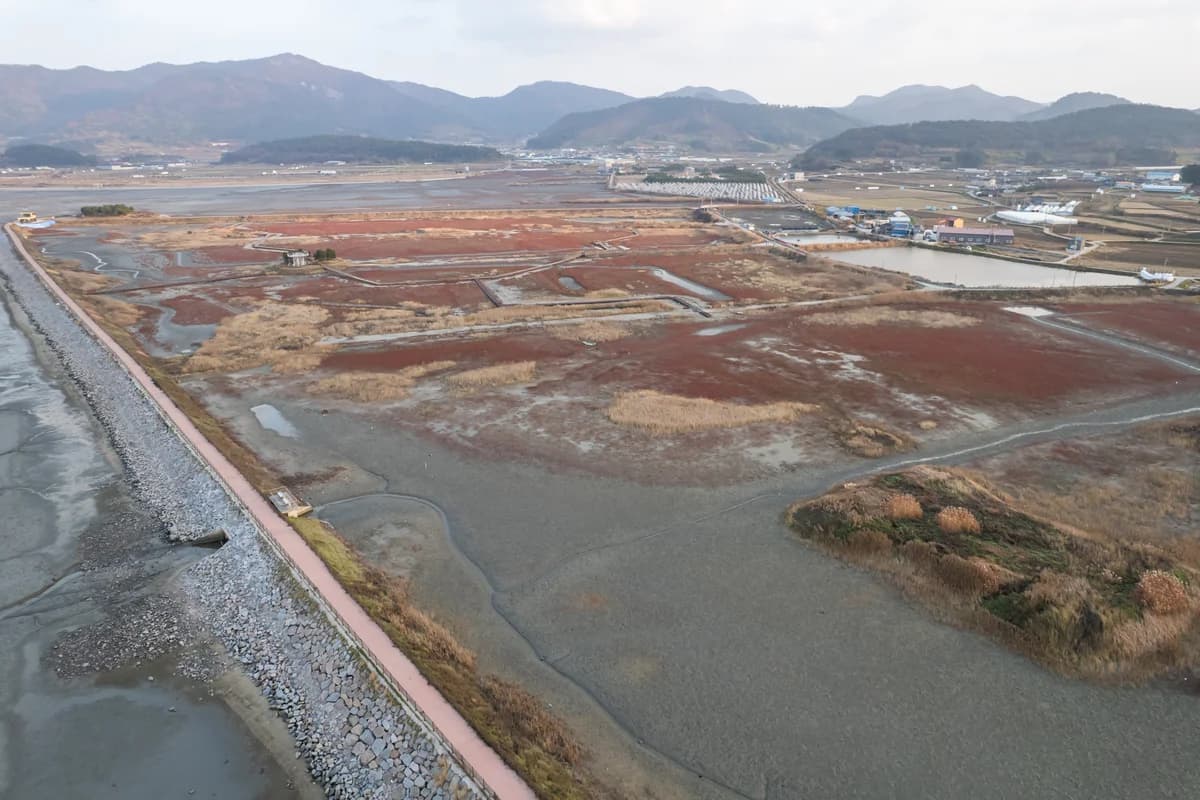
The Mud Korea Decided to Save: Getbol and the UNESCO Vote in Busan
The least Instagrammable thing Korea could nominate — a coastline of mud — is a UNESCO World Heritage site, and on July 25, 2026, in the one year Korea controlled the room, it was made bigger. A guide to getbol: the flats that feed millions of migrating birds, the women who ride wooden sleds across them, and why a country that once paved its tidal flats now enshrines them.
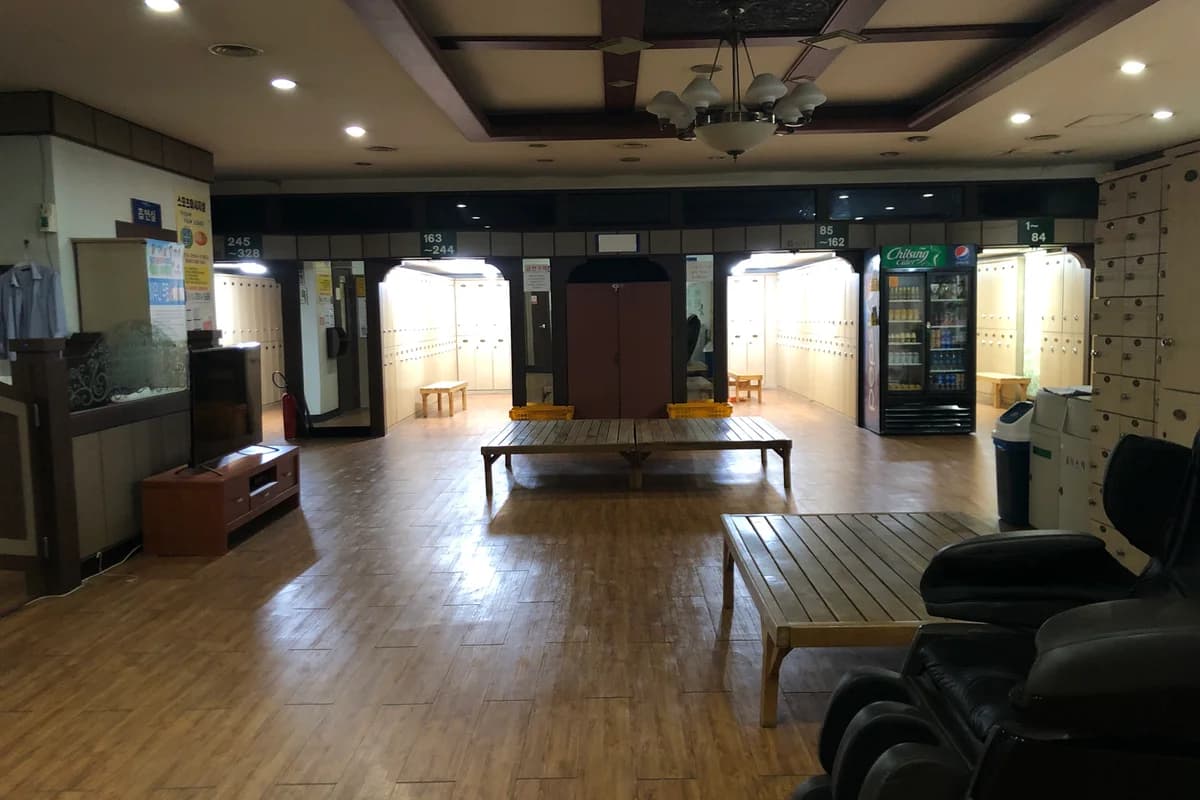
Jjimjilbang for First-Timers: How Korea's Bathhouses Actually Work
Yes, the bath part is fully nude. No, nobody cares. A step-by-step guide to the Korean spa-sauna-sleepover — the sheep-head towel, the scrub that removes a layer of you, which famous venues have quietly closed — and why the neighborhood bathhouse is disappearing even as the tourist jjimjilbang thrives.
The Weekly Dispatch
Korea, curated. Every week.
The best of K-culture, straight from Seoul. Written by people who actually live here.
Free, no spam, unsubscribe whenever.