Bundang & Jeongja, Explained: The New Town That Aged Into a Destination
Pangyo is the new tech money. Right next door, Bundang is the old guard — the first planned New Town Korea ever built, the one every other gets measured against, and the place Korea's actual 'Google' calls home. Here's what it is, why Koreans treat it as the gold standard, and what's quietly changing now that it's turned thirty.
In our Pangyo deep-dive, we left you with a promise: one station over from Korea's Silicon Valley sits its older, classier neighbor — the New Town that didn't just get built, but aged into somewhere people actually want to be. This is that place.
분당 (Bundang) doesn't have a flashy nickname. It doesn't need one. For thirty years it has been the quiet benchmark — the planned city every other planned city in Korea is secretly compared to. If Pangyo is where Korea's tech economy goes to work, Bundang is where a lot of it goes home.
Where it is — and why it was first
Bundang sits in 성남시 분당구 (Seongnam-si, Bundang-gu), Gyeonggi Province, directly south of Seoul and right beside Pangyo. (Same city, Seongnam; two very different moods — we mapped the whole region here.)
Here's the detail that explains everything about Bundang's status: it was first. When Korea answered its late-1980s housing crisis by building five entire cities from scratch — the first-generation New Towns (1기 신도시): Bundang, Ilsan, Pyeongchon, Sanbon, and Jungdong — Bundang's pilot complex (시범단지) was the very first to open its doors, with families moving in from September 1991. Before any of the others. Bundang is, quite literally, the original.
And it was built to a higher spec than the panic-housing label suggests. Wide boulevards. Mature trees planted on a schedule. A stream — 탄천 (Tancheon) — threaded straight through the middle. Real parks, real schools, a real downtown. When a Korean of a certain age pictures a New Town done right, they're usually picturing Bundang.
The part everyone gets wrong: Korea's "Google" lives here
If you read the Pangyo piece, you saw us make a point of it, so we'll pay it off now: the company people assume is in Pangyo is actually in Bundang.
Naver — Korea's dominant search engine and portal, the one genuinely fair to call "Korea's Google" — is headquartered in Bundang's most famous neighborhood, 정자동 (Jeongja-dong). Not Pangyo. Its first purpose-built headquarters, the Green Factory (그린팩토리), was completed in March 2010 — a 28-story tower that reset what a Korean office building could look like. In April 2022, Naver opened a second headquarters right beside it: 1784, a building designed as a live "robot-friendly" testbed, with delivery robots riding its own elevators. Korea's two biggest internet companies sit one subway stop apart — Kakao in Pangyo, Naver in Bundang — and almost every guide gets the geography backwards. Naver isn't the only landmark here, either: the twin-towered Doosan Bundang Tower, split by a dramatic mid-air sky-bridge, is one of the district's most recognizable silhouettes (it's the card image on this piece).
Jeongja is more than an office address, though. The 정자동 카페거리 (Jeongja Café Street) is a riverside strip of cafés, bakeries, and restaurants that turns into one of the area's nicest evening walks — the kind of place where Bundang's tech salaries quietly cash out.
What it's actually like
Green. Settled. Comfortable in a way that doesn't perform.
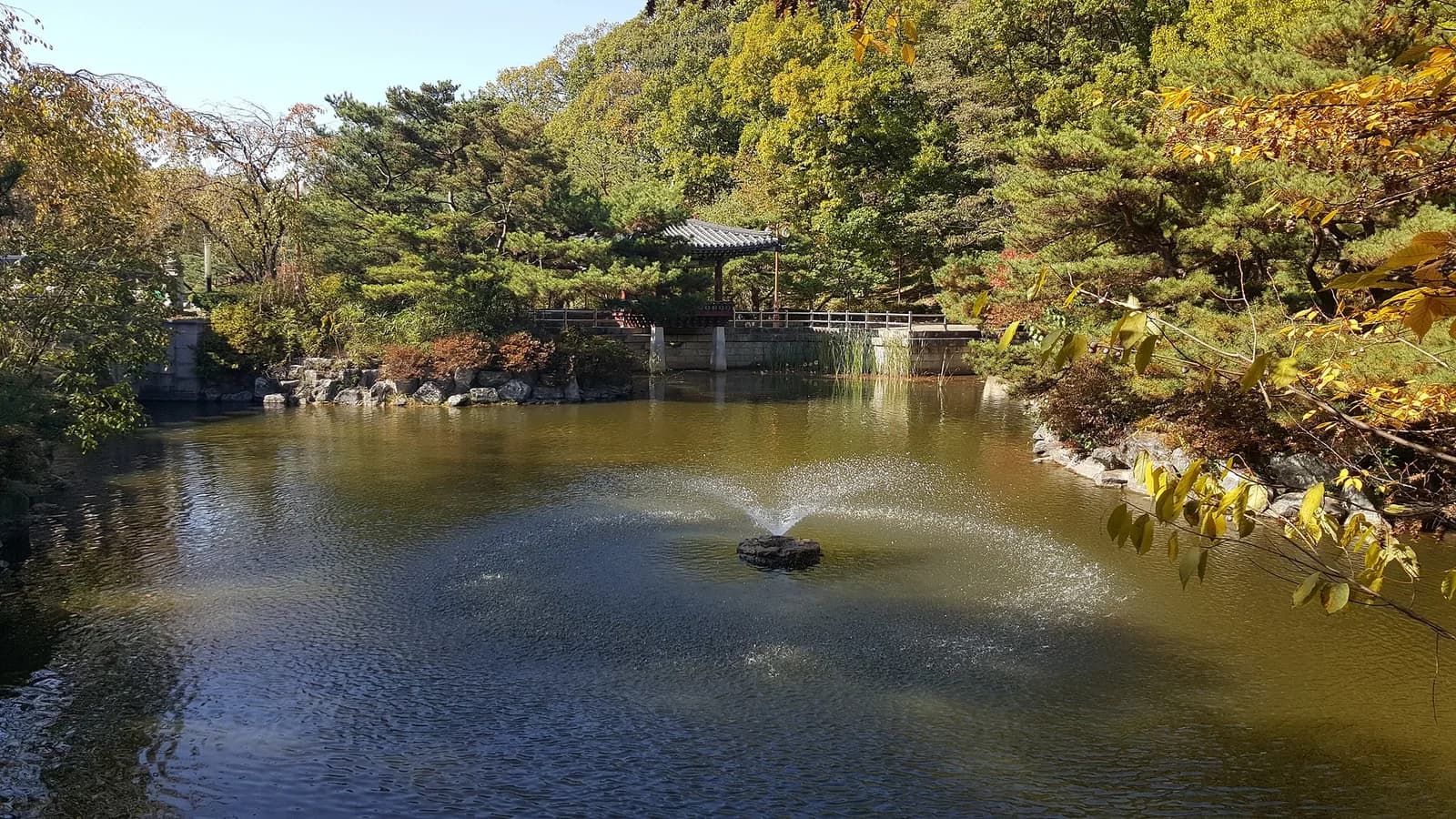
Bundang's signature is its parks, and the headliner is 분당중앙공원 (Bundang Central Park) — a genuine landscaped park with a lake, a traditional pavilion, and enough autumn color to anchor an entire afternoon. (It's the photo at the top of this page.) Walk it on a Saturday and you'll see the actual texture of affluent Korean suburban life: families, strollers, retirees doing laps, the occasional wedding photo shoot. It is the opposite of a tourist set piece, which is exactly the point.
The wider district reads the same way — leafy apartment towers, good schools that families move across the country for, an easy café-and-park rhythm. Bundang is what Koreans mean when they say a place is 살기 좋은 (sal-gi joeun, "good to live in"). Not exciting. Excellent.
The honest twist: the original is turning thirty
Here's the part a brochure would skip. Bundang's pilot complex passed thirty years old in 2021, and the rest of the first-generation New Towns are right behind it. "Premium" apartments built in 1991 are now, by Korean standards, old — and Bundang is at the front of a national push to redevelop the first-generation New Towns (the 1기 신도시 재건축 debate), tearing down and rebuilding the very complexes that defined the model.
It's a strange thing to watch: the city that taught Korea how to build a New Town is now the test case for how to replace one. If you visit in the next few years, you're seeing Bundang at a hinge moment — still the polished benchmark, but with cranes starting to appear on the horizon.
The transit reality
Bundang is wired into Seoul two ways. The 신분당선 (Shinbundang Line) — the same fast line that serves Pangyo — runs through Jeongja and puts you in Gangnam in roughly 20 minutes. The older 수인분당선 (Suin–Bundang Line) threads the district's spine through its main hubs — 서현 (Seohyeon), the downtown anchor, plus Sunae, Jeongja, and Yatap.
As ever in Korea, getting there is the easy part: it's all one connected network, a single T-money card covers the ride, and a Korean map app will route you door to door (Google Maps, as always here, will not).
Is it worth your time?
Differently than Pangyo. You don't come to Bundang to understand something the way you come to Pangyo to see Korea's tech economy in one frame. You come to Bundang to relax into something.
For most travelers, it's not a destination — it's a mood, and a good one: a green, unhurried half-day. Ride out to Jeongja, walk the café street along the water, cut over to Central Park for the lake and the pavilion, and watch comfortable suburban Korea go about its Saturday. If you've spent three days being sold the country, an afternoon in Bundang is the country not selling you anything.
What it really shows you is the long game of a New Town: not the shiny launch, but the part nobody photographs — what a planned city looks like once the trees have grown in, the schools have a reputation, the cafés have regulars, and the whole thing has quietly become home. Pangyo is the bet being made. Bundang is the bet that paid off.
Next in the series, we head northwest to the New Town that leads with space instead of money: Ilsan, the lake city — and how a new express train just rewrote how far away it is.
—The Editors
Sources: 분당신도시 / 1기 신도시 — CERIK report and Korean press (Bundang pilot complex first occupied September 1991, the first of the five 1기 New Towns); Naver Green Factory — 위키백과 (completed March 2010, Bundang-gu); 1784 by NAVER and NAVER Labs (second HQ opened April 2022). Transit + geography cross-checked against the Shinbundang and Suin–Bundang line maps.
Cover: Bundang Central Park, photo by Jocelyndurrey — Wikimedia Commons, CC BY-SA 4.0. Card: Doosan Bundang Tower, photo by Ca — Wikimedia Commons, CC BY-SA 4.0.
.jpg)

Keep Reading
More Stories
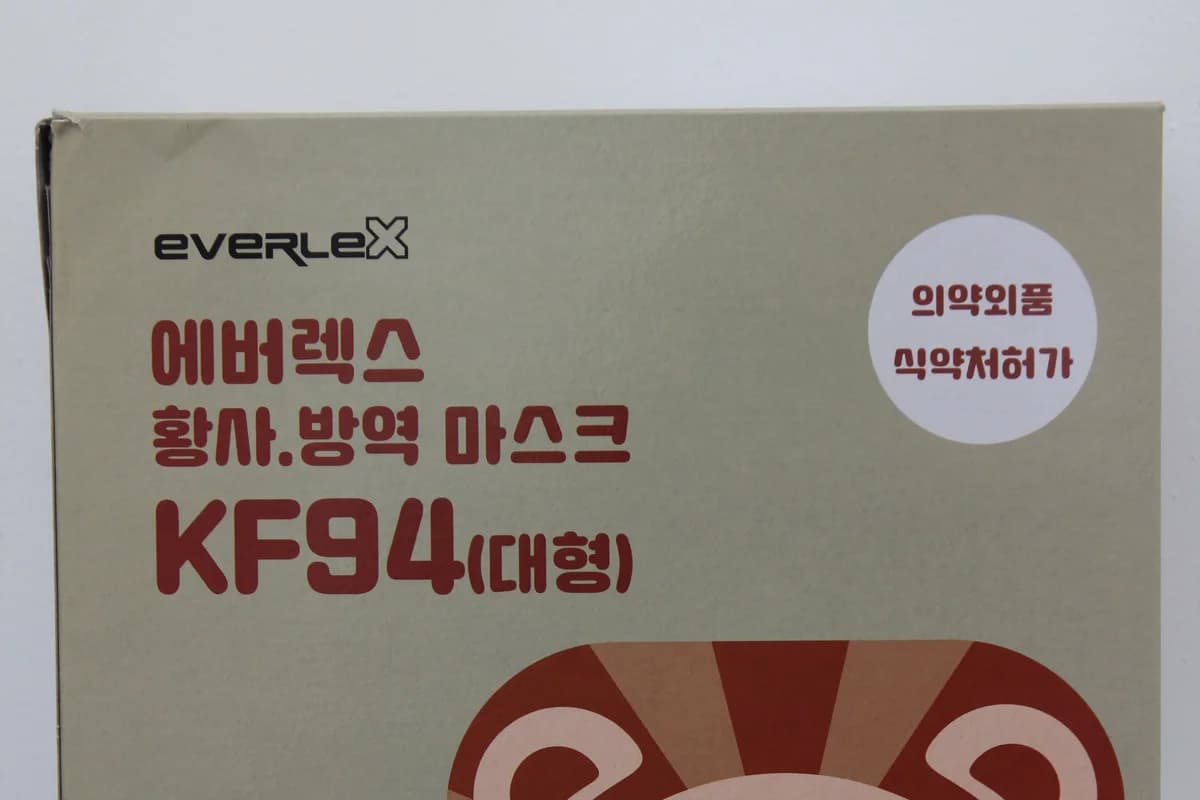
황사 Is Not 미세먼지: What Korea's Air Quality Alerts Actually Mean
English coverage treats yellow dust and fine dust as the same problem. Korea's own forecasters subtract one from the other before publishing. A guide to the two seasons, the alert thresholds, what KF94 actually certifies, and why 'it all comes from China' is a number swap.
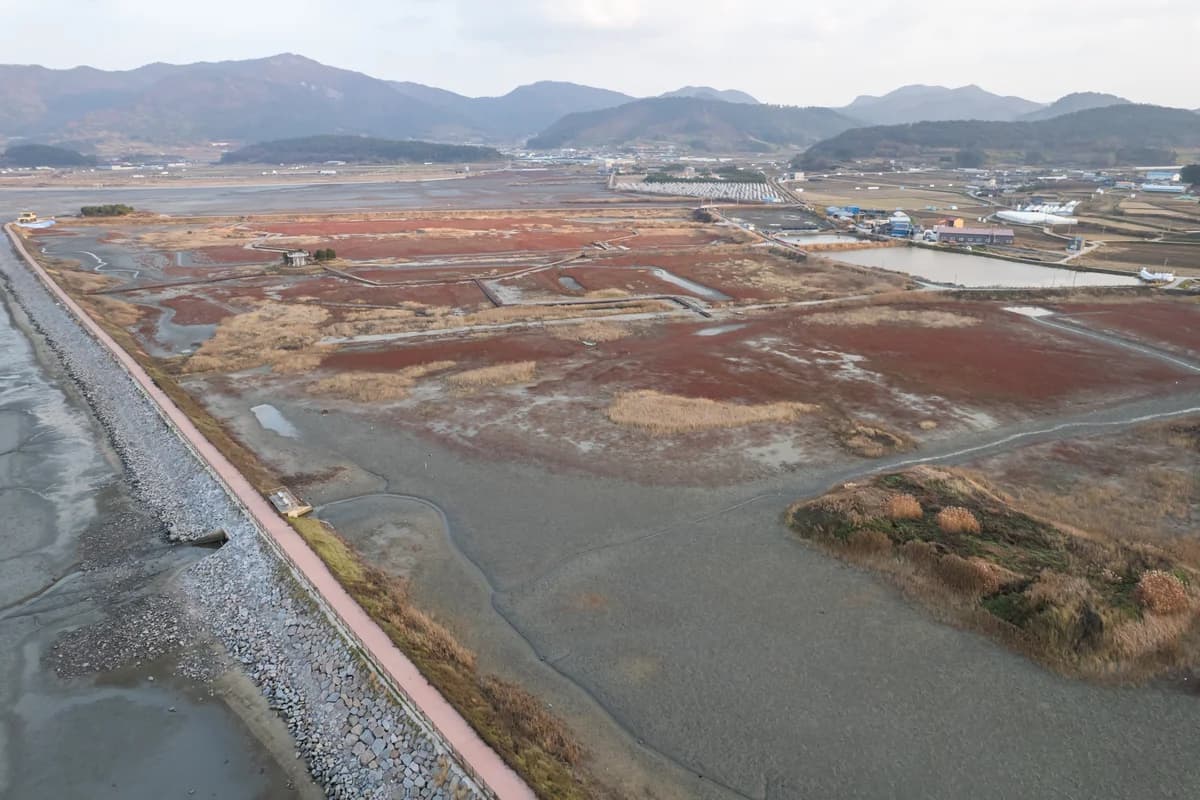
The Mud Korea Decided to Save: Getbol and the UNESCO Vote in Busan
The least Instagrammable thing Korea could nominate — a coastline of mud — is a UNESCO World Heritage site, and on July 25, 2026, in the one year Korea controlled the room, it was made bigger. A guide to getbol: the flats that feed millions of migrating birds, the women who ride wooden sleds across them, and why a country that once paved its tidal flats now enshrines them.
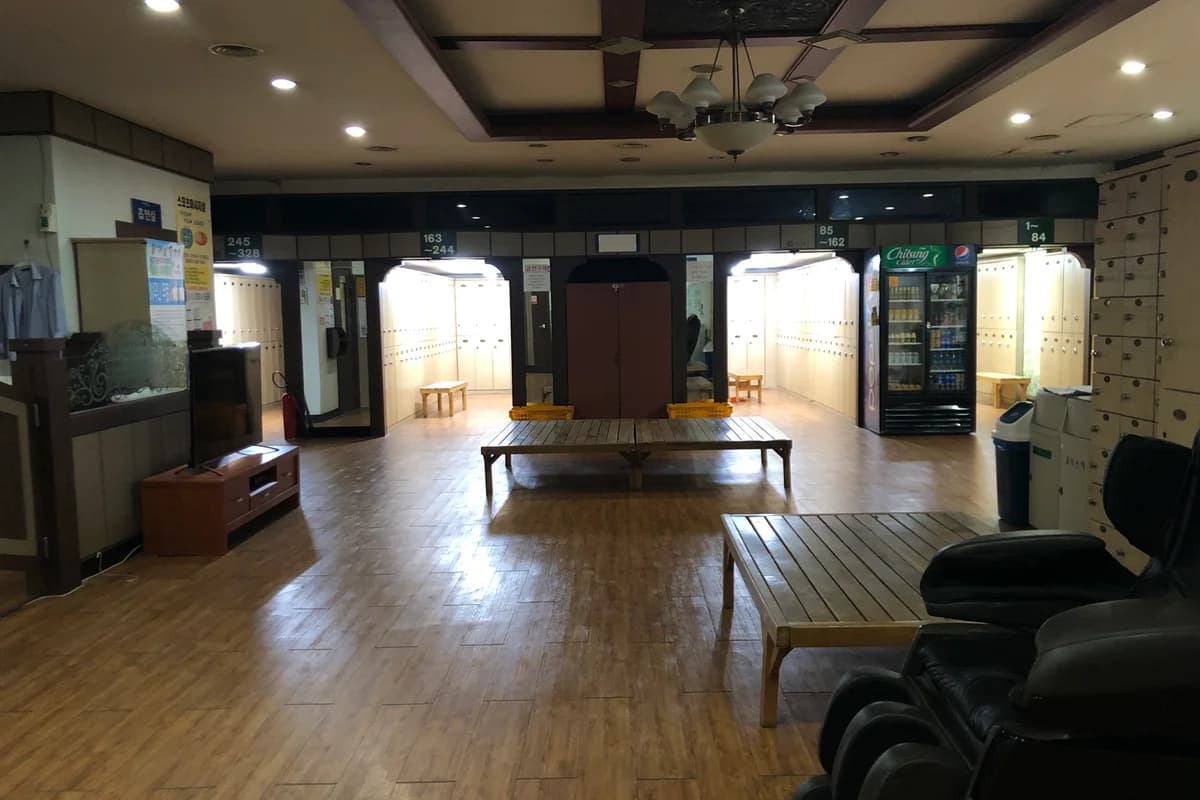
Jjimjilbang for First-Timers: How Korea's Bathhouses Actually Work
Yes, the bath part is fully nude. No, nobody cares. A step-by-step guide to the Korean spa-sauna-sleepover — the sheep-head towel, the scrub that removes a layer of you, which famous venues have quietly closed — and why the neighborhood bathhouse is disappearing even as the tourist jjimjilbang thrives.
The Weekly Dispatch
Korea, curated. Every week.
The best of K-culture, straight from Seoul. Written by people who actually live here.
Free, no spam, unsubscribe whenever.