Jjimjilbang for First-Timers: How Korea's Bathhouses Actually Work
Yes, the bath part is fully nude. No, nobody cares. A step-by-step guide to the Korean spa-sauna-sleepover — the sheep-head towel, the scrub that removes a layer of you, which famous venues have quietly closed — and why the neighborhood bathhouse is disappearing even as the tourist jjimjilbang thrives.
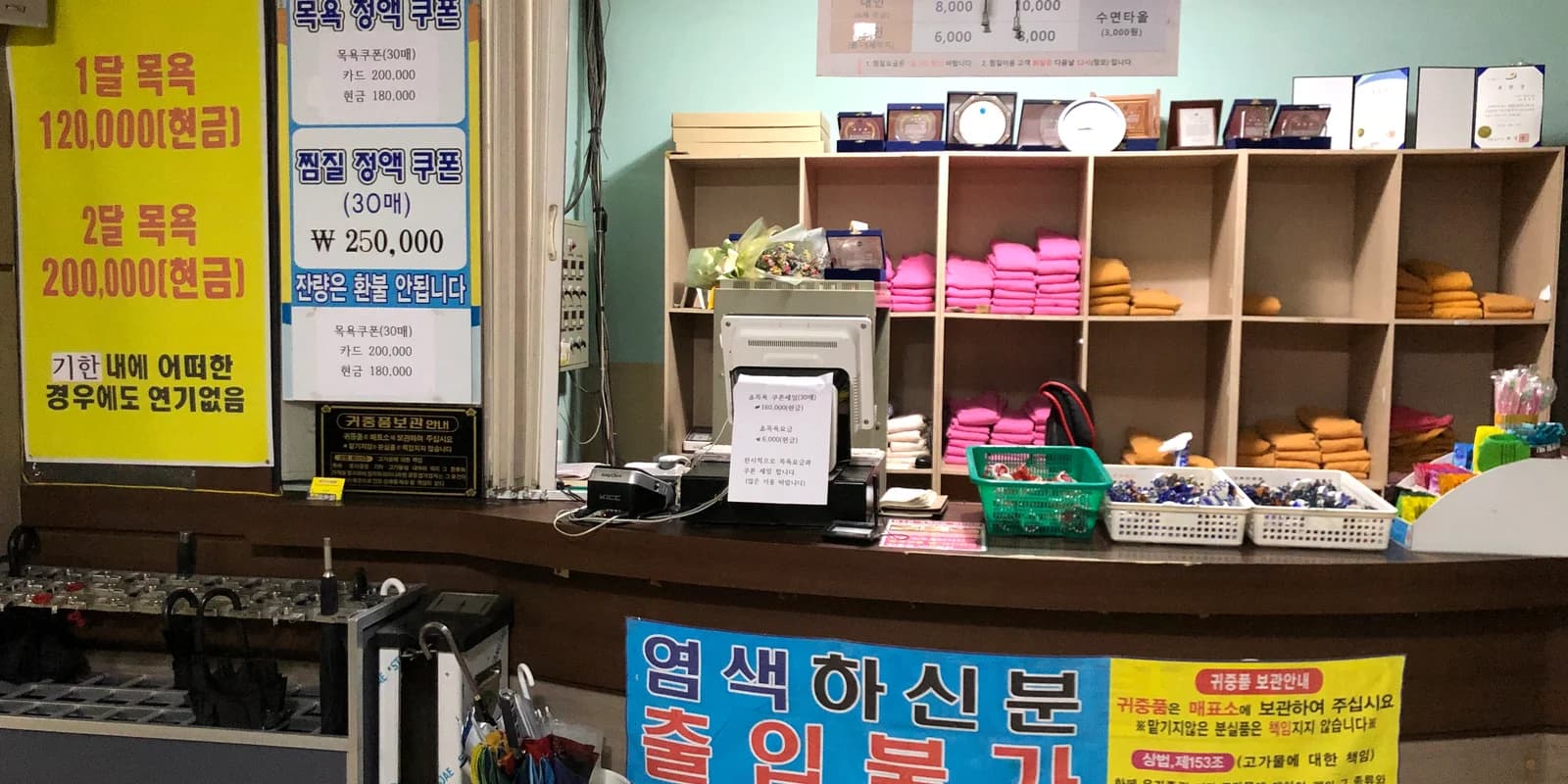
You've seen it in every K-drama: characters in matching pajama-like uniforms, towels folded on their heads like little sheep horns, cracking eggs and drinking rice punch on a heated floor. That's a jjimjilbang (찜질방) — Korea's bathhouse-sauna-lounge-sleepover complex, and one of the most Korean experiences a visitor can have for about the price of two coffees. It's also, quietly, a vanishing one: Korea has lost more than a third of its public baths this century. Here's exactly how your first visit works, what's worth knowing before you're standing in a locker room wondering what happens next — and which famous venues you should stop looking for.
The Words First
Three terms get mashed together in English, and they're not the same thing (Wikipedia, Korea Herald):
- 목욕탕 (mokyoktang) — the plain neighborhood public bath: gender-separated tubs and scrubbing stations, no frills. The old-school original.
- 찜질방 (jjimjilbang) — the modern mega-version, boomed since the 1990s: a mokyoktang-style bath zone plus a big co-ed, fully-clothed floor of themed sauna rooms, snack bars, TV lounges, and nap space. Usually open 24 hours.
- 한증막 (hanjeungmak) — the traditional dome-shaped stone kiln sauna, hot enough to bake the air. It's genuinely old: kiln sweat-bathing appears in the Annals of King Sejong in the 15th century, with separate men's and women's saunas ordered as early as 1429. Today the hanjeungmak survives as the hottest room inside jjimjilbangs.
And the famous towel hat has a name: 양머리 (yangmeori), "sheep's head," for the way the rolled ends look like curled horns (Namu Wiki). Nobody will teach you to fold one; a child nearby will be wearing a perfect specimen.
How a Visit Actually Works
The flow is the same nearly everywhere (Travel-Stained, The Soul of Seoul):
- Shoes off at the door. They go in a small shoe locker; the key often becomes your wristband.
- Pay. Expect roughly ₩10,000–26,000 depending on the venue's fanciness — SeaLaLa in Seoul charges ₩10,000 for the bath-plus-sauna floor, Busan's palatial Spa Land ₩26,000 (both current posted prices, July 2026; night entry usually costs more).
- Get the uniform. T-shirt and shorts, color-coded by gender. Your wristband is now your wallet — snacks, scrubs, and massages all charge to it; you settle up at checkout.
- The bath zone — gender-separated and fully nude. Not optional, not negotiable: swimwear and underwear are banned in the water. This is the part first-timers dread, and the honest report is that the dread lasts about ninety seconds. Nobody looks. Shower first, seated, thoroughly — going into a tub unshowered is the single gravest sin in the building. Then work the tubs: warm, hot, scalding, cold.
- The jjimjil floor — clothed and co-ed. Uniform on, join everyone else roaming the themed kiln rooms: salt rooms, ice rooms, clay ovens, and the 불가마 (bulgama) — the "fire kiln," the hottest of them all. Between rounds, lie on the heated floor with the TV murmuring.
- Stay as long as you like. Many 24-hour venues let you sleep overnight on the warm floor — entry typically covers around 12 hours, with a small hourly surcharge added at checkout if you stay longer. It remains one of Korea's great budget-lodging hacks.
The Rituals Worth Doing
- Seshin (세신) — the legendary full-body scrub. A no-nonsense professional in their underwear exfoliates you with rough mitts until gray rolls of dead skin you didn't know you had are gone. Bathhouse rates run about ₩20,000–30,000 (Korean reporting notes women are routinely charged more than men for the same scrub — a small documented controversy; Bizhankook). It is not gentle. You will feel extraordinary afterward. And no — there's no tipping, here or anywhere else in Korea.
- The snack ritual — 식혜 (sikhye), sweet chilled rice punch, plus 맥반석 계란 (maekbanseok gyeran), eggs slow-baked amber in the sauna's heat (Visit Seoul). Cracking one on your forehead is technically optional and spiritually mandatory.
- The sheep hat, obviously.
The Etiquette, Compressed
Shower before every soak. Keep your small towel out of the tub water. No phones or cameras anywhere near the bath zone. Keep your voice down — this is a resting place, not a pool party. Hydrate more than you think you need to. Tattoo policies vary venue to venue — larger city venues have generally relaxed, but if you're heavily inked and headed somewhere small and old-school, it's worth checking ahead.
Where to Actually Go (Verified July 2026)
Here's where we save you from the internet, because the two most famous "tourist jjimjilbangs" in every old guide are gone. Dragon Hill Spa in Yongsan — closed since 2021 and never reopened; the building's ground floor is now restaurants (Namu Wiki, VisitKorea). Siloam Sauna near Seoul Station — closed since late 2020, its website dead, though stale listings still confidently recommend both. Skip anything that sends you there.
What's actually open, verified against official pages this month:
- Spa Land Centum City (Busan) — the cathedral of jjimjilbangs, inside Shinsegae's record-breaking department store. ₩26,000, open 8:00–23:00, four-hour sessions (official). Worth planning a Busan afternoon around.
- Sparex Dongdaemun (Seoul) — 24-hour, in the basement of Good Morning City mall next to the night-shopping district; closed during COVID, now back (Visit Seoul). The classic budget overnight.
- SeaLaLa (Yeongdeungpo, Seoul) — water park + jjimjilbang combo, ₩10,000 for the sauna floors (official).
- Aquafield (Hanam / Goyang, near Seoul) — the sleek modern iteration inside Starfield malls (official).
Or do the most local thing of all: walk into any neighborhood jjimjilbang with the ♨ symbol out front. No English website is a feature, not a bug.
The Disappearing Bathhouse
Enjoy all this while it lasts, because the numbers are stark. Korea had 8,904 public baths in 2000; by 2025 the count was down to 5,656 (Korea Herald, April 2026). Seoul is starker still: 510 bathhouses were operating in 2025, down 71% from the 1995 peak of 1,764, with 242 closing during the pandemic years alone (SisaJournal, March 2026). The killers are unglamorous: heating a building full of hot water became brutal after energy prices spiked (one owner reported ₩5 million a month in utilities), COVID emptied the tubs, every new apartment has its own bath, and the land under an old mokyoktang is usually worth more as something else.
What's left is a split market: big, shiny destination spas for tourists and weekenders — and a thinning line of neighborhood bathhouses kept alive by elderly regulars and, in some cities, municipal bath vouchers for seniors. The jjimjilbang is part of Korea's whole bang culture — the national genius for renting a shared room to do one specific thing in — and like the DVD bang before it, the humble version is quietly becoming history while the premium version books out on weekends.
So go. Take a first-timer's Seoul itinerary, budget one evening, surrender your clothes and your schedule, fold the sheep hat, crack the egg. Ninety seconds of dread, then one of the things tourists most often get wrong about Korea turns into the story you tell everyone when you get home.
Prices, hours, and venue statuses are verified against official venue pages and dated Korean press as of July 18, 2026 — including the closures of Dragon Hill Spa and Siloam Sauna, which many travel listings still recommend. Bathhouse-count statistics are from the Korea Herald (April 2026) and SisaJournal (March 2026) as dated in-text. Overnight surcharges and tattoo policies vary by venue and are described accordingly. Images are real, license-clean photographs of a working Korean jjimjilbang in Wonju, Gangwon-do (2020), all CC0 via Wikimedia Commons: homepage/hero — a bulgama kiln room painted with a traditional farming mural; cover — the front counter with price boards and folded uniforms; listing card — the numbered locker hall. All by Choikwangmo9, released to the public domain (CC0). No bathing-area photographs are used.
Keep Reading
More Stories
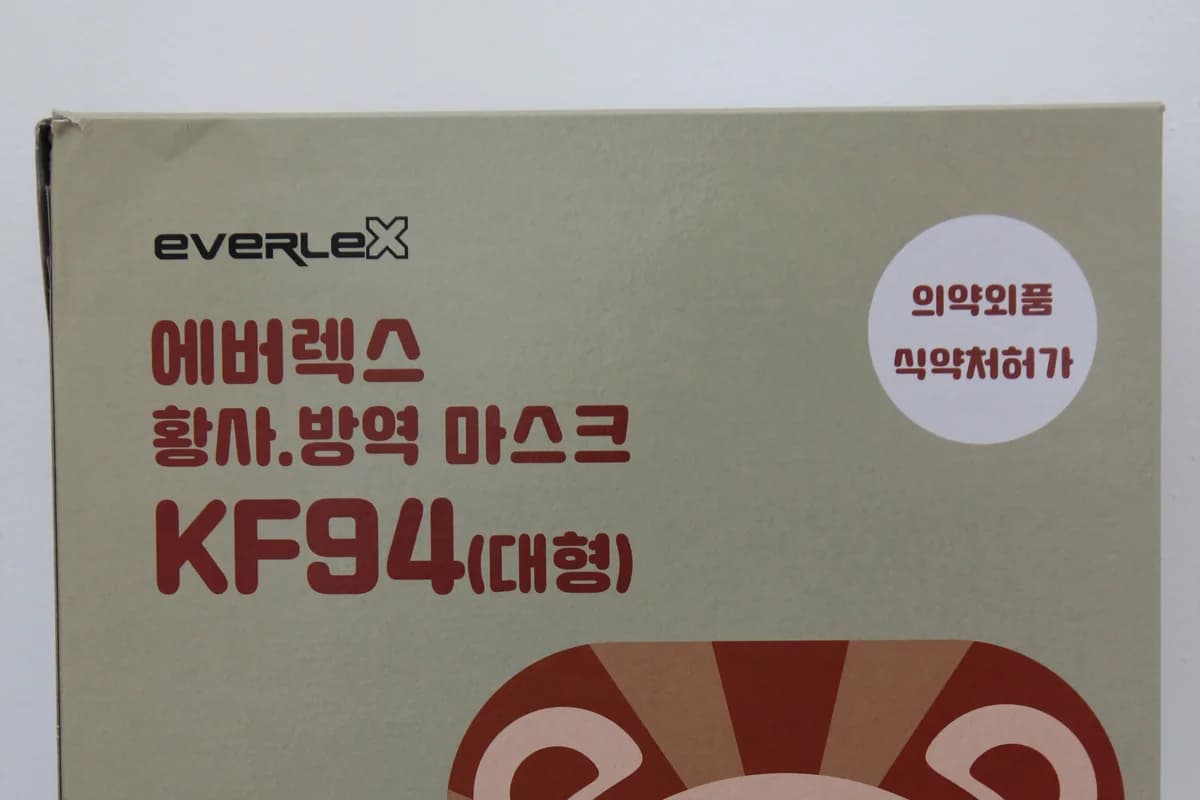
황사 Is Not 미세먼지: What Korea's Air Quality Alerts Actually Mean
English coverage treats yellow dust and fine dust as the same problem. Korea's own forecasters subtract one from the other before publishing. A guide to the two seasons, the alert thresholds, what KF94 actually certifies, and why 'it all comes from China' is a number swap.
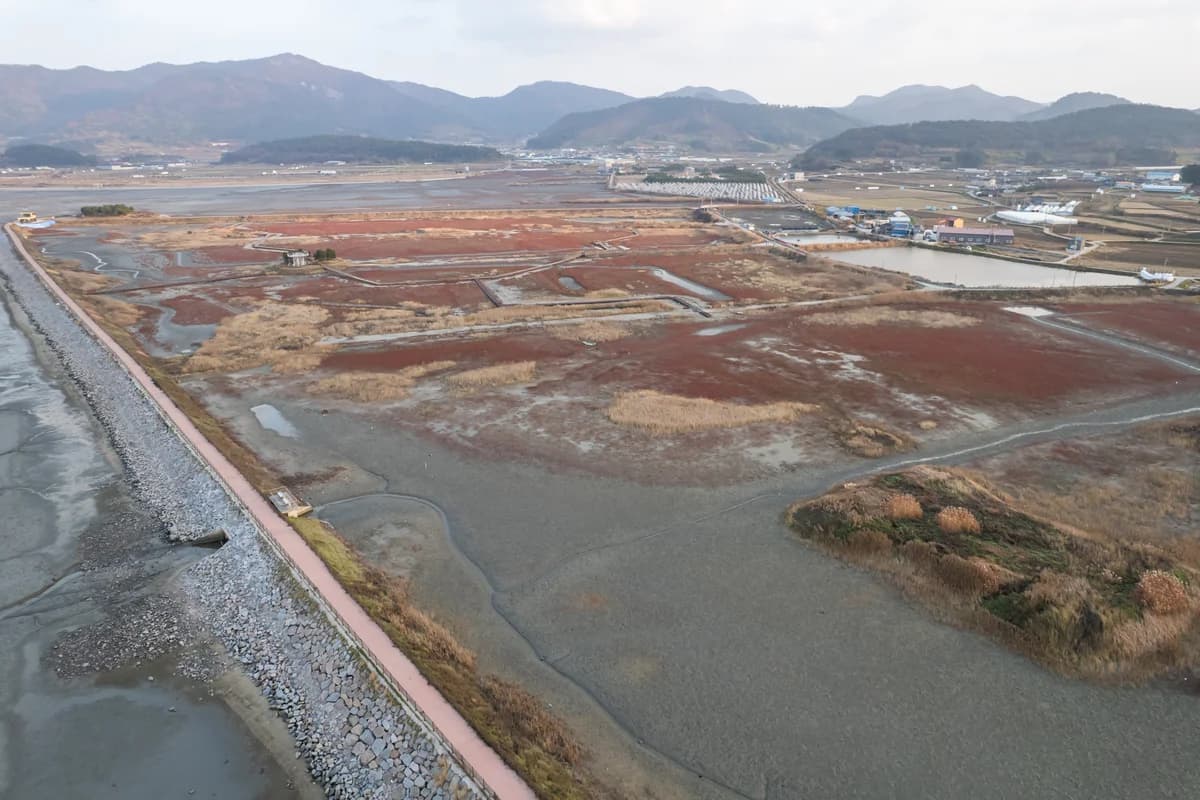
The Mud Korea Decided to Save: Getbol and the UNESCO Vote in Busan
The least Instagrammable thing Korea could nominate — a coastline of mud — is a UNESCO World Heritage site, and on July 25, 2026, in the one year Korea controlled the room, it was made bigger. A guide to getbol: the flats that feed millions of migrating birds, the women who ride wooden sleds across them, and why a country that once paved its tidal flats now enshrines them.
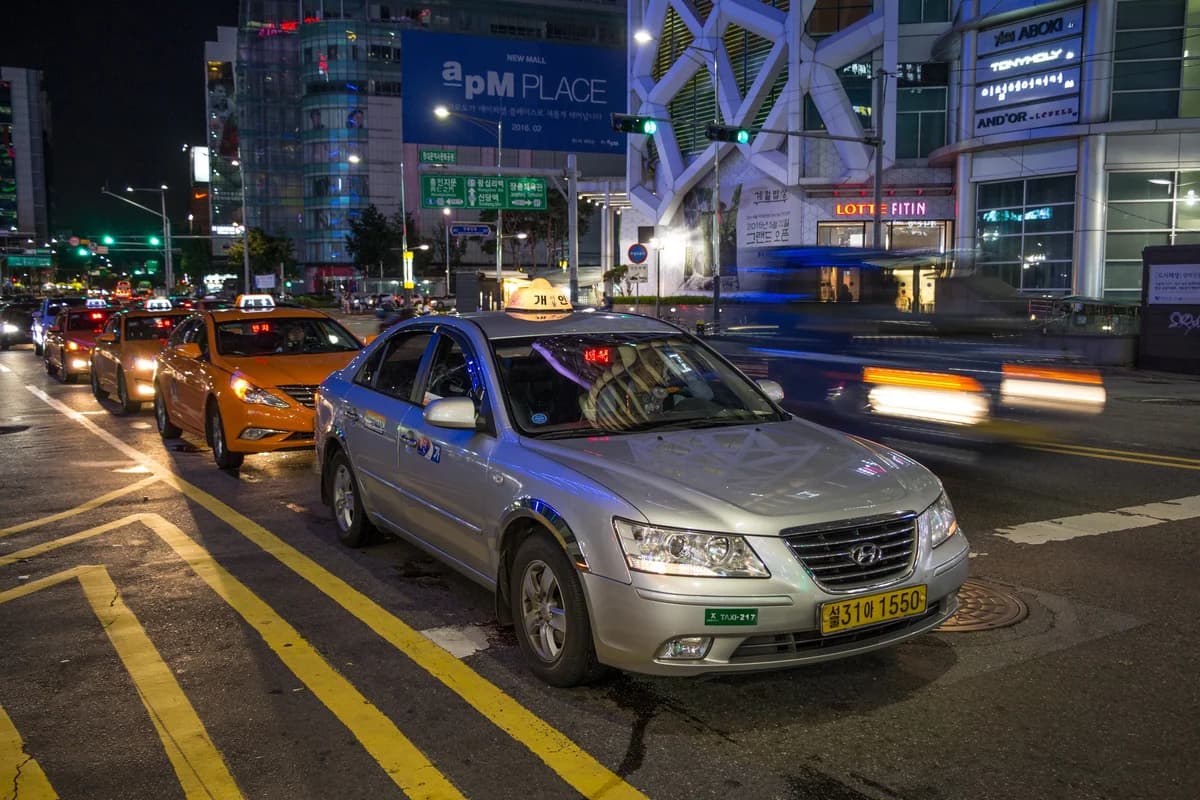
Do You Tip in Korea? The Honest Answer
Short version: no. Korea doesn't have a tipping culture — not at restaurants, cafes, or taxis — and you're not being rude by not tipping. Here's the honest, reassuring guide: why Korea doesn't tip, the one 'service charge' you'll see and shouldn't panic about, the rare times a tip is okay, and what actually happens if you try.
The Weekly Dispatch
Korea, curated. Every week.
The best of K-culture, straight from Seoul. Written by people who actually live here.
Free, no spam, unsubscribe whenever.