The House of LG: Korea's Gentleman Chaebol
How a Korean cosmetics shop and a radio factory grew into a battery-and-display empire — and why the Koo family's obsession with 'harmony,' single heirs, and quiet exits made LG the least dramatic dynasty in Korea's most dramatic business tradition.
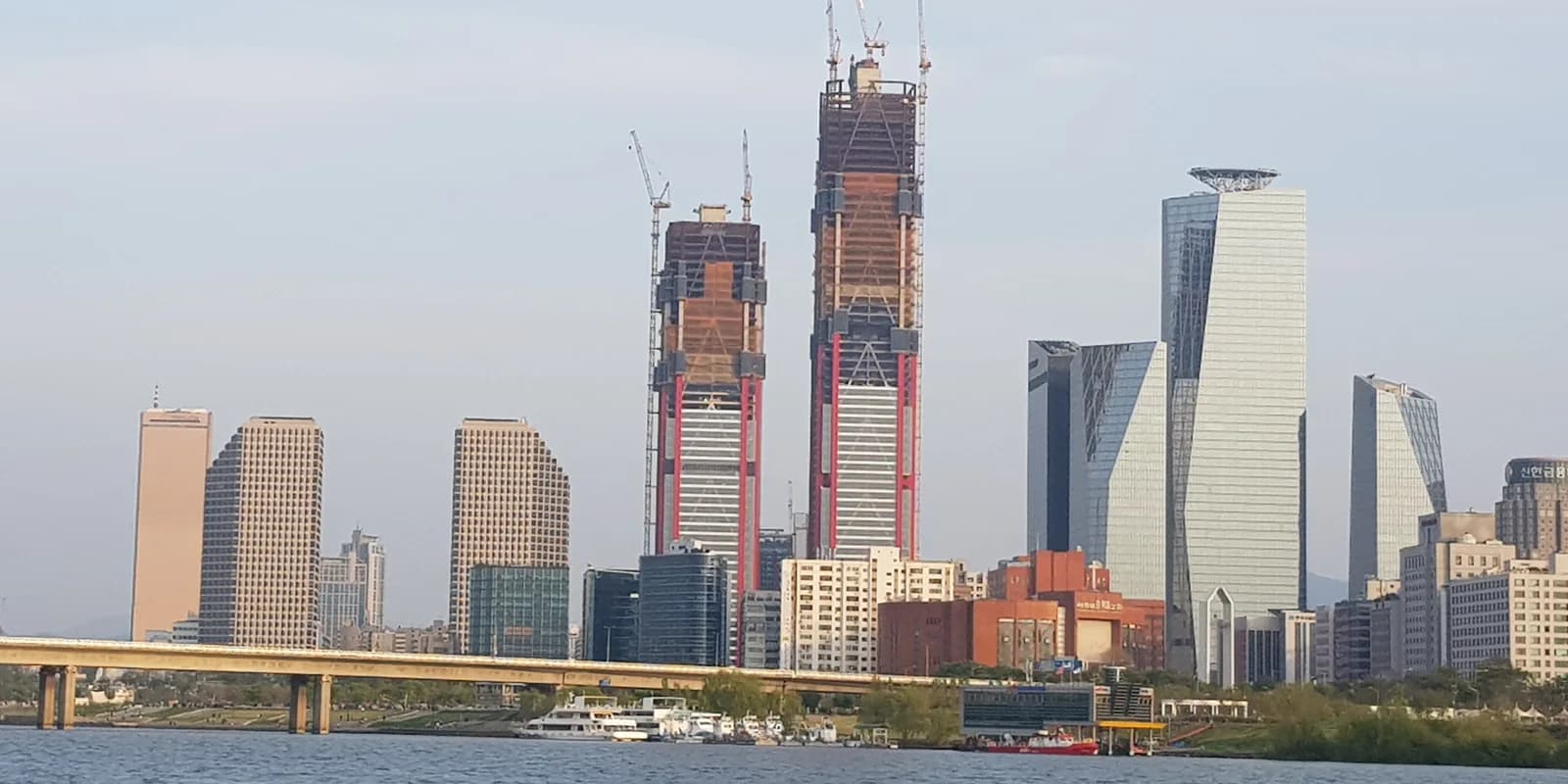
Every other great Korean business house has a courtroom scene. The Lees of Samsung have their bribery trials and pardons; the Chungs of Hyundai had a "War of the Princes" that split the empire; even the quieter Cheys of SK have convictions and a presidential pardon on the record. And then there is LG — the fourth-largest chaebol, the maker of the television on your wall and the battery in your car, and the one dynasty that mostly stays out of the headlines.
That is not an accident. It is a strategy — one rooted in a single Korean word the founding family has treated less as a slogan than an operating system: 인화 (inhwa), "harmony among people." This is the story of the House of LG, and how being boring on purpose built a battery-and-display empire.
Lucky Cream and the First Korean Radio
LG did not begin with electronics. It began with a face cream. In 1947, Koo In-hwoi (구인회, 1907–1969) founded Lak Hui Chemical Industrial Corp. (락희화학) — "Lak Hui," pronounced "Lucky" — and its first product was Lucky Cream, one of the first Korean-made cosmetics (LG, Wikipedia). To make the cream's jar lids, the company moved into plastics in 1952 — the first Korean firm to do so — and then, sensing where the future lay, spun up an electronics arm.
That arm was GoldStar, founded in 1958 — Korea's first electronics company — and it proceeded to build the country's technological firsts one after another: the first Korean radio (the A-501) in 1959, the first Korean electric fan (1960), refrigerator (1965), and television (1966) (Encyclopedia.com). If Samsung and Hyundai built the idea of "Made in Korea" out of chips and ships, GoldStar built it out of the appliances that filled ordinary Korean homes for the first time. For a generation of Koreans, modern life arrived with a GoldStar label on it.
Two Families, One Company
Here the LG story takes its defining turn — and it is a turn toward partnership, not conquest. Koo In-hwoi did not build alone. From the very first 1947 venture, he was backed by a co-founder: Huh Man-jung (허만정, 1897–1952), who put in capital and placed his son into the management of the business (hankyung, GS Group). The two families — linked by marriage and by trust — then co-managed the group side by side for more than half a century.
Think about how unusual that is. Korea's chaebol are famous for family feuds, for brothers suing brothers over a father's throne. LG's founding DNA was the opposite: two clans, the Koos and the Huhs, running one empire together for fifty-seven years without blowing it apart. That collaborative instinct is the quiet key to everything that makes LG different.
인화 — Harmony as a Business Plan
The value has a name. 인화 (inhwa), "harmony among people," is LG's documented founding principle, and Koo In-hwoi meant it literally — he grew up in a household of four generations under one roof and built the same ethic into his company: harmony among customers, employees, and partners (Korea Herald). One maxim attributed to him captures the worldview: "As fish can't live out of water, companies should think of the society they belong to."
Out of that came LG's reputation as the "gentleman chaebol" — professionally managed, comparatively scandal-light, the group that competes hard and litigates little. It is a characterization, not a metric, and LG is not entirely controversy-free (more on one family dispute below). But the reputation is real, and it is earned by decades of behaving differently from its rivals.
From Lucky-Goldstar to "Life's Good"
The two halves formally became one in 1983, when Lucky and GoldStar merged into the Lucky-Goldstar Group. Then, in 1995 — reaching for a global identity that didn't require foreigners to parse "Lucky-Goldstar" — the group renamed itself LG, adopted its now-familiar magenta "Face of the Future" symbol, and eventually the tagline "Life's Good" (LG Corp, Wikipedia). The rebrand coincided with a generational handover: Koo Bon-moo took the chairmanship in 1995, the third-generation leader of the house.
The Amicable Divorce
Which brings us to the most LG event imaginable — a corporate breakup with no lawsuit. By the early 2000s, the Koo and Huh families decided, after fifty-seven years, to separate. And they did it the way almost no chaebol ever has: cleanly. In January 2005, the Huh family took their businesses and formed the GS Group — GS Caltex (energy), GS Retail (the GS25 convenience-store chain), GS E&C (construction) — while the Koo family kept LG's electronics, chemicals, and telecom (GS Group). It was widely described as a "beautiful companionship" ending in a "good goodbye": no courtroom, no public war, a rare no-drama chaebol split. (An earlier spin-off, around 2003, had already peeled the cable-and-metals businesses off into the LS Group under a cousin branch — the same pattern of relatives quietly hiving off while one line keeps LG.)
One Heir, Always
If harmony is LG's first rule, its second is single-heir succession — male primogeniture, the eldest son takes LG, and everyone else steps back or spins off (The Investor). The chairman line runs clean: founder Koo In-hwoi → Koo Cha-kyung (1969–1995) → Koo Bon-moo (1995–2018) → Koo Kwang-mo (born 1978, chairman since June 2018) (Wikipedia, Koo Bon-moo).
But that rule ran into tragedy, and the family bent everything to preserve it. Koo Bon-moo's only biological son died young, in 1994. To keep the single male line intact, Bon-moo legally adopted his nephew, Koo Kwang-mo, in 2004 — a practice with deep roots in Korean lineage tradition (Forbes). When Bon-moo died in 2018, the adopted heir took the chair.
The succession did produce LG's rare public dispute — and here the record matters. After 2018, Bon-moo's widow and two daughters sued Koo Kwang-mo (filed 2023), seeking to reopen the division of his LG holdings; the court dismissed the suit, upholding the original settlement (Korea Herald, Korea Times). It is an inheritance disagreement resolved in court — litigation record, not wrongdoing — and, by chaebol standards, a remarkably contained one.
What LG Makes Now
The empire the quiet dynasty runs today rests on three pillars, all descended from that 1947 cream jar.
Displays and OLED. LG Electronics posted record annual revenue of about ₩84.2 trillion in 2023 (LG). Its signature is the OLED television: LG says it has led the global OLED TV market for over a decade, holding more than half of OLED TV shipments in the first half of 2023 (a company figure, via Omdia) — and its sister company LG Display is the dominant maker of the large white-OLED panels that even some rivals' TVs are built on.
Batteries. The pillar that may matter most this century is LG Energy Solution, spun off from LG Chem in December 2020. Its January 2022 IPO raised about ₩12.75 trillion (~$10.7 billion) — the largest ever in South Korea, more than doubling the previous record, and it debuted worth roughly $98 billion, briefly the country's second-most-valuable listed company (Al Jazeera, Forbes). LGES is consistently among the world's top EV-battery makers — ranked third globally for full-year 2023 behind China's CATL and BYD, and long the largest maker outside China (SNE Research). The batteries in a great many of the world's electric cars trace back to that Korean face-cream company.
And a famous subtraction. In 2021, LG did something few conglomerates ever do: it quit a business it was losing. After roughly six straight years of losses, LG Electronics shut down its smartphone division worldwide (announced April 5, wound down by July 31) and redeployed toward EV components, robotics, and AI (CNN). LG had once been a top-three global handset maker; it walked away with characteristic lack of drama, took the loss, and moved on.
The Quiet Dynasty
Step back and LG's whole story rhymes with that one decision to quit phones: know what you are, don't fight wars you needn't fight, take the boring, harmonious path. The Koos built an appliance-and-electronics empire and then a battery-and-display one; they shared a company with in-laws for half a century and split without a courtroom; they kept a single heir through adoption and stayed, mostly, out of the scandal sheets that define their rivals.
In Korea's most dramatic business tradition — the chaebol, forged in feuds and pardons and princely wars — LG is the house that decided drama was a cost, not a currency. Its plan for the next century looks a lot like the last one: make the things in everyone's home and car, keep the family line clean, and keep winning by staying, resolutely, the least interesting dynasty in the room. 인화, still.
Homepage/hero: LG 4K Curved OLED TVs at a trade show — photo by Maurizio Pesce, Wikimedia Commons, CC BY 2.0. Listing card: LG smart washing machines — photo by LG Electronics (LG전자), Wikimedia Commons, CC BY 2.0. Cover: Yeouido, Seoul's financial district and LG's home (the LG Twin Towers stand among these buildings) — photo by Ox1997cow, Wikimedia Commons, CC BY 3.0. Revenue, market-share and IPO figures are dated in-text and drawn from the linked sources; the post-2018 family suit is described as litigation record.


Keep Reading
More Stories
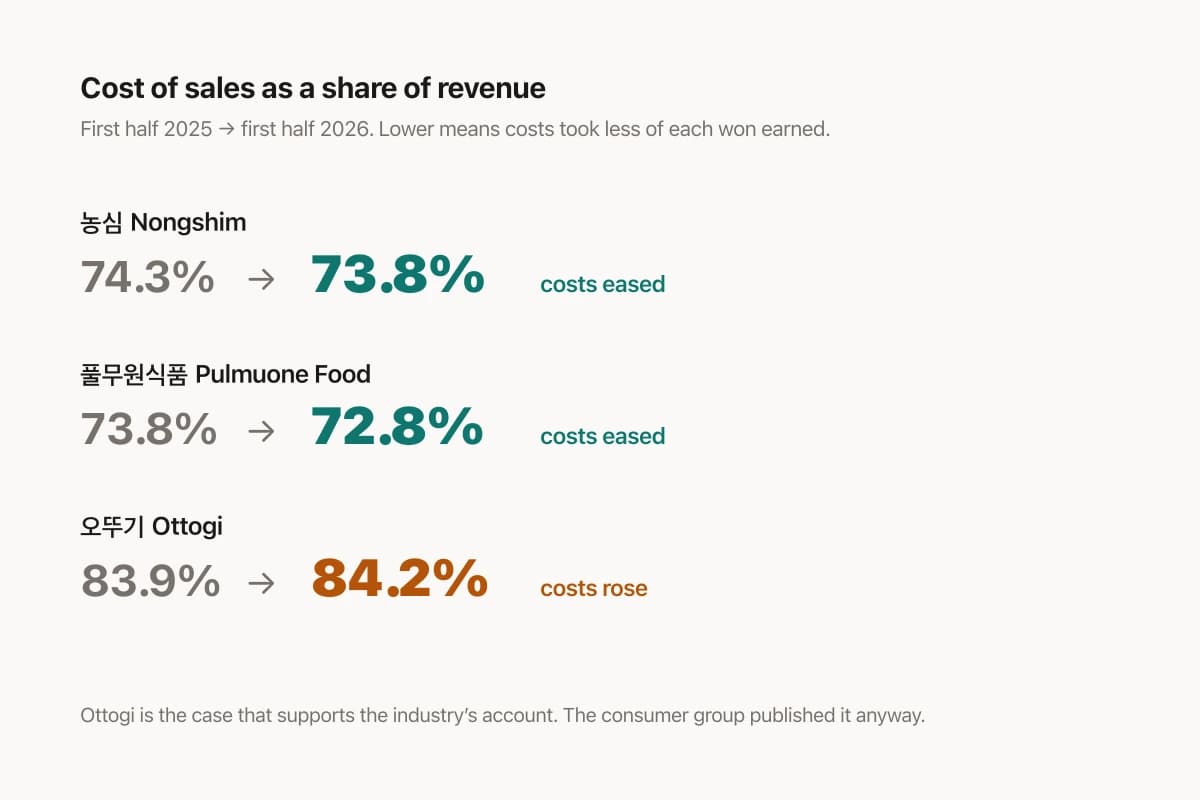
In April, Nongshim Cut Prices to Help With Inflation. In August It Raised Them, Using the Same Sentence.
Korea's biggest noodle company cut sixteen products in the spring, framed as joining the government's price-stability drive. Four months later it raised forty-three, framed as joining the government's price-stability drive. The products it cut are precisely the ones it left alone in August — and its own filings show the cost pressure it blames has not yet reached its margins. The awkward part is that the cost pressure is real.
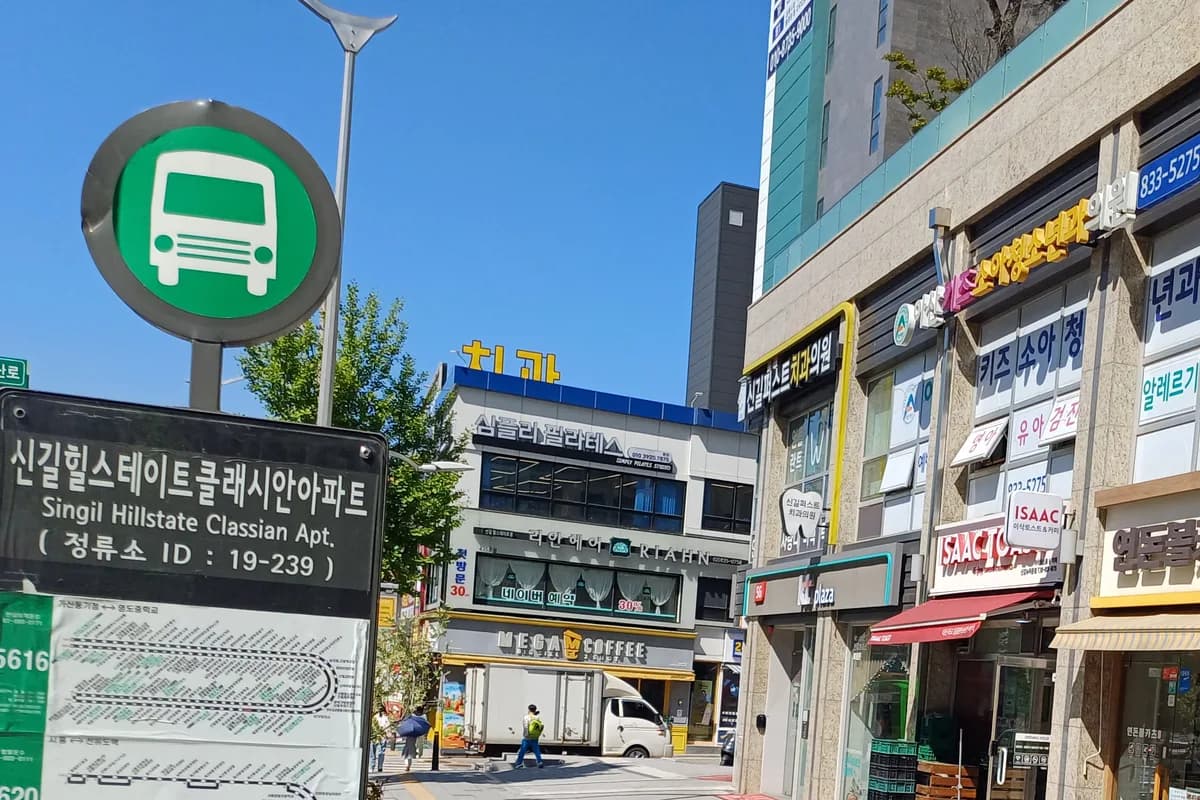
Korea's Longest Apartment Name Is 25 Characters — Seven Longer Than the Joke
Everyone says the names got long so mothers-in-law couldn't find the address. Twenty years of Korean and English coverage repeat that, and not once does anyone say it in the first person. Here is what actually happened: a decoder ring for 센트럴 and 포레, a Swedish word from a company with no Swedish business, and a 2021 study showing the thing residents vote hardest for doesn't work.
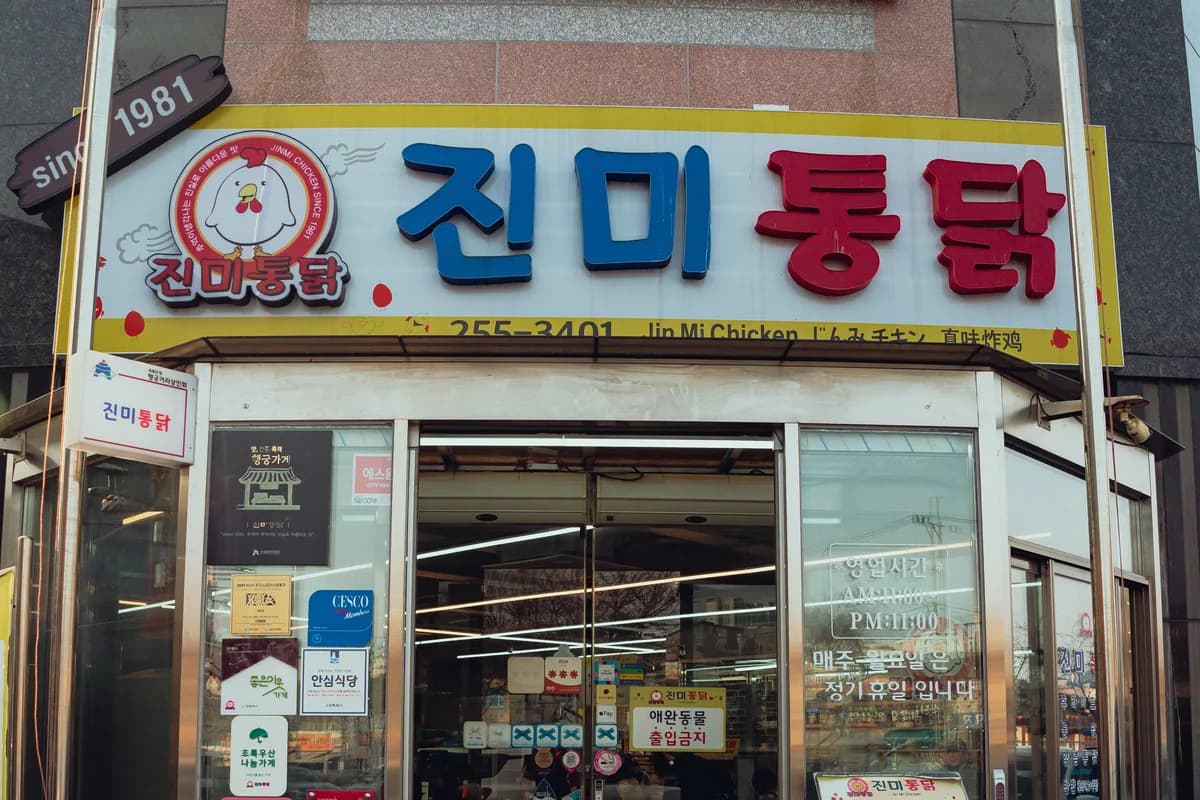
Korea Has Fewer Chicken Shops Than McDonald's Has Restaurants — the Famous Claim Was Counting Beer Halls
The number everyone quotes comes from a 2019 bank report whose own footnote says it includes 호프/통닭 licences and differs from the official count. On the like-for-like series the comparison is now the wrong way round. Four government bodies count Korean chicken shops four ways, two of them moving in opposite directions in the same year — and a decree amended last week finally requires the shops that closed to appear in the revenue forecast you're handed before you sign.
The Weekly Dispatch
Korea, curated. Every week.
The best of K-culture, straight from Seoul. Written by people who actually live here.
Free, no spam, unsubscribe whenever.