The Only Thing North and South Korea Own Together
In 2018 UNESCO did something it had never done: it took two separate national applications — one from Pyongyang, one from Seoul — and welded them into a single listing. Both would have passed on their own. The merge was chosen, not needed. And the two countries cannot actually wrestle each other: one fights on sand, the other on mats, and there has been no exchange between them since.
Two men kneel down facing each other in sand.
They press their right shoulders together. Each reaches around the other: right hand onto the cloth band at his opponent's waist, left hand onto the band around his opponent's thigh. Both grips are the same. Neither man has an advantage, and neither is trying to get one.
Then, still holding on, they stand up together.
Only now does the bout exist. There was no charge, no circling, no scramble for a hold. 씨름 — Korean wrestling — hands out its grip before the fight starts, symmetrically, and the entire contest happens from that grip.
And here is the rule that makes it unlike almost every wrestling tradition on earth: there is no ring-out. The ring is a raised circle of sand eight metres across. If both men let go of the band, the bout restarts. If they are shoved off the edge, the bout restarts. If the attacking wrestler has so much as one foot outside the circle when he lands his throw, the win is void.
You cannot push a man out of ssireum. You can only put him down.
The Band Is the Sport
The cloth is a 샅바, and it is the reason for everything above. Regulation 샅바 is cotton — 광목, sixteen-count, full width — in blue and red, at half width for primary schoolchildren, and adjustable in length to the wearer.
Because both wrestlers hold identical grips from a dead stop, ssireum cannot be won by grip-fighting or by momentum. It is won by unbalancing a man who is braced, holding you, and expecting it. Which is why the technique catalogue is enormous: fifty-four techniques were formally codified in 1984, in four families — waist, leg, hand, and mixed.
The foundational one is 배지기, a hip throw. Its most spectacular variant, 들배지기, lifts the opponent clear off the sand on the hip and turns him. Our favourite is 호미걸이, which is named after the 호미 — the small curved Korean hand hoe — because that is what your heel does to his ankle: hooks it and drags, while your upper body pushes the other way.
You lose the instant any part of you above the knee touches the ground. Choking, twisting the arm, headbutting, kicking, punching, covering the eyes or obstructing play all forfeit the bout — and the wrestler's eligibility for the rest of the tournament.
One historical wrinkle that matters, because it explains why "traditional" is doing some work here: there used to be two ssireums. 왼씨름 and 오른씨름 — left-side and right-side, differing in which limb takes which grip — were genuine regional variants, mapped by the Joseon Ssireum Association in a 1927 survey: the left form in the north and east, the right form in Jeolla and Gyeonggi. In 1972 the Korea Ssireum Association unified the sport on the left form alone. Today "ssireum" means 왼씨름. Half the tradition was standardised out of existence within living memory.
The Paperwork
Now the reason ssireum is on this page at all.
In March 2015, the Democratic People's Republic of Korea submitted a nomination to UNESCO's Representative List of the Intangible Cultural Heritage of Humanity, for Ssirum (wrestling) in the Democratic People's Republic of Korea.
In March 2016, the Republic of Korea submitted its own, for Ssireum, traditional wrestling in the Republic of Korea.
Two states that do not recognise each other, filing separately, on the same sport, one year apart. The North's file was referred back at the Committee's 2016 session in Addis Ababa for further information, and resubmitted in March 2017.
Then the diplomacy. The two sides had exchanged an intention to try for a joint listing back in July 2014, at a regional heritage meeting in Ulaanbaatar, and nothing had come of it. In the first half of 2018 — the year of the inter-Korean thaw, with the Panmunjom Declaration signed on 27 April — Seoul proposed a joint bid to Pyongyang. On 16 October 2018, President Moon Jae-in met UNESCO's Director-General Audrey Azoulay in Paris and raised it. Both governments then wrote to her separately, each requesting joint inscription.
On 26 November 2018, at the Committee's session in Port Louis, Mauritius, joint inscription was tabled as an emergency item and carried unanimously by all twenty-four member states. The decision records that the Committee acted "on an exceptional basis" to examine both nominations together, following the Evaluation Body's recommendation and the two states' expressed agreement. The listing is a single element: Traditional Korean wrestling (Ssirum/Ssireum), with the North's romanisation placed first.
Read that decision text carefully and the story changes shape. The Evaluation Body had recommended inscribing both files. Neither application was in trouble. Both were going onto the list that week regardless.
The merge was not a rescue. It was a choice.
One thing to be clear about, since English coverage sometimes overstates it: a shared listing across borders is not unusual. It happens routinely, and South Korea already had one — tugging rituals and games, inscribed in 2015 with Cambodia, the Philippines and Vietnam. What had never happened was the merging of two separately submitted national files into one element mid-process, between two governments with no diplomatic recognition of each other.
They Cannot Actually Wrestle Each Other
On the very day of the inscription, Korean wire coverage ran a piece under the headline "남은 모래판 북은 매트" — the South has a sand ring, the North has mats. It is worth listing what it laid out, because the single listing covers two different sports.
| South | North | |
|---|---|---|
| Surface | sand | mat |
| Dress | bare-chested | sleeveless top |
| Start | kneeling, grip, rise together | standing |
| Weight divisions | five, plus an open title | none |
| Scoring | — | a different method |
| Terminology | — | differs |
The North's national tournament is the 대황소상 전국민족씨름경기, held each September at the wrestling arena on 능라도, the islet in the Taedong River in Pyongyang, with roughly a hundred wrestlers competing in delegations of five. The eighteenth edition ran in 2022 after a two-year pandemic gap.
We should be careful here, because this is the point at which a story like this usually turns into a parable. Korean academic work on the joint inscription is unsentimental about it. There were no working-level consultations between the two sides to prepare a joint file; each applied alone. The merge was achieved politically, at the level of the Director-General. And since the inscription, no exchange of any kind has taken place between them. Measured against what a joint listing is supposed to mean, the scholarship's verdict is that the arrangement is symbolic and formal, and in substance closely resembles two separate individual inscriptions.
The listing was made over the heads of the two sports. Seven months after Panmunjom, at the high-water mark of a thaw that was finished within a year.
One Prize, Two Countries, One Live Animal
The traditional prize for winning at ssireum was an ox. Cash purses arrived with a broadcaster's tournament in 1972, starting at a million won and eventually reaching fifty million.
In South Korea today, the champion receives a 황소 트로피 — a trophy in the shape of a bull.
In North Korea, the champion of the 대황소상 receives a bull weighing over a tonne, and a bell made of gold.
Same heritage listing, same word, and one of the two countries still hands over an actual animal. There is a certain logic to it: the North's ssireum association is reportedly headed by a figure who also serves as a deputy premier and minister of agriculture, which fits an ox-and-harvest symbolism exactly.
The open title itself, 천하장사 — strongest under heaven — has an origin most English accounts get wrong by twenty-four years. It does not come from the professional league. In 1959, the newspaper 한국일보 created a national ssireum tournament for its fifth anniversary; the winner took the title 장사 and a prize bull, and the first champion went home with one ox. In October 1959, President Syngman Rhee brushed the characters 천하장사 by hand and presented the calligraphy to the paper's proprietor. It was made into the championship flag. The man who won it at the second tournament took two bulls.
The professional era's first 천하장사 tournament came on 14 April 1983, at 장충체육관 in Seoul. It was won by 이만기.
The Sport That Was Enormous, Briefly
장충체육관 became known as 씨름의 성지 — the holy ground of ssireum — and the numbers from that first professional year explain why: seven thousand spectators in the hall, and an annual attendance above 130,000.
이만기's record has never been touched. Thirty-five domestic 장사 titles — ten of them the open 천하장사, eighteen at 백두 and seven at 한라 — forty-nine including overseas competition, and a career win rate of 86.5 percent, the highest in the sport's history. He retired in March 1991 and became a university professor and commentator, and later ran for office repeatedly without ever winning a seat.
But the story that tells you what happened to ssireum belongs to the man who beat him.
On 13 March 1990, at a tournament in Seongnam, a twenty-year-old named 강호동 beat 이만기 — described in a Korean retrospective as having pressed down a man who was, at the time, like a mountain. The photograph is Kang with his arms in the air and 이만기 with his face in his hands. 이만기 stayed in the locker room.
Kang won five open titles and seven at 백두. Then, in March 1992, weeks after another championship, he walked out on his team without permission and retired. He was about twenty-two. His stated reason was that he could no longer handle how big and strong the incoming generation had become.
He was studying for coaching qualifications when the comedian 이경규 recommended him to a broadcaster. He joined MBC as a specially recruited comedian in 1993, and is now one of the most recognisable television hosts in South Korea.
The sport's biggest young star left for light entertainment five years before the money died. When it did die, it died fast: through the late 1990s and the IMF crisis, of eight professional teams, five folded, and three barely survived. The open championship ran for forty-two editions until 2004 and then was not held at all for three years. The last team with a heavy-industry parent company survived to the end of 2016, at which point its wrestlers transferred to a county council squad — which is what most teams are now. Where the 1980s had chaebol, ssireum today has municipal governments.
And the collapse has an image. In May 2017, a 장사 tournament in Boeun drew about a thousand people, most of them, in the words of the newspaper that counted them, bussed-in schoolchildren and elderly.
A Sport That Fixed Itself by Getting Smaller
Here is the least obvious and most interesting thing about modern ssireum.
From the 1990s, wrestlers arrived weighing over 200 kilograms and standing over two metres, and the sport they produced was described in Korean coverage as simply shoving with overwhelming physique. Technique wrestling — the hooks and the hip throws, the reason the catalogue has fifty-four entries — stopped paying.
So the sport started subtracting weight. The ceiling on the heaviest division has been ratcheted down repeatedly: 160 kilograms in 2011, then 150, then 145, then 140 by 2018. In July 2024 an entirely new lightest division, 소백급, was created at 72 kilograms and under.
In between, in 2019–20, a broadcaster built a series around the two lightest divisions, with sixteen wrestlers and a hundred-million-won prize. Its ratings averaged only about two percent. Its online engagement was reported as the highest of any programme on the network that season. The final was played behind closed doors in February 2020.
We would not call that a ratings recovery, and neither should anyone else. It was a social-media phenomenon around light wrestlers. But it was consequential, because the rulebook followed the audience: the giants had made the sport boring, and the sport made itself lighter on purpose.
It is a live sport today. The 2025 open championship was decided in Uiseong in late November, in a festival that also ran a division for foreign wrestlers — ssireum meeting the roughly 160 other belt-wrestling traditions that exist worldwide, from Swiss Schwingen to Senegalese Lamb.
The Ending Is in the Names
Compare it to Japanese sumo and the contrasts sharpen rather than blur. Sumo's ring is 4.55 metres to ssireum's eight. In sumo, forcing a man out wins; in ssireum it is a restart. Sumo's grip is contested throughout; ssireum's is issued before the start and identical for both men. Sumo charges from separation; ssireum rises from its knees. Sumo settles it in one bout; a ssireum final is best of five.
The oldest Korean claim on the sport is a mural on the east wall of a Goguryeo tomb at Ji'an, in what is now Jilin — late fourth or early fifth century — showing two strongmen with shoulders pressed together and an old bearded man apparently officiating. It is genuinely striking, and we would note two cautions about it. The tomb is called the Wrestling Tomb because of the painting; citing the name as evidence is citing a label modern archaeologists applied. And the historical terms for what it shows are generic ones covering force-contests that later split into ssireum and 태껸, so the mural depicts the common ancestor rather than this sport specifically. A Korean columnist has also published the reading that one of the two figures appears, from his features alone, to be a man from the Western Regions — one interpretation among several, on thin evidence, but it cuts against the tidy nationalist version.
Kim Hong-do's eighteenth-century painting 「씨름」, part of a genre album designated a National Treasure in 1970, is the better-known image: a circle of spectators around two men locked together, ink and light colour on paper, about the size of a sheet of A4.
But the detail we would end on is the weight classes.
South Korean ssireum names its divisions after the five great mountains of the peninsula, in ascending order of height: 소백, 태백, 금강, 한라, and at the top, 백두.
Which means the heaviest title in South Korean wrestling is named after Paektu — a mountain in North Korea.
They have been calling it that since long before anyone wrote to UNESCO.
For the other end of the Korean sporting spectrum — a traditional-adjacent sport with the opposite problem, winning so relentlessly that its own governing body worries about it — see how Korea came to own Olympic archery.
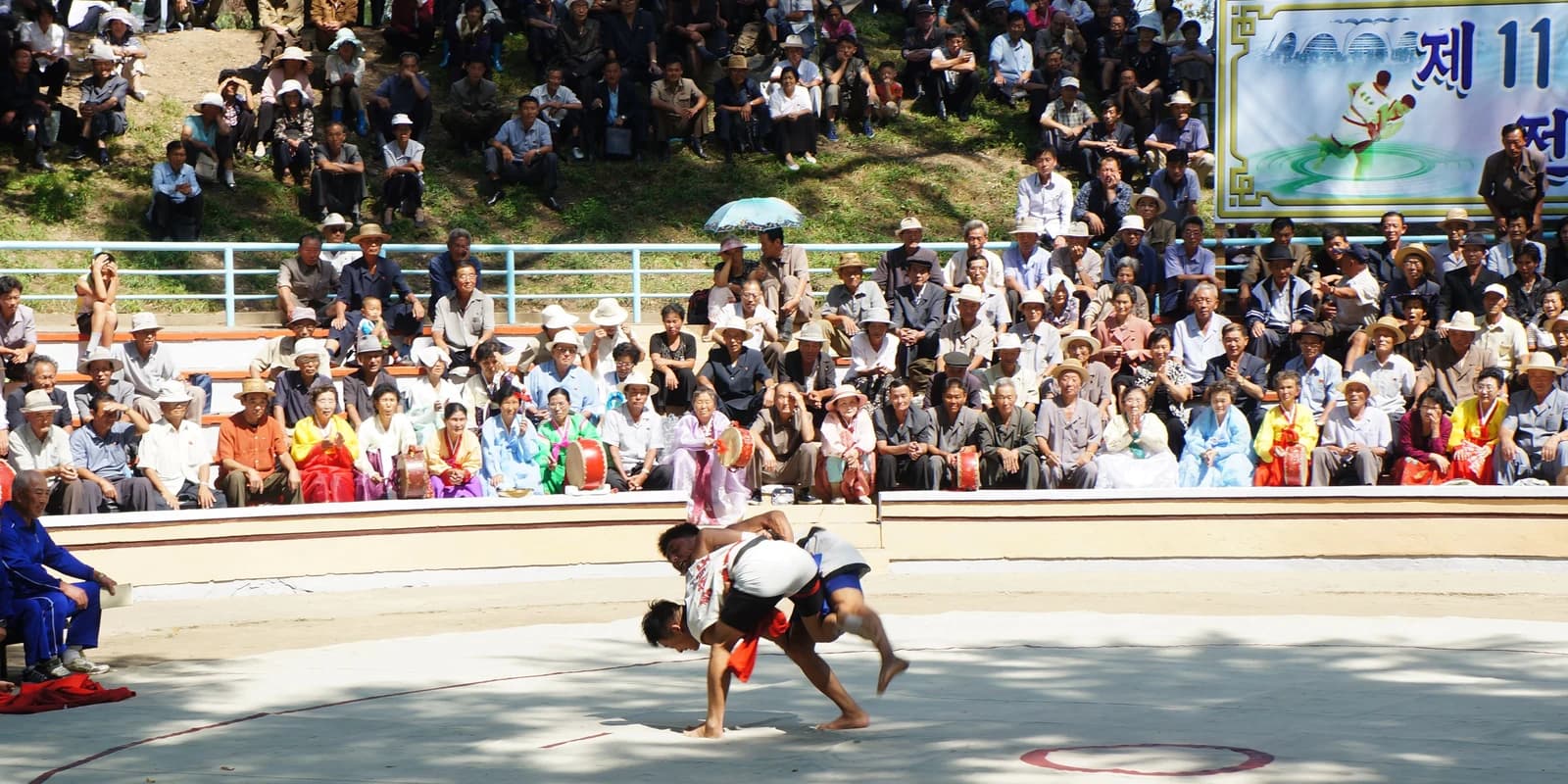
Images, cropped by us — three eras, three registers. Listing card — 김홍도, 「씨름」, from 《단원풍속도첩》, late 18th century; public domain, via Wikimedia Commons. The 엿장수 with his candy tray is kept in frame at left. Cover — a ssireum tournament in North Korea, September 2013, by Uri Tours (uritours.com), CC BY-SA 2.0 via Wikimedia Commons. It corroborates this article's own comparison: the wrestlers are in sleeveless tops on a smooth pale surface with painted rings, not bare-chested on sand. We caption it only as North Korea in September 2013 — the source does not name the venue, and while the banner in frame reads 제 11, the edition number is our reading of a partly cut-off sign. Hero — the Seogwipo ssireum competition, Jeju, 1969; 제주특별자치도, KOGL Type 0, which requires no attribution but deserves one. It is a textbook 들배지기, and at full size the 샅바 knot and the hand gripping the thigh band are both visible, which does the mechanic better than any object shot. The losing wrestler's face is hidden against his opponent's shoulder. We rejected the highest-resolution ssireum action photograph available — a US Army bout, public domain, 6000×4000 — because it takes place on a yellow gym mat in T-shirts, and using it to illustrate South Korean ssireum would visibly contradict this article's own argument. We also rejected a file sitting in the main ssireum category whose "own work" CC BY-SA claim is not credible: no camera data, web-export dimensions, and a stated creation date one day later than its own upload. Honest gaps, stated rather than filled: nothing exists under an acceptable licence for the 천하장사 title, for a prize bull or the bull trophy, or for women's ssireum, and there is no usable period imagery of the 1980s professional boom or its collapse. Roughly the middle third of this article is carried by text alone.
Verified against primary and Korean-language sources. The UNESCO mechanism — the two element names, the March 2015 and March 2016 submissions, the 2016 referral and 2017 resubmission, the emergency tabling on 26 November 2018 and the "on an exceptional basis" language — is from the Committee's own decision record; the Evaluation Body's recommendation to inscribe both files independently is the load-bearing point and comes from the same text. "First and only" was checked forward through every subsequent cycle to the present: Arirang and kimjang were inscribed separately by each state, and nothing has been jointly inscribed since. Rules, the 샅바 specification, the 1927 survey and the 1972 unification on 왼씨름, and the 1984 codification of fifty-four techniques are from 한국민족문화대백과사전. North Korean practice is from RFA Korean-service reporting and from Korean wire coverage published on the day of the inscription. The finding that no inter-Korean exchange has followed is from KCI-indexed Korean scholarship on the joint listing, which we quote as its assessment rather than ours. 이만기's and 강호동's records, the 1983 attendance figures, the team disbandments and the 2017 Boeun crowd are from 스포츠경향 and a 중앙일보 retrospective; the 130,000 figure has a single source and we give it with its stated denominator (annual, 1983) rather than free-floating. Deliberately omitted: any North Korean ssireum terminology, since two sources state that it differs but neither gives examples and we will not reconstruct it; the name of the North's ssireum association chair, described only by office; the hangul forms of the defunct professional teams, which reached us only as English glosses; women's ssireum beyond the division names and a 2025 result, because we could establish no founding date or participation figures and would rather leave a gap than pad it; and a career-title count for the reigning champion that circulates in two irreconcilable versions. The Goguryeo mural's identification as ssireum specifically is presented as contested, because the tomb is named after the painting and the period terms cover more than one later sport.
Keep Reading
More Stories
The Lights Went Out at Jamsil on Monday Night. Korea's Most Famous Ballpark Isn't Quite Finished Yet
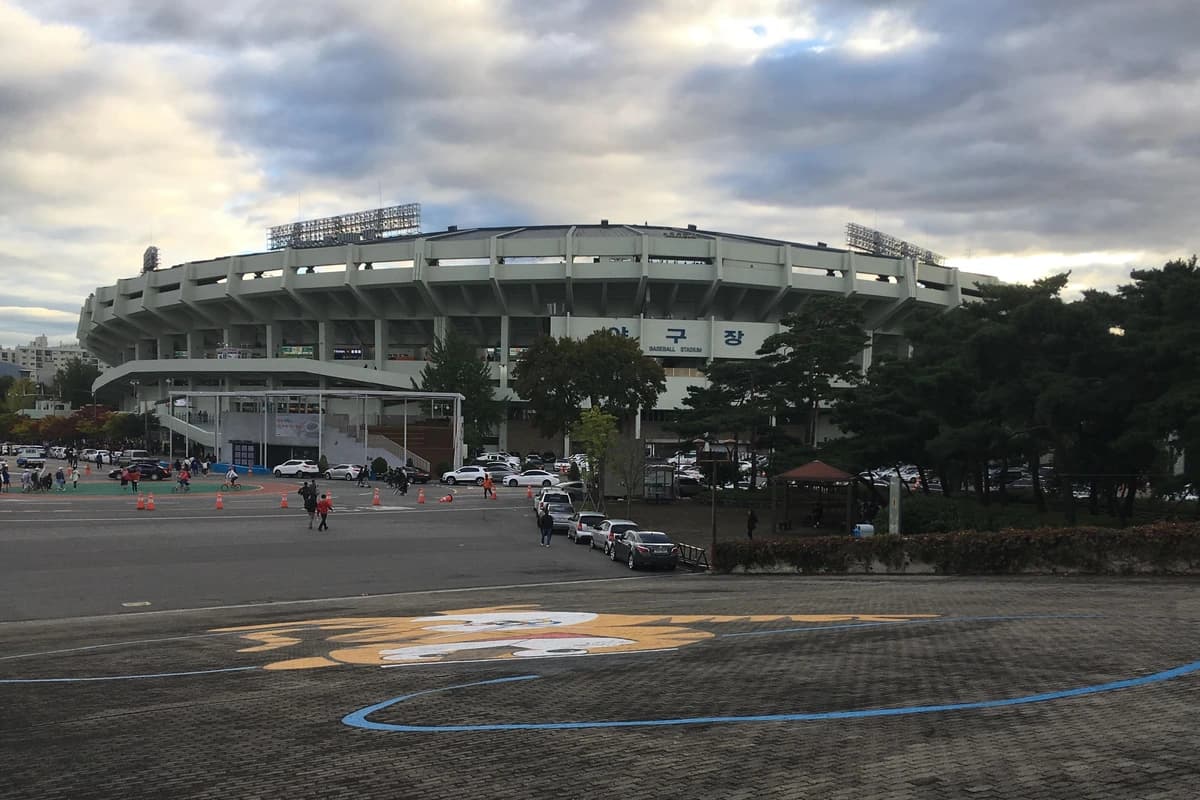
On 12 October, after the last regular-season game at 잠실야구장, four Doosan legends stood at the bases in the dark and lifted home plate. LG had said its own goodbye five days earlier. The 44-year-old stadium is due to come down for a domed replacement — but the postseason, starting tonight with LG against Doosan, will keep it open for at least two more games.
Korea Beat Japan for a Fourth Straight Asian Games Football Gold. Then Its Captain Held Up the Medal and Said, 'I'm Not Going to the Army'
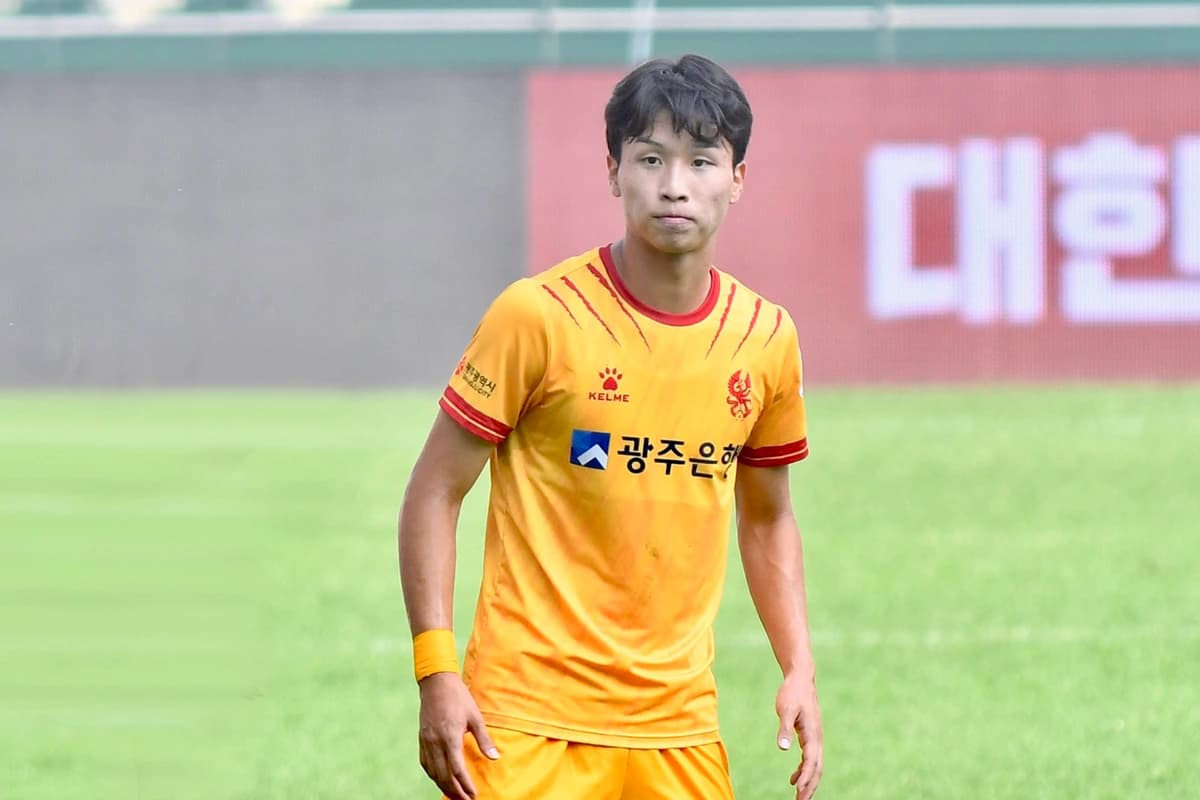
엄지성's 61st-minute goal at Toyota Stadium made Korea the first side to win the men's tournament four times running, and exempted 20 of its 23 players from active military service. Within a day three of them were apologising for saying what the medal was for — and the argument about the exemption itself had started again.
Korea's Sports Chief Gave Japan's Asian Games an F. Then the Organisers Apologised — to Japanese Spectators — for a Sign Saying the Rising Sun Flag Was Banned
The hosts of Aichi–Nagoya 2026 played North Korea's anthem for South Korea's hockey team, introduced Korea as the Republic of China at a medal ceremony, put Hideyoshi on the welcome stage, lost the basketball team's bus before the final, and housed athletes in leaking containers. Then a ballpark sign listed the Rising Sun flag among banned items, and the organising committee said sorry — in Japanese only, to its own crowd — because the flag was 'naturally' allowed. Its own rulebook bans flags that suggest political claims. It chose not to read it.
The Weekly Dispatch
Korea, curated. Every week.
The best of K-culture, straight from Seoul. Written by people who actually live here.
Free, no spam, unsubscribe whenever.