Naver Map Reviews, Honestly: How to Read Them Like a Korean (2026)
Stars came back on Naver Map in April, after a five-year hiatus. The five years without them are what made Naver reviews more useful than Google's — and the Korean vocabulary you need to read them is shorter than you think.
This article is a sequel. Two days ago we wrote about why the standard "go off the beaten path" advice fails for foreigners in Korea — the bagaji mechanism (every one-time customer is a one-shot to maximize) targets you precisely because you're visibly foreign. The piece ended with a three-tactic survival kit. Tactic C — "pre-research with Naver Map, not Google" — is the one that most readers wrote back asking us to expand on.
So here it is. What you're actually looking for inside a Naver Place review, why Korean reviews carry signal that Google's don't, and the five-word Korean vocabulary that does most of the work.
One thing before we start. Most English-language Korea travel guides will tell you to "download Naver Map for transit directions." That's true — but it buries the lede. Naver Map's reviews are the bigger reason to use the app, and the gap between Naver and Google is larger than most foreigners realize because of an obscure UI decision Naver made in 2021 that just got partially reversed in April 2026.
Why Naver beats Google in Korea — the structural answer
Three reasons, stacked. None of them are "Naver is just better."
1. Google Maps is structurally crippled in Korea. Per a longstanding Korean government restriction on the export of detailed mapping data, Google Maps inside Korea is missing the street-level routing precision it has in essentially every other country. Walking directions are unreliable. Bus routing is sparse. This is the part most travel guides mention.
2. Korean reviewers write on Naver because that's where their audience is. Naver Place is to Korea what Google Reviews is to most of the rest of the world — the default. A Korean person searching for a restaurant in Korea opens Naver Map; the friend they recommend it to opens Naver Map; the blogger writing about it posts on Naver Blog. The same restaurant on Google might have 12 English reviews and 4 Korean ones, two years stale. On Naver, the same restaurant has 380 reviews, 90% of them from the last twelve months.
3. The 2021–2026 "keyword era" trained Korean reviewers to write more text. This is the part nobody explains. From March 2021 to April 2026, Naver Place had no star ratings. None. Reviewers couldn't dash off a four-star rating and leave. If they wanted to register an opinion, they had to type something. For five years, that's exactly what they did — and the resulting review corpus is significantly more textual, specific, and bagaji-honest than Google's equivalent.
Stars came back to Naver on April 6, 2026 — a defensive move triggered by Google Maps making its serious Korean push. But the textual review culture that the keyword-only era built is sticky. The reviews are still long. The vocabulary is still specific. That's the artifact you're leveraging.
What the April 2026 star reintroduction actually changed
Worth knowing the current state, because Korean reviews look different than they did six weeks ago.
When Naver reintroduced 5-point star ratings on April 6, they did it carefully. The new system has three guardrails explicitly designed against the abuse that killed the original:
- Repeat low-rating behavior is banned. Users who post a pattern of sub-3-star reviews can be sanctioned.
- Factually incorrect reviews intended to distort ratings are bannable. This includes "review bombing" campaigns.
- Business owners control star visibility during the data-accumulation phase. Until enough ratings accumulate for a place, the star average is hidden from general users. The business decides when it's ready to show.
The practical result for a foreigner reading reviews right now (May 2026): you'll see some businesses with star averages displayed and some without. The places without displayed stars aren't necessarily bad — they just haven't accumulated enough ratings since April 6 to opt in. Don't read missing stars as a red flag. Read the text.
The Korean review vocabulary that does most of the work
Five categories of phrases cover ~90% of what you actually need to spot. Each is a real phrase Korean reviewers use constantly.
🚩 Bagaji and price-fairness warnings
These are the words you're scanning for. If you see two or more recent reviews using any of these, walk away.
| Korean | Romanization | Meaning |
|---|---|---|
| 바가지 | bagaji | The whole concept — "ripped off" |
| 너무 비싸요 | neomu bissayo | "Way too expensive" |
| 양이 적어요 | yangi jeogeoyo | "The portion is small" |
| 가격 대비 별로 | gagyeok daebi byeollo | "Not worth the price" (literally: "compared to the price, meh") |
| 가성비 별로 | gaseongbi byeollo | "Bad value" — the most common shorthand |
The single highest-signal word is 가성비 (gaseongbi — "value for money"). Used positively: 가성비 좋아요. Used negatively: 가성비 별로 / 가성비 떨어져요. Once you can spot this word in a review you've decoded most of what Korean reviewers care about.
🚩 Service and hygiene warnings
| Korean | Romanization | Meaning |
|---|---|---|
| 불친절 | bulchinjeol | Unfriendly / rude staff |
| 위생 | wisaeng | Hygiene (almost always negative — "위생 문제" = hygiene issue) |
| 서비스 별로 | seobiseu byeollo | Poor service |
| 줄 너무 길어요 | jul neomu gireoyo | "Line too long" — not necessarily a warning, but a wait expectation |
✅ Positive signals worth trusting
These come from real-locals reviews, not staged influencer posts.
| Korean | Romanization | Meaning |
|---|---|---|
| 가성비 좋아요 | gaseongbi joayo | Good value |
| 친절해요 | chinjeolhaeyo | Friendly staff |
| 양 많아요 | yang manhayo | Generous portion |
| 또 가고 싶어요 | tto gago sipeoyo | "I want to come back" — the gold-standard repeat-customer line |
| 현지인 | hyeonjiin | "Local resident" — used when a reviewer is identifying themselves as not-a-tourist |
⚠️ Phrases that mean "the photos lie"
Korean reviewers have specific vocabulary for places that are pretty but bad. Worth learning to dodge.
| Korean | Romanization | Meaning |
|---|---|---|
| 인스타용 | insta-yong | "For Instagram only" — i.e., not for eating |
| 사진맛집 | sajin matjip | "Photo restaurant" — looks great in pictures, food is mediocre |
| 분위기만 | bunwigi-man | "Only the atmosphere" (the rest is forgettable) |
When a review uses any of these phrases, the reviewer is warning you that the place is designed for content, not for meals.
🏷 Authenticity signal: 영수증 인증
The single most useful UI feature. Naver Place lets some reviews carry a 영수증 인증 (yeongsujeung injeung — "receipt verified") badge, which means the reviewer scanned an actual receipt from the place. They paid. They came. This filter alone removes the entire "I work for an influencer agency and got a free meal" category.
When reading any contested Korean restaurant review page, filter for 영수증 인증 reviews first. The remaining set is small but trustworthy.
How to actually open the reviews
Concrete tap path on the Naver Map app:
- Open the place page. Tap any pin or search for the restaurant name.
- Find the 리뷰 (Review) tab. It's the second or third tab below the name and address.
- Filter the review type. Above the review feed there are toggles:
- 방문자 리뷰 (bangmunja — "Visitor Reviews") — written by individuals who visited
- 블로그 리뷰 (blogeu — "Blog Reviews") — Naver Blog posts that mention the place
- 포토 리뷰 (Photo Reviews) — filters to reviews with photos
- Sort by 최신순 (Newest), not 추천순 (Recommended). Algorithm-sorted reviews on any platform skew positive. Recency sorts the bagaji warnings to the top — that's what you want.
- Use the built-in translate. Long-press a review and Naver Map offers an in-app translate to English. The translation is rough but workable for the vocabulary above.
- Read 10 reviews, not 3. The single positive influencer post that opens the feed is not the average. Scroll past it.
When to ignore reviews entirely
Three cases where the review system fails even when used correctly:
1. Brand-new openings. Korean food culture rewards "newness" disproportionately; new places get a wave of curious-visitor reviews that aren't representative. A place open less than three months reads better than it eats.
2. Famous tourist destinations. Gwangjang Market, Myeongdong, Insadong — the reviews are heavily inflated by international visitors who don't have a Korean baseline for comparison. Use the Korean keyword vocabulary above, not the star average, in these neighborhoods.
3. Anything in a hotel. Hotel restaurants and bars in Korea are reviewed almost exclusively by guests of the hotel, and guests rate their own choice of accommodation. The reviews bend up regardless of food quality.
The honest tactical close
Naver Map reviews aren't a tourist superpower. They're a Korean review platform that happens to be open to foreigners willing to read 50 words of decoded Korean text. The April 6 star reintroduction is a sign that Naver expects more competition from Google in Korea — not a sign that Google has caught up.
For now, the Korean text is where the signal is. Five years of keyword-only training built a denser, more honest review corpus than Google's equivalent. The star averages will eventually accumulate to be useful, but until then: read the 영수증 인증 reviews, scan for 바가지 / 가성비 / 위생, and trust the text more than the photos.
The Bagaji piece said Naver Map was the foreigner's pre-research tool. This article is the manual.
—The Editors
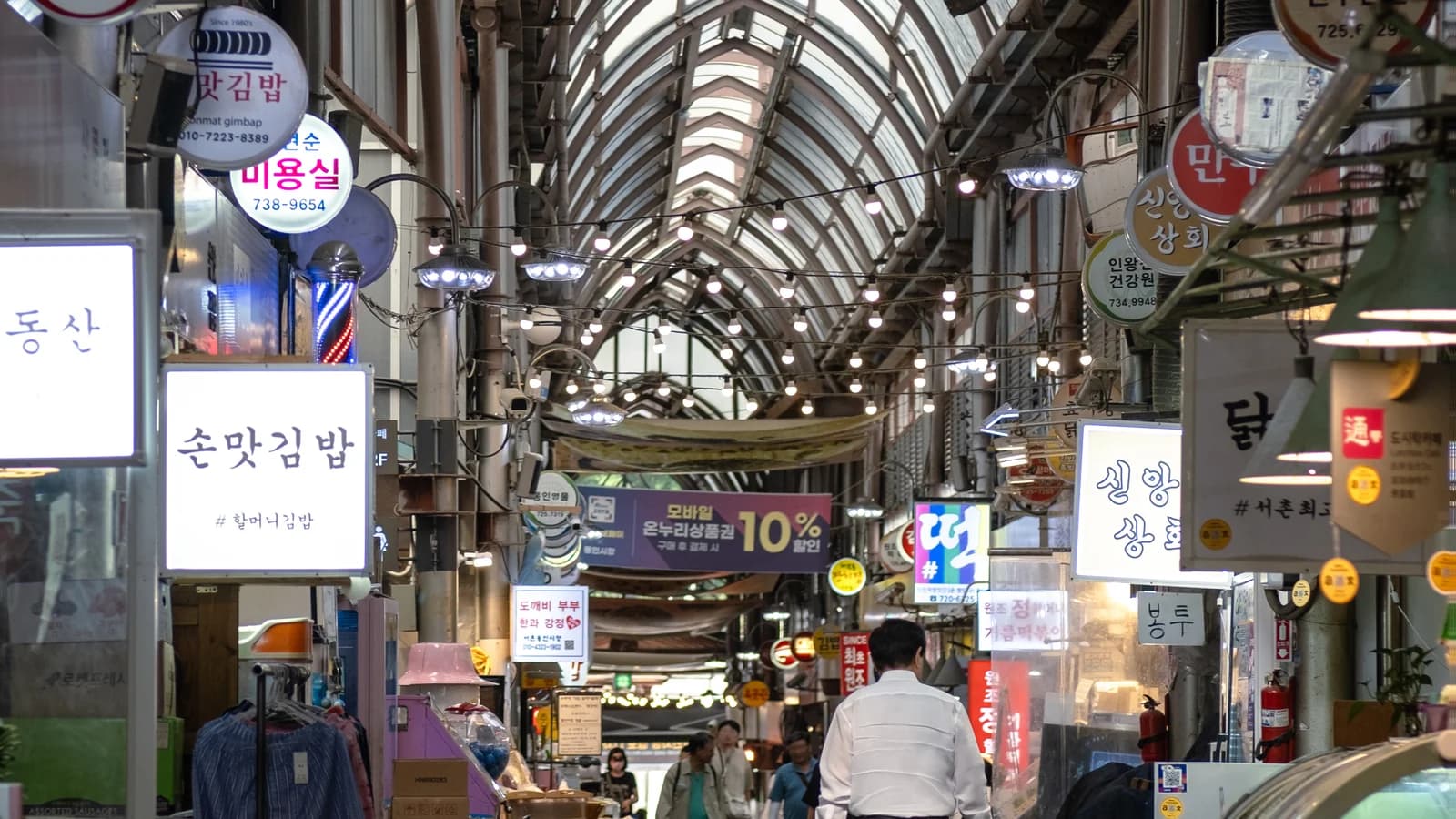
Cover photo: Tongin Market arcade, Seoul Jongno-gu. ⓒ Korea Tourism Organization. Licensed under KOGL Type 1.
Keep Reading
More Stories
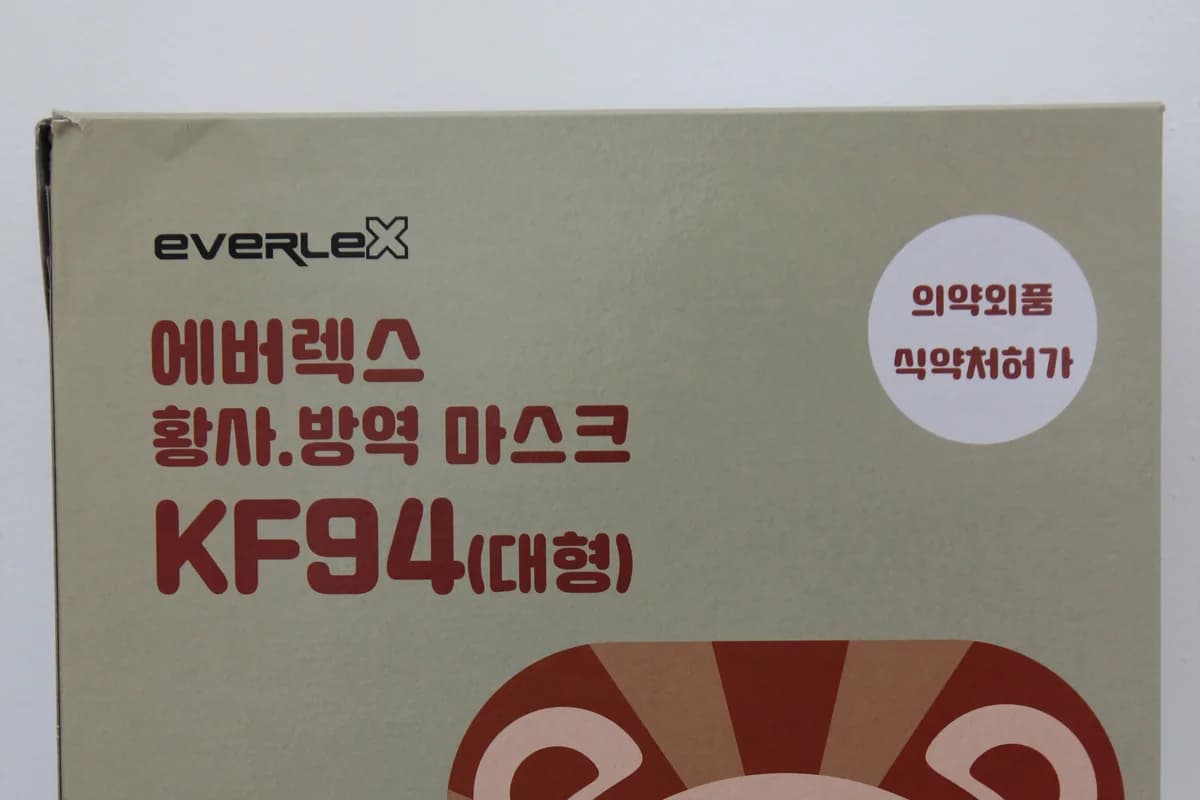
황사 Is Not 미세먼지: What Korea's Air Quality Alerts Actually Mean
English coverage treats yellow dust and fine dust as the same problem. Korea's own forecasters subtract one from the other before publishing. A guide to the two seasons, the alert thresholds, what KF94 actually certifies, and why 'it all comes from China' is a number swap.
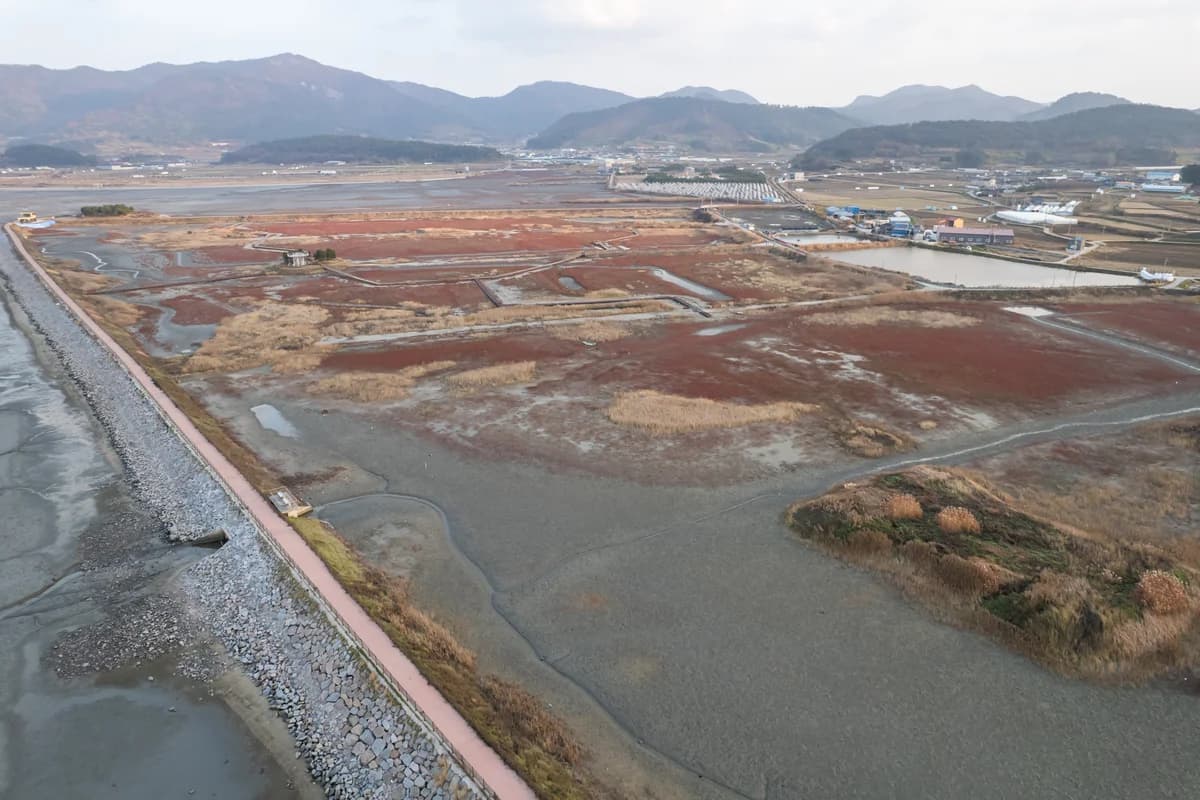
The Mud Korea Decided to Save: Getbol and the UNESCO Vote in Busan
The least Instagrammable thing Korea could nominate — a coastline of mud — is a UNESCO World Heritage site, and on July 25, 2026, in the one year Korea controlled the room, it was made bigger. A guide to getbol: the flats that feed millions of migrating birds, the women who ride wooden sleds across them, and why a country that once paved its tidal flats now enshrines them.
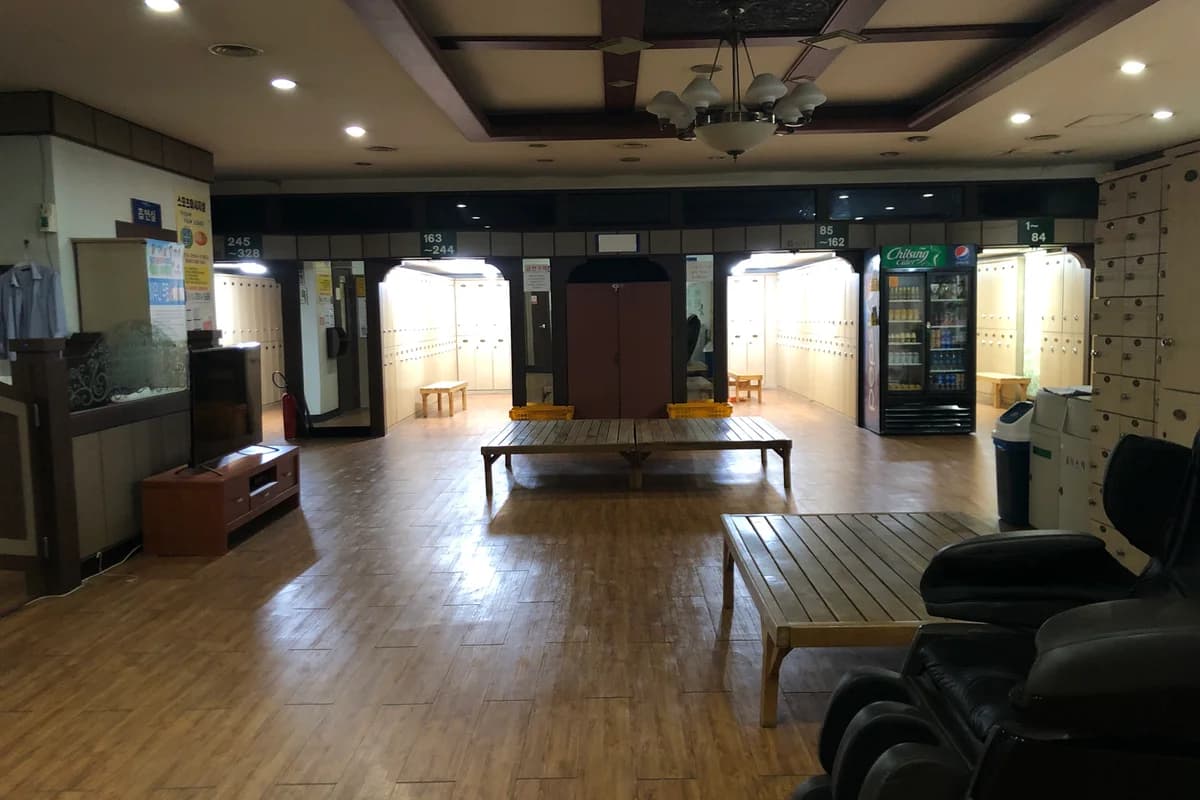
Jjimjilbang for First-Timers: How Korea's Bathhouses Actually Work
Yes, the bath part is fully nude. No, nobody cares. A step-by-step guide to the Korean spa-sauna-sleepover — the sheep-head towel, the scrub that removes a layer of you, which famous venues have quietly closed — and why the neighborhood bathhouse is disappearing even as the tourist jjimjilbang thrives.
The Weekly Dispatch
Korea, curated. Every week.
The best of K-culture, straight from Seoul. Written by people who actually live here.
Free, no spam, unsubscribe whenever.