Korea's Greatest Living Director Couldn't Get Funded at Home: Lee Chang-dong's 'Possible Love'
가능한 사랑 is Korea's Oscar entry, opens in Korean cinemas on September 23 and reaches Netflix worldwide on November 6 — Lee Chang-dong's first film in eight years. The staggered release is an Oscar clock. The reason it's a Netflix film at all is that no Korean investor would back it.

In August 2025, a Korean newspaper asked a producer why the new Lee Chang-dong film — the seventh feature from the director of Burning, Poetry and Oasis, a Silver Lion winner and a man who once served as Korea's Minister of Culture — was being made by Netflix rather than for cinemas.
The producer, 이준동 (Lee Joon-dong) of Pinehouse Film, answered by text. Domestic investors had been interested, he said, but couldn't work up the courage. The film wasn't one that pushed commerciality outright. And Korean film investment stamina, he added, was practically at rock bottom (Kyunghyang Shinmun).
That is the story of 가능한 사랑 (Possible Love), and almost none of it has appeared in English.
The film premieres in competition at Venice, opens in Korean cinemas on September 23, and arrives on Netflix worldwide on November 6. Here's what it is, why those dates are a month apart, and what it says about who pays for Korean films now.
What It Is
가능한 사랑 is Lee Chang-dong's seventh feature and his first since 버닝 (Burning) in 2018 — an eight-year gap.
| Korean title | 가능한 사랑 |
| English title | Possible Love |
| Director | 이창동 Lee Chang-dong |
| Screenplay | Lee Chang-dong and 오정미 Oh Jung-mi, who co-wrote Burning |
| Cast | 전도연 Jeon Do-yeon · 설경구 Sul Kyung-gu · 조인성 Zo In-sung · 조여정 Cho Yeo-jeong |
| Runtime | 164 minutes — his longest |
| Korean rating | 청소년관람불가 (18+) |
| World premiere | Venice 83, in Competition (festival runs Sept 2–12) |
| North American premiere | TIFF 51, Special Presentations |
The official logline, from the Venice programme: a story of two married couples — a laid-off worker and his spouse, and a documentary filmmaker and her spouse — crossing paths to film a documentary, and facing their different lives and hidden desires.
Netflix's Korean announcement fills in the pairings: 전도연 plays 미옥, married to 호석 (설경구), a laid-off worker; 조여정 plays 예지, a documentary director married to 상우 (조인성). Ye-ji is making a film about laid-off workers when the two women's paths cross.
That is the entirety of what has been released. Nobody outside the production has seen the film, so nothing here describes what happens in it, and we won't be characterising performances until it has screened.
One detail worth flagging for its own sake: this reunites Lee Chang-dong with Jeon Do-yeon, who won Best Actress at Cannes in 2007 for his 밀양 (Secret Sunshine).
The Release Calendar Is Not a Contradiction
If you have seen conflicting release dates for this film, both were probably right. English coverage has reported September 23 and October 23 as though one were wrong. They are different territories.
The full schedule, from Netflix's own announcement on July 27:
| Territory | Scheduled |
|---|---|
| South Korea — cinemas | September 23, 2026 |
| Australia — cinemas | October 22, 2026 |
| US, Canada, UK, Ireland, Japan — cinemas | October 23, 2026 |
| Netflix — worldwide | November 6, 2026 |
So Korea gets it a full month before North America, and six weeks before streaming.
The reason for that staggering is an awards clock — and it belongs specifically to the International Feature category, not to Academy eligibility in general, which turns on a qualifying run in the United States. For International Feature, the film needs a commercial cinema run of at least seven consecutive days in its country of origin, or failing that anywhere outside the US and its territories, completed before a late-September cutoff. A September 23 Korean opening clears it; a November streaming date would not.
Netflix has run this play before, with Roma, The Irishman, Glass Onion and Frankenstein — and its Korean newsroom names those precedents directly.
But eligibility is not contention, and this is the part almost everyone skips. For Best International Feature, each country submits exactly one film. Clearing the theatrical requirement made Possible Love eligible to be selected; it did not, by itself, make it Korea's submission. Update, 28 August: it is now. On 25 August 2026 the Korean Film Council selected it as Korea's entry for the 99th Academy Awards. Of the English coverage we surveyed, only the Korea Herald noted this. Everything else lets the reader assume the race has already been entered.
There is now a second door, and it opened three months before we published this. In the rules for the 99th Academy Awards, approved in May 2026, the Academy added a route that runs alongside national selection: a non-English-language film that wins the top prize at one of six designated festivals — Cannes, Berlin, Venice, Sundance, Toronto or Busan — becomes eligible to be submitted without going through its country's selection committee at all. Possible Love is in Competition at Venice, which closes on September 12, eighteen days before the submission deadline. A Golden Lion would put it in the race regardless of what Korea's committee decides.
(A small correction while we're here: the Hollywood Reporter described the TIFF slot as a Gala. TIFF's own press release and Netflix both place it in Special Presentations. TIFF announced both programmes in a single release, which is likely where the slip came from.)
Why It's a Netflix Film at All
Here is the part that makes this more than a release-date story.
Theatrical was the first choice. Korean reporting is explicit that the film was planned for a cinema release and redirected to Netflix during financing (한국일보). The pre-Netflix budget was under ₩8 billion — modest by the standards of a Korean tentpole.
It could not be raised.
And then there is the detail that turns a funding anecdote into an indictment. Possible Love was selected for KOFIC's mid-budget production support programme — the Korean Film Council's scheme for films in exactly its budget band — and then voluntarily withdrew the application, forfeiting ₩1.5 billion in public money.
Kyunghyang's framing is worth sitting with: that a director who represents Korean cinema abroad could fail a commerciality test at home is, in its words, a gloomy omen. The paper also raises the second-order worry — that directors giving back state support to run to streamers accelerates the shrinking of the domestic market that made them.
This is also unusual for a Korean Netflix original specifically. Bong Joon-ho's Okja went day-and-date with cinemas back in 2017, but Netflix's Korean films since have been overwhelmingly streaming-exclusive. A theatrical-first window on a Korean original, explicitly built around festivals and awards, is genuinely exceptional.
One consequence worth noting: going with Netflix made Cannes impossible. Cannes requires French theatrical release for competition titles, which Netflix does not do. Venice, which has no such rule, became the launchpad by default.
Netflix's Theatrical Stance, Honestly
It would be easy to write this as "Netflix discovers cinemas." That would be overstating it.
Ted Sarandos has said Netflix would maintain 45-day theatrical windows for Warner Bros. titles if that acquisition closes, and that windows "will evolve" — while separately insisting Netflix's own strategy remains exclusive first-run on its service. Both things are true at once.
The honest reading is narrower and more interesting: Netflix has not converted to theatrical. It makes calculated exceptions for awards contenders. Possible Love is one of those exceptions, and the exception exists because the Academy requires it.
There is a timing dimension too. Netflix committed $2.5 billion to Korean content across 2023–2026 (Reuters) — a sum Netflix itself described as double everything it had spent in Korea since entering the market in 2016. 2026 is the final year of that cycle, and the renewal decision is being taken now. Korean industry analysis has noted that Netflix has since put substantial money into Thai content, and that Korea is no longer the cost-effective production base it once was. That framing is analysis rather than fact, and we'd flag it as such — but it is the backdrop against which a 2026 Korean Netflix slate is being read.
The Complication: Korean Cinemas Are Packed
The doom narrative needs a counterweight, because the box-office numbers point the other way.
KOFIC's first-quarter 2026 figures were the best since 2020: 31.9 million admissions, up 53.2% year on year, and revenue of ₩318 billion, up 58.7%.
Then the qualifier. 47.7% of all that first-quarter revenue came from a single film — 〈왕과 사는 남자〉, which by late April had drawn 16.73 million admissions, second only to Myeongryang all-time. KOFIC's own analysis is that with fewer films being made and released, the market's size now swings on individual titles.
And in April 2026, thirteen film organisations and 581 industry figures held a joint press conference about a crisis in the Korean film industry. Producers quoted in the trade press say the major investors have largely stopped funding new films.
So both things are true simultaneously, and the contradiction is the actual story: Korean cinemas are fuller than they've been in six years, and the country's most decorated living director still had to go to a streamer. A packed hall and a starving industry are not incompatible when almost everyone is queuing for the same film.
If you want the structure underneath that — who owns the studios, the distributors and the multiplex chains — it's the same conglomerate architecture we mapped in the chaebol, explained. And 《오아시스》, the film that took Lee Chang-dong to Venice twenty-four years ago, was pitched at Busan's own project market in 2001 — a festival that has since become the only one in Asia whose top prize can put a film in the Oscars without its government's involvement.
The Kieślowski Connection
One more thread, and it's the one English coverage has almost entirely missed.
Possible Love is reported to be part of a project reinterpreting Krzysztof Kieślowski's Dekalog — the 1988 Polish television cycle of ten films, one per commandment. The rights were acquired by the Polish actor Maciej Musiał, who is attached as an executive producer, with Kieślowski's longtime co-writer Krzysztof Piesiewicz involved. The plan reported in the trade press is to commission directors for all ten segments.
The first entry was Asghar Farhadi's Parallel Tales, which premiered at Cannes in 2026, reworking Dekalog VI. Possible Love is reported as the next.
Two honest caveats. Which commandment Lee's film reinterprets has not been disclosed. And this thread comes from trade reporting and Polish-language coverage — it does not appear in Netflix's own materials, so we present it as reported rather than official. But given the title, and given a story built on two marriages and crossed desires, the shape of the thing invites a guess we won't make in print.
Who Lee Chang-dong Is
For readers who know Korean film mainly through Parasite and Squid Game, some grounding.
Lee Chang-dong, born 1954, was a novelist before he was a filmmaker, and has directed just seven features in twenty-nine years:
| Year | Film |
|---|---|
| 1997 | 초록물고기 Green Fish |
| 1999 | 박하사탕 Peppermint Candy |
| 2002 | 오아시스 Oasis |
| 2007 | 밀양 Secret Sunshine |
| 2010 | 시 Poetry |
| 2018 | 버닝 Burning |
| 2026 | 가능한 사랑 Possible Love |
Oasis won him the Silver Lion for direction at Venice in 2002 — making Possible Love his first film on the Lido in twenty-four years. Secret Sunshine won Jeon Do-yeon the Cannes Best Actress prize in 2007. Poetry won Best Screenplay at Cannes in 2010. Burning took the FIPRESCI prize at Cannes in 2018 and became the first Korean film to reach the Academy's nine-title shortlist for Best Foreign Language Film. He was made a Knight of the Legion of Honour in France in 2006, and served as Korea's Minister of Culture and Tourism from 2003 to 2004.
He did not stop working during the eight-year gap — he made a short film, 심장소리 (Heartbeat), in 2022, published fiction in The New Yorker in December 2024, and released an English-language short-story collection in 2025.
Speaking at a Malaysian festival in July 2026, he was blunt about the conditions directors work under now: "Today, directors are judged by the box office and evaluated by the industry." On the lifetime achievement award he had just been given, he was drier still: "It's not an achievement. It's more like encouragement."
What to Watch For
Three things will tell you how this lands.
Venice, September 2–12. The competition premiere is the first time anyone outside the production sees it. Lee has a Silver Lion from this festival already. (It won the Grand Jury Prize — see the update below.)
Korea's Oscar submission — resolved. Clearing the eligibility window was step one; selection was a separate decision, and on 25 August 2026 the Korean Film Council made it. Possible Love is Korea's International Feature entry for the 99th Academy Awards. The Venice route we describe above turned out not to be needed — though it remains open, and a Golden Lion would still matter for entirely different reasons.
Whether anyone follows him. The precedent being set here is not "Lee Chang-dong made a Netflix film." It's that a director of his standing could not raise ₩8 billion in Korea, and handed back a public grant to get the film made at all. If the next three auteur projects go the same route, the Kyunghyang warning stops being a warning.
For now, the most decorated living Korean director has a film premiering in competition at Venice, opening in Korean cinemas in September, and landing on Netflix in November. All of that is good news. The route it took to get there is not.
Update, 28 September: the Silver Lion did not sell tickets
The film opened on 23 September on about 180 screens and drew 130,353 admissions in six days, sixth in the market on its first two days, fifth across the holiday weekend and fourth on the Monday after it, behind two Korean openers, 《오디세이》 in its eighth week and, until Monday, 《인턴》. On its first two days it was out-drawn by the re-release of Avengers: Endgame, a seven-year-old film; it edged that encore over the weekend and finished the holiday ahead of it by about sixteen thousand. This is the result the precedents in this piece predicted and the reason it was hard to finance. The numbers are from KOBIS's daily table; the full holiday table is in the collision piece.
Update, 14 September: it won the Silver Lion — and Lee now holds both of them
Venice closed on 12 September, and Possible Love came away with the Grand Jury Prize — the 심사위원대상, which at Venice is a Silver Lion, the festival's second prize after the Golden Lion. Lee accepted it at the Palazzo del Cinema on the Lido.
Be precise about what that is, because the Korean headlines have not all been. Lee already had a Silver Lion from this festival: the one for Best Director, for 《오아시스》 in 2002. This is the other Silver Lion, the one given to a film rather than to a director. So the claim in one outlet that this is Korea's "first" Venice Silver Lion is wrong on its own terms — the first was his, twenty-four years ago. What is true, and better, is that he now holds both.
The juror whose reaction has travelled furthest is Johnnie To — 두기봉 — who said of the film: "나는 절대 이런 영화를 만들지 못할 것 같다" — "I don't think I could ever make a film like this."
Two consequences landed within forty-eight hours, and they are the actual story.
Netflix is globalising his back catalogue off the win. On 14 September the company confirmed a staggered international rollout of the earlier films: 《초록물고기》 and 《밀양》 went live in Italy, Britain, France, Australia and New Zealand at the end of August; 《박하사탕》 and 《오아시스》 followed in Italy and Spain on 4 September; 《시》 and 《버닝》 are slated for Japan, the United States, Canada, Australia and New Zealand. Which means the streaming service that made the theatrical window possible is now doing, for a filmography no Korean investor would fund, the thing a national distributor used to do.
And the win has already been picked up as an argument in domestic politics. The same day, the ruling party's leader, 김민석, told a party meeting in Gangwon that "한류에 대한 지원, 영화와 문화에 대한 지원도 미래대응기금을 포함한 여러 가지 국가적 지원의 대상이 돼야 한다" — support for film and culture should be a target of state funds including the 미래대응기금 — and that the "관성적 사고," the habitual thinking that such things cannot be strategic priorities, has to change. The film that exists because Korean money would not back it is now being cited as the reason Korean money should.
On the Oscar route: the Venice door we described above — a top-prize win bypassing national selection — was not triggered, because the Grand Jury Prize is not the Golden Lion. It did not need to be. Korea had already submitted the film on 25 August, and nothing about the award changes that. It opens in Korean cinemas on 23 September, against two other Korean films on the same day.
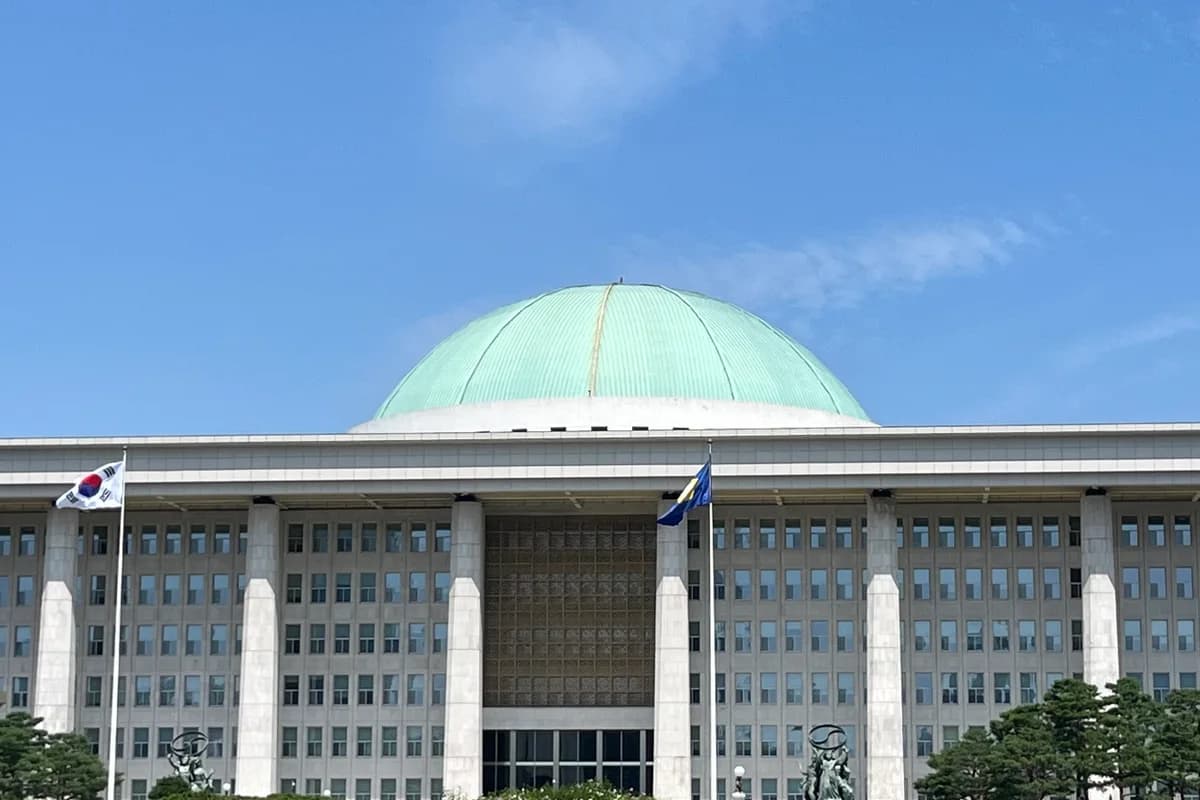
Release dates, cast and premise are taken from Netflix's own Korean and English newsroom announcements of July 27, 2026, and from the official Venice Biennale and TIFF listings; all dates are scheduled and stated as such. The five territory dates are given in full because English coverage has reported them as conflicting when they are simply different markets. The financing account — the failed domestic investment round, the producer's remarks, and the withdrawn KOFIC application — is from Kyunghyang Shinmun (August 2025) and Hankook Ilbo, both Korean-language. We noted at first publication that Academy eligibility is not the same as selection, since Korea submits only one film; the Korean Film Council selected Possible Love on 25 August 2026 and the relevant passages have been updated and dated rather than rewritten. The Dekalog reinterpretation is trade-reported and does not appear in Netflix's materials, so it is presented as reported rather than official; which commandment the film addresses has not been disclosed. Q1 2026 box-office figures are KOFIC's. We give no budget figure: only the pre-Netflix figure is sourced. Nothing here describes the film's content beyond the official synopses — it has not screened, and we make no claim about its quality. Cast and crew details carried only by user-edited wikis, including one reported supporting cast member and the cinematographer credit, are omitted pending an official crew list. Images are official production stills, © Netflix, used to illustrate coverage of the film and credited to the rights-holder. Only one official still is in public circulation, so all three are framings of the same photograph rather than three separate images; we would rather say that plainly than pass off cinema exteriors as production stills.
Keep Reading
More Stories

A Japanese Cartoon About Small Cute Creatures Opened at Number One in Korea. Tom Cruise's New Film Is Seventh on the Booking Board, With Cruise in Seoul to Sell It
《극장판 치이카와》 took 122,291 admissions on its opening day, the biggest start for any animated film released in Korea this year, and by the next morning held 39 per cent of every advance ticket in the country. 《디거》, Alejandro G. Iñárritu's black comedy with Tom Cruise as an oil baron, opens on 3 October with 2.6 per cent — behind a Venice prize-winner in its second week — while Cruise makes his thirteenth visit to Korea, more than any other Hollywood actor. Iñárritu was meant to come too. He cancelled the night before.
The Opposition Leader, the Park Chung-hee Foundation and a Police Complaint Want Chuseok's Number-One Film Off the Screens. The Director Says the Line They Object To Isn't In It
《암살자(들)》 passed 1.6 million admissions over the holiday. On the Monday after it, the foundation that keeps Park Chung-hee's memory demanded an apology and a halt to screenings, the leader of the opposition asked why insulting Park is 'freedom of expression' when touching Roh Moo-hyun gets you sued, and by Tuesday morning a former city councillor had filed a criminal complaint against the producer, the director and both writers. Hur Jin-ho's answer is that the film nowhere says Park ordered his wife shot, and that he now wishes he had drawn that line in dialogue. The audience score is 8.3. The netizen score is 2.2.

Seven Shots or Six? The 1974 Record Can Be Read Both Ways. Hur Jin-ho's Film Took Six, and Built a Newsroom Around the Bullet Nobody Examined.
Hur Jin-ho's 《암살자(들)》 opens on 23 September as the most pre-booked Korean film of the Chuseok season, ahead of 《인턴》, with a bracketed plural in its title that is the whole argument. The 1974 file on the shooting of First Lady Yuk Young-soo lists seven shots, one of them a misfire; the Park Chung-hee foundation now counts six; the film counts six and finds four bullets. What none of them can show is the bullet that killed her — and the director says he is offering a hypothesis, not a verdict.
The Weekly Dispatch
Korea, curated. Every week.
The best of K-culture, straight from Seoul. Written by people who actually live here.
Free, no spam, unsubscribe whenever.