Korea's Blood Type Personality Theory Isn't Korean. It's a Japanese Eugenics Idea From 1927.
57% of Korean adults still say personality differs by blood type. The theory came from a Japanese researcher who used blood groups to argue that colonised Taiwanese were genetically rebellious. Here's the real history, the survey data, the science — and the legal myth every English article repeats.
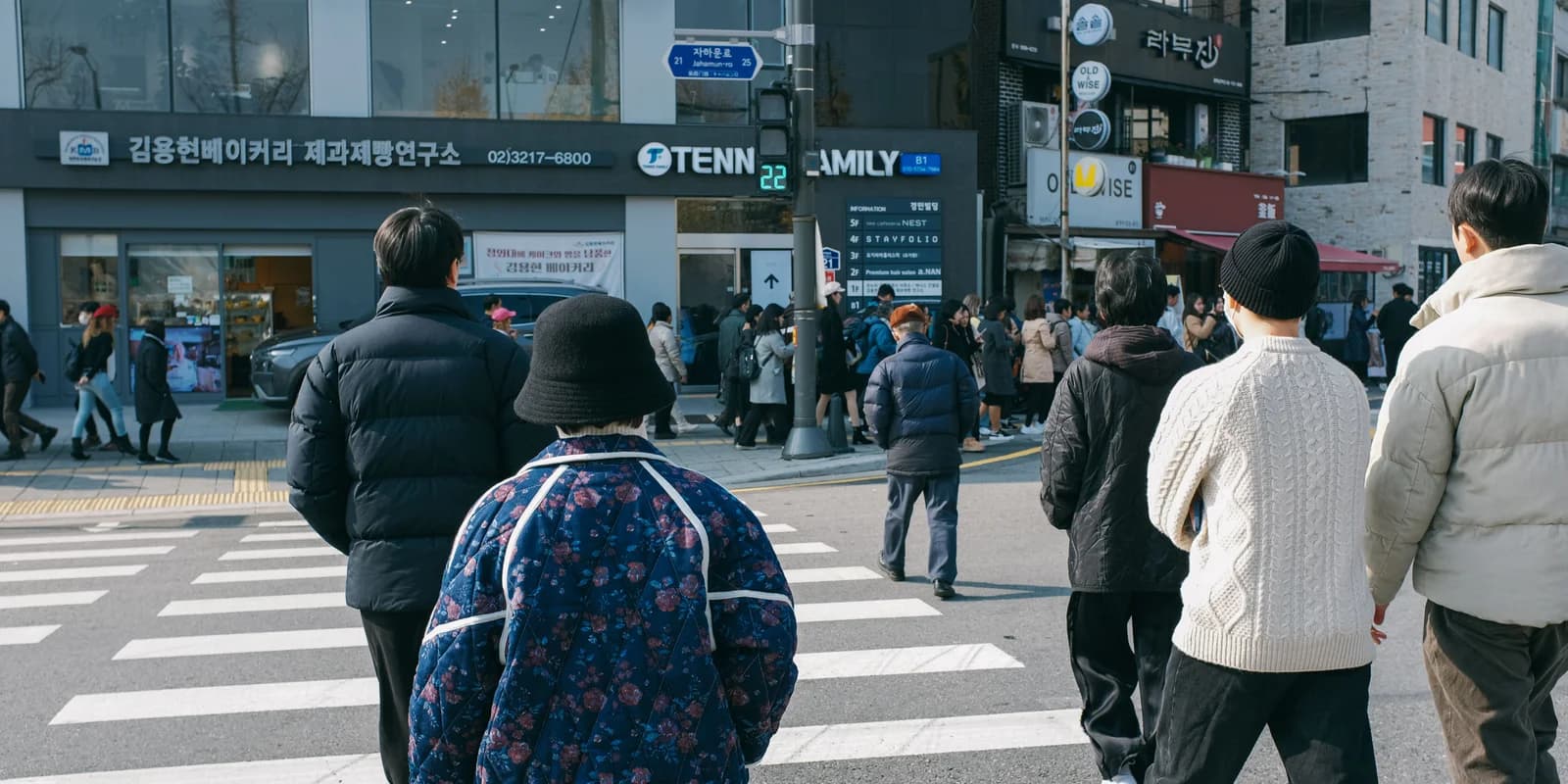
Ask a Korean what their blood type is and you'll usually get an answer without hesitation. Ask a Briton and you'll usually get a blank look. That asymmetry is real, it's measurable, and it has a much darker origin than the icebreaker suggests.
57% of Korean adults say personality differs by blood type (Gallup Korea, fieldwork 10–28 February 2023, published 19 October 2023; n=1,501 adults 19+, margin of error ±2.5 points). An independent poll by Hankook Research in October 2021 found 56%. Two different pollsters, two years apart, same answer.
The theory they're describing was invented in 1927 by a Japanese researcher who used blood-group frequencies to argue that colonised Taiwanese people were genetically predisposed to rebellion, and who proposed marrying them to Japanese settlers to breed the tendency out.
That's not an edgy reframing. It's what the sources say. Let's go through it properly.
What Koreans Actually Believe, With Numbers
Gallup Korea has asked the same question across two decades:
| Year | Believe personality differs by blood type |
|---|---|
| 2002 | 67% |
| 2012 | 67% |
| 2017 | 58% |
| 2023 | 57% |
One nine-point drop between 2012 and 2017, then flat. Belief is not currently collapsing — it fell once and settled.
The Hankook Research crosstabs are where it gets interesting:
- Women 64%, men 48%.
- By age: 20s 31%, 30s 48%, 50s 67%, 60+ 66%. A steep generational gradient.
- 81% have encountered blood-type personality content online.
- Behavioural use is low — 8% weigh blood type when making friends, 10% when dating.
But here is the single strangest number in the entire dataset:
60% of Koreans say their own personality matches the stereotype for their blood type — including 51% of people in their 20s.
Only 31% of Koreans in their twenties say they believe the theory. But 51% of them say the description fits. Belief is dying; the description isn't.
Among Gallup's believers, there's also a clear hierarchy of desirability. Asked which blood type they prefer in others: O 49%, A 19%, B 12%, AB 6%, with 14% expressing no preference. And 36% of believers — about a fifth of all Korean adults — say a partner's blood type is worth weighing.
(A note for anyone checking our work: several English write-ups, including one in a major Korean English-language paper, report that "A" figure as 14%. That's the no-preference row misread. The correct number is 19%.)
The Four Types, As Folk Belief
These are stereotypes, not descriptions. We're reporting what Koreans say about the categories, not endorsing that the categories describe anyone.
- A형 — 소심하다 (timid), 꼼꼼하다 (meticulous), 예민하다 (sensitive), but 배려심 있다 (considerate) and responsible to the point of perfectionism.
- B형 — 자유분방하다 (free-spirited), 자기중심적 (self-centred), hates convention and constraint. The most stigmatised type.
- O형 — 사교적 (sociable), a natural leader, extroverted and optimistic. Occasionally "too much."
- AB형 — 4차원, literally "fourth-dimensional," the standard Korean slang for eccentric, operating on another wavelength. Unpredictable. Cool in the detached sense.
If you learn one term here, make it 4차원. It's the most Korean of the four and it long ago escaped the blood-type context entirely — it's now general-purpose slang for anyone whose logic runs on a different track.
The Distribution — and Why the Usual Explanation Is Wrong
The standard claim is that Korea cares about blood type because Korea has unusually many B types. Half right.
| O | A | B | AB | |
|---|---|---|---|---|
| South Korea | 27–28% | 34% | 26–27% | 11–12% |
| Japan | 30% | 40% | 20% | 10% |
| China | 34% | 28% | 29% | 8% |
| India | 33% | 22% | 32% | 8% |
| UK | 50% | 36% | 11% | 3% |
| USA | ~44% | ~42% | ~10% | ~4% |
Korean figures from the Korean Red Cross; Japan from the Japanese Red Cross; UK from NHS Blood and Transplant.
Korea's B share is roughly 2.5× the UK's — that part of the story checks out. But Korea is not an Asian outlier: China and India both run higher.
Korea's genuine distinguishing feature is flatness. Four types at 34 / 28 / 27 / 11, none below 10%. Britain, where half the country is type O, doesn't have that.
And that's the better explanation. A four-box folk taxonomy needs four populated boxes. In Korea, telling someone your blood type actually partitions the room. In Britain it mostly tells people you're one of the two big groups. The demographic precondition for the system to feel useful exists in Korea and doesn't in the UK.
Where It Actually Came From
1927. Furukawa Takeji (古川竹二), a professor at Tokyo Women's Higher Normal School, publishes 「血液型による気質の研究」 — "A Study of Temperament by Blood Type" — in the Japanese Journal of Psychology, volume 2, number 4.
His samples were ten to twenty people.
The part that matters is what he did with the idea. Furukawa compared blood-group frequencies among Taiwanese — then under Japanese colonial rule and violently resisting it — against the Ainu of Hokkaidō, whom he characterised as submissive. He reported 41.2% type O among his Taiwanese sample against 23.8% among the Ainu, and concluded that Taiwanese rebelliousness was genetically determined. His stated purpose was to understand the racial character of a people "who recently revolted and behaved so cruelly."
Japanese-language accounts record that his books went further, proposing to reduce the O-type share of the Taiwanese population by marrying them to Japanese settlers — an explicit programme of 民族改造, "racial remodelling" — and attributing Ainu population decline to their low O share. The Imperial Japanese Army separately ran investigations into blood type and soldier temperament under his influence, producing statistically meaningless results (ja.wikipedia, 血液型性格分類).
Japanese personality psychologists themselves treat this as the theory's 影 — its shadow. There is a 2008 conference paper by Ōmura, Mizoguchi, Satō and Watanabe titled, literally, "Furukawa Takeji: the light and shadow of the blood-type temperament correlation theory" (J-Stage).
The wider context is interwar race science: the Hirszfelds' 1919 Lancet work showing ABO frequencies varying by geographic origin, which German and Austrian sero-anthropologists took up for explicitly eugenic ends. That chain is well established in outline, though we haven't independently read the primary sources, so we present it as background rather than as our own finding.
1930s–40s. The theory is discredited academically and goes dormant.
1971. Nomi Masahiko (能見正比古) — an electrical-engineering graduate turned broadcast writer, with no training in medicine or psychology — publishes 『血液型でわかる相性』. It's a mass bestseller and revives the whole thing. His evidence base was around 20,000 questionnaires collected from his own readers and lecture audiences: a textbook self-selected sample. He died mid-lecture in 1981; his son continued the business (ja.wikipedia).
When did it reach Korea? Honestly: we couldn't establish a solid date, and we're not going to invent one. Korean accounts point to 1990s women's magazines and translated Japanese books, with a mania peak around 2004. The hard constraint is that Gallup already measured 67% belief in 2002, so it was thoroughly naturalised well before then.
The Science
There isn't any. But the way there isn't any is interesting.
The big test. Nawata (2014), in the Japanese Journal of Psychology, reanalysed three nationally sampled datasets — two Japanese, one American, nearly 10,000 people combined. Result: 65 of 68 personality items showed no significant difference between blood groups, and every effect size was below η² = .003. Blood type accounts for under 0.3% of the variance in personality.
The better study, for our purposes, is Korean. 조소현, 서은국 and 노연정 (2005), in the Korean Journal of Social and Personality Psychology, tested 204 Korean university students. Blood type showed no relationship to the Big Five personality traits.
But when they measured personality using the stereotype adjectives themselves, differences did appear — and only among participants who believed the theory. Sceptics showed no such pattern (KCI record).
That is a clean demonstration of self-fulfilling prophecy, authored in Korea, by mainstream researchers. Put it next to the Hankook finding — 51% of Korean twenty-somethings say the description fits them, while only 31% believe the theory — and you have the mechanism.
These systems don't describe people. They recruit them.
Korean clinicians are blunt about the underlying biology. As psychiatrists told Herald Business: "ABO혈액형은 수혈 가능여부를 판별할 목적으로 탄생했고, 예나 지금이나 목적에는 변함이 없다" — ABO typing exists to determine transfusion compatibility, and that purpose hasn't changed.
The Cost
Mostly this is harmless. Not entirely.
Japan regulated it. On 8 December 2004, the youth committee of Japan's broadcasting standards body BPO formally asked broadcasters to stop promoting the idea that blood type determines personality. It cited complaints that the programmes were 非科学的, warned that sorting people by an unchangeable trait "社会的差別に通じる危険" — risks leading to social discrimination — and objected to shows running "blood-type experiments" on children (BPO).
Japan also has a word for it: ブラハラ (bura-hara), blood-type harassment, coined in 1994 by psychologist Satō Tatsuya. In one survey of 3,587 Japanese university students, 1,107 reported unpleasant experiences stemming from blood-type characterisation.
Korea has no equivalent ruling. In 2013 the cultural critic 김헌식 argued in 미디어오늘 that the theory should be removed from Korean broadcast, citing the BPO decision as precedent. That's an argument Korea should catch up — not a description of anything Korea has done.
The B-type man problem is documented. Herald Business opens with a 34-year-old woman who rules out type-B men because "B형 남자는 성격이 괴팍하고 바람둥이 스타일." The Korea Herald reported in 2018 that B-type men get read as selfish, womanising or hot-tempered, with a B-man/A-woman pairing considered the worst possible match; a psychotherapist quoted there says the misperception "sometimes actually ruins a relationship."
The clearest artifact is a film. 「B형 남자친구」 (My Boyfriend Is Type B), directed by 최석원, released 3 February 2005, starring 이동건 and 한지혜. The premise is entirely blood-type incompatibility: a woman falls for the type of man she's been told to avoid, while her cousin — a dating consultant and blood-type devotee — explains that a B-type man and an A-type woman are doomed. A mainstream commercial romance built on the theory is its own evidence of how deep this ran.
The legal myth every English article repeats
Here's something we can correct outright.
Korean recruiting sites and English-language explainers widely claim that Korea's 채용절차법 (Fair Hiring Procedures Act) banned employers from asking about blood type starting in July 2019.
That's false. We read the statute. Article 4-3, in force 17 July 2019, prohibits employers from requiring only three categories of information: physical characteristics (appearance, height, weight); place of origin, marital status and assets; and the education, occupation and assets of immediate family.
혈액형 — blood type — appears nowhere in the article.
We also found no documented Korean case of an employer screening candidates by blood type. English Wikipedia lists various Japanese examples — interview questions, blood-type-segregated school classes, work assignments — but flags them as contested and apocryphal, with no litigation on record. We're reporting the BPO ruling and the coined term as fact, and the employment anecdotes as claims that circulate without a court record, a regulator finding, or a news investigation behind them.
Why It Won't Die
Because it was never really about blood.
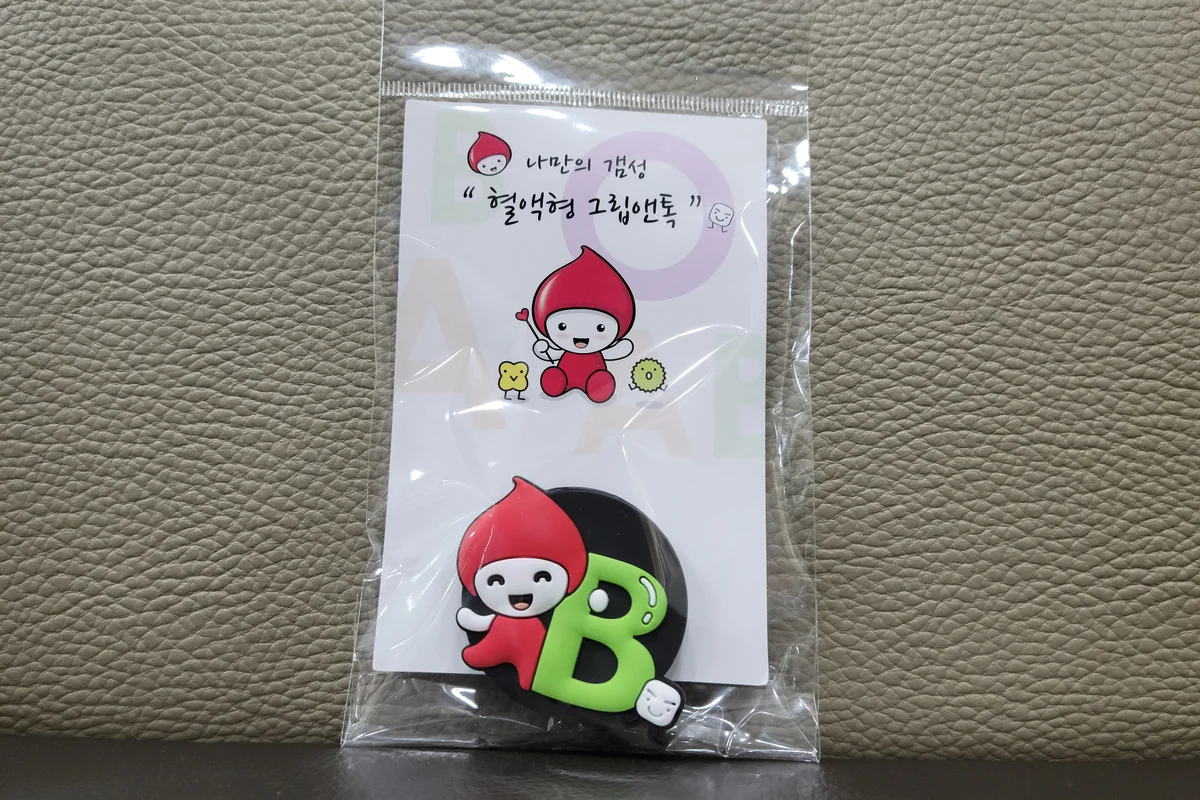
Korea currently runs at least four parallel personality systems. Saju, the indigenous four-pillars reading of your birth date and hour — a genuine industry with a genuine boom. Blood type, imported around the 1990s, peaked 2004, still at 57%. MBTI, which is so embedded that agencies list idols' four-letter types where they used to list blood types. And since mid-2025, 테토-에겐 — a hormone-based binary sorting people into "testosterone" and "estrogen" types, which went viral and got serious newspaper coverage.
A 경향신문 column in August 2025 nailed what that fourth one actually is: the same old 상남자 / 천상여자 schema, back again with a beauty mark drawn on.
The systems are interchangeable. The appetite is constant.
The saju practitioner and philosophy PhD 전형일 offered the most useful explanation we found, writing in 한국일보: "인류는 진화하면서 위험인물에 대한 회피 본능을 갖고 있다. 대안으로 가장 쉬운 방법이 상대를 단순화하고 범주화시키는 것이다." Humans evolved an instinct to avoid dangerous people; the easiest substitute for actually knowing someone is to simplify and categorise them.
He is, note, a professional fortune-teller diagnosing the demand for fortune-telling.
One footnote on prepared ground. Korea had its own four-box temperament system long before Furukawa. 사상의학 (四象醫學), Sasang constitutional medicine, was systematised by 이제마 in 『동의수세보원』, published 1894 — sorting people into 태양인 (太陽人), 소양인 (少陽人), 태음인 (太陰人) and 소음인 (少陰人), with corresponding regimens (Encyclopedia of Korean Culture). It's a traditional-medicine framework and we make no health claim for it. But chronologically it matters: Korea had a four-type body-and-temperament taxonomy 33 years before the Japanese theory arrived. The imported system landed on ground that was already prepared.
And one hard piece of K-pop evidence, rather than the usual list of idol blood types. The boy group B1A4, which debuted in April 2011, is named for its members' blood types: one B and four As (Bustle). Korean media called them "blood-dols." A group whose name is a blood-type formula dates the convention precisely — and the fact that agencies have since migrated that same profile slot to MBTI tells you the rest of the story in one line.
So What Should You Say When Someone Asks?
Tell them. It's a normal question in Korea, it's not an insult, and refusing to answer on principle will read as strange rather than principled.
But it's worth knowing what you're participating in. The theory is not Korean folk wisdom. It's a piece of 1920s colonial race science, revived in the 1970s by a broadcast writer with a self-selected questionnaire sample, imported into Korea some time around the 1990s, and sustained now mostly by the fact that a four-way split feels informative in a country where all four boxes are full.
The Korean research says it doesn't describe you. It says that if you believe it, you'll start matching it.
Which is the more unsettling finding, and the one worth carrying: these systems are not measurements. They're instructions.
Survey figures are dated in-text: Gallup Korea's fieldwork ran 10–28 February 2023 and was published 19 October 2023 — it is not an October poll, as some coverage states. Age and gender crosstabs are from Hankook Research (October 2021), not Gallup, because Gallup's crosstabs could not be reliably extracted. The blood-type trait lists are presented as folk stereotypes and should not be read as descriptions of anyone. The Furukawa Taiwan/Ainu figures are attributed to the cited Japanese-language sources rather than asserted independently, and we make no claim about whether his Taiwan work preceded or followed the 1930 Musha Incident. Claims of employment discrimination on blood-type grounds are reported as unverified. Sasang constitutional medicine is described as a traditional framework, with no health claim made. Images: hero — a 헌혈의 집 Korean Red Cross blood donation centre in Pyeongchon, by 고려, CC BY 4.0 via Wikimedia Commons (cropped); cover — a Seoul crosswalk, by Huy Phan via Pexels (Pexels License), chosen as a back-view image so that no identifiable person illustrates a personality stereotype; in-article — a Korean Red Cross blood-type phone grip souvenir, by 고려, CC BY 4.0 via Wikimedia Commons (cropped); listing card — an AI illustration (generated with Higgsfield, GPT Image 2.5): four identical, unlabelled blood tubes casting the four folk stereotypes as shadows.
Keep Reading
More Stories
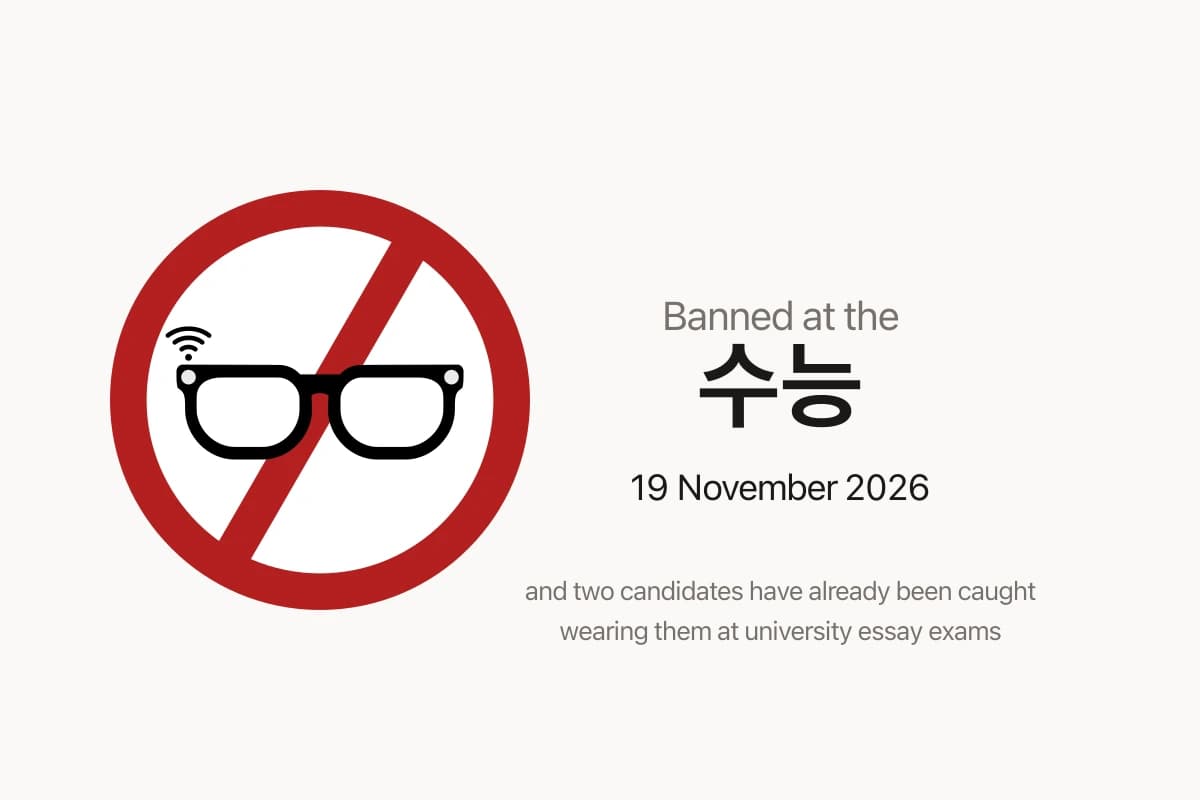
Two Candidates Wore AI Glasses Into Korean University Exams This Month. Five Weeks Later, 550,000 People Sit the 수능
At the University of Seoul on 3 October and at Yonsei a week later, proctors spotted AI smart glasses on candidates sitting essay exams for admission. Both had passed the glasses check in ordinary frames and switched once the exam began. The 수능 on 19 November already bans the devices; the question is whether anyone can see them.
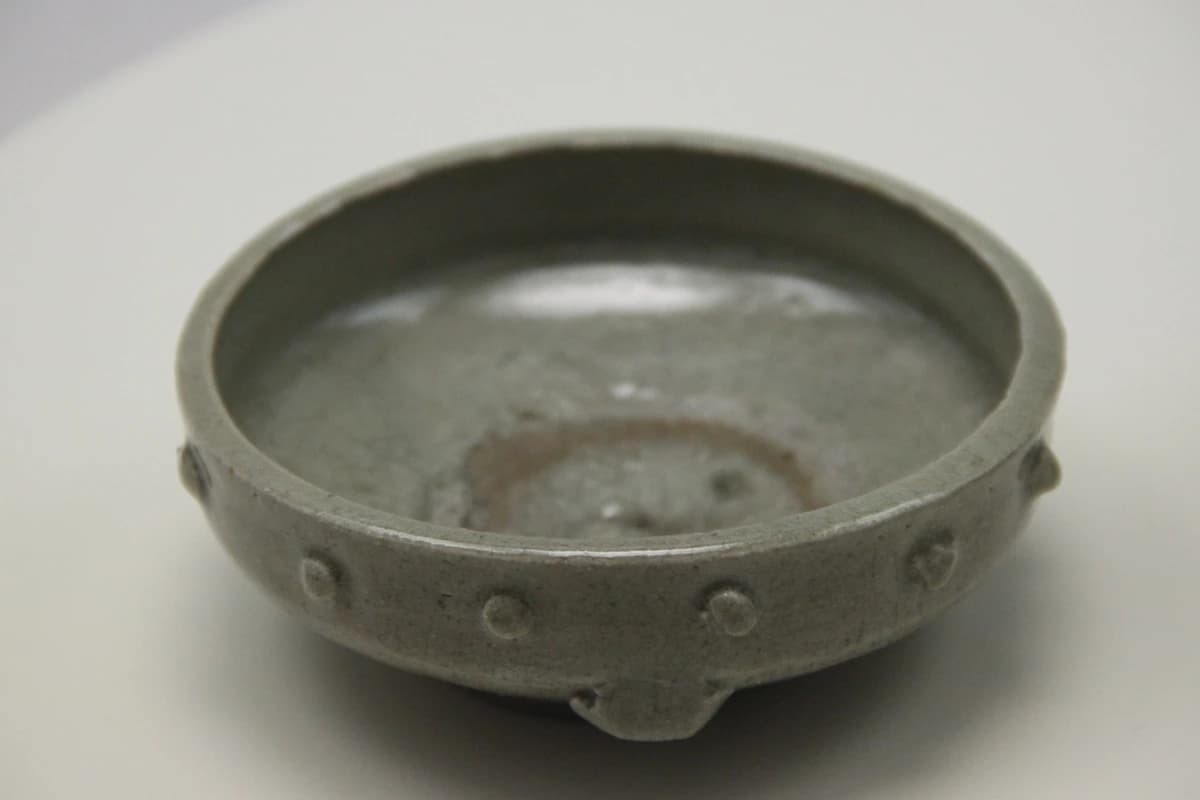
The Fisherman Hid It Under His Floorboards. The Reward He Eventually Got Set Off a Decade of Looting.
Korea marked fifty years of underwater archaeology in Mokpo in September 2026. The official story starts with a net and a report. The documented one starts with six pieces of Chinese porcelain given away as presents, a schoolteacher brother who had to get them all back, and officials who did not want the paperwork. Then the state paid a reward, a diver worked out how much of it went in tax, and for the next ten years people stole the wreck faster than the government could raise it — until the navy's own divers could not find the ship, and the excavation hired the looters.
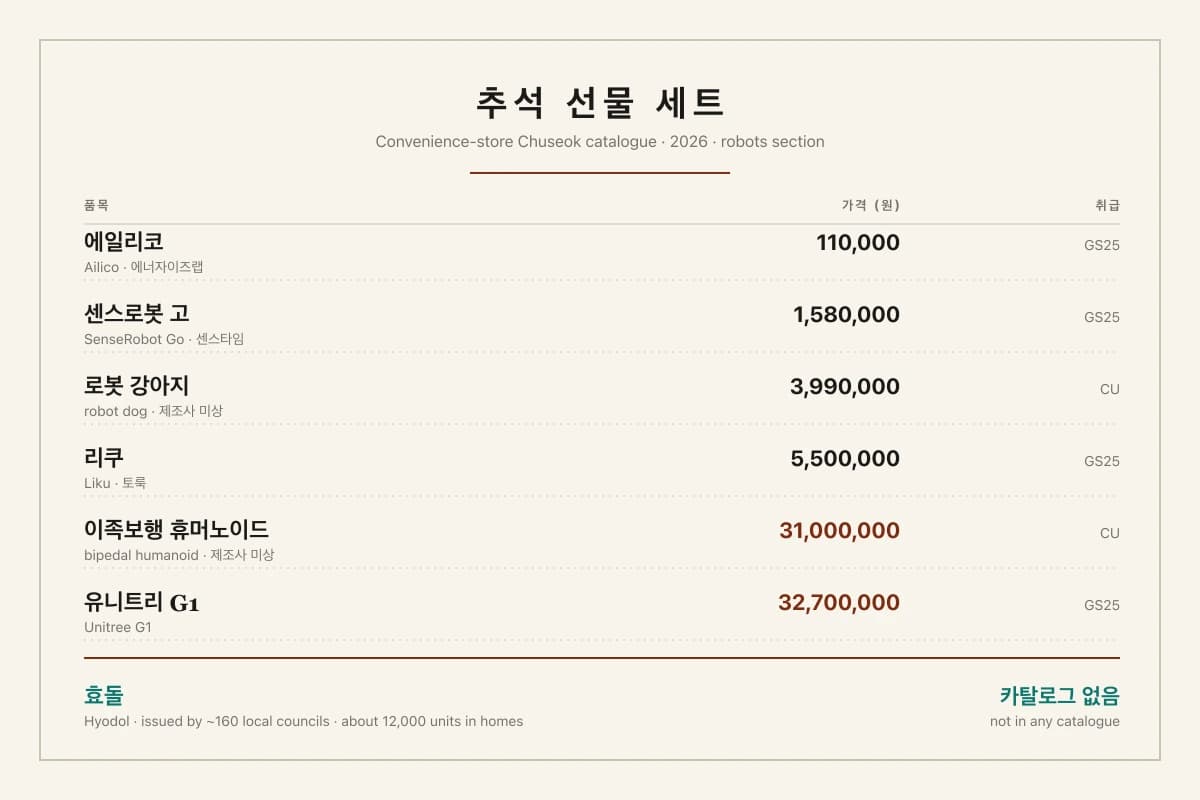
Korea's Convenience Stores Are Selling Humanoid Robots for Chuseok. Neither Chain Expects to Sell One, and Both Have Said So.
CU's holiday catalogue has a bipedal humanoid at ₩31 million, next to the beef and the gold bars. GS25 has an AI companion robot at ₩5.5 million and a keyring that talks back at ₩110,000. We assumed the pitch was companionship for parents you won't be visiting. It isn't — the retailers say plainly these are there to be noticed, not bought. Meanwhile about twelve thousand robots are already in Korean homes, asking elderly residents whether they've taken their medicine, and nobody put those in a catalogue.
The Weekly Dispatch
Korea, curated. Every week.
The best of K-culture, straight from Seoul. Written by people who actually live here.
Free, no spam, unsubscribe whenever.