Why Are So Many Koreans Named Kim? The Answer Involves a Marriage Ban That Lasted Until 1999
One in five South Koreans is a Kim. But Kim was never one family — it's a bucket holding hundreds of unrelated lineages, and the story of who acquired the name, when, and why is the story of Korea dismantling its own caste system. Plus: how to actually read a Korean name.
Until 1 January 1999, two people in South Korea who shared a surname and an ancestral clan seat could not legally marry each other. Not cousins. Not distant relatives in any traceable sense. Just two people whose paperwork named the same town as the origin point of their father's line — a line that might have diverged eight hundred years ago, or might never have converged at all.
For a Gimhae Kim, that meant the forbidden pool contained roughly 4.46 million people.
Couples lived together for decades without being able to register. The National Assembly passed three one-year amnesty laws — in 1978, 1988 and 1996 — purely to let backlogged couples file their paperwork. 44,827 couples used them, and the numbers rose every time: 4,577, then 12,443, then 27,807 (National Archives of Korea). The ban was collapsing under its own weight.
That is the real answer to "why are so many Koreans named Kim." Not the census number everyone quotes. The fact that a shared surname in Korea carried such enormous legal and social weight that the state policed marriage with it — while simultaneously, the surname itself had become almost meaningless as a marker of actual family.
Here's how both things ended up true at once.
First, the Numbers
South Korea's most recent surname census is 2015 (reference date 1 November 2015, released 7 September 2016). This data is collected rarely — only three times ever: 1985, 2000 and 2015 (Statistics Korea SGIS). The 2020 census didn't include it.
| Rank | Surname | Population | Share |
|---|---|---|---|
| 1 | 김 Kim (金) | ~10.69 million | 21.5% |
| 2 | 이 Lee (李) | ~7.31 million | 14.7% |
| 3 | 박 Park (朴) | ~4.19 million | 8.4% |
| 4 | 최 Choi (崔) | ~2.33 million | 4.7% |
| 5 | 정 Jung (鄭) | ~2.15 million | 4.3% |
Kim, Lee and Park together account for 44.6% of the country (부산일보). The top ten surnames cover 63.9%.
Two footnotes that matter. First, these percentages are calculated against 49,705,663 Korean nationals, not the ~51.07 million total residents (which includes foreign residents). A lot of Korean coverage in 2016 wrote "21.5% of 51.07 million," which doesn't actually work out — 21.5% of 51.07 million would be 10.98 million, not 10.69 million.
Second, if you pool every different Chinese character read as Jung, Jung edges past Choi into fourth. Both rankings are real cuts of the same official table; they just count differently. If you've seen it the other way round, that's why.
The census also recorded 5,582 distinct surnames — but don't read that as an explosion of new names. The comparable 2000 figure is 728: 286 surnames of Korean origin plus 442 belonging to naturalised citizens, which that census counted but reported separately. (The 286 you'll see quoted is only the first half of that pair.) The jump from 728 to 5,582 is a methodology change: the 2000 figure came from field interviews, the 2015 figure from administrative records, which swept in thousands of rare surnames — of the 5,582, 1,507 can be written in hanja and 4,075 cannot. And only 153 have more than a thousand bearers.
The Actual Explanation: Kim Is Not a Family
Here is the thing most English-language explainers never say clearly.
Kim was never one family. It is a bucket containing hundreds of unrelated lineages that happen to share one syllable. The unit of identity that actually matters is the 본관 (本貫, bon'gwan) — the ancestral clan seat, the place a lineage's founder came from. You don't say "Kim." You say Gimhae Kim, or Gyeongju Kim, or Gwangsan Kim.
The Encyclopedia of Korean Culture defines it precisely: because "성만으로는 동족을 구별할 수가 없으므로" — because a surname alone cannot distinguish kin — Koreans prefixed the founder's place of origin to the name. The system was fixed in the early Goryeo period (encykorea).
So the census counted 5,582 surnames but 36,744 surname–clan-seat combinations. That second number is the one that describes Korean kinship.
The largest Kim lineages:
| Clan seat | 2015 population | Share of all Koreans |
|---|---|---|
| 김해 Gimhae | 4,456,700 | 9.0% |
| 경주 Gyeongju | 1,800,853 | 3.6% |
| 광산 Gwangsan | ~926,000 | ~1.9% |
| 안동 Andong | ~519,000 | ~1.0% |
Gimhae Kim alone is larger than the population of New Zealand. And a nice illustration of how messy the record is: Gyeongju Kim was counted twice, because 87,268 people registered under 월성 (Wolseong) — the old name for Gyeongju. Same clan, two spellings, two rows in the national census.
Where the Name Came From — Myth and Evidence
Two founding stories get told, and Korean scholarship files both of them as 신화 — myth. It's worth saying so plainly, because English coverage often presents them as history.
김알지 (Kim Alji), ancestor of the Gyeongju Kims: King Talhae hears a rooster crying in a forest, finds a golden box hanging from a pine tree, and inside is a boy. The surname 金 — meaning gold — comes from the box. The Encyclopedia of Korean Culture files this under "김알지 설화" and calls it a myth outright. The two classical sources can't even agree on the date: the Samguk Sagi says 65 CE, the Samguk Yusa says around 60 CE (encykorea).
김수로 (Kim Suro), ancestor of the Gimhae Kims: in 42 CE, a golden box descends on a purple cord at Gujibong containing six golden eggs; the first boy to emerge founds the kingdom of Geumgwan Gaya. The catch is that the text recording this, the 「가락국기」, was written in the 11th century — a thousand years after the events. The National Institute of Korean History states the obvious conclusion: "그 내용을 전부 신뢰할 수는 없다" — you cannot trust all of it (encykorea).
What is documented: the Silla royal house demonstrably used 金 by the 6th century. The Book of Northern Qi records that in 565 CE the Northern Qi emperor invested "金眞興" — Kim Jinheung — as King of Silla (National Institute of Korean History). That's a foreign court's administrative record, which is about as solid as 6th-century evidence gets.
So the honest version is: Silla's kings were Kims from at least the 500s. Everything earlier is a story about golden boxes.
And here's a detail that tells you something about how Korean genealogy has always worked. King Munmu's tomb stele, erected in 682 CE and still extant, traces the royal Kim ancestry to 김일제 (金日磾) — a Xiongnu prince who served the Han emperor Wu in the 1st century BCE. Real inscription, real stone. But the mainstream scholarly reading is that this was a prestige genealogy the Silla Kims constructed to borrow the authority of a grander lineage (Korea Heritage Service).
In the 7th century, Koreans were already inventing impressive ancestors. Which is the whole story of Korean surnames in miniature.
How Everyone Ended Up With One
Through most of Korean history, most Koreans had no surname at all. Surnames belonged to the elite. The transformation happened in roughly a century, in three moves.
Move one: late Joseon, the paperwork market. From the Imjin War onward the state sold 공명첩 (空名帖) — "blank-name warrants," documents conferring an office title, exemption from corvée labour, or manumission from slave status, with the recipient's name left blank. They were issued for military merit or in exchange for grain (납속). Local officials sometimes force-sold them to hit quotas. The Encyclopedia of Korean Culture's verdict: they became "조선 후기에 신분 제도를 문란하게 하는 요인" — a factor in the disordering of the late-Joseon status system (encykorea). Alongside this ran a trade in purchased and forged 족보 (clan genealogies).
This is where the internet's favourite Korea statistic comes from, and it's misread. The Daegu household registers show yangban households rising from 9.2% in 1690 to 37.5% in 1783 to 70.3% in 1858. People quote this as "70% of Koreans became nobles."
The National Institute of Korean History, which publishes the figures, says otherwise. The growth is almost entirely in one register category — 유학 (幼學), nominally "unranked scholar" — and NIKH's own term for what drove it is 모칭유학: commoners falsely claiming the 유학 title to escape the military-service tax. It adds that researchers don't even agree on how to identify yangban in a register, and that registers contain deliberate false entries and omitted households (NIKH).
So: by 1858, seven in ten Daegu households were recorded as yangban. That number measures how many people were successfully claiming elite status on paper. It's a measure of paperwork, not nobility — and the same is true of surnames.
Move two: 1894. The Gabo Reforms abolished the hereditary status system, including slavery. The Encyclopedia of Korean Culture: "1894년 갑오경장을 계기로 종래의 신분·계급이 타파되며 성의 대중화가 촉진되었고" — surnames went mass-market.
Move three: 1909. The 민적법 (民籍法), Household Registration Law No. 8, was promulgated on 4 March 1909 and took effect 1 April 1909. Under it, everyone was legally required to have a surname and a clan seat on record.
What happened next is recorded with unusual candour:
"상당수였던 **무성인(無姓人)**이 이때를 기하여 새 성을 갖게 되자 갖가지 희화극이 벌어졌다고 한다. 어떤 지방에서는 성이 없는 사람에게 본인의 희망에 따라 호적담당 서기나 경찰이 마음대로 성을 지어주기도 하였는가 하면, 노비의 경우는 상전의 성을 따르기도 하였다."
Registry clerks and police made up surnames on the spot for people who had none. Former slaves commonly took their master's surname (encykorea).
Masters were disproportionately drawn from elite lineages. Elite lineages were disproportionately Kim, Lee and Park. That mechanism concentrates the common names further — though it's worth being precise: the source documents the practice, it does not quantify how much of today's Kim share it produced. Any specific percentage you see for that is invented.
The error nearly every English article makes
민적법 (1909) is not 창씨개명 (1940). They are 31 years apart, from different administrations, with opposite purposes.
| 민적법 (1909) | 창씨개명 (1940) | |
|---|---|---|
| In force | 1 April 1909 | 11 February 1940 |
| What it did | Created a household register; everyone got a Korean surname and clan seat recorded | Required each household to establish a Japanese-style 씨 (氏) household name |
| Effect on Korean surnames | It gave them | The Korean 성 and 본관 stayed in the register; the Japanese name was added on top |
| Reversed? | No | Yes — voided 23 October 1946 |
Sources: encykorea, 민적법; 창씨개명.
Compliance with the 1940 policy reached 79.3% of households only after severe coercion — schools refusing enrolment, ration exclusion, police surveillance. It was genuinely brutal. But it was a Japanese household name added alongside the Korean surname, not a replacement of it, and it was annulled in 1946.
So: do not write that Japanese colonial authorities forced Koreans to take surnames. The 1909 law that universalised surnames recorded Korean ones. Conflating the two is the most common error in English coverage of this subject, and it's one a Korean reader spots instantly.
The Marriage Ban
Now back to where we started.
Korea's Civil Code, Article 809(1), in force from 1 January 1960: "동성동본인 혈족 사이에서는 혼인하지 못한다" — people of the same surname and the same clan seat may not marry.
The logic descends from much older law. Goryeo kings restricted same-surname marriage repeatedly from 1058, with a formal ban in 1309; under Joseon, the Great Ming Code applied as general criminal law prohibited it (encykorea).
But by the 20th century the rule had detached from anything resembling family. Two Gimhae Kims might share no traceable ancestor whatsoever — the "shared ancestor" was a man who, according to the record, hatched from a golden egg in a story written a millennium after the fact. Yet the state treated their marriage as incest.
The human cost was real. In 1977 a young couple jumped from a hotel roof, leaving a note saying they would rather die than be parted. In 1996 a 45-year-old man died by poisoning after being unable to register his marriage; his wife died trying to save him (여성신문). Women's legal-aid organisations ran a dedicated reporting centre for same-clan couples.
On 16 July 1997, the Constitutional Court ruled Article 809(1) 헌법불합치 — incompatible with the Constitution. Five justices voted for outright unconstitutionality and two more for incompatibility, making it 7–2 against the provision, one vote short of the seven required for a simple unconstitutionality ruling. The Court held that the ban had lost "사회적 타당성 내지 합리성" — social validity and rationality — and that it violated human dignity, the right to pursue happiness, and sexual equality, since it traced only the male line (Constitutional Court 95헌가6).
The Court gave the National Assembly until 31 December 1998 to amend the law.
The Assembly missed the deadline. So the ban simply lapsed on 1 January 1999.
That's the date same-clan couples could actually marry — and it's worth stating loudly, because the commonly repeated answer is "2005," which is wrong by six years. What happened in 2005 was the replacement text: on 31 March 2005, Law No. 7427 rewrote Article 809 to prohibit marriage within eight degrees of blood kinship — an actual, traceable relationship — instead of a shared clan seat. The same law abolished the male household-head system.
The rule went from do you share a legend to can you draw the family tree.
How to Actually Read a Korean Name
The practical payoff.
Structure. One-syllable surname, then usually a two-syllable given name. Surname always first.
돌림자 / 항렬자 — the generational character. Within a lineage, everyone of the same generation shares one fixed character in their given name. The sequence is set in advance in the clan genealogy, cycling through the five elements (金水木火土), the ten heavenly stems, or the five virtues. And the position alternates: one generation carries it as the first syllable of the given name, the next as the second (encykorea).
Which means: given two traditional names from the same clan, the shared character tells you they're the same generation — cousins rather than uncle and nephew — regardless of their ages. The family tree is encoded in the name.
Why Korean women keep their surname. Not a modern feminist reform — the opposite. The surname marks patrilineal descent, not household membership. You can no more change it than change who your father was, and changing it would read as disowning your ancestors. Women in early Joseon likewise kept their father's surname, joined ancestral rites, and inherited alongside sons. Korean law has never contained a provision changing a wife's name at marriage.
Why "Mr. Kim" is useless in a Korean office. Do the arithmetic. In a 50-person office you'd expect around 11 Kims, 7 Lees and 4 Parks — three names covering 44% of the room. Korean workplaces therefore use name plus title (김 부장님, 김 과장님) or the full three-syllable name — which is where Korean honorifics stop being an abstraction and start being load-bearing infrastructure. The bare surname carries almost no information.
The romanisation trap. Kim / Gim / Kym are the same surname. So are Lee / Yi / Rhee / Ri, and Park / Pak / Bak. There is a prescribed default — 여권법 시행규칙 제2조의2 transliterates your passport name syllable by syllable from the hangul on your family register, using the culture ministry's official romanisation system — but it bends in several directions at once: customary surname spellings are accommodated, and a spelling you already used abroad can be carried over. Which is precisely how siblings end up spelled differently.
And a genuinely modern wrinkle. Korean spelling rules — the 두음법칙, or "initial-sound law" — historically forced 柳 to be written 유 (Yu) rather than 류 (Ryu). On 1 August 2007 the Supreme Court permitted exceptions for families that had historically used the original sound. In the first two years, 55,174 people changed their registered surname spelling — 54,346 of them from 유 to 류 (경향신문). Ninety-eight percent of a legal reform, spent on one vowel.
That same court decides the other half of a Korean name, too. The surname you inherit; the given name has to be chosen from a list of 9,389 permitted Chinese characters that the Supreme Court maintains — and in April 2026 the Constitutional Court upheld that restriction by a single vote. We unpick it in who decides what you can name your baby in Korea.
The Kicker
There is a Kim clan called the 사성 김해 김씨 — the "bestowed-surname" Gimhae Kims, also known as the Urok Kims.
Their founder was 김충선 (1571–1642), born 沙也可 (Sayaka): a Japanese vanguard commander who invaded Korea in 1592 during the Imjin War, defected almost immediately to the Joseon side, taught Korean forces to manufacture muskets, and was granted the Gimhae Kim surname by King Seonjo on General Gwon Yul's recommendation. He settled at Urok-dong in Daegu. His descendants live there today (ko.wikipedia).
Some Kims are descended from an invading Japanese samurai.
Which is the honest answer to the question. There are so many Koreans named Kim because Kim stopped being a family and became a category — one that absorbed Silla royalty, Gaya founding myths, purchased genealogies, freed slaves taking their former masters' names, people handed a surname by a bored clerk in 1909, and at least one defecting samurai. Twenty-one percent of a country carries it.
And for thirty-nine years, the state used that category — a bucket that capacious — to decide who was allowed to marry whom.
Surname figures are from the 2015 Population and Housing Census (reference date 1 November 2015, released 7 September 2016) via Statistics Korea and the Korean-language sources linked in text; population counts are given rounded because published sources differ in their final digits depending on whether hanja variants are pooled. Percentages are calculated against 49,705,663 Korean nationals. Clan populations for Gwangsan, Andong and Uiseong Kim are press-rounded approximations. Founding accounts for Kim Alji and Kim Suro are described as myth because Korean scholarship classifies them that way. The "70% yangban" figures are from the Daegu household registers as published by the National Institute of Korean History, together with that institute's own caveats. Images: hero — the Tomb of King Suro in Gimhae, founding ancestor of Korea's largest clan, by Kwj2772, CC BY-SA 3.0 via Wikimedia Commons (cropped); cover — Gyerim forest in Gyeongju, legendary birthplace of Kim Alji, by 한솔임, CC BY-SA 4.0 via Wikimedia Commons (cropped); listing card — a crowd in Myeongdong, Seoul, by ProjectManhattan, CC BY-SA 3.0 via Wikimedia Commons (cropped).

Keep Reading
More Stories
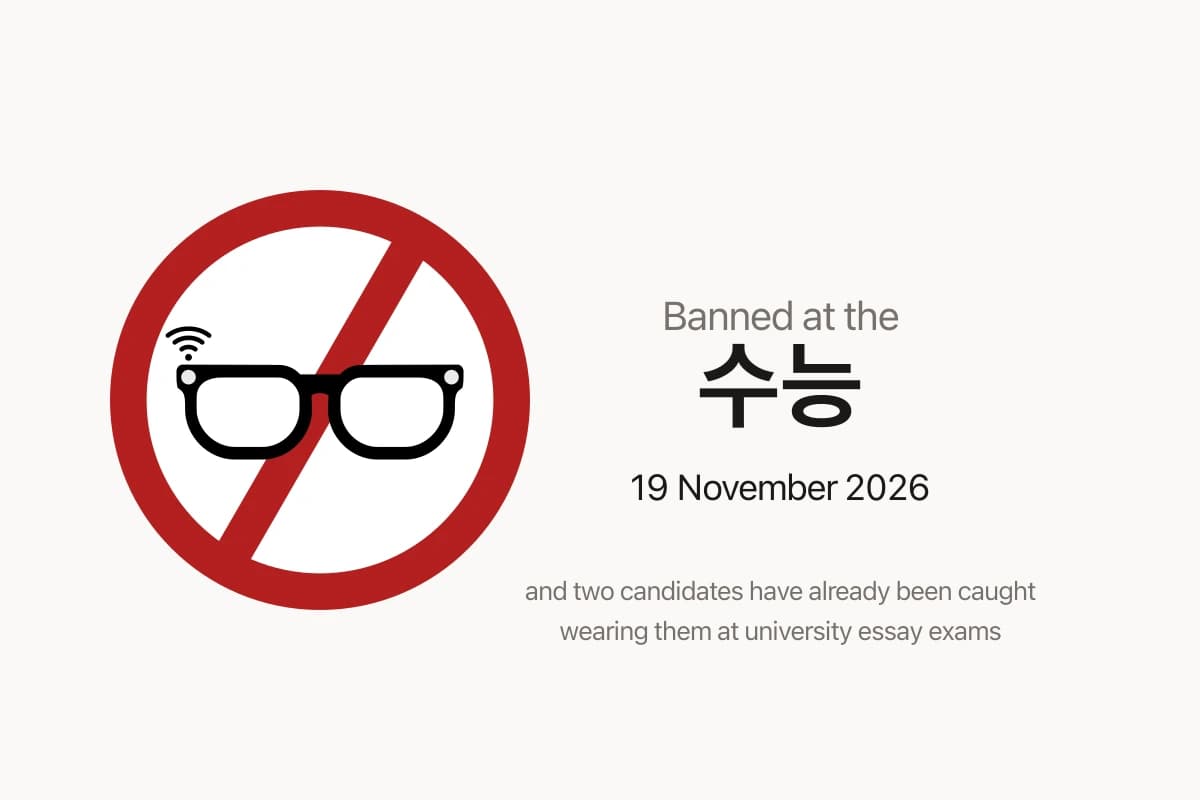
Two Candidates Wore AI Glasses Into Korean University Exams This Month. Five Weeks Later, 550,000 People Sit the 수능
At the University of Seoul on 3 October and at Yonsei a week later, proctors spotted AI smart glasses on candidates sitting essay exams for admission. Both had passed the glasses check in ordinary frames and switched once the exam began. The 수능 on 19 November already bans the devices; the question is whether anyone can see them.
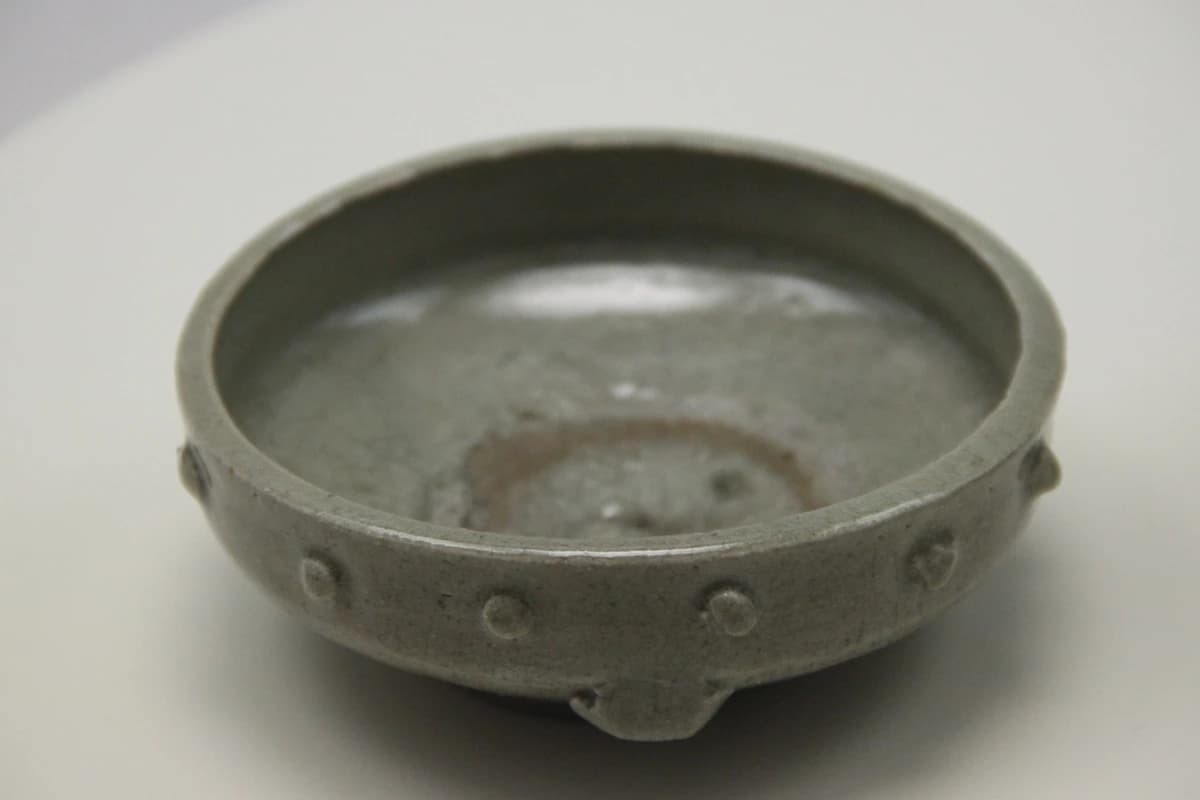
The Fisherman Hid It Under His Floorboards. The Reward He Eventually Got Set Off a Decade of Looting.
Korea marked fifty years of underwater archaeology in Mokpo in September 2026. The official story starts with a net and a report. The documented one starts with six pieces of Chinese porcelain given away as presents, a schoolteacher brother who had to get them all back, and officials who did not want the paperwork. Then the state paid a reward, a diver worked out how much of it went in tax, and for the next ten years people stole the wreck faster than the government could raise it — until the navy's own divers could not find the ship, and the excavation hired the looters.
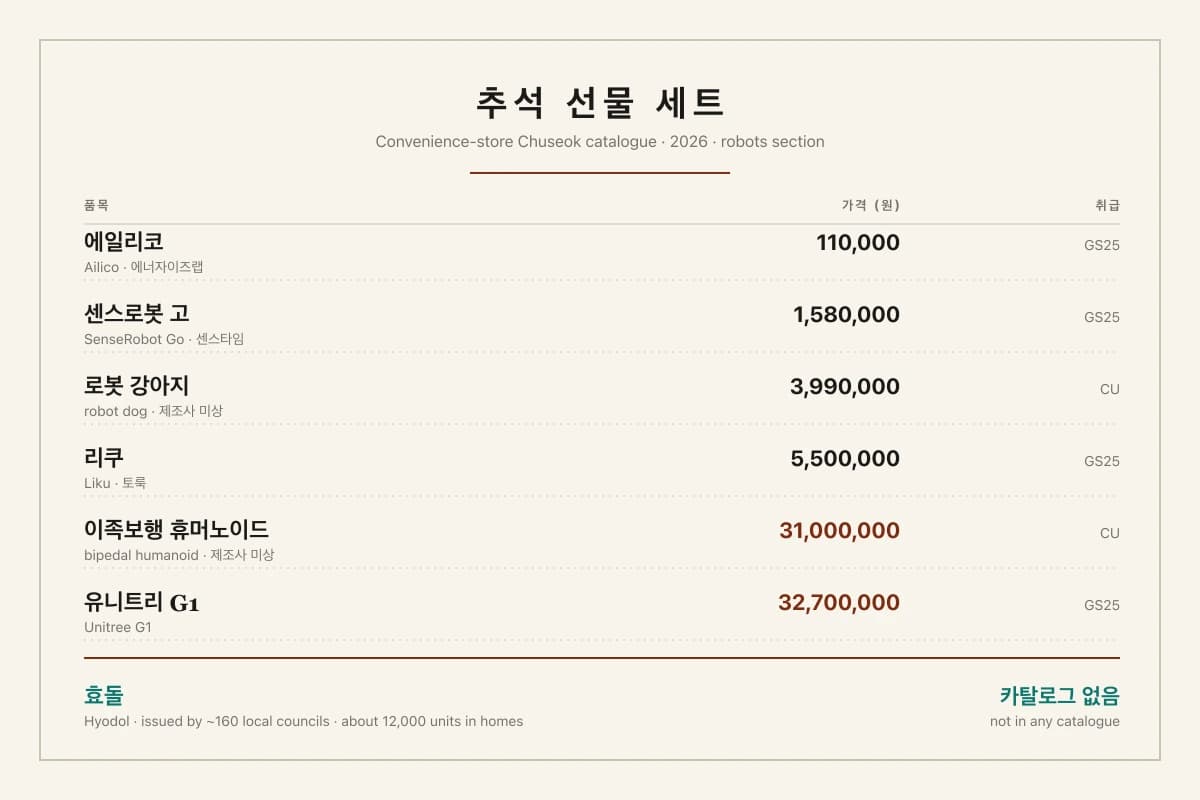
Korea's Convenience Stores Are Selling Humanoid Robots for Chuseok. Neither Chain Expects to Sell One, and Both Have Said So.
CU's holiday catalogue has a bipedal humanoid at ₩31 million, next to the beef and the gold bars. GS25 has an AI companion robot at ₩5.5 million and a keyring that talks back at ₩110,000. We assumed the pitch was companionship for parents you won't be visiting. It isn't — the retailers say plainly these are there to be noticed, not bought. Meanwhile about twelve thousand robots are already in Korean homes, asking elderly residents whether they've taken their medicine, and nobody put those in a catalogue.
The Weekly Dispatch
Korea, curated. Every week.
The best of K-culture, straight from Seoul. Written by people who actually live here.
Free, no spam, unsubscribe whenever.