On Chuseok, a Five-Person Shop Pays Time and a Half. A Four-Person Shop Pays Nothing Extra. Five Workers Spent Five Years Asking Why.
In August the Constitutional Court answered them, unanimously, and did not reach the question. It dismissed the case on the ground that the law they had challenged does not actually do anything — the exclusion lives in a different statute. The last time the court ruled on the substance was 1999, when it called the discrimination unavoidable at a stage of gradual institutional improvement. The improvement has since reached every size of Korean workplace except theirs.
Chuseok this year falls on Thursday 24 to Saturday 26 September. A great many Koreans will work through it, because shops and restaurants do not close.
If you work through it at a business with five or more employees, those are paid public holidays, and hours worked on them earn a premium — half as much again, and double beyond eight hours.
If you work through it at a business with four, none of that applies. Not the paid holiday, not the premium. Straight time, by design.
In August 2021, five workers at such businesses filed a constitutional complaint. On 27 August 2026 — five years and two weeks later — the Constitutional Court answered them unanimously, and the answer was not about whether the rule is fair.
What the court actually said
The complaint challenged Article 4 of the 공휴일법, the Public Holidays Act, passed in July 2021.
Article 4 is a cross-reference. It says, in substance, that the application of the holidays listed in the Act follows what is prescribed by the State Public Officials Act, the Labor Standards Act and other relevant statutes. It routes; it does not decide.
And that is what the court held. The provision, it said, exists to avoid contradictions between other statutes, and "the challenged provision does not, by itself, bring about any restriction of freedom, imposition of obligation, or deprivation of a right or legal status." Because it does nothing on its own, it cannot be the target of a constitutional complaint.
The thing that actually excludes them is elsewhere: 근로기준법 제55조 제2항, which makes public holidays paid, read together with 제11조, which applies the Labor Standards Act only to workplaces with five or more employees.
So the ruling is 각하, not 기각 — dismissed as inadmissible, rather than rejected on the merits. In plain terms: you have sued the wrong sentence.
This publication has had to be careful before about the difference between a statute, a decree, a directive and a recommendation, and this is the same discipline pointed at an outcome rather than an instrument. The court did not say the exclusion is constitutional. It said it would not look. Headlines reading "court upholds holiday-pay exemption" are describing something that did not happen.
Five years to establish that the wrong provision was named.
What "four or fewer" actually costs
It is worth setting out, because it is much more than a holiday.
| Five or more | Four or fewer | |
|---|---|---|
| Paid public holidays | yes | no |
| Overtime and holiday premium pay | yes | no |
| Statutory 8-hour day, 40-hour week | yes | no |
| Twelve-hour weekly overtime cap | yes | no |
| Protection against unfair dismissal | yes | no |
| Written notice of dismissal | yes | no |
| Statutory paid annual leave | yes | no |
| Minimum wage | yes | yes |
| Severance pay | yes | yes |
The minimum wage and severance survive because they sit in different statutes. Everything in the top block is the Labor Standards Act, and the Labor Standards Act mostly does not reach these workplaces.
The threshold is not a headcount on the day. It is an average over the preceding month — total worker-days divided by operating days — with a tie-breaker that pulls a workplace back into coverage if it actually ran with five or more people on more than half the days. Which is precise, and also, as the union that brought this case argues, gameable: their word for it is 사업장 쪼개기, splitting the workplace, keeping each registered entity under the line.
The sentence from 1999
Here is the part that reframes the whole thing.
The Constitutional Court has ruled on the merits of the five-employee line before. In September 1999, it upheld it. The reasoning was that drawing the line there was a rational legislative judgment given the realities of very small businesses and the limits of the state's capacity to inspect them — and that the resulting inequality was "unavoidable discrimination arising at a stage of gradual institutional improvement."
A stage of gradual institutional improvement. That was twenty-seven years ago.
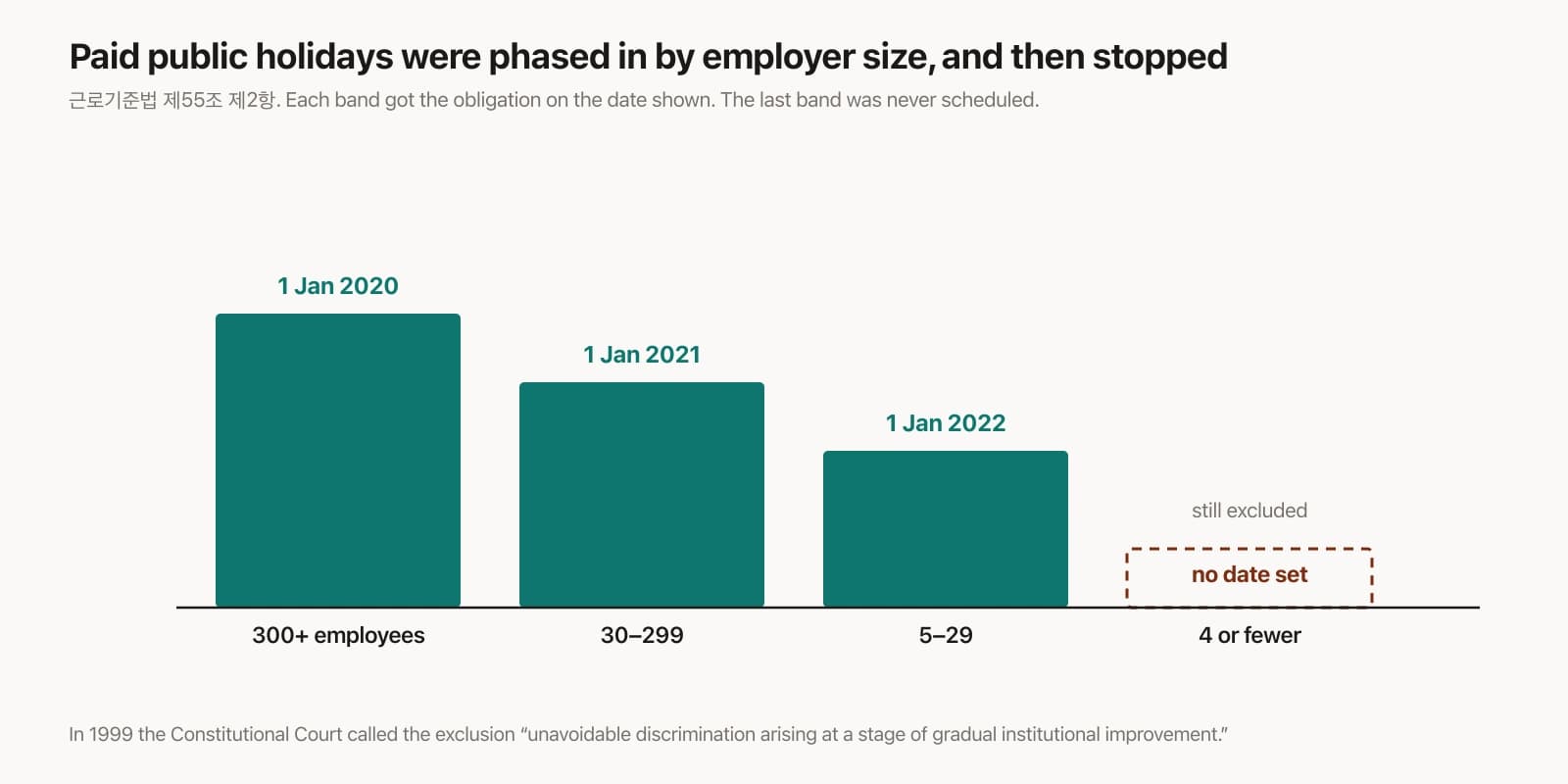
Look at what the improvement has done since, on the specific question of paid public holidays. The obligation was phased in by employer size:
- 1 January 2020 — workplaces with 300 or more employees, and public institutions
- 1 January 2021 — 30 to 299
- 1 January 2022 — 5 to 29
- four or fewer — never scheduled
The staircase was built, climbed, and stopped one step short. There is no date for the last group because no date was ever set.
And it keeps happening in the present tense. In 2026 Korea restored 제헌절, Constitution Day, as a public holiday after eighteen years — the regulation took effect on 11 May and the country observed it on Friday 17 July. Workplaces with five or more staff had to pay for it. Workplaces with four did not. A holiday was returned to the nation and the same group was carved out of it again, five weeks before the court declined to consider whether that is lawful.
How many people
Two official numbers, and they do not agree, so we will give both rather than pick the convenient one.
The establishment survey route, via KOSIS for 2024: 1,368,866 workplaces with one to four workers — 67.7 per cent of all workplaces in Korea — employing about 2.98 million people, or 16.5 per cent of insured employees.
The household survey route, from the supplementary labour-force survey of August 2025: about 3.90 million workers, 17.4 per cent of all wage earners.
The gap is methodological. One asks businesses how many people they employ; the other asks workers how big their workplace is. Somewhere between three and four million people are on the wrong side of this line — call it one Korean employee in six.
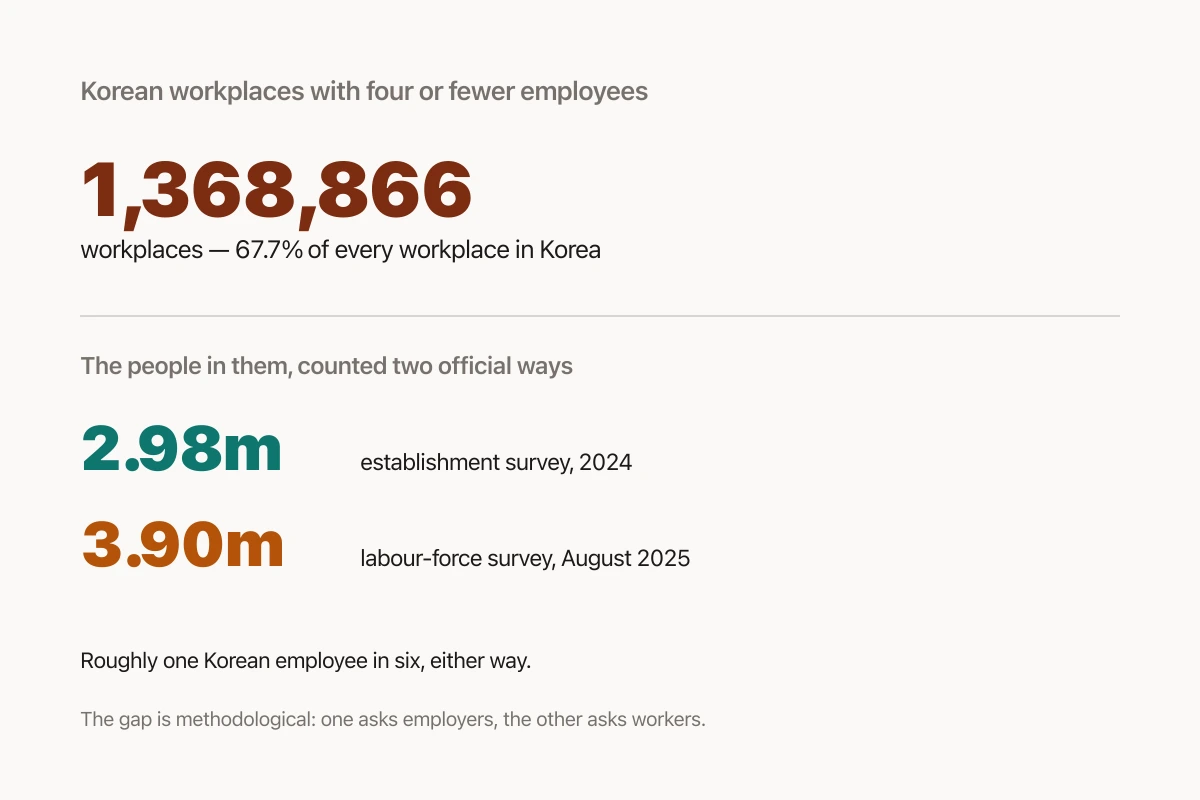
Two thirds of Korea's workplaces are too small for most of its labour law.
The case for the exemption, put properly
It is not a frivolous case and it should not be waved away.
The 소상공인연합회, the federation representing micro-enterprise, called the dismissal "매우 다행스러운 결과" — a very fortunate outcome — citing a long domestic downturn, high prices and high interest rates, and warning of "감당하기 힘든 인건비 부담", an unbearable labour-cost burden, if the obligation were applied uniformly. It called on the National Assembly and on labour groups to stop pressing for uniform application and to concentrate on stabilising small businesses instead.
That is a real constituency with a real problem. A two-person restaurant operating on thin margins is not a scaled-down corporation; a holiday premium is a materially different proposition for it. The 1999 court's second reason — that the state lacks the inspection capacity to enforce the full Act across 1.37 million tiny workplaces — is, if anything, more obviously true now than it was then.
What the federation's statement does not contain, and we looked, is any figure. No closure rate, no margin data, no estimate of the cost. The argument as made is entirely qualitative, against an exclusion whose scope is precisely quantified.
What is actually moving
There is a reform programme, and it is worth knowing what is on it and what is not.
The current administration set out a phased plan in August 2025 to extend Labor Standards Act protections into sub-five workplaces: workplace-bullying and maternity protections in the second half of 2025; an equal-pay-for-equal-value principle in the second half of 2026; protections for platform and freelance workers in early 2027; retirement-pension coverage phased in between 2027 and 2030.
Paid public holidays are not on that list.
So the position after 27 August is this. The court will not rule on it. The legislature has a roadmap that does not include it. The last authoritative statement on the substance remains a sentence from 1999 describing the exclusion as a temporary feature of a system in the process of improving.
What it says
We are wary of pieces that discover an injustice and stop there, so let us be precise about what this one is.
It is not that Korea has a five-employee threshold; many countries scale obligations by employer size, and the reasons are not disreputable. It is that this particular threshold has been described as transitional for twenty-seven years, that the transition has visibly completed for every other size band, and that the mechanism which would ordinarily test whether that is still defensible has now declined to engage with it on a point of pleading.
The five workers can, in principle, file again against the right provision. That would start the clock over.
Meanwhile Chuseok is on the 24th. Somewhere in Korea, two shops on the same street will open on the same morning, and the one with an extra member of staff will pay its people half as much again for being there.
For what Chuseok is actually for — and why the state's own documents describe two different holidays — see Chuseok is not Korean Thanksgiving. For the other piece of Korean labour culture with a legal edge, see gapjil, explained.
Images. The listing thumbnail is an AI illustration (generated with Higgsfield, GPT Image 2.5): two near-identical shops, four workers in one and five in the other. It depicts no real shop or person. The rest are charts we built ourselves: the protections that stop at five employees; the phase-in staircase for paid public holidays, ending in a step with no date on it; and the two official counts of how many people are on the far side of the line. No photographs — this is a piece about a statutory threshold, and there is nothing honest to photograph.
Reported from Korean coverage of the 27 August decision in 한국경제, TV서울, 이뉴스투데이, 아시아투데이, 매일일보 and 워크투데이, all of which quote the court's reasoning in near-identical terms; from the statutes as published on the national law portal; and from the 소상공인연합회's own statement. Stated as uncertain rather than smoothed: we could not obtain the case's docket number, and give none. The literal text of 공휴일법 제4조 and of the enforcement-decree rule for counting employees are corroborated across multiple legal and practitioner sources but we could not pull either from the primary text directly, so they are described rather than quoted. The two employment figures come from two different official surveys with different methods and we give both. Deliberately not cited: a 2019 Constitutional Court decision on the related exclusion from unfair-dismissal protection, because two reference sources give it two different outcomes and we could not reach the judgment to settle which is right — the 1999 ruling, which we do rely on, is consistently reported. We have also not named or described the individual complainants beyond the fact of their employment, and we make no claim about the merits of a case the court has not decided.
Keep Reading
More Stories

A Portmanteau Walks into a Party: In Defence of the Koreaboo
The word 'koreaboo' travels fast and lands hard — but nobody can define it, nobody who matters invented it, and it applies, with suspicious consistency, almost only to East Asian cultures. Drawing on the Francophile, the Anglophile, and a 1,555-day Duolingo streak, a guest essay on the double standard that calls Western cultural enthusiasm personality and Korean cultural enthusiasm a phase.
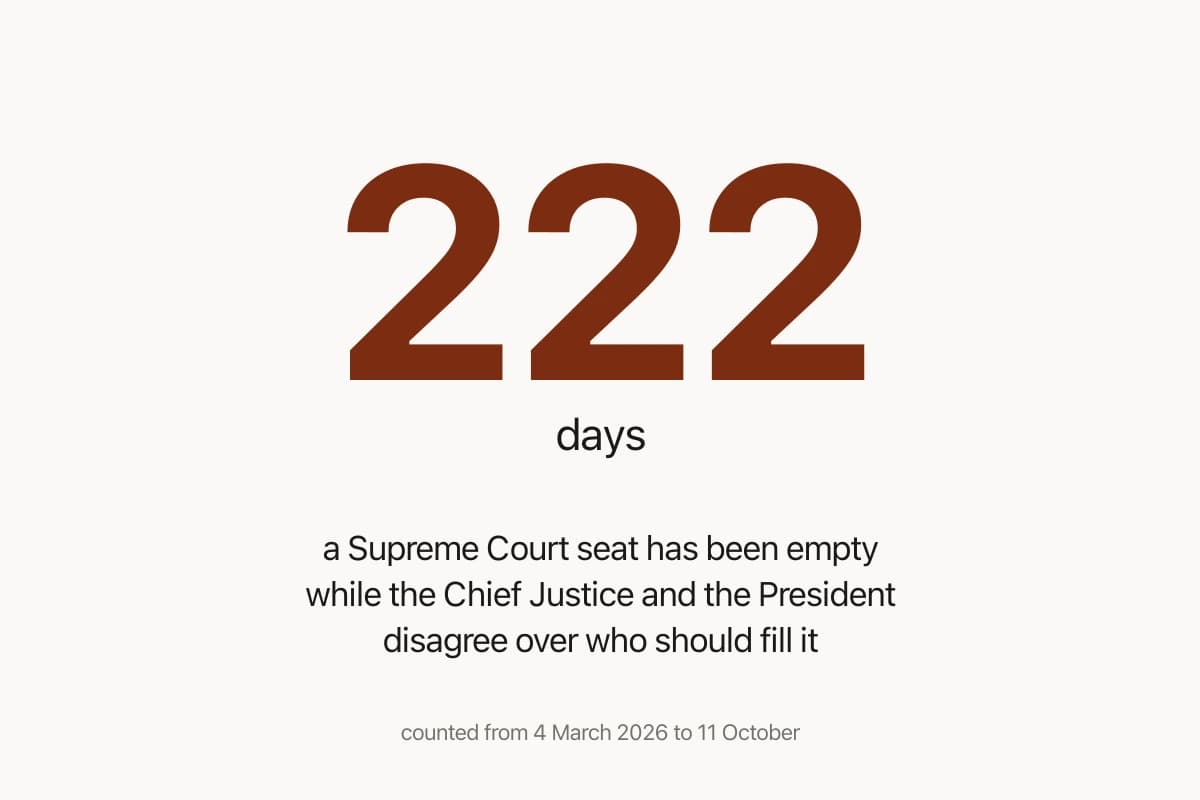
Summoned to Testify, Korea's Chief Justice Came, Refused the Oath, Answered Anyway — and Left at Lunch
On 6 October 조희대 sat before the National Assembly's judiciary committee for two and a half hours, unsworn, defending a refusal to put forward a second name for a Supreme Court seat that has been empty since March. Then the Chief Justice went, and came back at ten to eleven at night to give closing remarks. Nobody voted to compel a return, and the seat is still empty.
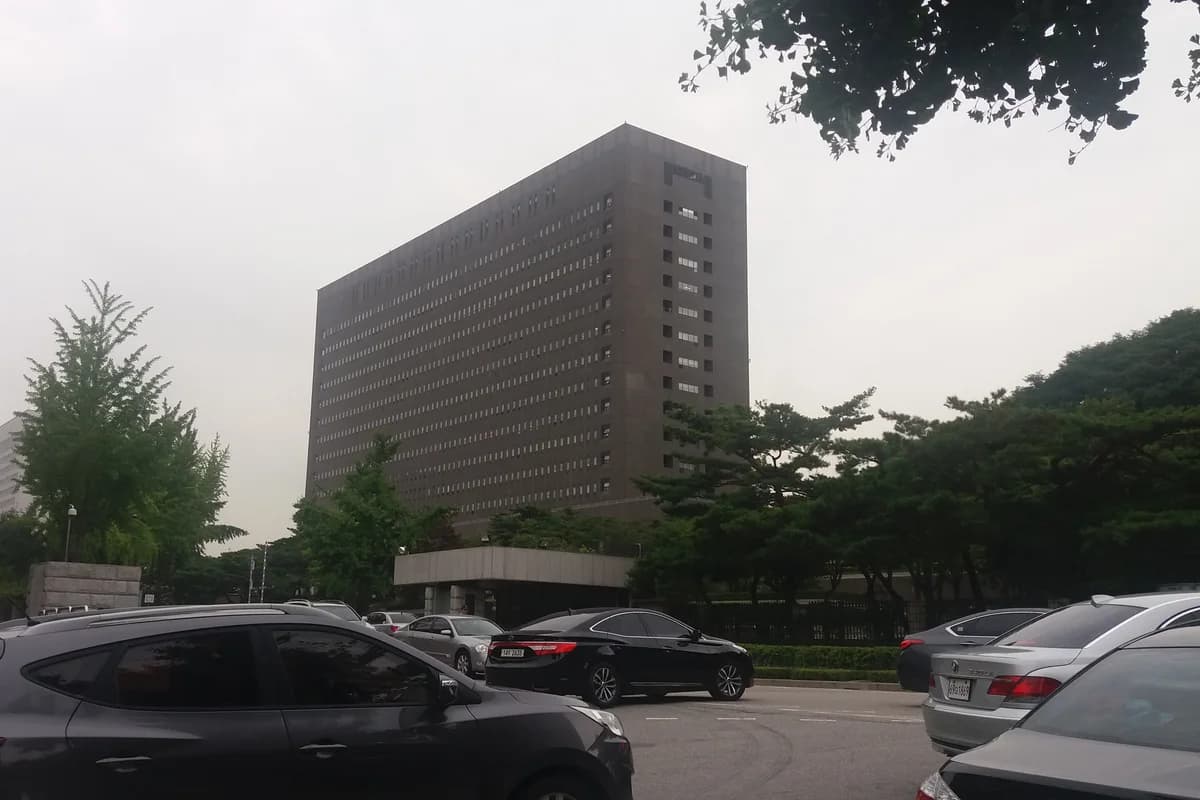
Korea Abolishes Its Prosecution Service on 2 October. One Successor Opens Without a Chief or a Finished Building. The Other Opens With the Same Prosecutors Under a New Sign
At midnight on 1 October the 검찰청법 is repealed and the institution that has dominated Korean politics since 1948 splits in two: a 공소청 that charges and tries cases, and a 중대범죄수사청 that investigates serious crime. It is the largest change to Korean criminal justice in seventy years, and it begins with acting heads at the prosecution office, the justice ministry and the national police, no head at all at the new investigation agency, seven sets of rules still unpublished, four challenges pending at the Constitutional Court — and the President arguing on X, in the small hours, with his own party about whether a former prosecutor may run the agency that replaces prosecutors.
The Weekly Dispatch
Korea, curated. Every week.
The best of K-culture, straight from Seoul. Written by people who actually live here.
Free, no spam, unsubscribe whenever.