The Oldest Man at the World Championships Is 106. He Missed His First Event. Then He Set a World Record.
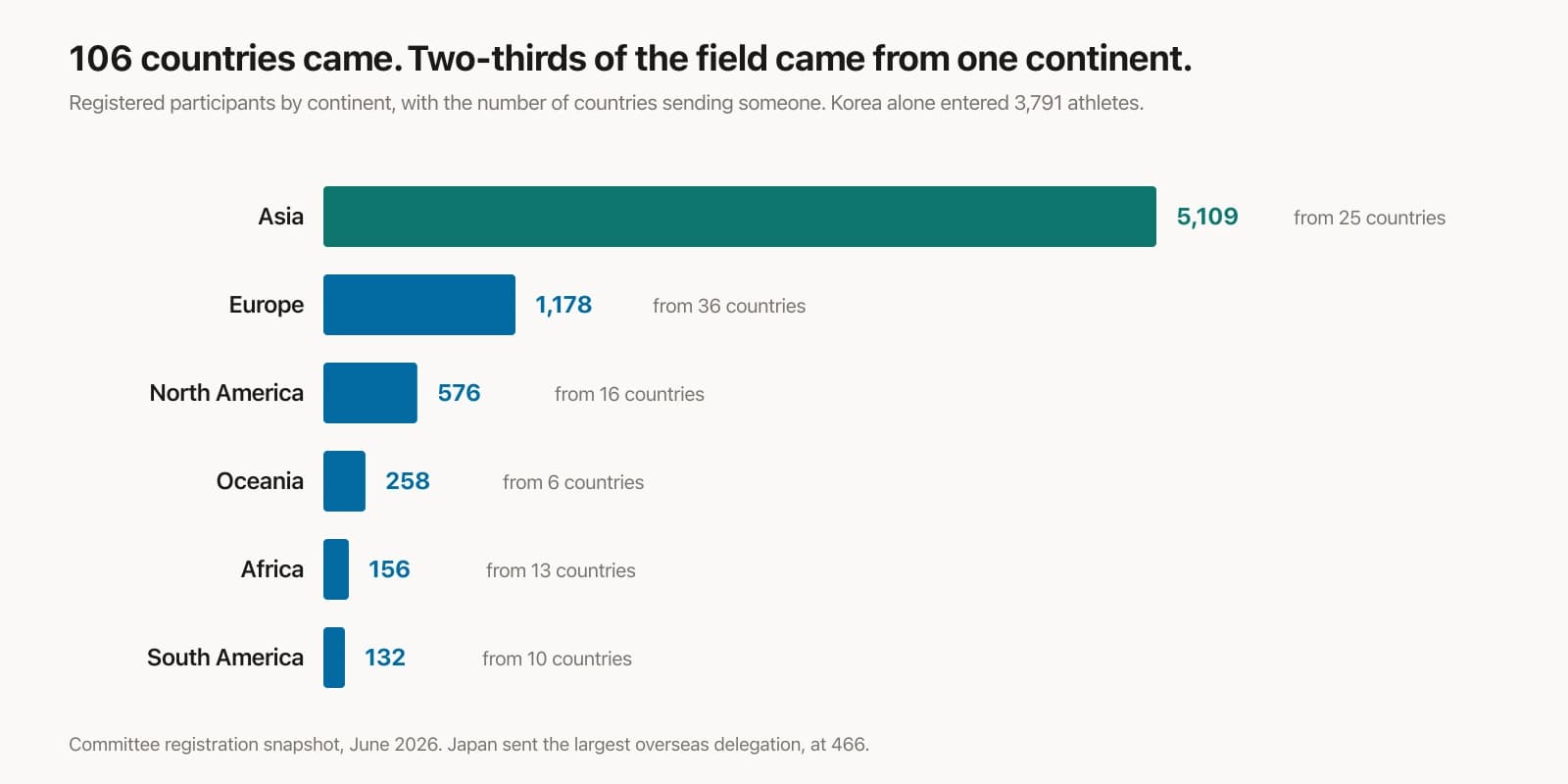
Seven thousand four hundred amateurs paid their own airfare to Daegu this month to enter a world championship anyone over 35 can join. Among them: a Thai schoolteacher who took up sport at 80 and is now 106, a Korean who vaulted at three Olympics and won gold on the same runway thirty years later, and a 90-year-old who finished last of six in the 100 metres while his granddaughter watched. The 106-year-old withdrew from his first event. On 27 August he threw a discus 7.59 metres, nine centimetres past the world record for his age group, in 33-degree heat.
Sawang Janpram was entered in the men's shot put on Monday morning.
He is 106 years old. He is from Thailand, he was a schoolteacher and then a primary-school principal, and he did not touch a sport until he was 80 — a fact worth sitting with for a second, because he has since won 78 medals. He got into it because a friend of his became bedridden and he did not fancy the same ending, and because his daughter had taken up athletics and looked better for it. His daughter is 74. She competes too. At the World Masters Games in Taipei last year they won medals in the same week.
He did not throw on Monday. He withdrew — personal circumstances, per the local paper, no elaboration. His discus is on the 27th and his javelin on the 29th, and the organisers have a ceremony planned for him on the second of those days.
So the oldest competitor at a world championship currently under way in Daegu had, at the time we first published this, not competed at all. (He has since. There is an update at the foot of this piece, and it is worth the wait.) That is the honest state of it, and it is a more useful way into this event than the one you would get from the promotional copy, because the thing that makes the World Masters Athletics Championships worth your attention is not that a 106-year-old shows up. It is that 7,400 other people did, they all paid their own way, and most of them are not going to win anything either.
The entry requirement is that you are 35
There is one rule. You have to be 35 or older. That is the whole qualification.
You do not need a time, a record, a ranking, a federation's blessing or a sponsor. You need to be over 35 and you need to pay — your flights, your hotel, your entry fee, all of it, out of your own pocket. Then you get a lane at Daegu Stadium, the 66,000-seat bowl built for the professional World Championships in 2011, the one where Usain Bolt false-started out of the 100 metres final.
The opening ceremony was on 21 August, with IVE and a run of trot singers on the bill and delegations from most of the 106 competing countries in the stands. Competition started the following morning and ran to 3 September across eight venues — the main stadium, the auxiliary stadium next door, Gyeongsan Civic Stadium, Suseong Family Park, the city's athletics centre, and road courses laid out on ordinary Daegu streets.
Thirty-four events: 17 on the track, 11 in the field, 6 on the road. Everything is split into five-year age bands, which is how a 106-year-old and a 36-year-old can be at the same championship without either being a novelty act.
One number correction before we go further, because it is in most of the coverage and it is wrong. You will see 11,176 reported as the number of athletes. It isn't. That figure — sometimes given as 11,014 — is athletes plus accompanying family, officials and volunteers. The organising committee's own athlete count is 7,409; World Masters Athletics, working from a slightly later registration cutoff, says 7,476. Call it about 7,400. The difference matters, because 3,600 of those people flew to Korea not to compete but to watch someone they are related to.
Between them the athletes filed 12,277 event entries. That is roughly 1.7 events each. Having crossed the world at their own expense, a lot of them entered everything they could get into. One British competitor is in seven. One Korean is in seven.
What has actually happened
22 August. Korea's first gold, and a good one. 김철균 (Kim Chul-kyun) won the M55 pole vault at 3.55 metres. He is a former national-team vaulter who competed at the 1988 Seoul Olympics, the 1992 Barcelona Olympics and the 1996 Atlanta Olympics — and who, thirty years on from the last of those, was back on a runway in a Korean stadium going over a bar.
Also on the first day: 도도환 (Do Do-hwan), 77, ran 15.63 in the M75 100 metres heats. And 임을용 (Im Eul-yong), 79, ran 19.34 in his — reportedly his return to a track after a gap of about sixty years. He has the 400 metres on the 29th.
23 August. The 10km road race drew 1,330 entrants from 52 countries. 신행철 (Shin Haeng-chul) won the M70 division in 41:49. He also holds the M70–74 world record for the marathon at 2:54:10. Those are two separate facts that get merged in a lot of the write-ups — the world record is the marathon, the 41:49 is a 10km in Daegu — and both are impressive enough not to need conflating.
The same morning, 김명락 (Kim Myung-rak), aged 90, lined up in the second semi-final of the M90 100 metres. He finished last of six, in 44.83 seconds. His daughter and his granddaughter were in the stand.
He said afterwards that the plan had been not to fall over, and to think about his own stamina rather than anyone else's. He finished. At this championship that is the achievement, and everybody in the stadium understands it as one.
The people who are not the story
Pull the entry list apart and it stops being a curiosity and starts being a portrait of what happens to athletes after the part that gets televised.
김희선 (Kim Hee-sun) is 63 and entered in the high jump. In 1988, in Seoul, she cleared 1.92m and became the first Korean woman to reach an Olympic high jump final — still the only one. She broke the Korean national record eleven times. The 1.93m she jumped in 1990 has now stood for 36 years. Her husband, 도호영 (Do Ho-young), 66, is also a former national-team athlete, and he is entered in the high jump too.
Joetta Clark Diggs is at the American end of the same story. Four Olympics — Seoul, Barcelona, Atlanta, Sydney — as an 800 metres runner, eleven US national titles, a personal best of 1:57.84. In Daegu she is entered in the 100 and 200 metres, which is not her event and never was. She is the daughter of Joe Louis Clark, the New Jersey principal Morgan Freeman played in Lean on Me, and the mother of Talitha Diggs, a world-champion 400 metres runner. Three generations.
Ser-Od Bat-Ochir of Mongolia is entered in the 5,000 metres and the half marathon. He is the first person to run six Olympic marathons.
문기숙 (Moon Gi-sook), 64, has more than seventy marathon podium finishes and ran the 10km. Dainis Kūla, who won the javelin at the Moscow Olympics in 1980, is throwing the javelin. James Beckford, Jamaica's long jump silver medallist from Atlanta, is jumping.
And the athletes' oath at the opening ceremony was taken by 공한식 (Gong Han-sik), 75, a Daegu local in the 100 metres, and Sarah Roberts of Britain, who is 75 or 76 depending on which side of the world you ask, and who has spent the last twelve months setting W75 world records at 800 metres, 1500, the mile, 3000 and 5000.
The part nobody planned for
They are doing this in the worst Korean summer on record.
Daegu is the city Koreans call 대프리카 — Daegu plus Africa — and it earned the name long before this year. This August it has been competing in a heatwave that set a national daily-mean temperature record twice in the first week, broke, came back, and had its warnings expanded across most of the inland regions again on 24 August. 처서, the solar term that is supposed to mean the heat retreats, was the 23rd. It didn't.
We wrote about what this summer has done to the country in our piece on the Korean summer. What it means here is narrower and sharper: a 90-year-old ran a 100-metre semi-final, and a 79-year-old is going to run a 400, in conditions that the Korean government spent the same week telling people to stay indoors to avoid. The organisers have around 1,200 volunteers and interpreters on the ground — the committee's own count of its formal volunteer corps is 844 — free shuttles from the airports and stations, and information desks at five transport hubs. None of that changes the temperature.
Why you have not read this anywhere
You more or less haven't, and the reason is unglamorous. Korea's English-language papers have covered it — the Korea JoongAng Daily ran a good piece on the returning Olympians, the Korea Times previewed it in May, Seoul Economic Daily covered the opening. Beyond that: nothing. No wire service. No general-interest coverage anywhere outside Korea-focused press.
Which is a strange gap, because the ingredients are not obscure. Eleven thousand people came to a Korean city. A hundred and six countries sent someone. The oldest man in the field was born during the 1918 influenza pandemic and took up throwing at 80.
The likeliest explanation is that it does not fit a category. It is not elite sport, so the sports desks are not interested. It is not a human-interest story about one person, because there are 7,400 of them. It is a world championship where the median competitor will not medal, has no coach, took annual leave to be there, and will fly home on Thursday.
That is also, fairly obviously, the appeal.
The number that is actually the story
Of about 7,400 athletes, 225 are 80 or over. Twenty-six are 90 or over. One is 106.
Read that as a survival curve and it is bleak. Read it as an entry list and it is the opposite: 26 people over the age of 90 filled in a form, paid a fee, booked a flight to a foreign country in the hottest month it has ever had, and put themselves on a start line where they were fairly likely to come last.
Kim Myung-rak came last. In 44.83 seconds. His granddaughter watched him do it.
Sawang Janpram was entered in the discus on the 27th.
Update, 28 August: he threw
On the morning of 27 August, on the field at Daegu Stadium, wearing bib number 6975, Sawang Janpram entered the men's 105-and-over discus and threw the one-kilogram disc 7.59 metres.
That is an amateur world record for the age group — nine centimetres past the 7.50m that stood before it. He won gold. It was 33°C.
Two qualifications, both of which make it better rather than worse. He was the only entrant: there was nobody else over 100 in the field, so the gold was his provided he was not disqualified. And the Korean reporters who watched him all noted the same thing anyway — that he went through his preparation and every throw with complete seriousness, as though the result were in any doubt at all.
Afterwards he said:
"경기를 마칠 수 있어 행복하고 금메달을 따게 돼 기쁩니다"
"I'm happy I was able to finish the competition, and glad to have won the gold."
Finishing first. The medal second.
Which is, almost exactly, what Kim Myung-rak said after coming last of six in the 100 metres — that the plan had been not to fall, and that he was proud to have got round. A 90-year-old who finished last and a 106-year-old who set a world record gave the same answer about what they had come for.
He had the javelin on the 29th.
Second update, 1 September: he won that too
On 29 August Sawang Janpram threw the javelin 10.04 metres on his first attempt of the final — 9.08m and 9.30m followed — and won the men's 100-and-over category. Two events, two golds.
This one was not a world record, and it is worth saying so rather than letting the pattern imply it: the standing mark for the age group is 12.42m. He was again the only entrant. That evening the city's vice mayor for administration presented his medals and a bouquet at Daegu Stadium.
"경기 결과에 만족하고 기쁘다"
"I'm satisfied and happy with the result."
He said health matters more than anything, that he hoped young people would take exercise seriously, and that he intends to compete next at a meet in Petchabun, in Thailand, in 2027. He is 106.
And the couple we mentioned earlier finished their competition. 김희선 — the first Korean woman to reach an Olympic high jump final, whose 1990 national record has stood 36 years — cleared 1.38m for fourth in the W60 high jump on the 30th. Her husband 도호영 cleared 1.45m for fifth in the M65 two days before her. They live in New Zealand now, and flew in like everybody else.
Five world records were set across the championships, and the roll-call is worth having in full, because it is a fair portrait of who comes to a meet like this:
| Sawang Janpram (Thailand) | M105 discus | 7.59m |
| Kenton Brown (USA) | M80 100m | 14.16 |
| B. John Wright (UK) | M65 100m | 12.03 |
| Richard Lee (USA) | M65 2000m steeplechase | 7:09.29 |
| Boonnok (Thailand) | W70 80m hurdles | 15.61 |
None was Korean. The championships close today, 3 September.
For Korea's other complicated relationship with an ageing sport, see ssireum, explained — a national tradition that had to be inscribed by UNESCO before Koreans took it seriously again. And for the summer these athletes are competing in, Korean summer, explained.
Images. All three are charts we built ourselves from the Daegu organising committee's own published registration figures, because we could not find a single licence-clean photograph of this event. That is worth explaining rather than hiding. Korea.net and KOCIS, our usual source for freely licensed Korean official photography, appear not to have covered the championships at all. Daegu Metropolitan City's newsroom does have photographs, but the pages carry a blanket copyright notice and no KOGL type marking, and an unmarked page is not an open licence — so we left them. The organising committee's gallery states no licence. And Wikimedia Commons has photographs of Daegu Stadium, but Commons treats South Korea as a no-freedom-of-panorama country, which means a third party's CC licence on a photograph of a building exterior does not clear the architect's copyright underneath it. (Corrected 11 September: we had written that Korea has no freedom of panorama at all. It has one — 저작권법 제35조②, which lets works permanently displayed in streets, parks and on building exteriors be reproduced "by any method whatsoever" — but it carves out reproduction for the purpose of sale, and that carve-out is why Wikimedia Commons, which requires commercial reuse, treats Korea as a no-FoP country and will not host such photographs. Our sourcing decision is unchanged; the reason we gave for it was wrong.) So: no photographs. Three charts instead.
The charts show the age tail (about 7,400 athletes, 225 aged 80 or over, 26 aged 90 or over, one aged 106), the continental split of entrants, and the single number at the end of the tail. All figures are the organising committee's June registration snapshot as reported by 헤럴드경제, cross-checked against World Masters Athletics' own August press release. They are registration figures, not a turnstile count, and the two sources differ slightly because they were taken at different cutoffs — we have used the committee's numbers throughout and said so on the artwork.
Reported from Korean-language coverage published 17–24 August 2026 — principally 매일신문, 국제뉴스, 경향신문, 헤럴드경제 and 한국일보 — together with the championships' own English site and World Masters Athletics' press releases. Results were as of the morning of 24 August at first publication; the discus update was added on 28 August and verified against 연합뉴스, 세계일보, 조선비즈, 아시아경제, 서울신문 and 노컷뉴스, which agree on the distance, the category and the record. One outlet dates the throw to the 25th; the weight of reporting and the photo captions put it on the 27th, which is also the date the organisers scheduled. The meet ran to 3 September. We updated this piece twice during it — the discus on 28 August and the javelin on 1 September — and then checked again on 8 and 11 September for reporting on its closing days and on whether Sawang Janpram added anything after the high jump. We found none, in searches for 세계마스터스육상 대구 폐막 and for his name in Korean, so the results above stand as our last verified position rather than a final medal table, and we would rather say that than imply we watched it to the end. Deliberately left out: a widely-summarised claim that Hwang Young-cho left the official course during the 10km road race, which we could not confirm in any second source and will not print on one; the Thai and hangul spellings of Sawang Janpram's name, which we could not verify against any original-script source and would rather omit than guess at; and an age-by-five-year-band breakdown of the full field, which is not in any public reporting — the committee published only the 80-plus, 90-plus and 100-plus counts, and the start-list platform that holds the rest is a bot-blocked single-page app we could not extract cleanly. Where sources disagree we have said so in the text: Sarah Roberts is 75 in the Korean press and 76 in Athletics Weekly; Shin Haeng-chul is 70 in most reports and 71 in one; the volunteer count is 844 or about 1,200 depending on whether interpreters are included.
Keep Reading
More Stories
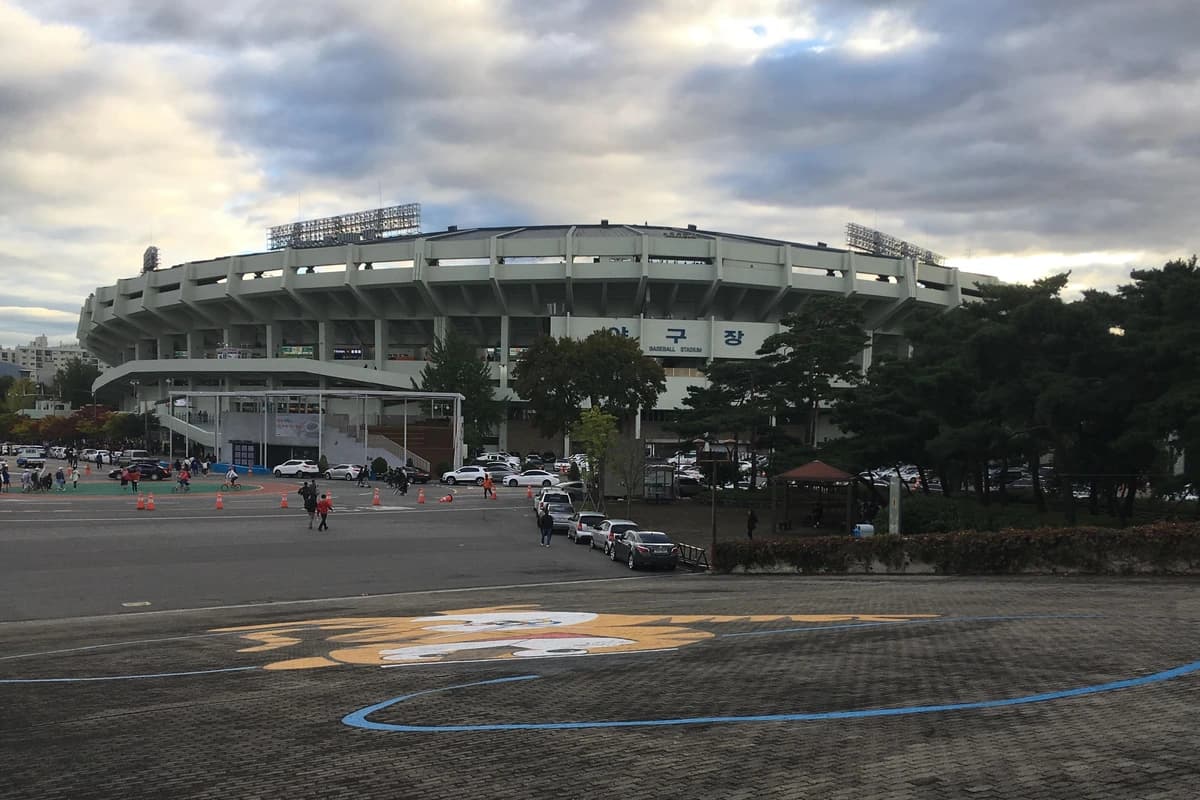
The Lights Went Out at Jamsil on Monday Night. Korea's Most Famous Ballpark Isn't Quite Finished Yet
On 12 October, after the last regular-season game at 잠실야구장, four Doosan legends stood at the bases in the dark and lifted home plate. LG had said its own goodbye five days earlier. The 44-year-old stadium is due to come down for a domed replacement — but the postseason, starting tonight with LG against Doosan, will keep it open for at least two more games.
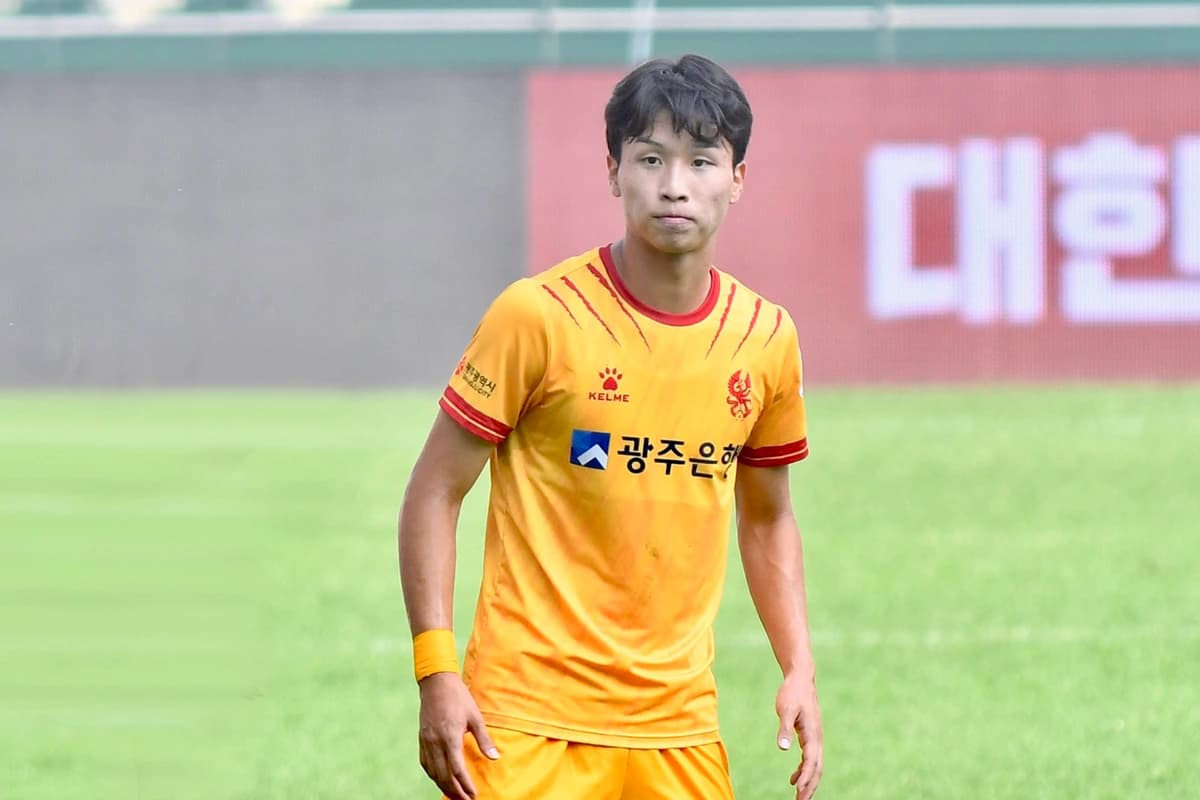
Korea Beat Japan for a Fourth Straight Asian Games Football Gold. Then Its Captain Held Up the Medal and Said, 'I'm Not Going to the Army'
엄지성's 61st-minute goal at Toyota Stadium made Korea the first side to win the men's tournament four times running, and exempted 20 of its 23 players from active military service. Within a day three of them were apologising for saying what the medal was for — and the argument about the exemption itself had started again.
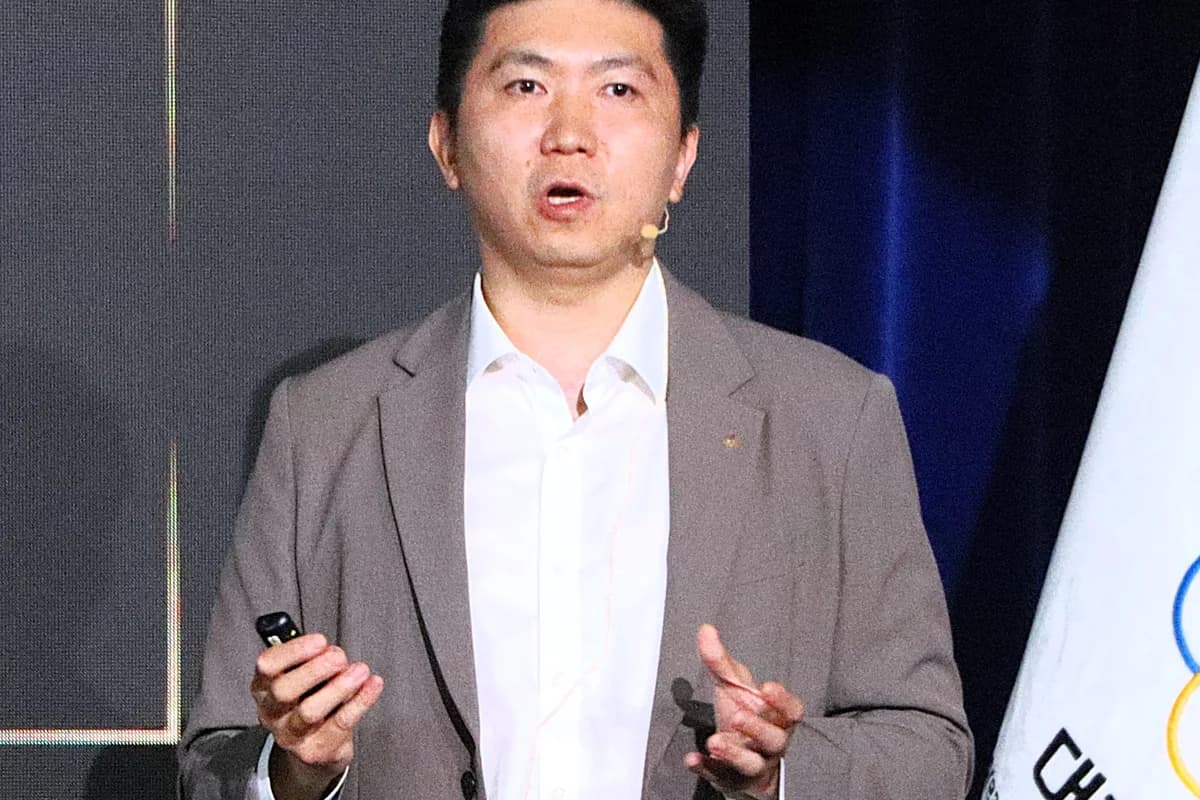
Korea's Sports Chief Gave Japan's Asian Games an F. Then the Organisers Apologised — to Japanese Spectators — for a Sign Saying the Rising Sun Flag Was Banned
The hosts of Aichi–Nagoya 2026 played North Korea's anthem for South Korea's hockey team, introduced Korea as the Republic of China at a medal ceremony, put Hideyoshi on the welcome stage, lost the basketball team's bus before the final, and housed athletes in leaking containers. Then a ballpark sign listed the Rising Sun flag among banned items, and the organising committee said sorry — in Japanese only, to its own crowd — because the flag was 'naturally' allowed. Its own rulebook bans flags that suggest political claims. It chose not to read it.
The Weekly Dispatch
Korea, curated. Every week.
The best of K-culture, straight from Seoul. Written by people who actually live here.
Free, no spam, unsubscribe whenever.