황사 Is Not 미세먼지: What Korea's Air Quality Alerts Actually Mean
English coverage treats yellow dust and fine dust as the same problem. Korea's own forecasters subtract one from the other before publishing. A guide to the two seasons, the alert thresholds, what KF94 actually certifies, and why 'it all comes from China' is a number swap.
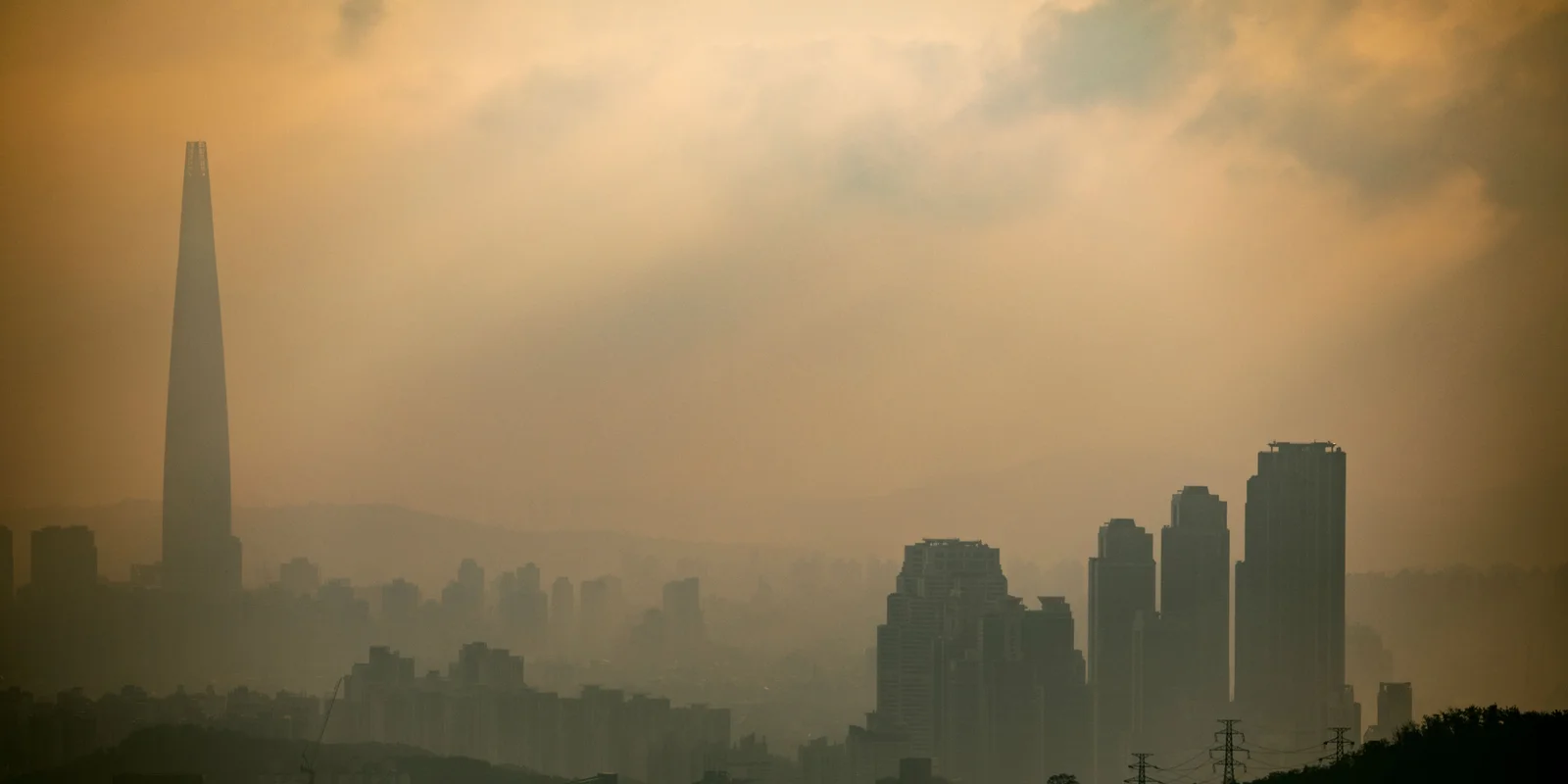
Open Korea's National Institute of Environmental Research seasonal air-quality outlook and you'll find, beside every fine-dust figure, a small parenthesis: (황사일 제외).
Asian dust days excluded.
Korea's own forecasters subtract yellow dust from the fine-dust dataset before publishing it. They are not the same phenomenon, they do not come from the same place, they do not peak in the same month, and Korean institutions treat them as separate to the point of running them out of two different government agencies.
English-language coverage merges them constantly. If you have read that "spring is Korea's dust season" and packed accordingly, you got one of the two right and the more consequential one wrong.
Here is what the two things actually are.
Two Different Problems
황사 (hwangsa) is mineral dust — soil, blown off the Gobi Desert, the Inner Mongolia Plateau and the Loess Plateau, and carried east on the westerlies across the Yellow Sea. It is a natural geological event that has been recorded in Korea for centuries. It is coarse, which means it registers mostly as PM10 rather than PM2.5.
미세먼지 (PM10) and 초미세먼지 (PM2.5) are combustion aerosol — the by-product of burning things. Vehicles, industry, power generation, heating. It is year-round, it is finer, and a majority of it is made in Korea.
The institutional split makes the distinction concrete: 황사 is forecast by the Korea Meteorological Administration, because it is weather. 미세먼지 is forecast by the National Institute of Environmental Research, because it is pollution. Since 2018 they run a joint desk so the public gets one forecast — but the two phenomena belong to different ministries.
The Season Everyone Gets Backwards
This is the correction with the most practical consequence.
Fine dust is a winter problem. Korea's own figures: average PM2.5 from December to March is 29 µg/m³, against 20 µg/m³ across April to November — roughly 45% higher. That is why Korea's 계절관리제, its seasonal management regime of tightened emissions controls, runs from 1 December to 31 March.
And the government states plainly which month is worst: March has both the highest concentrations and the most "bad" days of the year.
Yellow dust is a spring problem. KMA's Seoul observation record concentrates almost entirely in January to May, peaking in March and April, and falls to near zero from June to December.
So the two overlap in exactly one month — March — which is precisely why they get conflated.
The practical version, for anyone planning a trip:
| Worse | Better | |
|---|---|---|
| Fine dust (combustion) | December–March, worst in March | Summer — rain and southerly flow scrub the air |
| Yellow dust (desert) | March–May, peaking April | June–December, essentially absent |
A February trip has worse fine dust than a May trip. A May trip has more yellow-dust risk than a February one. "Spring is the bad season" is half-right for the wrong reason — and it leaves people thinking a January visit is clear.
Summer being the cleanest air of the year is genuinely counterintuitive if your mental model of a Korean summer is the one we describe in Korean summer, explained — but the monsoon that makes August unpleasant is also what washes the sky.
The Alerts, and a Trap Inside Them
Korea has two alert tiers: 주의보 (advisory) and 경보 (warning). The current thresholds, set in the enforcement rules of the Clean Air Conservation Act:
| Alert | Issued when |
|---|---|
| 미세먼지 (PM10) 주의보 | Hourly mean ≥150 µg/m³, sustained 2 hours |
| 미세먼지 (PM10) 경보 | Hourly mean ≥300 µg/m³, sustained 2 hours |
| 초미세먼지 (PM2.5) 주의보 | Hourly mean ≥75 µg/m³, sustained 2 hours |
| 초미세먼지 (PM2.5) 경보 | Hourly mean ≥150 µg/m³, sustained 2 hours |
Note the metric: these are one-hour means sustained for two hours — not daily averages. Comparing them against a daily-average guideline from somewhere else is the second most common error in English writing on this.
At 주의보, kindergartens and primary schools are told to avoid outdoor classes. At 경보, outdoor classes are prohibited and schools may shorten hours or close.
Now the trap. For yellow dust, only one tier exists — 황사경보. There is no 황사주의보; it was abolished when the dust and fine-dust alert systems were merged. And the surviving threshold is severe: dust-driven PM10 of 800 µg/m³ or more, sustained two hours.
Which means that in practice, a heavy yellow-dust day usually reaches the public as an ordinary 미세먼지 주의보 — a fine-dust advisory. The alert name does not tell you which of the two problems you're looking at. In March, it could be desert dust, combustion smog, or both at once.
There's a separate system for the worst days, 비상저감조치 (emergency reduction measures), triggered on daily averages rather than hourly ones. It restricts construction and industrial operations, and bans the oldest, dirtiest emission-grade-5 vehicles from the roads.
You will read in English that Seoul "bans half of all cars" on bad days. That's a garbling of 차량 2부제, odd-even plate rationing — which applies to government vehicles and public-sector employees, not the general public. The measure that touches ordinary drivers is the grade-5 ban, which is a different mechanism aimed at a small, specific slice of the fleet.
Where It Actually Comes From
Now the big one.
The most repeated claim about Korean air is that it comes from China — usually at "70 or 80 percent." The number has a real source, and it is being used to answer a question it doesn't answer.
The reference document is the 2019 Summary Report of the 4th stage LTP Project — a joint study on long-range transboundary air pollutants published by Korea, China and Japan together, using each country's own emissions inventory and models run independently in all three countries.
Its source-receptor findings, verbatim:
"The self–contributions in China, Korea and Japan are 91.0%, 51.2%, and 55.4%, respectively. … China's contributions to major cities in Korea are 32.1% … and to major cities in Korea are 1.5% [from Japan]."
And the report's own headline conclusion:
"The local emissions dominate the PM2.5 concentrations in each major city, including polluted days."
So on an annual average, in Korea's major cities: about half is domestic, about a third is Chinese.
Three things about that figure matter, and all three usually go missing:
It's an annual mean. Not a bad day. Not an episode.
It's modelled, for a 2017 base year, in three cities — Seoul, Daejeon and Busan — at 36km resolution. The report devotes a section to its own uncertainties, listing limitations in the source-receptor methodology, the emissions inventory, the coarse grid, and the chemical mechanisms, and notes the models underestimated against observations at all twelve receptor cities.
The three shares don't sum to 100. 51.2 + 32.1 + 1.5 = 84.8%. Roughly 15% is unattributed to any of the three countries — North Korea, Mongolia, Russia, natural sources, model boundary conditions. "Korea versus China" isn't a two-way split, and the remainder is not China's by default.
So where does "70%" come from? Individual high-concentration episodes — and it runs in both directions.
In November 2019, Korea's Ministry of Environment issued a formal clarification stating that the claim of a 70% Chinese contribution during high-concentration periods is not in the LTP report at all, and that contribution shares differ case by case. It gave two worked examples:
- 3–7 November 2018: domestic 66–72%, foreign 28–34%
- 11–15 January 2019: foreign 69–82%, domestic 18–31%
Both are real. Both are episodes. Neither is the annual average.
That single substitution — quoting the top of the episode range as if it were the yearly figure — is the entire misconception. And it's worth noting who corrected it: the Korean government, correcting Korean media coverage of a report Korea co-authored. This is a politically charged subject inside Korea, and we're reporting the documented Korean-side dispute rather than characterising anyone's media.
The Air Genuinely Got Better
Korea's national annual mean PM2.5, since nationwide monitoring began in 2015:
| Year | µg/m³ |
|---|---|
| 2015 | 25.2 |
| 2019 | 23 |
| 2020 | 19 |
| 2021 | 18 |
| 2023 | 18.2 |
| 2024 | 15.6 — lowest on record |
That's a real improvement of roughly a third in a decade, and 2024 was the cleanest year since measurement began. Under the seasonal management regime, winter-spring PM2.5 has fallen from 33 to 20 µg/m³ across six seasons.
The honest part: the Korean government does not credit policy alone. Its own stated attribution for the 2024 record is three-part — domestic policy effects, reduced inflow from abroad, and favourable meteorological conditions acting together.
And the 2020 step-down coincides with COVID. Peer-reviewed attribution for Northeast Asia splits that drop roughly into a 21% contribution from reduced anthropogenic emissions, 5% from meteorology and 4% from emission-control policy. A separate Seoul study found the March 2020 reduction was driven mainly by synoptic weather rather than local conditions.
The improvement is real, multi-causal, and partly weather. Anyone telling you it's purely a policy triumph, or purely a pandemic artefact, is picking one of three causes.
For scale against international guidance: Korea's annual PM2.5 standard is 15 µg/m³, and 2024's actual was 15.6. The WHO 2021 guideline is 5 µg/m³, with interim targets at 35, 25, 15 and 10. Korea now sits at roughly WHO's third interim target, and about three times the guideline level.
One more calibration worth having, because it changes how you read the app: Korea's index rates PM2.5 as 나쁨 ("bad") from 36 µg/m³. The WHO 24-hour guideline is 15. A day labelled 보통 ("moderate") in Korea can be double the WHO daily guideline.
What KF94 Actually Certifies
Korean masks are graded KF80, KF94, KF99. KF stands for "Korea Filter" — it is a Korean regulatory grade, issued by the Ministry of Food and Drug Safety, and masks are regulated as 의약외품, a quasi-drug category.
| Grade | Filters | Test particle |
|---|---|---|
| KF80 | ≥80% | mean 0.6 µm |
| KF94 | ≥94% | mean 0.4 µm |
| KF99 | ≥99% | mean 0.4 µm |
The most useful and least reported fact: KF80 is the grade officially intended for dust. MFDS classifies KF80 as a fine-dust mask, and KF94/KF99 as fine-dust and infection-control masks. If your concern is air quality rather than viruses, KF80 is the grade the regulator designed for the job.
On KF94 versus N95: they are not comparable numbers. N95 certifies ≥95% filtration of 0.3 µm particles under a US NIOSH standard. KF94 certifies ≥94% of 0.4 µm particles under a Korean one. Different test particles, different protocols. "N95 is better than KF94 because 95 > 94" is not a supportable claim, and neither is the reverse.
The grades also differ on inward leakage — how much air gets in around the edges rather than through the filter — with the tighter grades permitting substantially less. Korean sources consistently report specific limits for each grade; we haven't been able to open the underlying MFDS notice, so we'll say only the directional point, which is the useful one anyway: the grades separate as much on fit as on filter media. A KF99 worn loosely can underperform a well-fitted KF80.
You can buy them anywhere — pharmacies, convenience stores, and Daiso, where they cost about a thousand won.
What Koreans Actually Check
에어코리아 (Air Korea) is the official platform, run by the Korea Environment Corporation. Every other service pulls its data from it. It's the authoritative source and the least pleasant to use.
미세미세 is the app people actually have on their phones — around 4.8 stars from roughly 49,000 ratings, drawing on Air Korea, the KMA and regional environmental research institutes. It's the one that tells you, with a cartoon face, whether today is fine.
Naver 날씨 bundles PM10 and PM2.5 into its standard weather card, which is how most Koreans passively see the number without opening anything dedicated.
And for 황사 specifically, the forecast lives with the KMA at 날씨누리 — separate from Air Korea, because it's a different agency's problem.
Foreign visitors tend to default to IQAir. It works, but it isn't what's on Korean phones. If you're assembling a Korea phone setup, our honest guide to Korean travel apps covers the rest of the stack.
On the Health Question
We'll be brief and careful here, because this is where air-quality writing usually goes wrong in one of two directions.
The strongest evidence base on Asian dust specifically is a 2020 systematic review and meta-analysis in Environmental Health Perspectives, pooling 21 studies. It found measurable increases in circulatory and respiratory mortality, and in hospital admissions for respiratory conditions, asthma and pneumonia, on dust days compared with non-dust days. The authors note substantial variation between studies in how Asian dust was even defined.
We're deliberately not quoting the effect percentages, because we could not retrieve the confidence intervals for them, and a percentage without its interval is the kind of number that gets screenshotted and stripped of context.
What's worth understanding about that class of finding: these are population-level associations from short-term exposure, measured in resident cohorts across many dust seasons. They describe single-digit percentage shifts in daily rates across a whole population, concentrated among people with existing cardiorespiratory disease. They are not a model of the risk to a visitor on a two-week trip.
For broader context, the WHO attributes about 4.2 million premature deaths worldwide per year to ambient air pollution, with the majority of that burden in heart disease and stroke rather than lung conditions.
We're not going to tell you whether to wear a mask. Koreans check an app, and on bad days a great many of them put on a KF80 or KF94 without thinking much about it. That's the behaviour; the decision is yours.
The Short Version
They are two different things. Yellow dust is desert soil, mostly coarse, spring, forecast by the weather service. Fine dust is combustion aerosol, year-round, worst in winter, forecast by the environment agency. Korea's own statistics exclude one from the other.
The seasons are not the same. Fine dust peaks in March at the tail of winter; yellow dust peaks in April. Summer is the clearest air of the year.
The alert won't tell you which. With no 황사주의보 left, a heavy dust day usually surfaces as a fine-dust advisory.
It isn't mostly China, on average. In Korea's major cities, roughly half is domestic and about a third Chinese on an annual mean — and about 15% belongs to nobody in the study. The 70%-plus figures are individual episodes, and some episodes run the other way.
And it's improving. A third cleaner in a decade, with the Korean government itself crediting weather alongside policy.
None of which is a reason to avoid Korea in March. It's a reason to know what the number on the app means, and which of the two problems you're actually looking at.
Alert thresholds are quoted from the enforcement rules of Korea's Clean Air Conservation Act via the government's legal-information service, and are one-hour means sustained over two hours — not daily averages. Source-attribution figures are quoted verbatim from the 2019 Summary Report of the 4th stage LTP Project, read in full; we state its metric (annual mean, modelled, 2017 base year, three Korean receptor cities), reproduce its own stated uncertainties, and note that the three national shares sum to about 85%, leaving roughly 15% unattributed. The "70% from China" correction is from a Ministry of Environment clarification of November 2019, which states the figure does not appear in the report and gives episode examples running in both directions. We report the documented Korean-side dispute over this reporting; we make no claim about Chinese-language media framing, which we did not source. WHO figures are from the 2021 Global Air Quality Guidelines, not the 2005 edition. Mask filtration percentages and test-particle sizes are from the Ministry of Food and Drug Safety; the inward-leakage limits are reported consistently across Korean sources but we could not open the underlying MFDS notice, so only the directional point is stated. Health findings are from a 2020 systematic review in Environmental Health Perspectives; effect percentages are deliberately omitted because we could not retrieve their confidence intervals. Nothing here is medical advice. Several monthly concentration figures that circulate in secondary Korean coverage could not be traced to a primary source and are omitted. National PM2.5 figures are from the Korean environment ministry; the 2024 record low of 15.6 µg/m³ is confirmed, and the ministry's own three-part attribution — policy, reduced inflow, and favourable weather — is reported as stated.
Keep Reading
More Stories
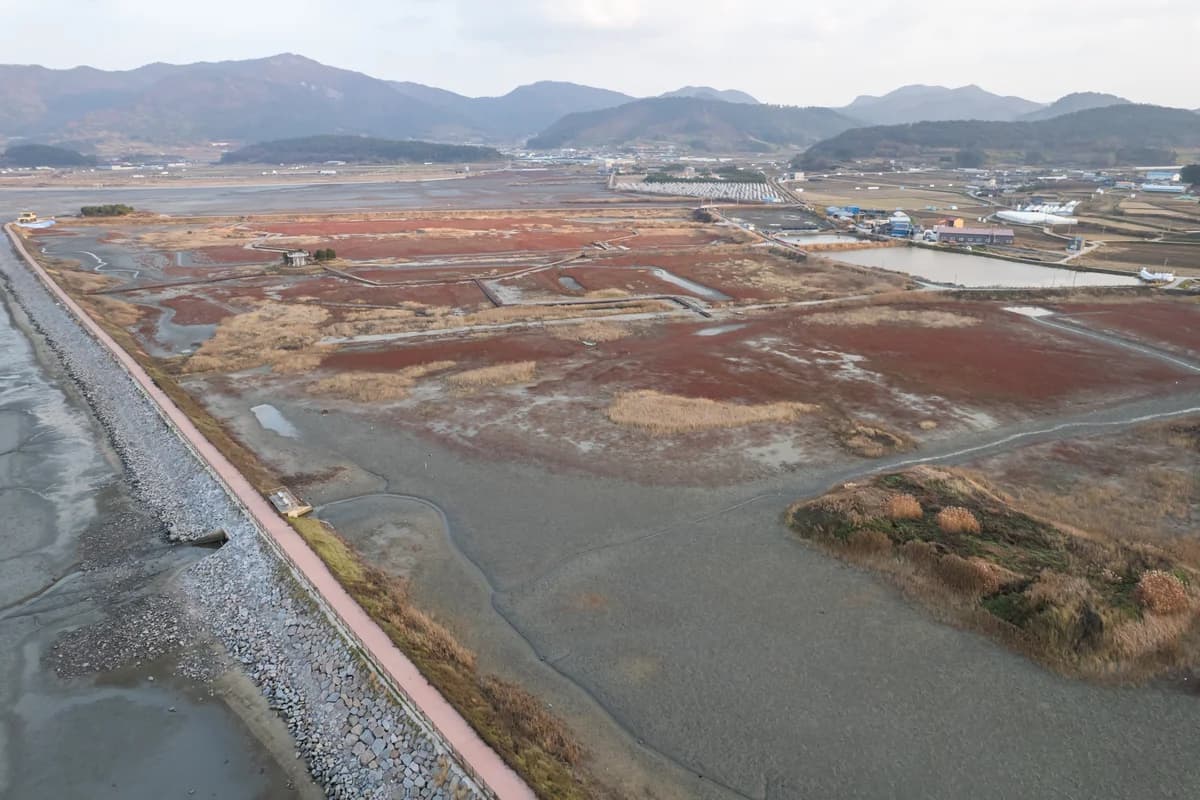
The Mud Korea Decided to Save: Getbol and the UNESCO Vote in Busan
The least Instagrammable thing Korea could nominate — a coastline of mud — is a UNESCO World Heritage site, and on July 25, 2026, in the one year Korea controlled the room, it was made bigger. A guide to getbol: the flats that feed millions of migrating birds, the women who ride wooden sleds across them, and why a country that once paved its tidal flats now enshrines them.
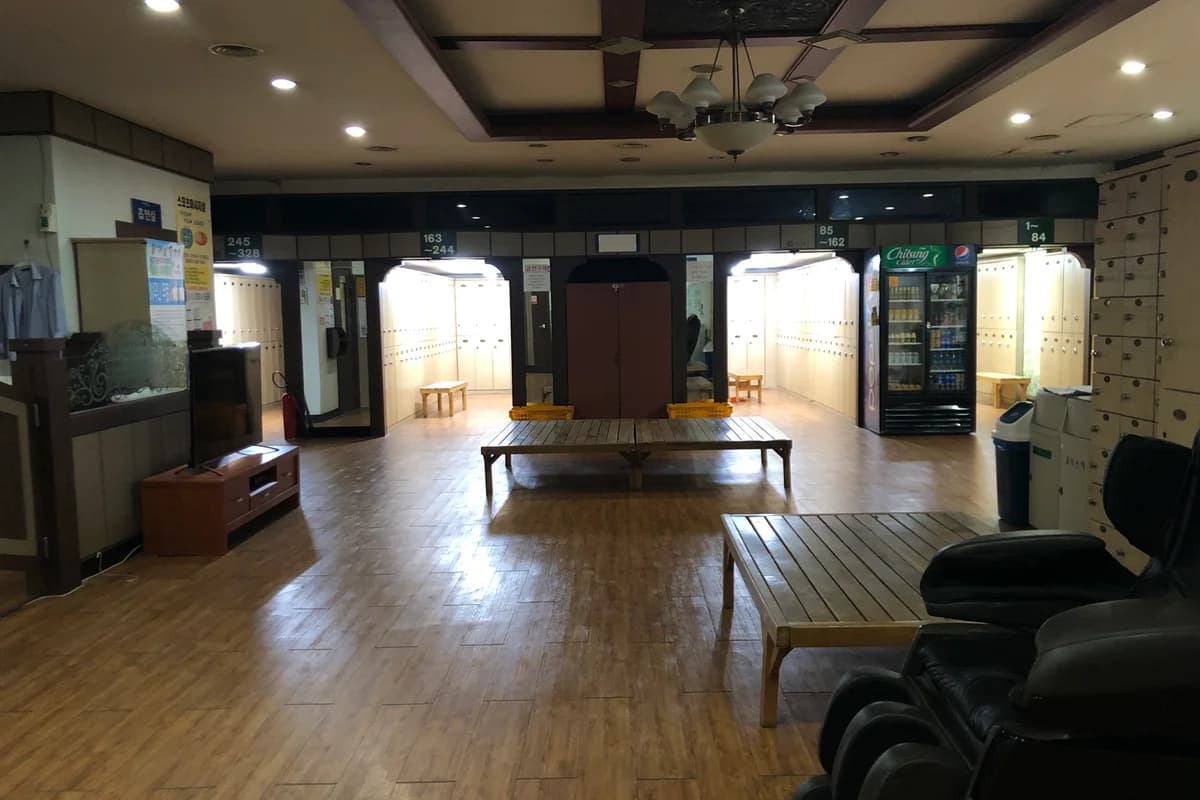
Jjimjilbang for First-Timers: How Korea's Bathhouses Actually Work
Yes, the bath part is fully nude. No, nobody cares. A step-by-step guide to the Korean spa-sauna-sleepover — the sheep-head towel, the scrub that removes a layer of you, which famous venues have quietly closed — and why the neighborhood bathhouse is disappearing even as the tourist jjimjilbang thrives.
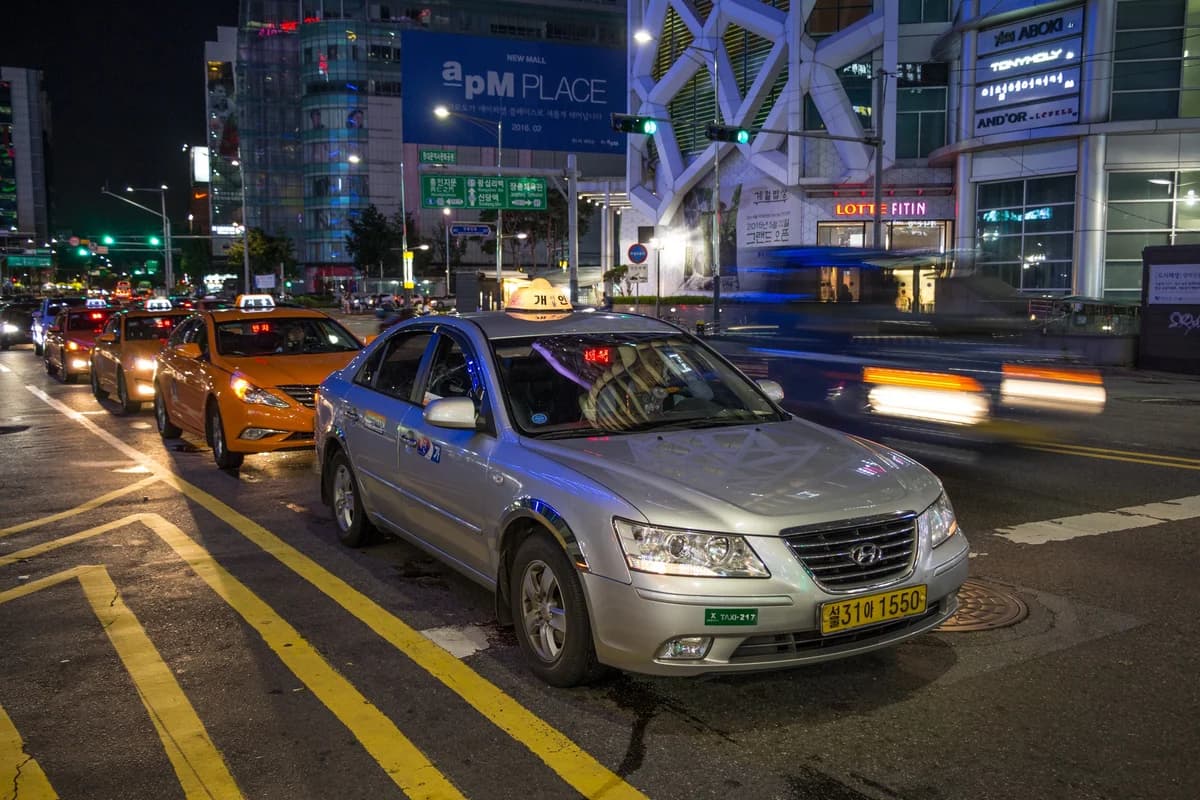
Do You Tip in Korea? The Honest Answer
Short version: no. Korea doesn't have a tipping culture — not at restaurants, cafes, or taxis — and you're not being rude by not tipping. Here's the honest, reassuring guide: why Korea doesn't tip, the one 'service charge' you'll see and shouldn't panic about, the rare times a tip is okay, and what actually happens if you try.
The Weekly Dispatch
Korea, curated. Every week.
The best of K-culture, straight from Seoul. Written by people who actually live here.
Free, no spam, unsubscribe whenever.