Republic of Apartments: Why Koreans Live in Identical Towers — On Purpose
Two-thirds of Korean homes are apartments, and they look near-identical for a reason. The sameness isn't a failure of imagination — it's what turns an apartment into a liquid, tradable asset. A guide to the 아파트 공화국: the 84㎡ flat everyone wants, the chaebol brands that signal your class, and how a home became a savings account.
When Rosé of BLACKPINK and Bruno Mars released "APT." in October 2024 and sent it to the top of charts in thirty countries, most of the Western world had no idea it was named after a Korean drinking game — which is itself named after 아파트 (apateu), the apartment. Players stack their hands like apartment floors and chant. That a very Korean word for a very Korean way of living became a global earworm is fitting, because there may be no better key to modern Korea than the apartment.
Two-thirds of all Korean homes — 64.6%, some 12.6 million units — are apartments (Statistics Korea, 2023 census). They rise in regimented rows, brand name emblazoned on the side, near-identical for miles. To the first-time visitor it can look bleak — a whole country living in matchboxes.
But the sameness is not a failure of imagination. It's the entire point. The identical-ness is exactly what makes a Korean apartment a liquid, comparable, tradable asset — and that, more than shelter, is what an apartment is in Korea: a home, a savings account, and a status badge, all in one standardized concrete box.
Here's how that happened.
The Numbers
Korea didn't drift into apartment living; it converted, fast, and it's still converting. The apartment share of all housing has climbed every single census: 58.4% (2010) → 62.3% (2019) → 64.6% (2023) (e-나라지표). Add low-rise multi-unit housing and 79.2% of Korean homes are some form of collective housing.
And the apartment isn't just where Koreans live — it's where their money lives. In the 2025 Household Finance survey, real assets made up 75.8% of the average household's wealth, the overwhelming majority of it real estate (Statistics Korea). Korean household wealth isn't in stocks or bonds. It's in the apartment.
That single fact — the home is the balance sheet — is what everything else flows from.
Why Apartments? From a Mountainous Country to Matchboxes
Two forces made Korea vertical.
The first is geography: about 70% of Korea is mountainous. Habitable land is genuinely scarce, the population is among the densest in the OECD, and over 90% of Koreans live in cities. When you must house a rapidly urbanizing nation on very little flat ground, you build up, and you build efficiently.
The second is the state. Korea's first true apartment complex — the 마포아파트, six Y-shaped buildings completed in 1962 — was built by the government's Korea Housing Corporation (the ancestor of today's LH). It taught the public a new concept: not a building, but a 단지 (danji), a planned estate. Through the postwar rush of migration into Seoul, the developmental state churned out standardized state-built complexes as the efficient answer to an acute housing shortage.
Then came the moment apartments stopped being merely practical and became aspirational. In 1975–76, Hyundai built the Apgujeong Hyundai Apartments south of the river, and in 1976 the government designated Banpo, Apgujeong, Cheongdam, and Dogok as official "apartment districts." This was the signal fire of Gangnam — the birth of the neighborhoods that would become synonyms for wealth.
It arrived wrapped in scandal, and the scandal is instructive. In 1978, it emerged that units the developer had ostensibly built for its own employees had instead been funneled to VIPs — senior officials, lawmakers, generals, judges, and journalists. Of 952 employee units, only a fraction went to employees; hundreds of notable figures, including dozens of journalists, got apartments. The Apgujeong preferential-sale scandal became the era's signature case of state-business-power-press collusion — and it told every ambitious Korean something unforgettable: the people with power wanted these apartments. The apartment was now a prize.
The Brand Is the Status
Look at a Korean apartment tower and you'll see a name in giant letters: 래미안, 자이, 힐스테이트, 푸르지오. These aren't building names. They're brands — and each belongs to a chaebol construction arm.
| Brand | Builder |
|---|---|
| 래미안 (Raemian) | Samsung C&T |
| 자이 (Xi) | GS E&C |
| 힐스테이트 (Hillstate) | Hyundai E&C |
| 푸르지오 (Prugio) | Daewoo E&C |
| e편한세상 | DL E&C (formerly Daelim) |
| 더샵 (The Sharp) | POSCO E&C |
| 롯데캐슬 | Lotte E&C |
| 아이파크 (I-Park) | HDC |
The builders are, quite literally, the chaebol — the same conglomerates that make the phones and the ships also stamp their names on where people live. And there's a hierarchy. In a 2024 consumer survey, the "three-strong" order came out Hillstate, Raemian, Xi at the top (rankings shuffle by methodology, but that trio is stable), and each has a premium sub-brand — Hyundai's 디에이치, Daelim's 아크로 — to stratify buyers even further.
The brand on the building is a class signal, read instantly by every Korean. Where you live isn't just a neighborhood; it's a name-brand, priced and ranked like any other luxury good.
The 84㎡ That Everyone Wants (and a Tax Trick)
Ask about a Korean apartment and you'll hear it sized in 평 (pyeong), the traditional unit of about 3.3㎡, and you'll hear one number constantly: the 국민평형 — the "national-size flat," a unit of 84㎡ of private area, colloquially the "33–34 pyeong." It's the default aspiration, the standard family home.
Why exactly 84, and not a round 85? Here's the delicious, specific reason. Korean law defines the "national housing size" as 85㎡ or less, and housing at or under that size is exempt from the roughly 10% construction VAT. Cross 85㎡ and the tax kicks in and flows straight into the sale price. So builders design units at 84.89㎡ — as close to the line as they can get without stepping over it — to keep the exemption and the price down. An entire nation's default home size is set by a tax threshold, shaved to two decimal places.
That's also a clue to the sameness. When everyone builds the same tax-optimal size, in the same 판상형 (slab-type) rows — the look Koreans themselves call 성냥갑, "matchboxes" — grouped into gated 단지 with shared amenities and a monthly 관리비 fee, you get repetition. But repetition has a payoff, and it's financial.
Sameness Is Liquidity Is a Savings Account
Here's the argument most explainers miss.
Because Korean apartments are so standardized — same sizes, same layouts, named brands, ranked complexes — a given unit is a known quantity with a transparent price. An 84㎡ flat in a recognized brand danji is, in effect, a share of stock: comparable, easy to value, easy to sell, easy to borrow against. The homogeneity that looks soul-crushing to a visitor is precisely what makes the apartment a liquid asset rather than an idiosyncratic house that takes a year to price and sell.
And a liquid asset can be a savings vehicle and a speculation chip. This is where the apartment plugs into jeonse, Korea's lump-sum lease: through 갭투자 ("gap investment"), a buyer uses a sitting jeonse tenant's deposit to cover most of the purchase price, fronting only the gap — pure leverage on expected appreciation. The standardized apartment is the perfect vehicle for it precisely because everyone agrees what it's worth.
Then there's the ultimate windfall: 재건축, reconstruction. Old low-rise estates sit on land zoned at low density. Tear down a 5-story block and rebuild it as a 25-story tower, and you multiply the number of units. The existing owners get bigger, brand-new apartments; the extra units are sold to the public to fund the build. Done right, an owner of a small old unit can move into a large new one for a modest payment — sometimes almost nothing. At one Gangnam estate, an owner of a 50㎡ unit could reportedly move into an 84㎡ one for around ₩100 million. That gap — between the value of the tired old flat and the gleaming new one — is a wealth machine, and it's why owning the right aging apartment in the right district is a Korean investment strategy in itself. (The state claws back part of the windfall through a "reconstruction excess-profit" levy, on the logic that much of the gain comes from public rezoning — a reminder that, as with the chaebol, the state never fully leaves the game.)
The Man Who Named It — and the Bill Coming Due
The phenomenon has a scholar. In 2003, the French geographer Valérie Gelézeau published the doctoral work that became, in its 2007 Korean edition, 《아파트 공화국》 — Apartment Republic. Her argument: Korea's mass apartments were produced by the interlocking interests of the developmental state, the chaebol construction industry, and an aspiring middle class. The result inverted the European experience, where mass housing blocks became stigmatized homes of the marginalized. In Korea, the standardized apartment became the aspirational choice — the thing the middle class climbed toward, not away from.
That inversion is the miracle and the trap. For the generation that rode it, the apartment was a one-way escalator: buy in, watch it appreciate, trade up, retire on the equity. But an escalator that only goes up eventually prices out the people trying to step on. When the primary path to wealth is a Seoul apartment and prices outrun wages, the rungs disappear — and that affordability wall is now tangled up with Korea's collapsing birthrate, as young Koreans delay marriage and children they feel they can't house.
The Point
The identical towers aren't a lack of taste. They're the physical form of a decision — made by a mountainous country, a developmental state, and eight chaebol builders — to turn housing into a standardized, tradable, appreciating asset that a whole middle class could climb.
It worked spectacularly, for a while. It built the wealth of a generation, gave Korea a status system you can read from a car window, and even, forty years later, produced a chart-topping pop song. Whether the next generation gets on the escalator at all is the open question — and it's the same question underneath the jeonse collapse and the birthrate crisis. The Republic of Apartments made a lot of people rich. It's now deciding whether it has room for anyone new.
One postscript, and it's a lighter one. Once the brand on the building became a price signal, the names themselves started to inflate — to twenty-five characters at the current record, seven longer than the famously unsayable name from an old Korean comedy sketch.
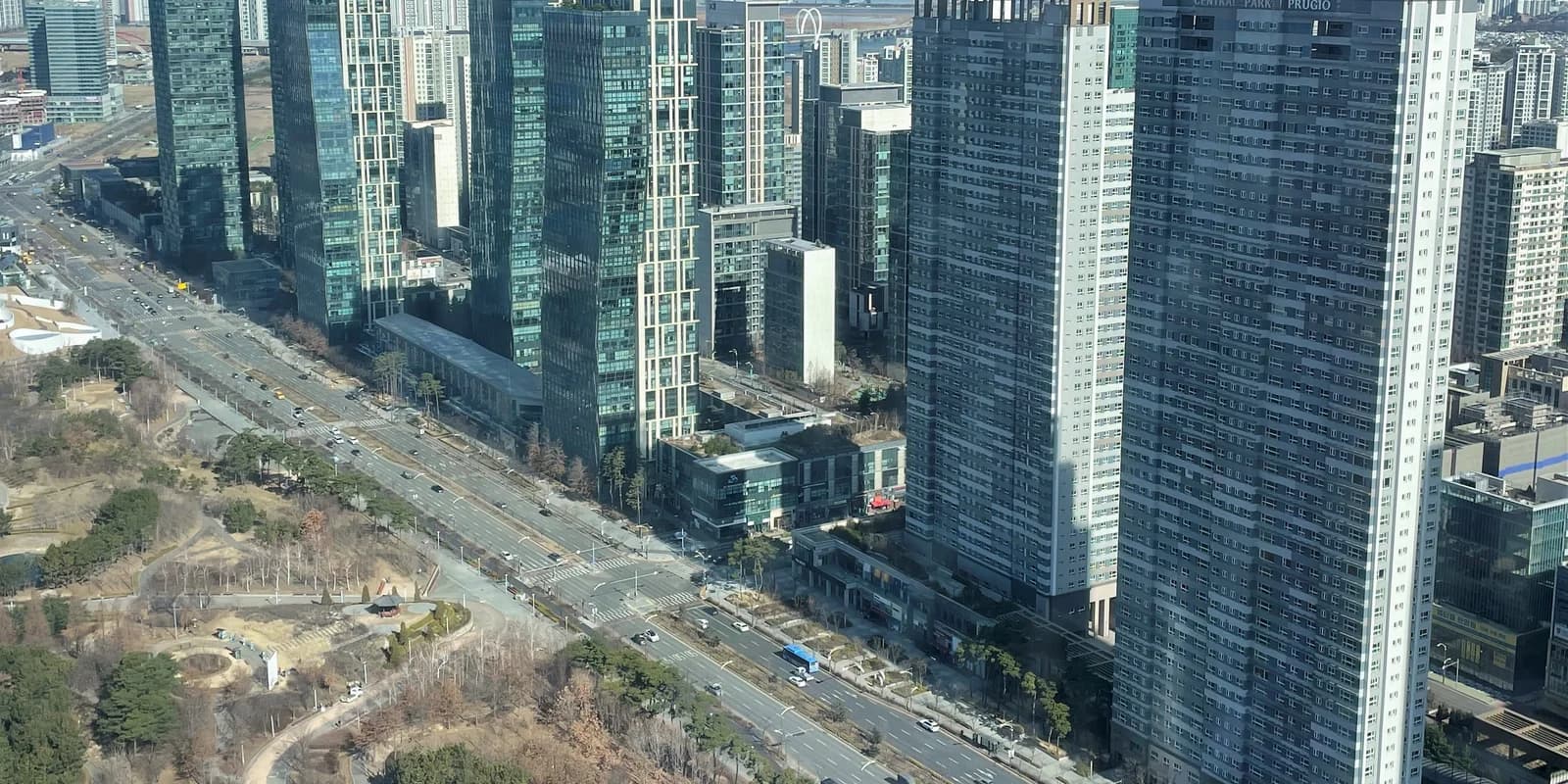
Housing-stock figures are from Statistics Korea's 2023 census (released July 2024) and are dated in-text; the apartments-only share (64.6%) and the collective-housing share (79.2%) are kept distinct. The Apgujeong preferential-sale scandal is dated to 1978 (the public disclosure), with construction and district designation in 1975–76. The brand-to-builder mapping reflects current corporate names (DL E&C formerly Daelim; POSCO E&C formerly POSCO Construction). The 84㎡/85㎡ VAT threshold and the 재건축 example are as reported. Gelézeau's thesis is summarized, not quoted verbatim (the "tripartite" framing is our paraphrase). Rosé's "APT." and its drinking-game origin are verified. Images: hero — a 1978 aerial of the Jamsil housing estate, an early field of identical blocks by the Han River, by 전민조 via the National Museum of Korean Contemporary History, KOGL Type 1 (cropped); cover — the Central Park Prugio (푸르지오) towers in Songdo, by Vincent van Zeijst, CC BY-SA 4.0 via Wikimedia Commons (cropped); listing card — the premium THE H Xi (디에이치자이) complex in Gaepo, Gangnam, by S h y numis, CC BY-SA 4.0 via Wikimedia Commons (cropped).
Keep Reading
More Stories
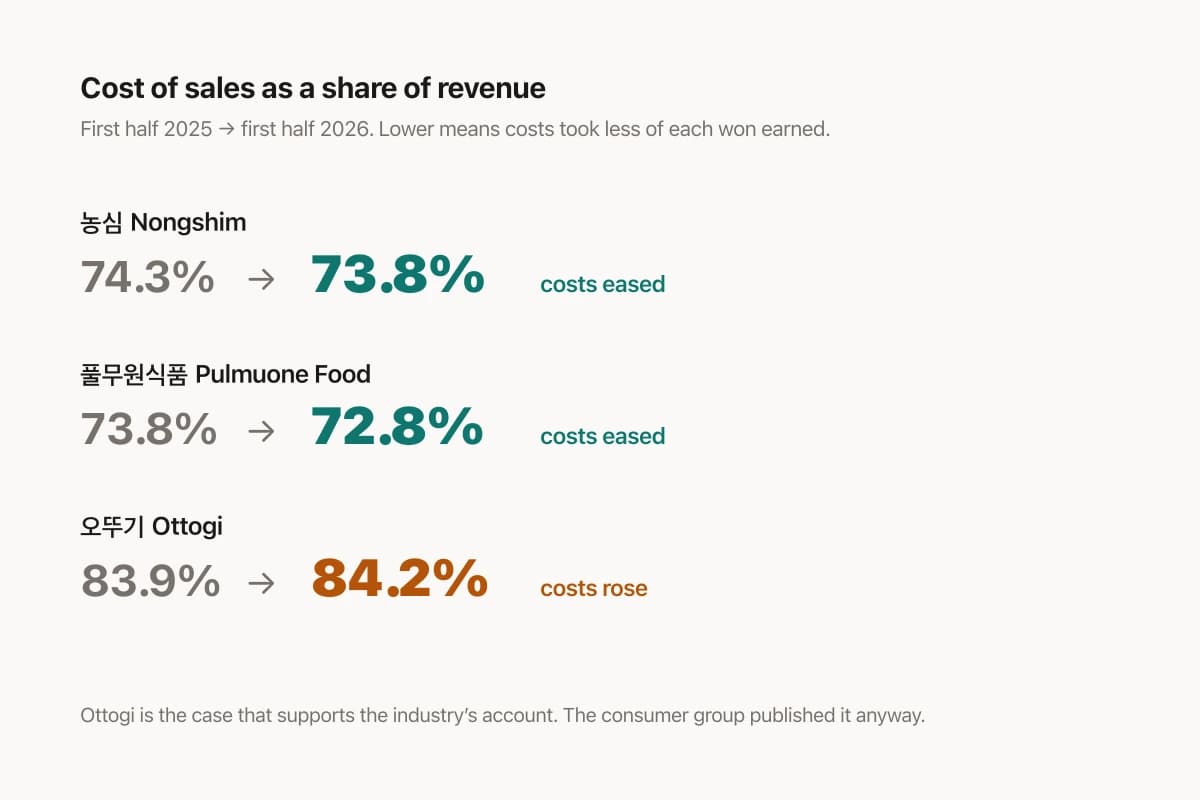
In April, Nongshim Cut Prices to Help With Inflation. In August It Raised Them, Using the Same Sentence.
Korea's biggest noodle company cut sixteen products in the spring, framed as joining the government's price-stability drive. Four months later it raised forty-three, framed as joining the government's price-stability drive. The products it cut are precisely the ones it left alone in August — and its own filings show the cost pressure it blames has not yet reached its margins. The awkward part is that the cost pressure is real.
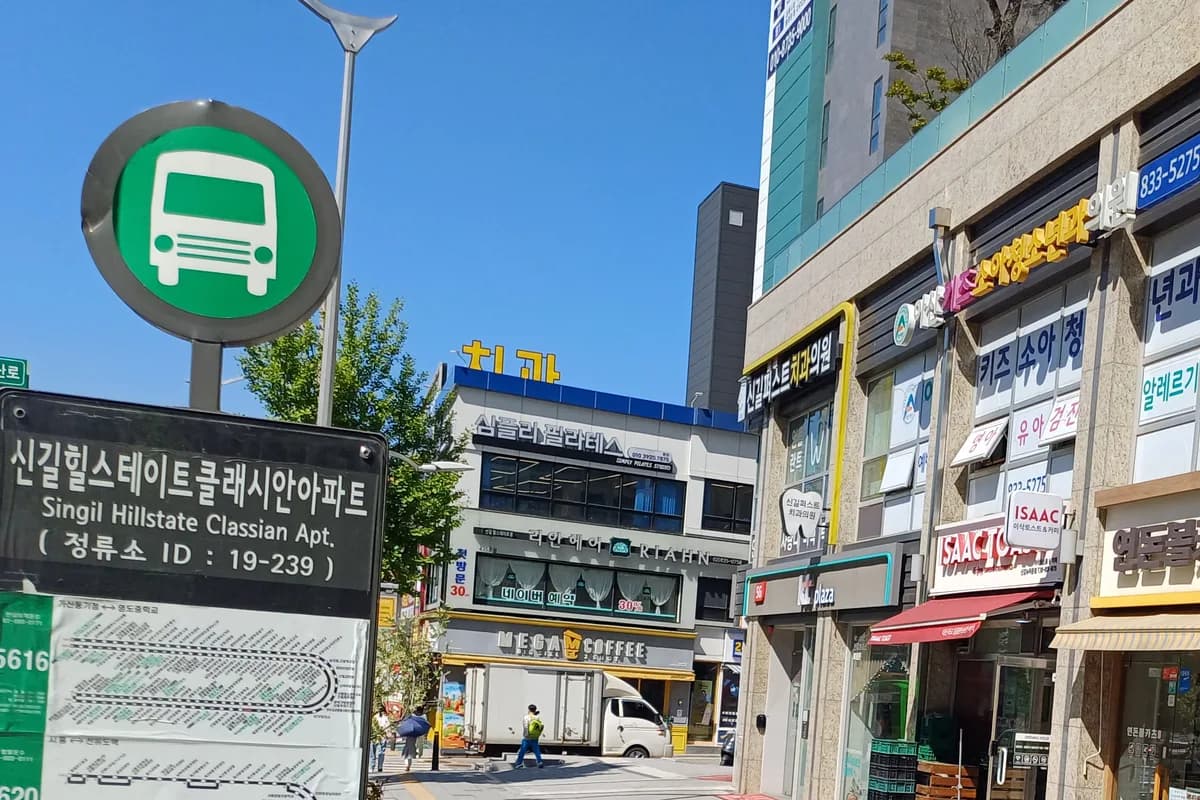
Korea's Longest Apartment Name Is 25 Characters — Seven Longer Than the Joke
Everyone says the names got long so mothers-in-law couldn't find the address. Twenty years of Korean and English coverage repeat that, and not once does anyone say it in the first person. Here is what actually happened: a decoder ring for 센트럴 and 포레, a Swedish word from a company with no Swedish business, and a 2021 study showing the thing residents vote hardest for doesn't work.
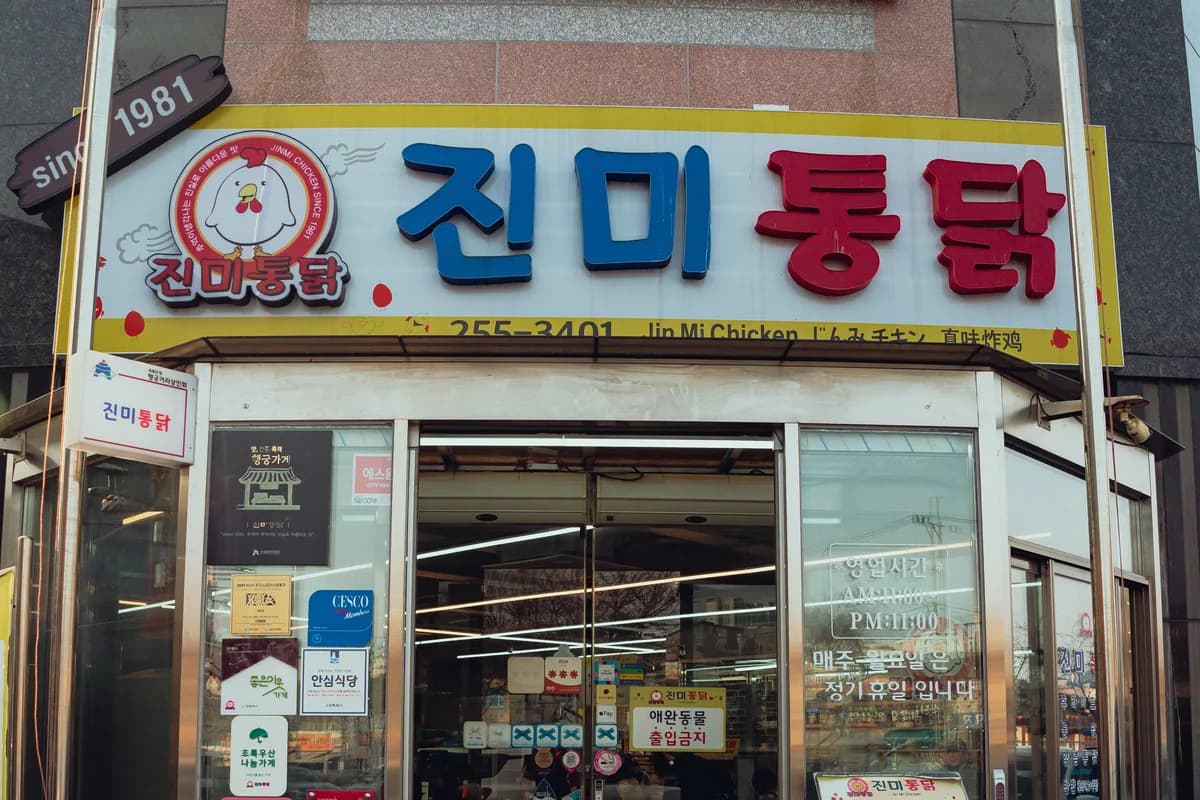
Korea Has Fewer Chicken Shops Than McDonald's Has Restaurants — the Famous Claim Was Counting Beer Halls
The number everyone quotes comes from a 2019 bank report whose own footnote says it includes 호프/통닭 licences and differs from the official count. On the like-for-like series the comparison is now the wrong way round. Four government bodies count Korean chicken shops four ways, two of them moving in opposite directions in the same year — and a decree amended last week finally requires the shops that closed to appear in the revenue forecast you're handed before you sign.
The Weekly Dispatch
Korea, curated. Every week.
The best of K-culture, straight from Seoul. Written by people who actually live here.
Free, no spam, unsubscribe whenever.