The Interest-Free Loan That Built Korea Is Coming Due: Jeonse, Explained
For decades, millions of Koreans rented with no monthly payment at all — you hand the landlord a lump sum worth most of the apartment, live rent-free, and get it all back in two years. In April 2026, for the first time, monthly rent overtook jeonse inside Seoul's apartments. A guide to how the world's strangest lease worked, why it's dying, and how not to lose your deposit.
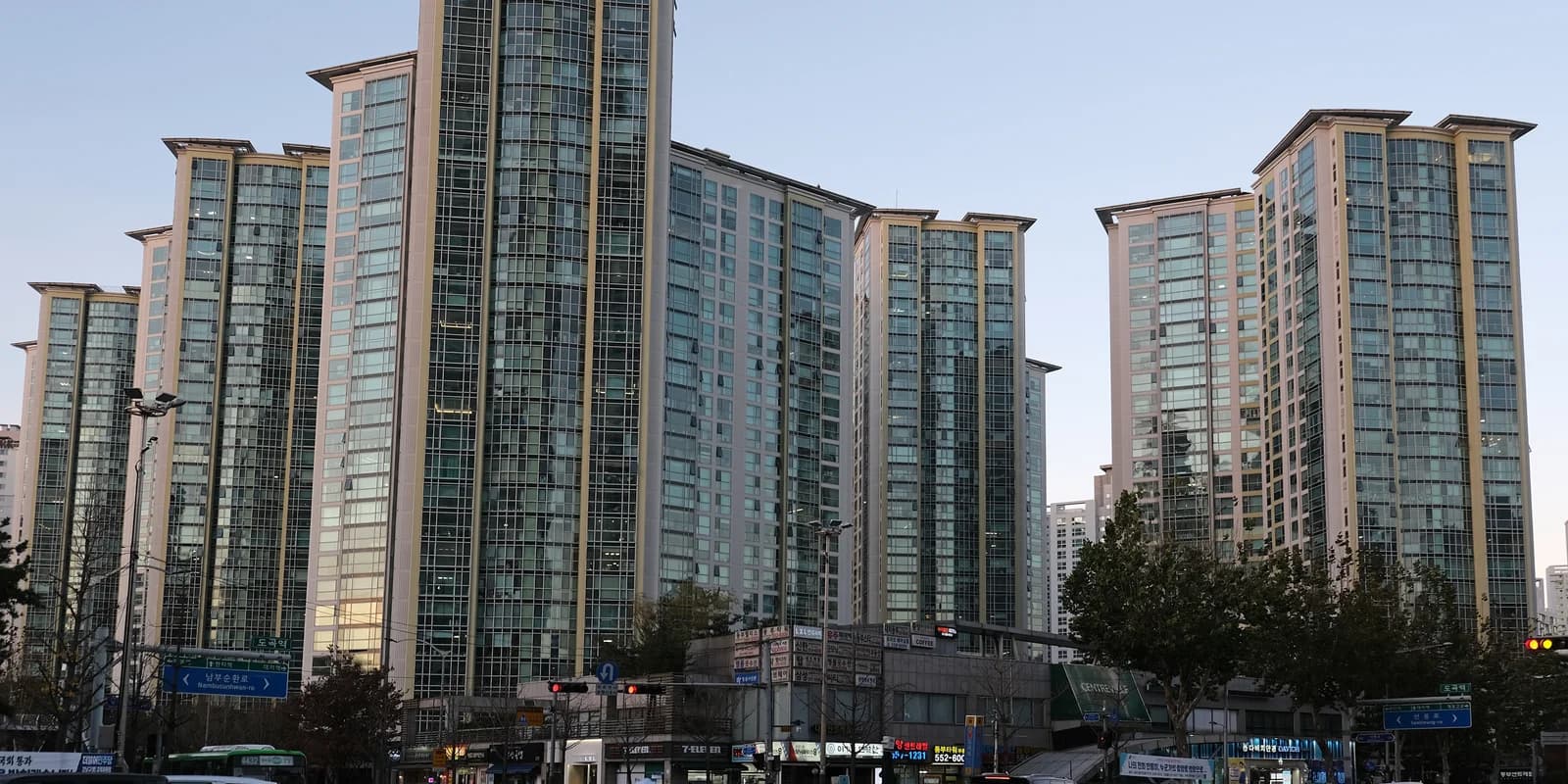
Imagine renting an apartment with no monthly rent at all. Instead, you hand the landlord a single lump sum — often 50 to 80% of the apartment's entire market value — and live there, payment-free, for two years. At the end, you get every won back.
That's 전세 (jeonse), and for most of modern Korean history it was how the middle class climbed the housing ladder. It is also, according to Korea's own president, "a private-finance system uniquely found in Korea" (Herald Economy). And in April 2026, it quietly crossed a line it had never crossed before: inside Seoul's apartments — jeonse's last stronghold — monthly rent finally overtook it.
Here's how the strangest lease in the world worked, why it's dying, and — if you're renting in Korea — how to keep your deposit from vanishing.
The Tipping Point
The numbers are worth stating carefully, because there are three different data cuts floating around and they measure different things.
The headline event is from a Dabang analysis of April 2026 transaction data: among Seoul apartment leases, monthly rent was 49.8% and jeonse 50.2% — a gap of 0.4 percentage points (Hankyung). A decade earlier that gap was 31.3 points (in 2017, jeonse held 65.6% of Seoul apartment leases). Jeonse transaction volume has fallen 38% in three years, from an April 2023 peak of 13,979 to 8,613.
Zoom out and the trend is even starker. Nationally, monthly rent hit a record 68.6% of all rental transactions in Q1 2026, up from 48% in 2022 (MOLIT via Seoul Economic Daily). For the first time ever, monthly rent crossed 50% even among apartments nationwide.
Jeonse held on longest inside Seoul apartments — the most desirable housing in the country. That's the stronghold that just fell.
How It Actually Works
The mechanic is genuinely alien to anyone raised on Western renting:
- You pay a 보증금 (deposit) — a lump sum, typically 50–80% of the home's market value — up front.
- You pay no monthly rent for the lease term (minimum two years by law).
- At the end, the landlord returns the entire deposit.
Where does a young Korean get 60% of an apartment's value in cash? Overwhelmingly, from a bank: the 전세자금대출 (jeonse loan) is its own giant lending category — the outstanding balance stood at ₩165.7 trillion at the end of Q1 2026 (Edaily). You borrow the deposit, live rent-free, and your "rent" is effectively the interest on that loan — historically cheaper than market rent.
Why would a landlord give up rent for this? Because in a high-interest era, a giant interest-free deposit was a gift. The landlord could park it in the bank, reinvest it, or — most consequentially — use it to buy the next apartment. Which brings us to the term that explains both Korea's 2010s housing boom and its current fraud catastrophe.
갭투자 (gap investment): buy an apartment using the tenant's jeonse deposit to cover most of the price, putting up only the "gap" in your own cash. A ₩200 million apartment with a ₩160 million jeonse tenant costs the buyer just ₩40 million. Do that repeatedly and you can control dozens — or, as we'll see, thousands — of homes on very little capital. As long as prices rise and new tenants keep appearing, the machine runs. When either stops, it runs backward.
There's also a hybrid worth knowing: 반전세 (half-jeonse) — a smaller deposit plus a modest monthly rent. It's increasingly where the market is landing as pure jeonse recedes.
Why It Existed at All
Jeonse wasn't ancient. Korea's Encyclopedia of Korean Culture dates its origin to after the 1876 Treaty of Ganghwa, when treaty ports and rural-to-urban migration swelled Seoul and created new rental relationships. It became fully entrenched during the postwar industrialization decades (encykorea). (The right itself, 전세권, was codified as a property right in the Civil Act enacted in 1958, effective 1960 — not 1959, as often stated.)
Its real function was to be a private substitute for a mortgage market that didn't exist yet. In the high-growth, high-interest decades, banks weren't lending ordinary people money to buy homes — so jeonse improvised the credit system Korea lacked. The landlord got an interest-free lump sum to reinvest; the tenant got rent-free housing and a forced-savings vehicle. Both sides climbed: the classic Korean housing ladder ran 월세 → 전세 → 자가 — monthly rent, then jeonse, then a home of your own. (Below that bottom rung is a tier Korean has a single word for, and English doesn't: 지옥고 — the semi-basement, the rooftop room and the goshiwon, where a deposit is exactly what you can't raise.) And the thing at the top of that ladder was almost always the same object: an apartment, in one of the near-identical branded towers that make Korea a Republic of Apartments.
It only worked because growth and interest rates were both high. Take those away, and the machine loses its reason to exist.
Why It's Dying
Three failures, all at once.
1. The economics broke. When interest rates, inflation, and growth all fell, a lump-sum deposit stopped earning the landlord anything meaningful. The interest-free-loan logic that made jeonse attractive to landlords simply evaporated (KDI analysis). Landlords switched to monthly rent, where they collect actual income.
2. Trust broke. The rise of 깡통전세 ("empty-can jeonse" — where the deposit equals or exceeds the home's value, leaving nothing if it's auctioned) and a wave of mass fraud (below) made tenants afraid to hand over that much cash. Monthly rent puts far less at risk.
3. Policy pushed. The 2020 임대차 3법 (three tenancy laws) — a renewal right ("2+2"), a 5% cap on increases, and mandatory reporting — are widely blamed for a 2020–21 jeonse price spike as supply tightened. And the current government now openly frames jeonse's decline as "정상화" — normalization — while multi-home-owner tax enforcement pushes landlords to sell.
The honest verdict from the reporting: jeonse will shrink to a residual, not vanish outright — a ₩166-trillion loan book doesn't evaporate. But the era in which it was the default way Koreans rented is ending.
The Fraud Catastrophe
The dark side of gap investment is that it lets someone control enormous amounts of housing on almost no money — and when it collapses, ordinary tenants lose life savings.
The emblem is a landlord the press called the 빌라왕 ("Villa King") — a man who amassed more than 1,100 villa units across Incheon, Bucheon, and Seoul via gap investment, then died in October 2022, leaving thousands of tenants unable to recover deposits from a dead man's estate; police tallied over ₩230 billion in damage (Financial News). In Incheon's Michuhol district, a builder-landlord dubbed the "건축왕" (Building King) controlled some 2,700 homes; he was ultimately sentenced to a finalized seven years, plus fifteen more for embezzlement.
The human cost was severe. A cluster of Michuhol fraud victims died by suicide in early 2023, and those deaths became the political trigger for a relief law. We'll leave it at the fact and its consequence.
That consequence was the 전세사기특별법 (Special Act for Jeonse-Fraud Victims), passed in May 2023 and substantially amended in 2024. The current mechanism runs through the public housing corporation LH, which takes over a victim's preferential right to buy the fraud-hit home at auction and either compensates them or provides public rental housing. As of the June 2026 round, the government had formally recognized 39,669 victims — and 76% of them were under 40 (Financial News). A whole generation of young renters, wiped out at the exact moment they were trying to get a foothold.
How Not to Lose Your Deposit
If you rent jeonse (or any deposit-based lease) in Korea, this is the part that matters. The protections exist; you have to activate them, in the right order, on the right day.
- Before you sign, pull the 등기부등본 (property registry extract). Check for 근저당권 (mortgage liens) and 가압류 (seizures). A bank mortgage recorded before your protections outranks your deposit if the home is auctioned. A heavily mortgaged property is a red flag; a deposit near or above the home's value (a high 전세가율) is a bigger one.
- On move-in day, do two things the same day: 전입신고 (resident registration) at the district office, and get a 확정일자 (fixed-date stamp) on your contract.
- Why both: occupancy plus 전입신고 gives you 대항력 (the right to assert your lease against a new owner). Adding the 확정일자 gives you 우선변제권 — priority repayment at auction, ahead of junior creditors. One without the other leaves a gap.
- Mind the one-day trap. 대항력 takes effect at midnight the day after you register — a notorious loophole where a bad-faith landlord mortgages the home that same afternoon, jumping ahead of you. Ask for a contract clause barring new liens before your protection kicks in.
- Consider the HUG guarantee. The 전세보증금반환보증 has HUG repay you if the landlord doesn't. Under the rule effective May 2023, the deposit must be no more than 126% of the home's 공시가격 (official assessed price) — a tightening designed to keep guarantees off overvalued "empty-can" properties.
None of this is optional folklore. It's the exact chain the fraud victims, in case after case, didn't complete in time.
What It Means
Jeonse is a growth-era institution dying in a low-growth era. It was built for a Korea of high interest rates, rising prices, and a housing ladder that reliably lifted each generation from renting toward ownership. Every one of those conditions has now reversed.
That makes jeonse's slow death part of a larger story this site keeps circling: the same demographic and economic reversal that's collapsing Korea's birthrate and freezing dynastic wealth inside the chaebol is dismantling the machine that once turned renters into owners. The ladder built during the Miracle on the Han is being pulled up — and the generation losing their deposits to fraud is the same one being told not to expect the homeownership their parents achieved.
The world's strangest lease made sense for exactly as long as Korea was getting richer fast. Now the loan is coming due.
The three tipping-point data cuts (MOLIT quarterly national stats, the Dabang April-2026 Seoul-apartment snapshot, and mid-year Herald figures) are labelled and kept separate rather than blended, because they measure different geographies and periods. All figures are dated in-text. Fraud-case scale figures are presented as evolving investigation totals; victim deaths are reported as fact and policy trigger, without detail. The safety checklist reflects the deposit-protection chain under the Housing Lease Protection Act and the HUG guarantee rule effective May 2023; verify current HUG caps at signing, as they have changed repeatedly. Images: hero — a forest of apartment towers in Nowon, Seoul, by Ox1997cow, CC BY-SA 3.0 via Wikimedia Commons (cropped); cover — apartment complexes in Daechi-dong, Gangnam, by kallerna, CC BY-SA 4.0 via Wikimedia Commons (cropped); listing card — riverside apartment towers on the Han River, by Ox1997cow, CC BY-SA 4.0 via Wikimedia Commons (cropped).
Keep Reading
More Stories
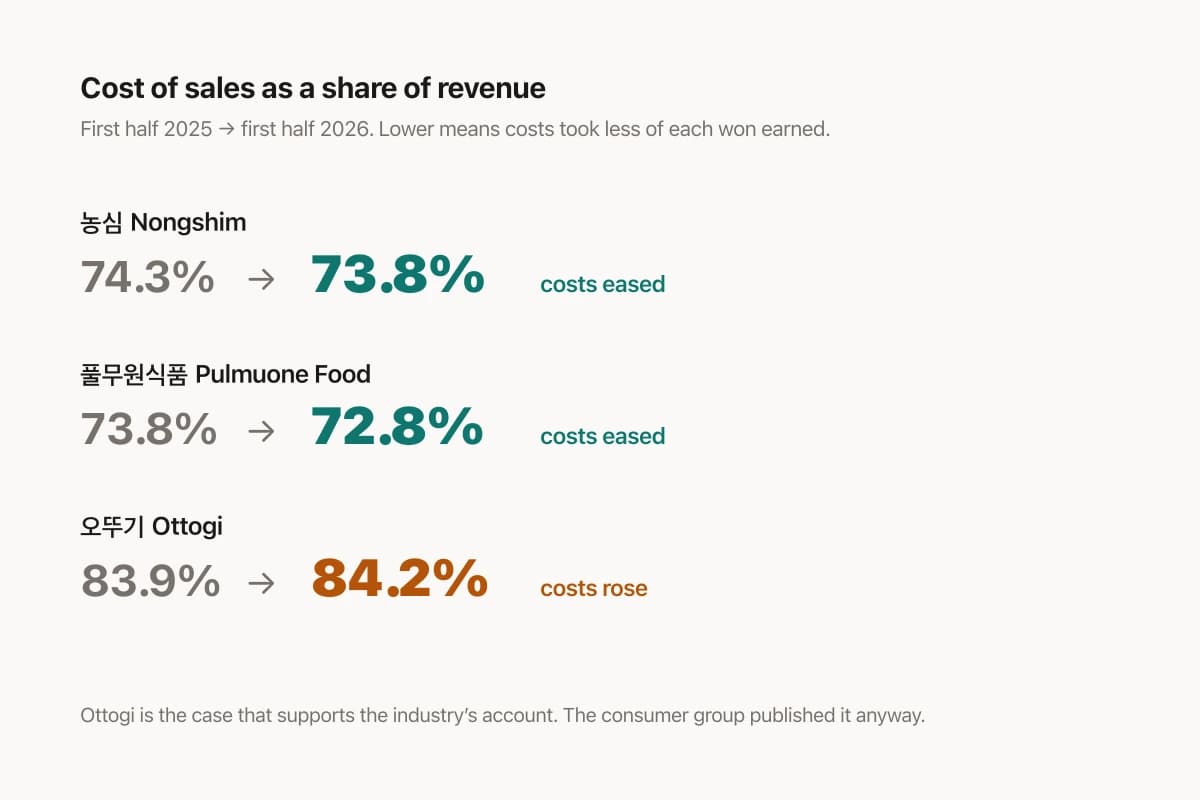
In April, Nongshim Cut Prices to Help With Inflation. In August It Raised Them, Using the Same Sentence.
Korea's biggest noodle company cut sixteen products in the spring, framed as joining the government's price-stability drive. Four months later it raised forty-three, framed as joining the government's price-stability drive. The products it cut are precisely the ones it left alone in August — and its own filings show the cost pressure it blames has not yet reached its margins. The awkward part is that the cost pressure is real.
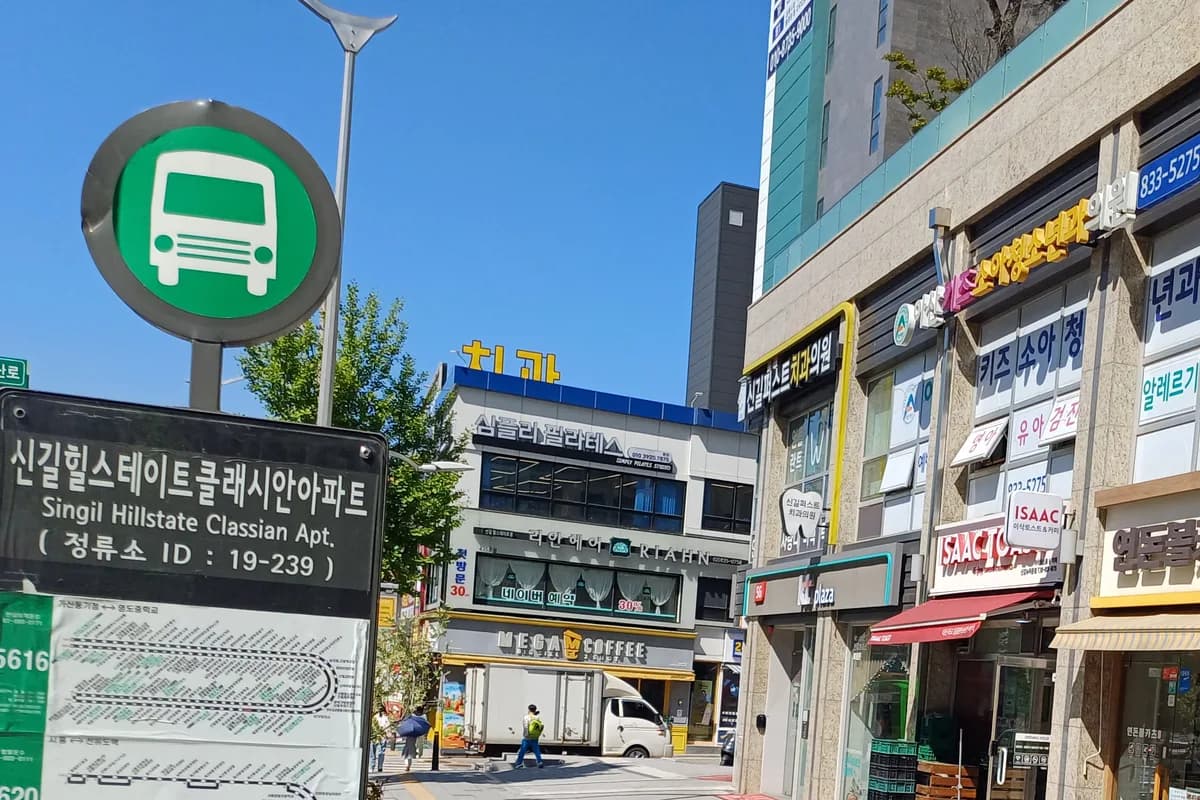
Korea's Longest Apartment Name Is 25 Characters — Seven Longer Than the Joke
Everyone says the names got long so mothers-in-law couldn't find the address. Twenty years of Korean and English coverage repeat that, and not once does anyone say it in the first person. Here is what actually happened: a decoder ring for 센트럴 and 포레, a Swedish word from a company with no Swedish business, and a 2021 study showing the thing residents vote hardest for doesn't work.
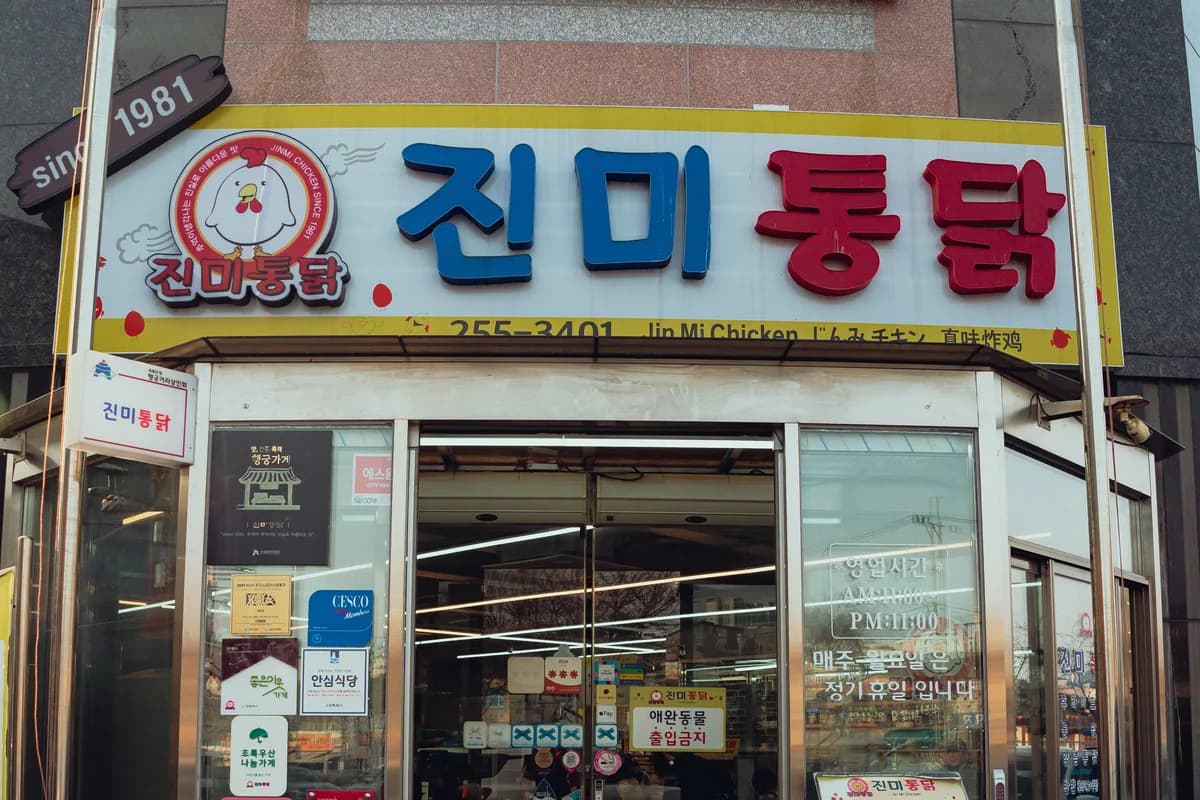
Korea Has Fewer Chicken Shops Than McDonald's Has Restaurants — the Famous Claim Was Counting Beer Halls
The number everyone quotes comes from a 2019 bank report whose own footnote says it includes 호프/통닭 licences and differs from the official count. On the like-for-like series the comparison is now the wrong way round. Four government bodies count Korean chicken shops four ways, two of them moving in opposite directions in the same year — and a decree amended last week finally requires the shops that closed to appear in the revenue forecast you're handed before you sign.
The Weekly Dispatch
Korea, curated. Every week.
The best of K-culture, straight from Seoul. Written by people who actually live here.
Free, no spam, unsubscribe whenever.