The Biggest Korean Film of 2026 Is the One Koreans Can't Agree On: 호프, Explained
Na Hong-jin's 'Hope' has topped the Korean box office for thirteen straight days while the market collapsed around it — and set off the loudest argument Korean film has had in years. A critic who gave it four stars had to publicly deny owning the director's phone number.
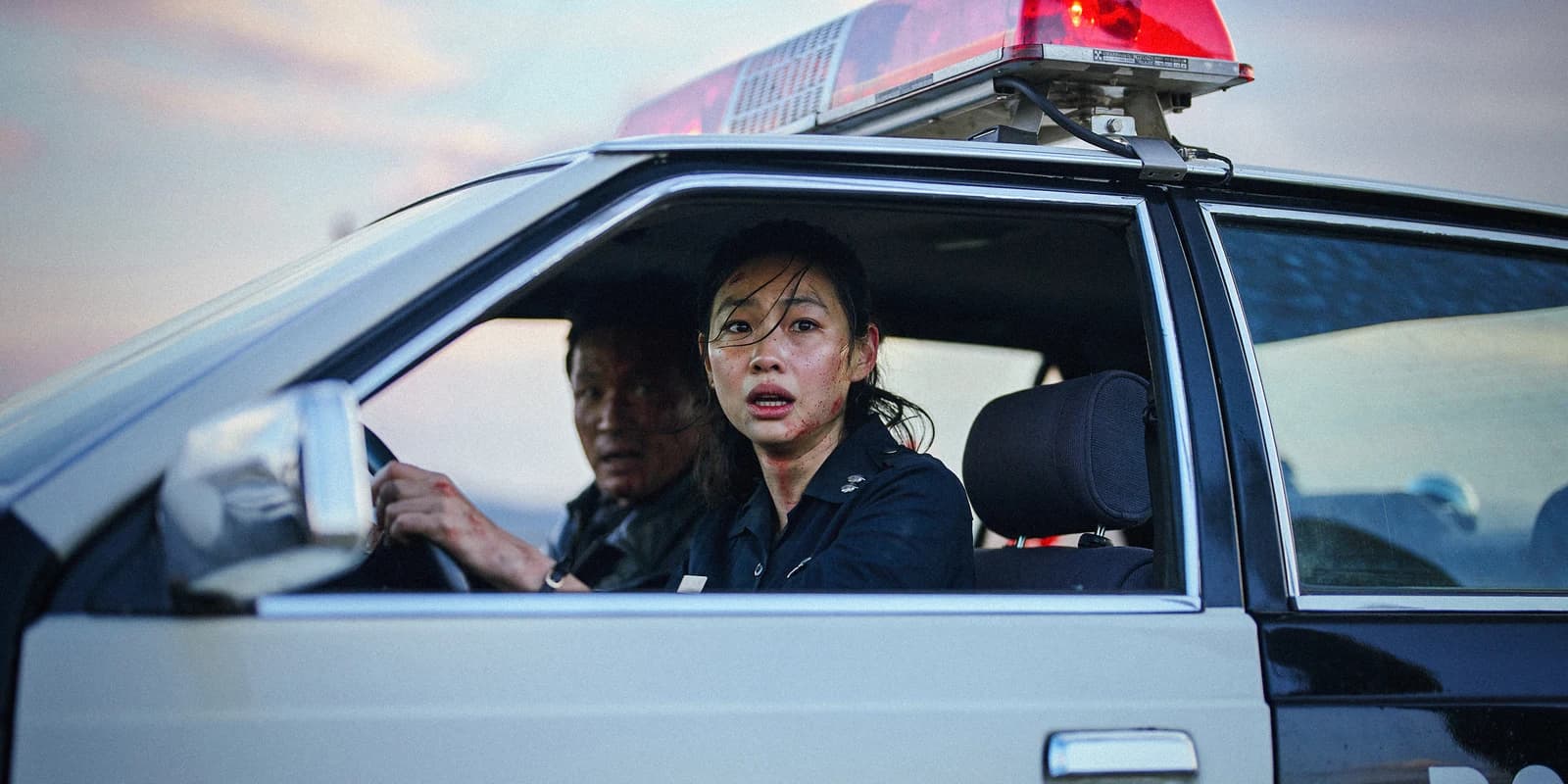
On July 19, the Korean film critic 이동진 (Lee Dong-jin) posted a four-star review of 호프 (Hope), the new film from Na Hong-jin, with a one-line verdict: the whole film is one giant crescendo, racing boldly through a grotesque shambles.
Within two days he was fielding enough abuse on his blog and YouTube channel that he published a formal rebuttal — in which he found himself explaining that he does not know Na Hong-jin, has never had coffee with him, and does not have his phone number.
That is the temperature of the argument Korea is currently having about its biggest film of the year.
Meanwhile the film keeps selling tickets. 호프 has been number one for thirteen consecutive days, and in its second weekend it took a larger share of the market than in its first — while the overall Korean box office roughly halved around it.
Here's what the film is, what the fight is actually about, and why English-language readers have seen none of it.
The Basics
| Korean title | 호프 |
| English title | Hope |
| Director / writer | 나홍진 Na Hong-jin |
| Korean release | July 15, 2026 |
| US release | September 9, 2026, via Neon |
| Runtime | 160 minutes |
| Premiere | 79th Cannes Film Festival, Main Competition, May 17, 2026 |
| Cinematography | 홍경표 Hong Kyung-pyo — Parasite, Burning, The Wailing |
Korean cast: 황정민 (Hwang Jung-min) as 범석, the head of the local police post at the fictional 호포항; 조인성 (Zo In-sung) as 성기, a tracker; 정호연 (Jung Ho-yeon, credited internationally as Hoyeon) as 성애, a rookie officer.
International cast: Michael Fassbender, Alicia Vikander, Taylor Russell and Cameron Britton, all credited as alien characters.
The Korean premise, as distributed: 범석, the officer in charge at Hopo Harbor, hears from local young men that a tiger has appeared — and as the whole village goes on alert, he runs into a reality that is difficult to believe.
Cannes was Na's fourth selection and his first in Competition — The Chaser (2008) and The Wailing (2016) screened out of competition, The Yellow Sea in Un Certain Regard. It did not win anything.
Note the title, because English coverage garbles it: the Korean title is 호프, the loanword "hope," a single vowel away from the fictional harbour 호포항 — 호프 against 호포, ㅡ against ㅗ. It is not 희망, the ordinary Korean word for hope.
The Numbers, and the Strange Shape of Them
All figures below are admissions (관객수) and gross kept separate, because Korean box office is reported in tickets and international trades convert to dollars.
| Window | Admissions | Note |
|---|---|---|
| Opening day (Jul 15) | ~334,000 | Biggest single day of any 2026 Korean release |
| Opening weekend (Jul 17–19) | 1,504,019 | ~two-thirds of the entire market |
| First five days (Jul 15–19) | 2,129,726 | Fastest of any 2026 release to both 1M and 2M |
| Second weekend (Jul 24–26) | 767,366 | 66.8% of total market revenue |
| Cumulative (to Jul 27) | 3,519,117 | 13 straight days at number one |
For scale on the opening day: Na's own previous films opened at 113,673 (The Chaser), 120,482 (The Yellow Sea) and 310,042 (The Wailing).
Now the detail that matters most. Between the first and second weekends, the total Korean box office fell from about $17.1m to about $8.2m — it roughly halved. In that same window, Hope's share of the market went up, to 66.8%.
A film that people are arguing about is out-holding a market collapsing around it. Korean trade coverage makes the causal claim directly: the argument is driving the box office, because "what on earth is in it, then?" sends people to the cinema.
(Figures are as of July 27 and move daily. The film is reported as the most expensive Korean production ever made; published budget figures range from about $33m to about $46m, and we won't pick one. The break-even admissions number has been reported as revised downward from a rumoured 10 million on the strength of pre-sales, but the actual figure has not been published.)
What the Fight Is About
The disagreement is unusually articulate on both sides, which is what makes it worth explaining rather than just reporting.
Na Hong-jin stated the design goal himself, at a screening event with Bong Joon-ho on opening day:
"서사라는 살을 내주고, 디테일이라는 뼈를 얻으려 했다." I gave up the flesh of narrative to gain the bone of detail.
He described the text of the film as a single sentence — a policeman chases something whose identity he cannot determine, and ends up in a pursuit with it — and said he wanted to make a film that could sustain an hour on that one line.
Almost every complaint about Hope is a direct consequence of that stated goal:
- The creature is withheld for roughly the first fifty minutes.
- Connective tissue is skipped. Korean critics call the film 불친절한 — "unfriendly" — and hard to follow.
- In-film questions go unanswered. Why does this village have so many guns? Why can 성기 ride like that? The film's recurring answer is a version of that isn't what matters.
- A five-minute digression in which 임현식's character gives a lengthy testimony — thematically about 확증편향, confirmation bias, and the unreliability of memory — has become the rallying point for people who find the film self-indulgent.
- The swearing. Korean netizens ran an unofficial tally of 173 uses of 씨발. That is a fan count, not an official figure — but Na was asked about it at a Q&A and replied that roughly half was ad-libbed, and that he had already cut around two hundred instances in post, leaving "a hundred and some."
The sharpest formulation of the case against, from Korean trade coverage, is that the director set the table, couldn't clear it, and is now outsourcing the argument to the audience's interpretation.
The case for is being made, loudly, by the most decorated people in the Korean industry:
- 봉준호 (Bong Joon-ho): "정말 놀라운 쾌감과 폭주의 롤러코스터" — a genuinely astonishing rollercoaster of thrill and runaway speed.
- 이창동 (Lee Chang-dong): "말 그대로 미친 영화" — literally an insane film.
- 장재현 (Jang Jae-hyun), director of Exhuma: overwhelmed by the visuals, the sound and the world-building, and the ticket price was not wasted.
- 정국 (Jungkook) of BTS posted on July 27 that it was fun — credited by Korean outlets with helping the second-weekend hold.
The 곡성 Problem
Here is the thing that organises the entire argument: almost nobody in Korea is judging Hope on its own terms. They are judging it against 곡성 (The Wailing).
Every Korean write-up frames the film as "the first in ten years since The Wailing." Na made The Chaser in 2008, The Yellow Sea in 2010, The Wailing in 2016, and then nothing of his own for a decade — he produced and wrote the Thai film The Medium in 2021 — before Hope.
Korean analysis identifies the through-line precisely: Hope continues The Wailing's project of erasing the question "why." That worked in a shamanistic horror film. The dispute is whether it works in an alien action movie.
And then the genuinely remarkable rhetorical turn. The defence has started swinging The Wailing's own bat.
The Wailing's most famous line is "뭣이 중헌디" — roughly, what's it that matters?, in Jeolla dialect, delivered as an accusation at someone focused on the wrong thing. It became one of the most quoted lines in modern Korean film.
It is now being deployed against people over-reading Hope. The actor 김정난, who reviews films on her own channel, argues that where the guns came from doesn't matter when the antagonist is an alien, and invokes 뭣이 중헌디 to say so. Reporting around her comments adds that the production feels the constant Wailing comparison is genuinely stressing Na out, and her prescription is to stop decoding and just watch.
The film that taught Korean audiences to hunt for meaning is now the stick used to beat them for hunting for meaning.
The Critic Who Had to Deny Owning a Phone Number
The 이동진 episode is worth setting out carefully, because it's where the argument stops being about a film.
He gave Hope four stars out of five on July 19. The response accused him of inflating the score for one of three reasons: personal friendship with Na Hong-jin, deference to Na's reputation, or sympathy for a Korean film industry and an exhibitor in acknowledged financial trouble. The abuse arrived on his blog and his YouTube channel.
On July 20–21 he answered, and his answers were specific:
On the friendship allegation — he has no personal relationship with Na Hong-jin; they have met only at official events for The Wailing and Hope, have never had a coffee together, and he does not have the director's phone number.
On the industry allegation:
"제 앞에 놓인 영화 한 편 한 편의 평가는 언제나 한국 영화계 전체의 사정보다 중요하다." My assessment of each individual film in front of me is always more important than the circumstances of the Korean film industry as a whole.
On whether he simply goes easy on big names, he pointed at his own record of negative reviews of major Korean films.
And the line that became the headline:
"더 많은 사람이 특정 의견에 동의한다고 해서 그것이 곧 사실이 되는 것은 아니다." More people agreeing with a particular opinion does not make it a fact.
We're reporting that he was harassed, and quoting his response. We're not reproducing anything his attackers wrote, and we make no claim about his motives beyond the reasons he gave himself.
But note what the accusation reveals. Nobody accused him of bad taste. They accused him of protecting the industry — which only works as an accusation in a moment when Korean cinema is understood to be in trouble, and when a critic siding with a domestic tentpole reads to some people as a political act rather than an aesthetic one. His own denial names that context explicitly.
The Split Is Not About Quality
The scores are the clearest evidence that this isn't a good-film-bad-film disagreement.
| Platform | Score | As of |
|---|---|---|
| CGV 에그지수 | 83% | Jul 24 |
| 네이버 실관람평 | 7.25 | Jul 21 |
| 왓챠피디아 | 3.2 / 5 | ~Jul 24 |
| Rotten Tomatoes (critics) | 78% | Jul 28 |
| Metacritic | 68 / 100 | Jul 28 |
None of those are the numbers of a disliked film. A 7.25 on Naver alongside 83% positive on CGV is not "bad" — it's contested. Korean outlets describe the audience response as 호평 아니면 혹평, rave or pan, with little in between. That's a characterisation by reporters rather than a published distribution, and we'd flag it as such — but it matches the shape of everything else.
Meanwhile the professional class — Bong, Lee Chang-dong, Jang Jae-hyun, Lee Dong-jin — is close to uniformly positive.
So the divide isn't critics-versus-audience in the usual sense. It's that the people who make Korean films and the people who buy tickets to them are having different conversations, at a moment when the question of who gets to certify a Korean film as good has unusual stakes.
Two Countries, Two Arguments
The last piece, and the one that explains why none of this has reached English readers.
Western critics have reviewed Hope, and they are also split — but along a completely different axis. Variety's review calls it an overlong creature feature and a riot of bawdy humour, bad CGI and brilliant action. The reviewer's comparison point is Ron Underwood's Tremors and 1950s sci-fi B-pictures.
That is a craft argument: are the effects good, is it too long, does the action deliver.
The Korean argument is an authorial one: did Na Hong-jin earn the right to refuse to explain himself, ten years after the film that made refusing to explain himself his signature.
Same movie. Two incompatible debates. Neither audience is aware the other one is happening.
And the English-language coverage reflects only one of them. Search for this film in English and you get trade box-office wires, Cannes reviews, and aggregator pages. Variety and Deadline have covered the box office repeatedly without once covering the reception fight. The 이동진 story exists in English only as machine-translated Korean wire copy that ranks nowhere.
That gap matters practically, too: the film opens in the US on September 9, which will produce a wave of English-language searches from people who have no way of learning that the film they're about to see is the subject of a national argument.
What to Watch
The US release, September 9. Neon is distributing. Whether American audiences read it as a Tremors riff or go looking for the Na Hong-jin text will tell you how much of this argument is culturally specific.
Whether the hold continues. Thirteen days at number one in a market that halved is genuinely unusual. If controversy is the engine, the engine eventually runs out.
Whether Na answers. He has given exactly one full explanation — the flesh and the bone — and otherwise declined to litigate. Ten years of silence after The Wailing suggests he's comfortable letting the argument run without him.
If you want the Korean thriller lineage this sits at the end of, our guide to the best Korean thrillers on Netflix is the place to start, and the supernatural register The Wailing worked in is the same territory as Korean ghosts and their rules. For a director on the opposite end of Korean film financing right now, see our piece on Lee Chang-dong's Possible Love — the two films share an actor in 조인성, and almost nothing else about how they got made. And the year after Hope, Na Hong-jin chaired the jury of the first competition Busan has ever held — a change that has just made Busan the only Asian festival with a direct route to an Oscar submission, and which cost the festival an award named after a dead founder. And the summer’s biggest foreign release moved out of its way: Christopher Nolan’s Odyssey was scheduled for 15 July, the day Hope opened, and shifted three weeks to 5 August — where it ran into a Korean-cinema problem of its own, in the shape of the screen quota.
Box-office figures are from KOFIC's integrated ticketing system as reported by Korean outlets and by Screen Daily and Variety, and are dated in-text; admissions and gross are reported as separate metrics and never combined. Cumulative figures are as of July 27, 2026 and move daily. Opening-day counts differ slightly across three outlets (333,899 / 333,918 / 333,988), so we round; opening market share is reported as 64.74% by Screen Daily and 66.62% by Variety on different methodologies, so we say "about two-thirds." We give no single budget figure — reported figures range from about $33m to about $46m — and no break-even number, which has not been published. The 173-instance profanity count is an unofficial netizen tally, labelled as such by the outlet that reported it, and is presented only alongside the director's own response. The critic-harassment account is drawn from six Korean outlets; we quote the critic's published response, characterise the accusations in aggregate, reproduce nothing written by his attackers, and make no claim about his motives. Nothing here describes the film as though we had seen it: every characterisation is attributed to a named critic, director or outlet. No performance is criticised — none of the sources we used criticised one. Audience-score distribution described as "rave or pan" is a reporters' characterisation, not a published dataset. Cast members reported in 2023 trade announcements but not confirmed in final credits are omitted. Images are an official production still, courtesy of NEON, used to illustrate coverage of the film and credited to the rights-holder. Only one official still is in public circulation, so all three are framings of the same photograph rather than three separate images; we would rather say that plainly than pass off cinema interiors as production stills.
Keep Reading
More Stories
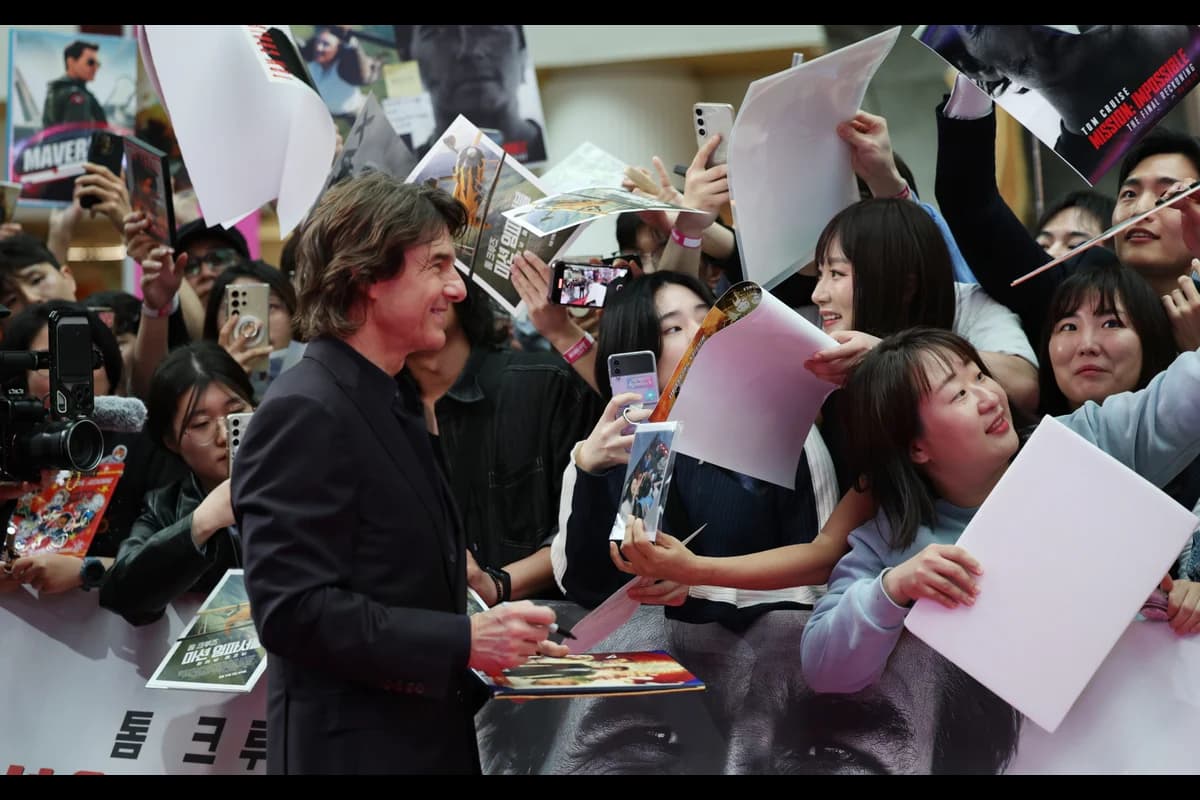
A Japanese Cartoon About Small Cute Creatures Opened at Number One in Korea. Tom Cruise's New Film Is Seventh on the Booking Board, With Cruise in Seoul to Sell It
《극장판 치이카와》 took 122,291 admissions on its opening day, the biggest start for any animated film released in Korea this year, and by the next morning held 39 per cent of every advance ticket in the country. 《디거》, Alejandro G. Iñárritu's black comedy with Tom Cruise as an oil baron, opens on 3 October with 2.6 per cent — behind a Venice prize-winner in its second week — while Cruise makes his thirteenth visit to Korea, more than any other Hollywood actor. Iñárritu was meant to come too. He cancelled the night before.
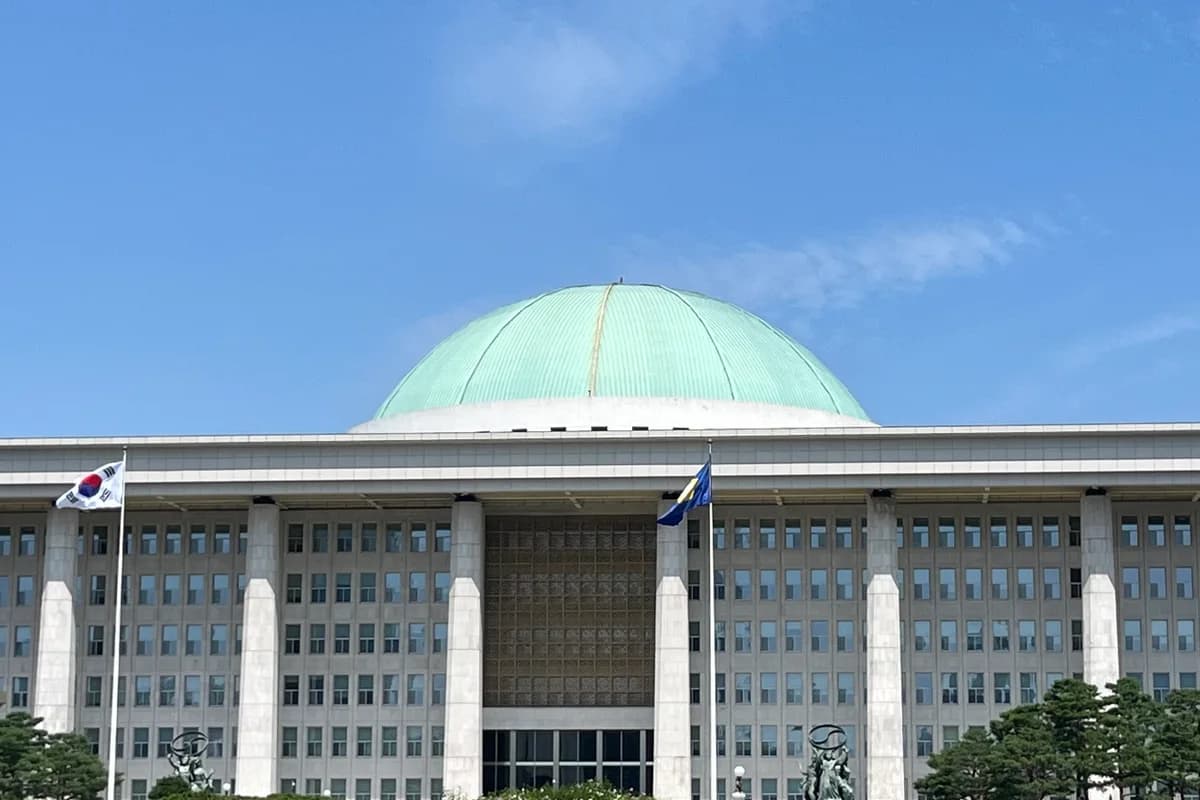
The Opposition Leader, the Park Chung-hee Foundation and a Police Complaint Want Chuseok's Number-One Film Off the Screens. The Director Says the Line They Object To Isn't In It
《암살자(들)》 passed 1.6 million admissions over the holiday. On the Monday after it, the foundation that keeps Park Chung-hee's memory demanded an apology and a halt to screenings, the leader of the opposition asked why insulting Park is 'freedom of expression' when touching Roh Moo-hyun gets you sued, and by Tuesday morning a former city councillor had filed a criminal complaint against the producer, the director and both writers. Hur Jin-ho's answer is that the film nowhere says Park ordered his wife shot, and that he now wishes he had drawn that line in dialogue. The audience score is 8.3. The netizen score is 2.2.

Seven Shots or Six? The 1974 Record Can Be Read Both Ways. Hur Jin-ho's Film Took Six, and Built a Newsroom Around the Bullet Nobody Examined.
Hur Jin-ho's 《암살자(들)》 opens on 23 September as the most pre-booked Korean film of the Chuseok season, ahead of 《인턴》, with a bracketed plural in its title that is the whole argument. The 1974 file on the shooting of First Lady Yuk Young-soo lists seven shots, one of them a misfire; the Park Chung-hee foundation now counts six; the film counts six and finds four bullets. What none of them can show is the bullet that killed her — and the director says he is offering a hypothesis, not a verdict.
The Weekly Dispatch
Korea, curated. Every week.
The best of K-culture, straight from Seoul. Written by people who actually live here.
Free, no spam, unsubscribe whenever.