Why Every Korean Man Serves: Military Service, Explained
Even the biggest band on the planet had to enlist. Nearly every able-bodied South Korean man gives up 18-plus months of his life to the military — because a war that started in 1950 technically never ended. Here's how conscription works, the medal that buys your way out, and why dodging it ends careers.
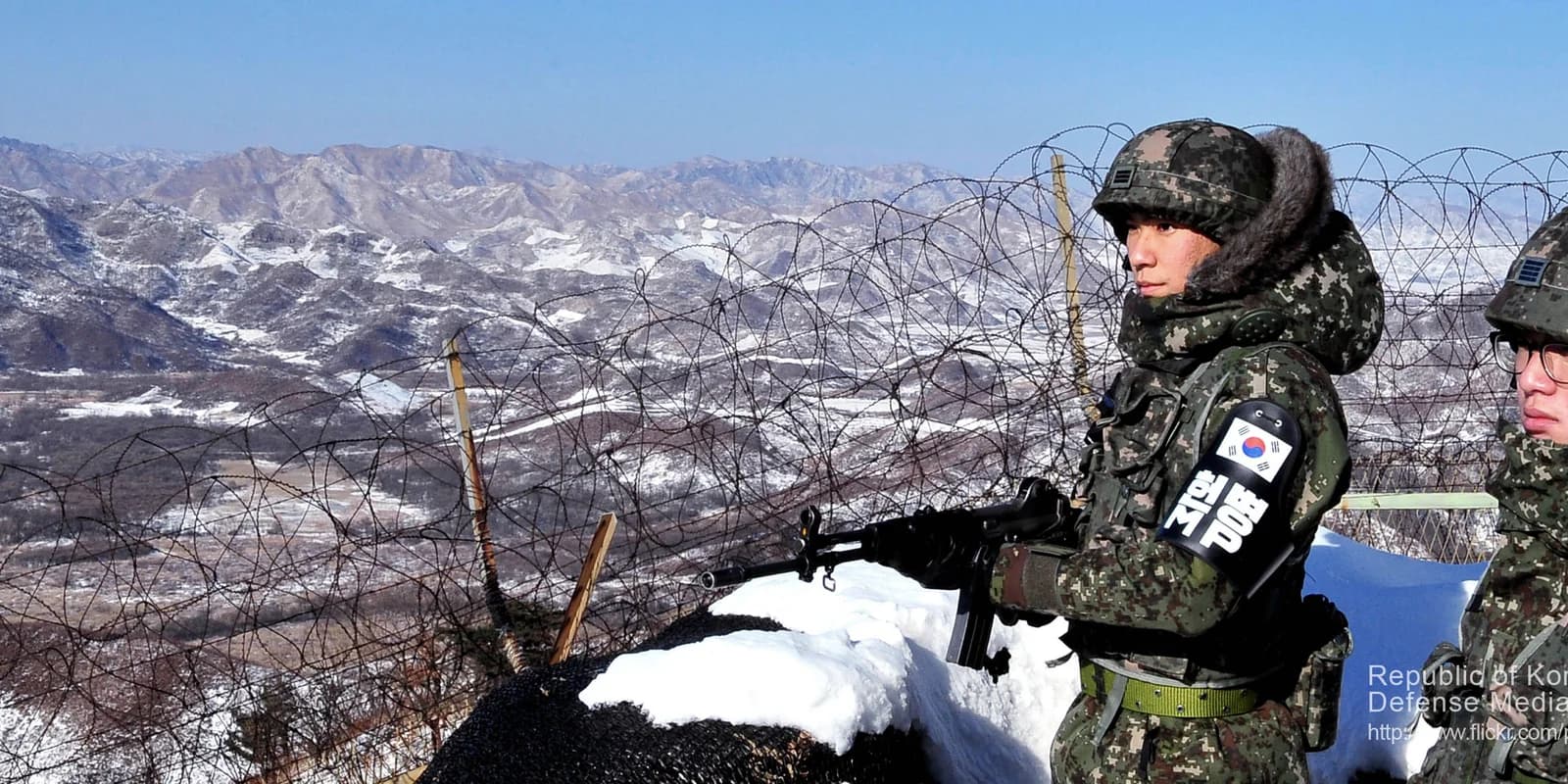
In December 2022, the most famous musician in South Korea — Jin of BTS, a member of the biggest band on Earth — walked through the gates of an army boot camp with a freshly shaved head, like millions of ordinary Korean men before him. Over the next two and a half years, all seven members of BTS would do the same. No amount of global fame, chart records, or economic value to the nation got them out of it.
That single fact tells you how seriously South Korea takes military service (병역, byeongyeok). Nearly every able-bodied Korean man must serve — and to understand why, you have to understand a war that, on paper, is still going on. Here's how it works.
The War That Never Ended
Start with the reason underneath everything: the Korean War (1950–1953) did not end with a peace treaty. It ended with an armistice — a ceasefire signed on July 27, 1953 (TIME). No formal peace was ever concluded, which means that, more than seventy years later, North and South Korea remain technically at war.
That is not an abstraction. A heavily armed, nuclear-armed North Korea sits directly across a border less than an hour's drive from Seoul, with much of its enormous army stationed near the DMZ. To deter it, the South maintains one of the world's largest standing militaries — roughly half a million active-duty troops (2024), backed by millions of reservists (Wikipedia). A country of 51 million can only field a force that size one way: by requiring its young men to serve. Conscription isn't a tradition in Korea. It's a security necessity that never got switched off.
The Rule, Plainly
Nearly all able-bodied South Korean men must perform compulsory active-duty service. (Women are exempt but may volunteer.) The obligation is written into the Constitution and the Military Service Act (병역법) (Wikipedia).
- How long: it depends on the branch — about 18 months in the Army and Marines, 20 in the Navy, and 21 in the Air Force (Wikipedia). (Decades ago the term ran close to three years; it's been cut in stages.)
- When: men become eligible at 18 and are generally required to enlist before turning 28. That age-28 deadline is the quiet clock ticking under every young Korean man's twenties — and, as we'll see, the whole reason "deferral" is such a loaded word for celebrities.
The Journey: From Physical to Reserves
The path is the same for a farmer's son and a movie star. It starts with a physical examination around age 19 that assigns a fitness grade from 1 to 6. Grades 1–3 mean active duty; grade 4 routes you to public "social service" work; grade 6 means a full exemption for serious medical reasons (Wikipedia).
From there it's a few weeks of basic training, then assignment to a unit for your term of service, and — after discharge — years on the reserve roster (reduced to five years of occasional training from 2021). There is also, since a landmark 2018 court ruling, a legal path for conscientious objectors, though the alternative is a demanding 36-month stint in a correctional facility (CNN). For the overwhelming majority, though, it's boot camp, a buzz cut, and a year and a half away from ordinary life.
The Golden Exit: A Medal
There is one famous way out, and it isn't money or fame — it's a medal. Winning an Olympic medal of any color, or a gold medal at the Asian Games, qualifies a man for what's officially called "art and sports personnel" status (Olympics.com). A handful of elite classical musicians and traditional artists can earn the same through top international competitions.
It's important to be precise: this is a substitute, not a free pass. Those who qualify still complete a few weeks of basic military training and hundreds of hours of community service; they're simply allowed to keep practicing their sport or art instead of spending 18 months in uniform. Two vivid examples, from opposite worlds:
- Son Heung-min, Korea's greatest-ever footballer, earned his exemption when South Korea won football gold at the 2018 Asian Games (he set up both goals in a 2–1 win over Japan). It let him keep his career at its peak rather than pause it — the reason he could go on to captain a Premier League club and, later, move to Major League Soccer.
- "Faker" (Lee Sang-hyeok), the greatest esports player alive, got his the same way — Korea won League of Legends gold at the 2022 Asian Games (held in 2023), the first time a video game counted. We told that story in full. The Demon King beat the draft with a joystick.
The BTS Question
Which brings us to the argument that consumed the country: should BTS get that exemption too?
After BTS conquered the global charts — a Korean act topping the Billboard Hot 100 — many argued their soft-power value to the nation was worth at least as much as an athlete's medal, and that they'd earned the same pass. Others insisted that the entire system rests on shared sacrifice, and that carving out pop stars would break faith with every ordinary conscript (Rolling Stone).
Here's what actually happened, and it's widely misunderstood. In December 2020, the National Assembly revised the Military Service Act so that acclaimed pop artists could postpone (defer) enlistment until age 30 — nudging that age-28 clock a couple of years later (ABC News). That "BTS law" bought time. It did not grant an exemption. When the deferral ran out, the members went — Jin first, in December 2022, and by June 2025 all seven had completed their service (TODAY). The biggest band in the world enlisted like everyone else, and their fans spent two and a half years counting down to a reunion. That is the whole point of the system, made visible on a global stage.
The Third Rail: Dodging
If serving is a rite of passage, evading is a career death sentence — and Korea makes an example of those who try.
The defining cautionary tale is Yoo Seung-jun (Steve Yoo), a top pop star of the late 1990s who publicly vowed to serve — then became a US citizen in January 2002, just before enlistment, shedding his Korean nationality. The public read it as a betrayal of the shared bargain. He was banned from entering the country, and has been shut out ever since — more than two decades — even after winning court cases on procedural grounds; in 2026 the government moved to codify a permanent entry ban on draft evaders, citing his case (Korea Times, Korea JoongAng Daily). The rapper MC Mong faced a similar firestorm over accusations he'd had teeth removed to fail his physical; a court acquitted him of that specific allegation but convicted him of otherwise intentionally delaying enlistment, and broadcasters effectively froze him out (Wikipedia). The lesson Korean men absorb early: you can survive almost any scandal except looking like you ducked your service.
What It Says About Korea
Step back and the whole system is really about one idea: shared sacrifice. Because virtually every man goes — the chaebol heir and the idol and the day laborer alike — the 18 months become a common experience that binds a generation, and skipping the line reads as breaking a promise to everyone who didn't.
You can see it most clearly in the culture that's grown up around it: the tearful enlistment send-offs, the fans and families who "wait," the emotional discharge-day reunions. For idols and actors, service is the great mid-career pause — a gap that comeback culture is often built to bridge, and one more thing the years-long grind of the trainee system is quietly preparing them for. A Western fan sees a strange interruption to a superstar's career. A Korean sees a young man doing what every young man does, famous or not — because across the border, the other army never stood down, and the war on paper never ended.
Service durations, the 1953 armistice, the exemption mechanism, the 2020 deferral law ("BTS law"), and the enlistment outcomes are drawn from the linked sources and dated in-text. The art-and-sports service term is described in general terms because sources differ on the exact figure; troop numbers are dated approximations. Convictions and court outcomes are matters of public record — where a person was cleared of a specific charge (MC Mong), that is noted. Images: homepage/hero — ROK soldiers saluting at a military review, US Department of Defense photo (public domain), Wikimedia Commons; cover — ROK border guards on the DMZ, and listing card — ROK Marine recruits in training — both by the Republic of Korea Armed Forces, via Wikimedia Commons, CC BY-SA 2.0.

Keep Reading
More Stories
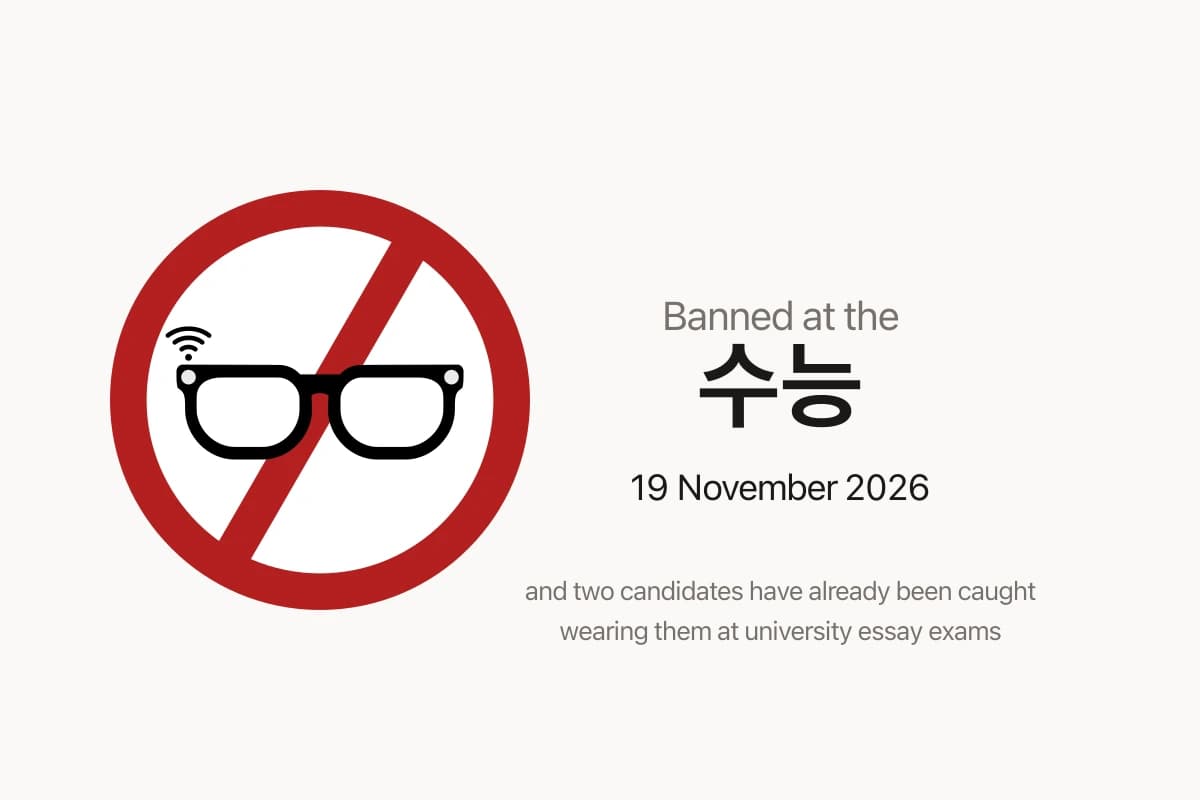
Two Candidates Wore AI Glasses Into Korean University Exams This Month. Five Weeks Later, 550,000 People Sit the 수능
At the University of Seoul on 3 October and at Yonsei a week later, proctors spotted AI smart glasses on candidates sitting essay exams for admission. Both had passed the glasses check in ordinary frames and switched once the exam began. The 수능 on 19 November already bans the devices; the question is whether anyone can see them.
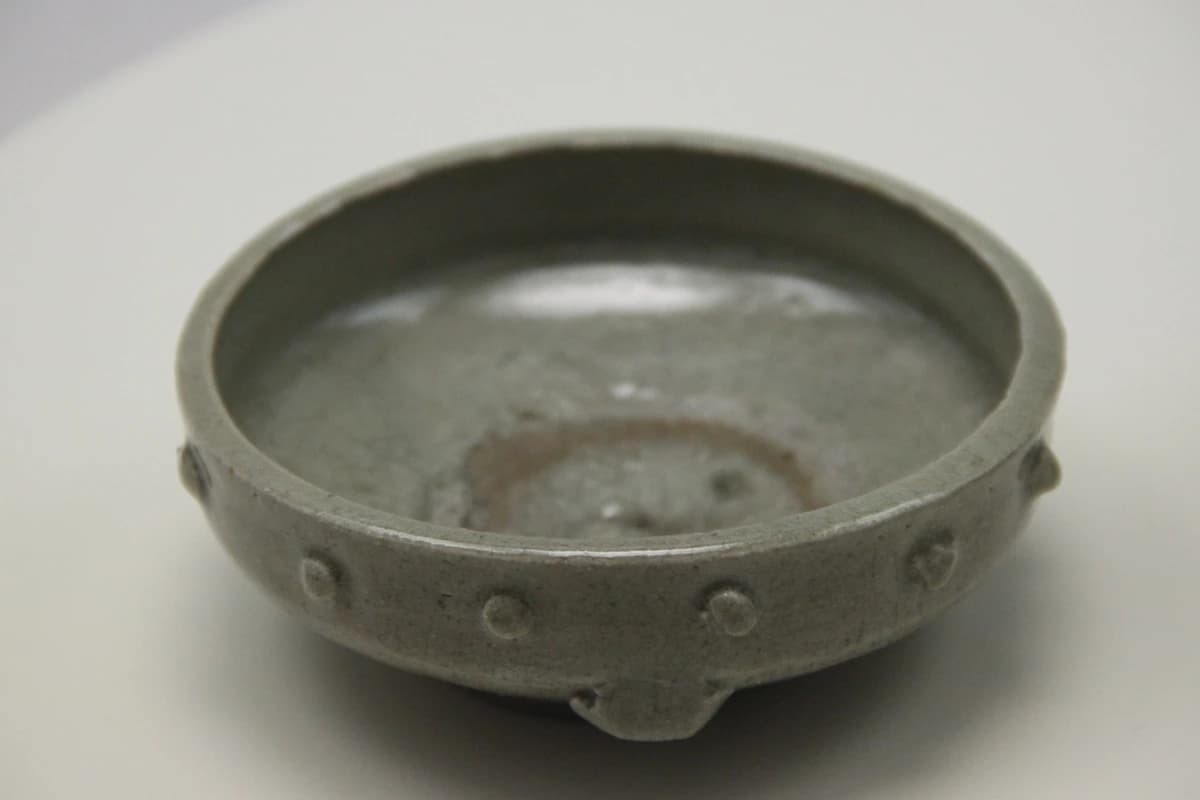
The Fisherman Hid It Under His Floorboards. The Reward He Eventually Got Set Off a Decade of Looting.
Korea marked fifty years of underwater archaeology in Mokpo in September 2026. The official story starts with a net and a report. The documented one starts with six pieces of Chinese porcelain given away as presents, a schoolteacher brother who had to get them all back, and officials who did not want the paperwork. Then the state paid a reward, a diver worked out how much of it went in tax, and for the next ten years people stole the wreck faster than the government could raise it — until the navy's own divers could not find the ship, and the excavation hired the looters.
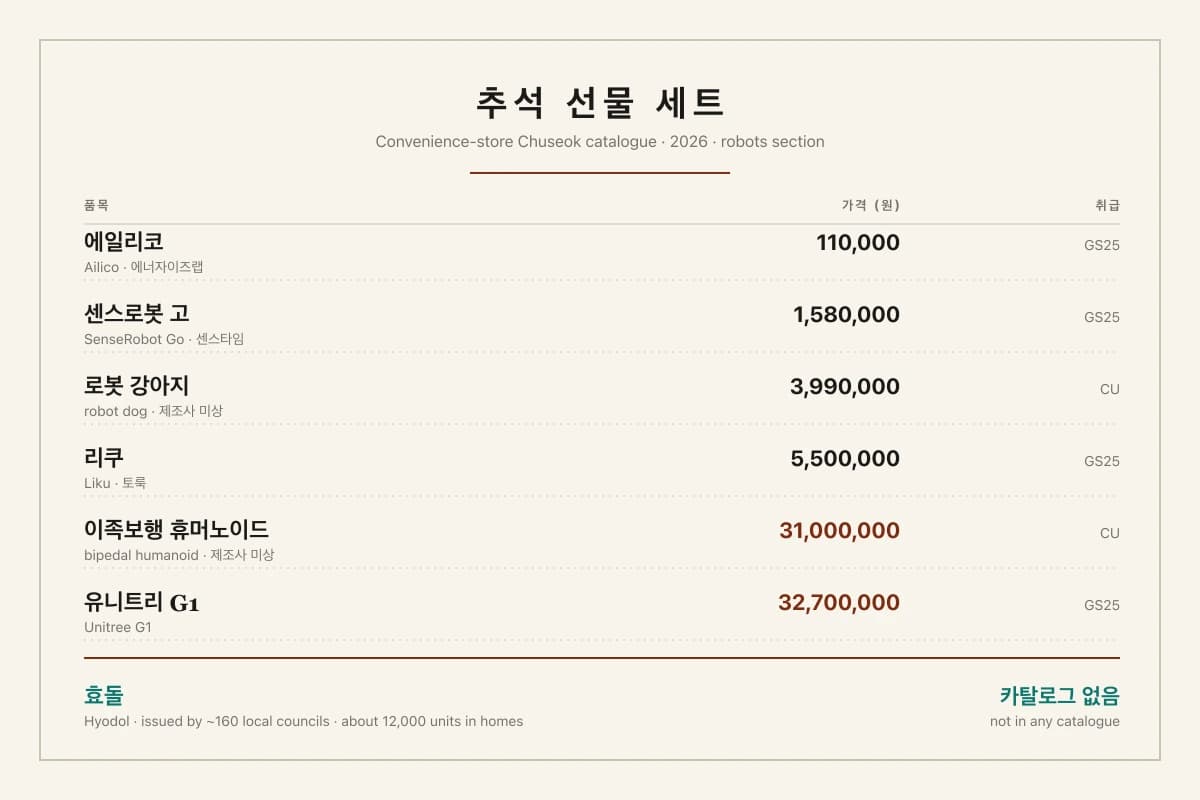
Korea's Convenience Stores Are Selling Humanoid Robots for Chuseok. Neither Chain Expects to Sell One, and Both Have Said So.
CU's holiday catalogue has a bipedal humanoid at ₩31 million, next to the beef and the gold bars. GS25 has an AI companion robot at ₩5.5 million and a keyring that talks back at ₩110,000. We assumed the pitch was companionship for parents you won't be visiting. It isn't — the retailers say plainly these are there to be noticed, not bought. Meanwhile about twelve thousand robots are already in Korean homes, asking elderly residents whether they've taken their medicine, and nobody put those in a catalogue.
The Weekly Dispatch
Korea, curated. Every week.
The best of K-culture, straight from Seoul. Written by people who actually live here.
Free, no spam, unsubscribe whenever.