Korea Added Two Public Holidays This Year and Gave Both of Them Saturday Protection. Chuseok Still Does Not Have It.
Chuseok's last day falls on a Saturday, and Monday is a normal working day. Eight days later National Foundation Day also falls on a Saturday, and everyone gets the Monday off. Same collision, two different answers — because the decree sorts holidays into three tiers, and the only two in the middle tier are Seollal and Chuseok. The government rewrote that exact clause in April to protect the two holidays it was adding. It left the biggest one where it was.
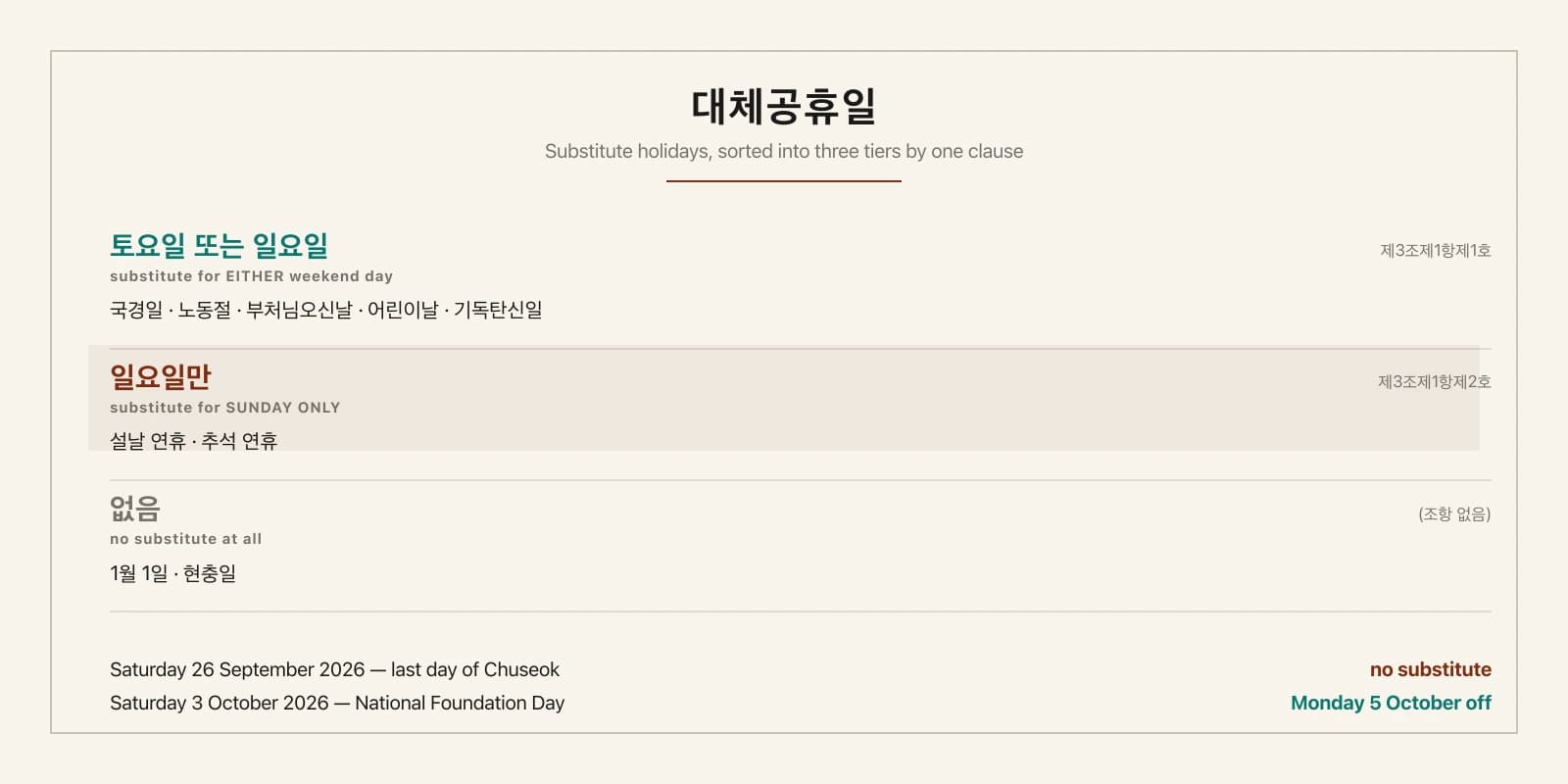
Chuseok this year runs 24–26 September. 추석 당일 is Friday the 25th; the holiday's third day, 추석 다음날, is Saturday the 26th.
Monday 28 September is a normal working day.
Eight days after that, 국경일 개천절 — National Foundation Day — falls on Saturday 3 October, and the country gets Monday 5 October off. It is the only substitute holiday left in the 2026 calendar.
Two Saturdays, eight days apart, and the law treats them completely differently. This is not an oversight and it is not an accident of drafting. It is written down, deliberately, and it was edited four months ago.
What the decree actually says
The rule lives in 관공서의 공휴일에 관한 규정, the Presidential Decree on public holidays for government offices. Its 제3조 governs 대체공휴일 — substitute holidays. In the current text, 제3조제1항 sorts every holiday in the country into three groups.
제1호 — a substitute if the holiday falls on Saturday or Sunday:
"제2조제2호, 제5호부터 제7호까지 또는 제10호의 공휴일이 토요일이나 일요일과 겹치는 경우"
That covers the national days (제2호 — 3·1절, 제헌절, 광복절, 개천절, 한글날), 노동절 (제5호), 부처님오신날 (제6호), 어린이날 (제7호) and Christmas (제10호).
제2호 — a substitute only if it falls on a Sunday:
"제2조제4호 또는 제9호의 공휴일이 일요일과 겹치는 경우"
제4호 is the Seollal holiday. 제9호 is the Chuseok holiday. That is the entire membership of this tier.
제3호 covers the case where holidays collide with each other midweek.
And then there is everything the article does not mention at all: 1 January (제3호) and 현충일 (제8호) get no substitute under any circumstances.
So the country's holidays are sorted into those protected against both weekend days, those protected against Sunday only, and those not protected at all. The two biggest family holidays in the Korean year — the only multi-day ones, the two that involve the entire population physically travelling — sit alone in the middle tier.
Which means the exact thing that happens this month. Chuseok loses a day to a Saturday and nothing replaces it. Had the 26th been a Sunday, Monday would have been a holiday.
The part that makes it an argument rather than a curiosity
Any long-standing rule can be defended as inertia. Nobody got round to it; the decree is old; these things accrete.
That defence is not available here, because the government was inside this exact clause on 30 April 2026.
대통령령 제36290호, in force 1 May, amended 제3조제1항. It had to, because the National Assembly had just added two public holidays: 노동절 (May Day) became a public holiday under 법률 제21543호, and 제헌절 (Constitution Day) was restored as one under 법률 제21338호 — the first time since it was dropped in 2008.
Here is the amending instruction, verbatim:
"제3조제1항제1호 중 '제2조제2호ㆍ제6호ㆍ제7호'를 '제2조제2호, 제5호부터 제7호까지'로 하고…"
They opened 제1호 — the Saturday-and-Sunday tier — and widened it to take in the new holidays. The stated purpose, in the decree's own explanatory note, is that when Constitution Day and May Day "토요일이나 일요일 또는 다른 공휴일과 겹치는 경우" a substitute should follow.
So in 2026 the Korean state added two holidays, considered the Saturday problem for both of them, and solved it for both of them — in the same sentence, in the same paragraph, one clause above the one that leaves Chuseok exposed.
제2호 was not touched.
Why Saturday is the hinge
There is a reason this is possible at all, and it is stranger than the holiday rule.
Saturday is not a public holiday in Korean law. Look at 제2조, which lists what the public holidays are. Item one is 일요일 — Sunday. 토요일 does not appear anywhere in the decree.
Saturday's status as a non-working day comes from the five-day week, and in legal terms it is a 휴무일 — a non-working day — rather than a 휴일, a holiday. That distinction is not in the statute either. It rests on an administrative interpretation issued by the labour ministry when the five-day week arrived in 2004.
So the whole structure is: Sunday is a holiday because a decree says so; Saturday is a day off because of the working week; and whether a holiday landing on a Saturday is worth replacing is then a policy question the decree answers differently depending on which holiday it is.
Once you see it that way, the Chuseok rule stops looking like a technicality. Somebody had to decide that a Saturday swallowing the last day of Chuseok was acceptable, and that a Saturday swallowing National Foundation Day was not.
It is a choice, and we know that because they have chosen otherwise
The decisive evidence that this is discretionary rather than structural is that the government has already overridden it, in living memory, for exactly this problem.
In 2023, facing the same Saturday collision around Chuseok, the government designated Monday 2 October an 임시공휴일 — a temporary public holiday — under 제2조제11호, which allows the government to name additional days. Doing so requires only a Cabinet deliberation: 제4조 says a 제2조제11호 holiday needs 국무회의의 심의, and nothing more.
The machinery exists. It has been used. It has been used for this. As of 8 September 2026, no such designation has been made for 28 September.
The objection, taken seriously
The honest counter-argument is that holidays are expensive, that Korea already has a lot of them, and that every substitute day has a cost borne largely by employers — and disproportionately by small ones.
That is a real argument, and if it were the argument being made, the tiers would look different. You would expect the shortest holidays to be protected and the long ones left alone, on the grounds that a three-day break survives losing a day and a one-day holiday does not.
The decree does the opposite. Christmas — one day — is protected against Saturday. Children's Day — one day — is protected against Saturday. The three-day Chuseok holiday is not. If the principle were cost, the two multi-day holidays would be the last ones you would protect, and they are the only ones singled out for the weaker rule.
There is a second defence, which is that Seollal and Chuseok are lunar and therefore move around, so they collide with weekends more often and the cost of protecting them is higher over time. That is arithmetically true and it is an argument for how much protection to give, not for the specific rule that Sunday counts and Saturday does not. A lunar holiday is no more likely to hit a Saturday than a Sunday.
What it comes down to
The people most affected by the Chuseok rule are the people with the least discretion over their own time: workers whose leave is counted in days, who travel to a hometown and back, and for whom the difference between a three-day holiday and a four-day one is the difference between arriving and turning round.
The state has an instrument for this. It used the instrument in 2023. It rewrote the governing clause in April 2026 and used the opportunity to protect Constitution Day and May Day, both of which are single days, neither of which requires anybody to drive to South Jeolla.
We are not arguing that Korea should have more holidays. We are arguing something narrower: that if the rule is going to distinguish between holidays, the distinction should track something. Right now it tracks nothing that anyone has been willing to say out loud, and the two holidays that come out worst are the two that the largest number of people actually plan their year around.
Chuseok is the holiday where the country moves. It is the one the calendar should be most careful with, and it is the one the decree is least careful with.
Related: Chuseok is filed under two different months in the state's own documents, the charye table rules that first appear in print in 1920 as an insult, and the convenience-store robots nobody expects to sell.
Update, 14 September: it is now the national question, and the answer is still no
Ten days out, the thing this piece argued has become the morning's news. In a single day 아시아경제, 매일신문, TV조선, 이코노미스트, 허프포스트코리아, 세계일보 and 센트럴경제 all ran the same question — will Monday 28 September be made an 임시공휴일? — and TV조선 walked its readers through 제3조's tiers exactly as set out above: national days get a substitute for a Saturday or a Sunday, "설날과 추석은 다르다."
The government's position, as of today, has not moved. 이코노미스트: "현재까지 정부 차원에서 28일 임시공휴일 지정을 공식 검토하거나 발표한 바는 없다" — no official review, no announcement. Absent one, the 28th stays a working day.
Two things in today's coverage are worth adding to the argument.
First, the procedure is not the obstacle. Past temporary holidays were designated about thirteen days before the day in question, so a decision now is still within precedent. What is holding it is the case against, which 이코노미스트 lays out honestly: a longer break tends to send people abroad rather than into domestic shops — the six-day Seollal break of January 2025 produced a record 2.97 million outbound travellers in a month — and shifting the school calendar opens a childcare gap for dual-income households.
Second — and this is the detail that ties this piece to the other one we published this month — a temporary public holiday is only a mandatory paid day off at workplaces of five or more people. Under the Labour Standards Act it creates no obligation at all for the under-five workplaces that employ a large share of the country's lowest-paid workers. So even the remedy, if it comes, arrives with the same hole in it that the Constitutional Court declined to look at in August. The people the calendar treats worst would be the ones an 임시공휴일 does not reach.
We will update this piece if a designation is announced.
Update, 23 September: the last cabinet meeting before the holiday came and went
The regular cabinet meeting of Tuesday 22 September was the last one scheduled before Chuseok. On its eve, the ministry responsible, 인사혁신처, told 문화일보 that there was nothing to report: "현재 28일 지정과 관련해 검토·논의 중인 내용은 없다" — nothing under review or discussion about designating the 28th. The same official gave the criteria as "당시 경기 상황과 여론 등을 종합적으로 고려해 결정하는 사안", the economic situation and public opinion, weighed together — which is a description of a discretion, not a rule, and is the whole of the argument above.
No designation had been announced by the early hours of the 23rd, the day before the holiday begins. So the calendar stands as printed. The holiday is Thursday 24 to Saturday 26 September; Chuseok itself is Friday the 25th; Saturday's day off is absorbed into a Saturday; Monday the 28th is a working day. The reporting on the 22nd — 문화일보, 이데일리, 아주경제, 금강일보 — has moved from whether to why not, and the answers offered are the familiar two: a longer break sends people abroad rather than into domestic spending, and it costs manufacturers working days. Office workers, 문화일보 reports, were describing the wait as "희망고문" — hope as a form of torture — while deciding whether to burn a day of annual leave on the Monday.
Nothing prevents a designation even now; the precedent of thirteen days' notice was passed on the 15th, and nobody in government has cited it as a bar. But a temporary holiday announced after the holiday has begun would be a first, and there is no sign of one. This is, as far as we can tell, the end of the question for 2026.
Images. The chart is ours, built from the decree's own text. The listing thumbnail is an AI illustration (generated with Higgsfield, GPT Image 2.5): leftover 송편, a full moon and a briefcase set out for Monday. It depicts no real home or person.
Sources. The decree text is quoted from the current consolidated version of 관공서의 공휴일에 관한 규정 — 대통령령 제36290호, amended 30 April 2026, in force 1 May 2026 — retrieved from 국가법령정보센터, along with the amending instruction and the decree's own explanatory note. The two statutes behind the April amendment are 법률 제21338호 (제헌절, promulgated 10 February 2026, in force 11 May) and 법률 제21543호 (노동절, promulgated 9 April 2026, in force 1 May). Weekday assignments for every date named here were computed rather than repeated from reporting. The 2026 substitute-holiday position, including that 1 January and 현충일 attract no substitute at all and that 5 October is the year's last one, was cross-checked against Korean calendar reporting.
A trap worth flagging, because we nearly fell into it. The version of this decree on Korean Wikisource is the 2017 text, 대통령령 제28394호. Its 제3조 has two short paragraphs and no tier structure at all, because it predates both the 2021 and 2023 expansions of 대체공휴일 and the 2026 amendment. Anyone reading it would conclude the modern rule does not exist. We drafted from the current consolidated text instead, and we mention it because the stale version is what a search engine surfaces first.
Deliberately not asserted. We do not say Korea is unusual internationally, because we did not do that comparison. We do not put a figure on what a substitute holiday costs the economy — estimates circulate and we could not source one we trusted to a method we could see. And we do not predict whether an 임시공휴일 will be designated for 28 September; as of publication none had been, and as of the 14 September update above none still has.
Keep Reading
More Stories

A Portmanteau Walks into a Party: In Defence of the Koreaboo
The word 'koreaboo' travels fast and lands hard — but nobody can define it, nobody who matters invented it, and it applies, with suspicious consistency, almost only to East Asian cultures. Drawing on the Francophile, the Anglophile, and a 1,555-day Duolingo streak, a guest essay on the double standard that calls Western cultural enthusiasm personality and Korean cultural enthusiasm a phase.
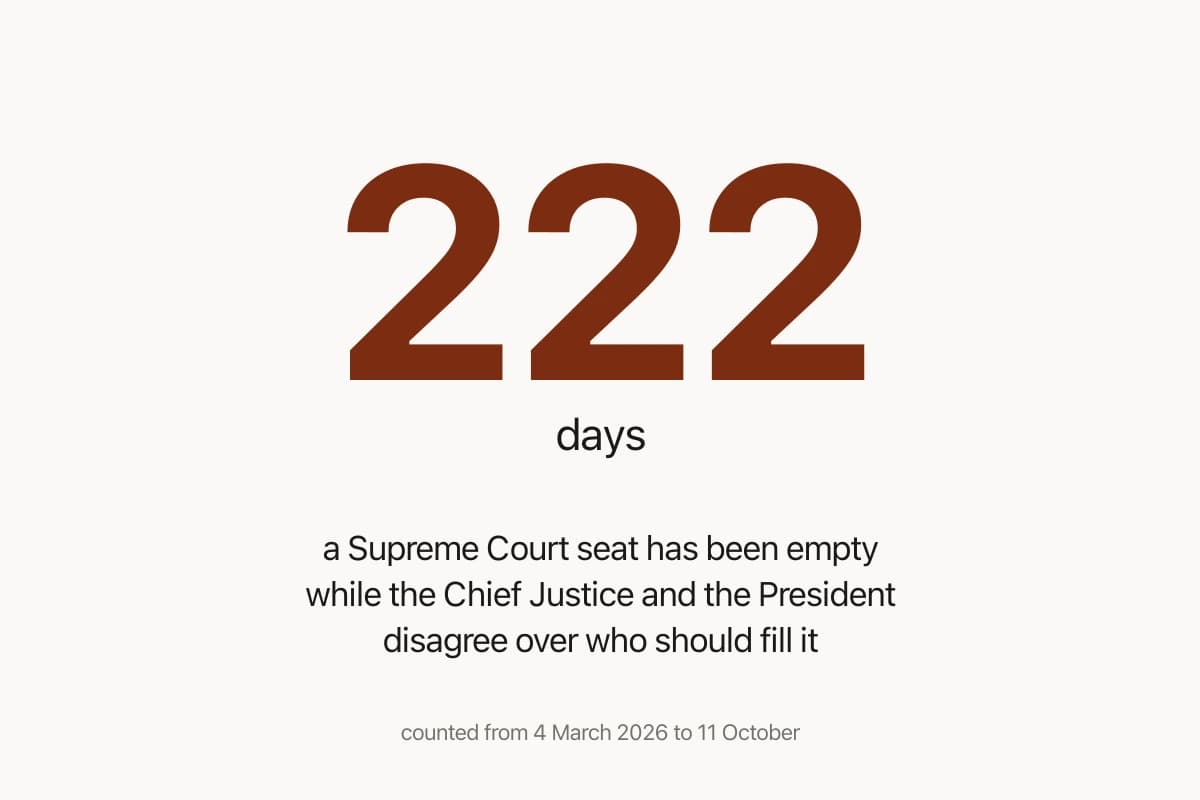
Summoned to Testify, Korea's Chief Justice Came, Refused the Oath, Answered Anyway — and Left at Lunch
On 6 October 조희대 sat before the National Assembly's judiciary committee for two and a half hours, unsworn, defending a refusal to put forward a second name for a Supreme Court seat that has been empty since March. Then the Chief Justice went, and came back at ten to eleven at night to give closing remarks. Nobody voted to compel a return, and the seat is still empty.
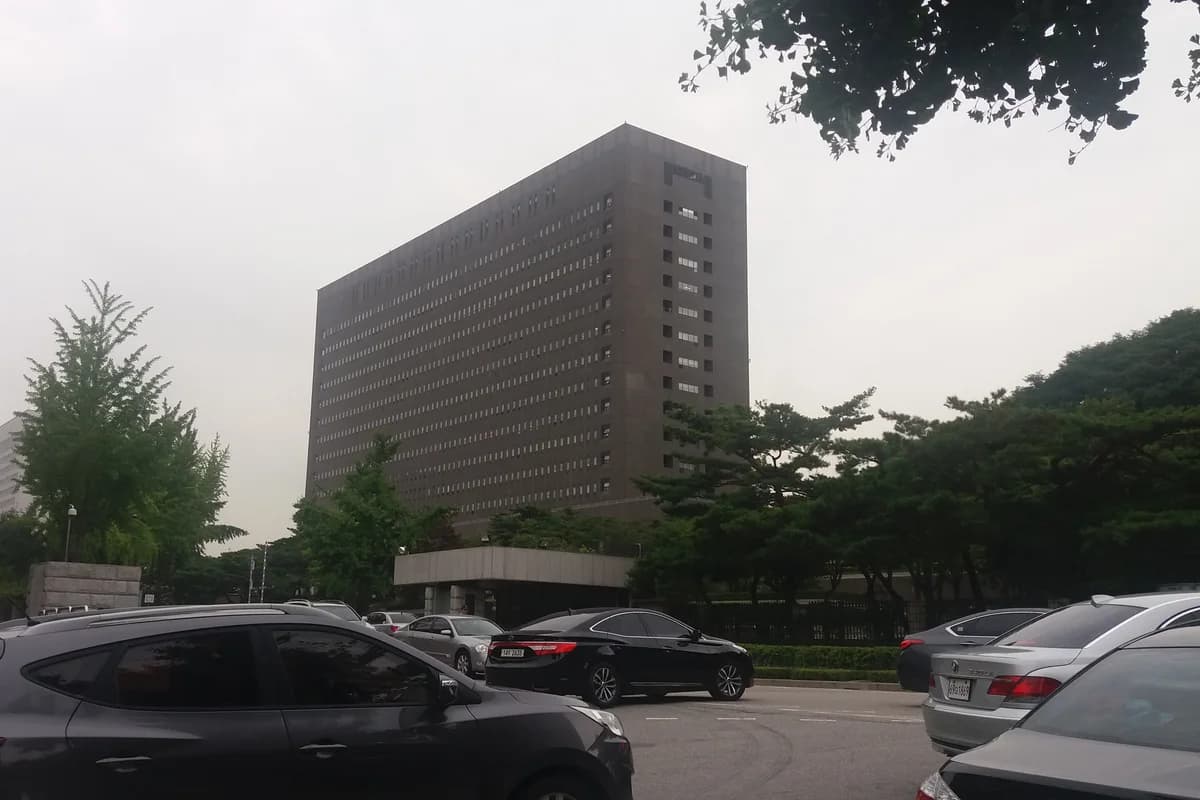
Korea Abolishes Its Prosecution Service on 2 October. One Successor Opens Without a Chief or a Finished Building. The Other Opens With the Same Prosecutors Under a New Sign
At midnight on 1 October the 검찰청법 is repealed and the institution that has dominated Korean politics since 1948 splits in two: a 공소청 that charges and tries cases, and a 중대범죄수사청 that investigates serious crime. It is the largest change to Korean criminal justice in seventy years, and it begins with acting heads at the prosecution office, the justice ministry and the national police, no head at all at the new investigation agency, seven sets of rules still unpublished, four challenges pending at the Constitutional Court — and the President arguing on X, in the small hours, with his own party about whether a former prosecutor may run the agency that replaces prosecutors.
The Weekly Dispatch
Korea, curated. Every week.
The best of K-culture, straight from Seoul. Written by people who actually live here.
Free, no spam, unsubscribe whenever.