Kim Do-young Went 4-for-4 on the Last Possible Day and Missed the Record by One Home Run. He Says He Could Not Carry the Crown.
He hit his 39th on 26 August with Yankees and Rangers scouts in the stand, needing one more before he turned older than Lee Seung-yeop was in 1999. Then somebody checked the record-holder's birthday and found a lunar date, a week of games was cancelled for heat, four more were rained off, and the deadline arrived anyway. On the last day he could still have beaten it, Kim went four-for-four — four singles, nothing over the fence — and afterwards said the thing nobody expected him to say out loud.
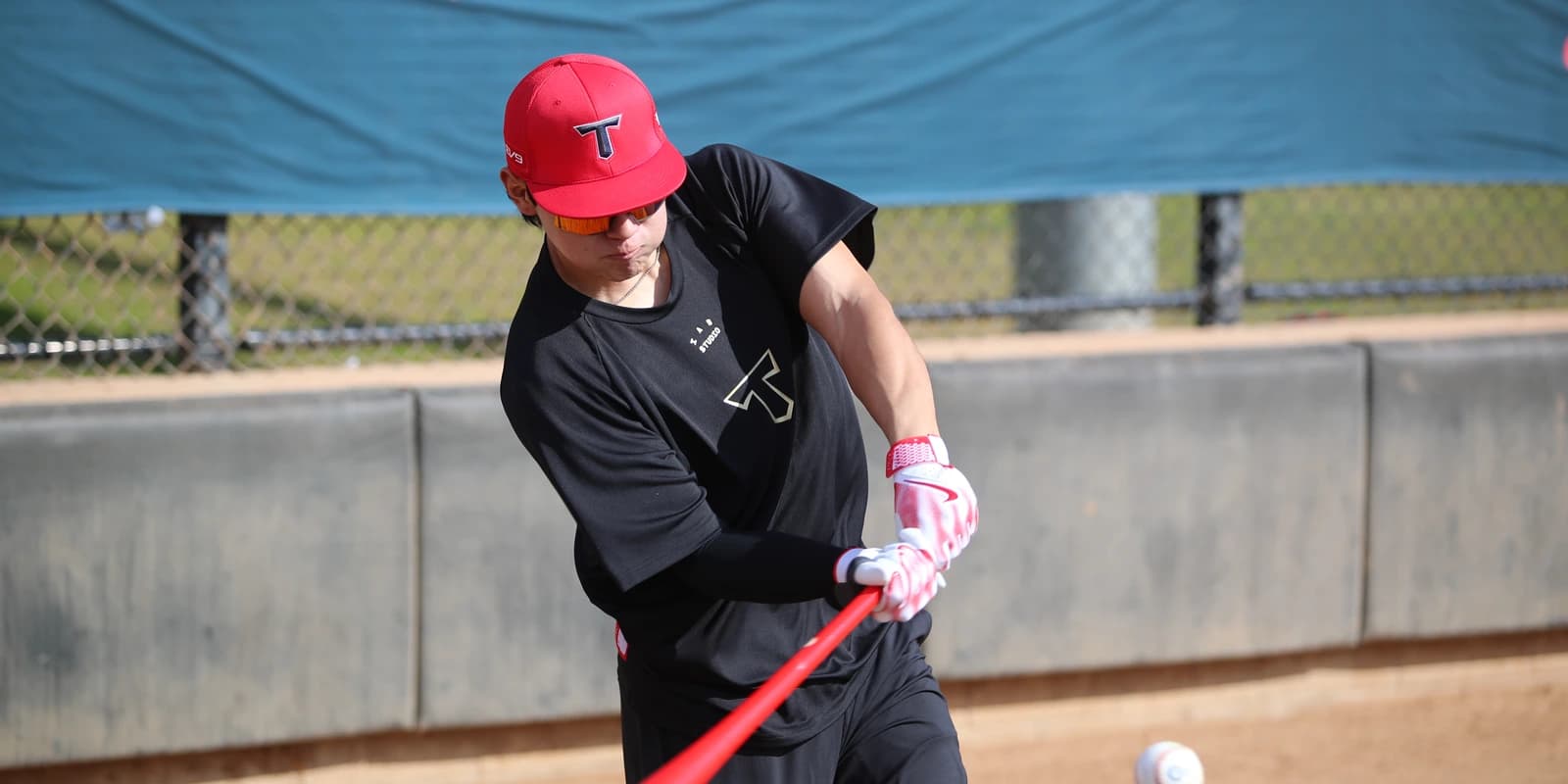
On the evening of 26 August, in the first inning at Gwangju-KIA Champions Field, Kim Do-young turned on a 155km/h fastball from Lotte's Elvin Rodriguez and hit it out for a three-run home run that put KIA in front. It was his 39th of the season, beating the 38 he hit in 2024, which had been his own personal best.
Scouts from the New York Yankees and the Texas Rangers had come to Gwangju to watch.
One more home run and he becomes the youngest player in the history of Korean professional baseball to reach forty in a season. He has until 6 September.
And then, in the middle of all this, somebody looked up the birthday of the man who holds the record, and the whole thing briefly stopped making sense.
He did not get there. This piece was written during the chase and updated through it, and we have left that record standing rather than rewriting it backwards from the answer. The ending is the last section.
The deadline, and how it is calculated
The record belongs to 이승엽 (Lee Seung-yeop), who reached his 40th home run on 23 July 1999, against Hanwha in Daejeon — in 92 games, 428 plate appearances and 341 at-bats, all of them the fewest anyone has needed. He finished that season on 54 and hit 56 four years later, which is still the KBO single-season record.
He was, by the date in the record book, 22 years, 11 months and 5 days old.
Kim Do-young was born on 2 October 2003. Add 22 years, 11 months and 5 days and you land on 7 September 2026 — the day he would exactly equal Lee's age. To break the record rather than tie it, he has to do it on or before the 6th.
It is worth being clear about what that deadline is and is not. It is not the end of the season. The 2026 KBO regular season runs to 12 October — rain has pushed it back from the 7 October we first gave — and KIA will keep playing well past the 6th. The deadline is purely arithmetic: after that date, Kim is simply older than Lee was, and no home run can change it.
The birthday
Here is what came out in the last week.
When Lee Seung-yeop joined the Samsung Lions in 1995, the birthday he registered with the KBO was 18 August 1976. That is the date in the record book, and every age-based record about him has been calculated from it for thirty years.
It is his lunar birthday. His solar-calendar birth date — the one on the ordinary calendar — is 11 October 1976.
Recalculate his record on the solar date and he was not 22 years, 11 months and 5 days when he hit his 40th. He was 22 years, 9 months and 12 days. Nearly two months younger.
Which moves the bar. Kim Do-young passed the age of 22 years, 9 months and 12 days on 14 July 2026. On that date he had 27 home runs.
So for a few days there were two live versions of this story running at once: one in which Kim has a fortnight to make history, and one in which the record quietly became unreachable in the middle of July, while he was 13 home runs away and nobody had noticed.
There was a second, smaller argument alongside it about whether leap days should be counted in an age measured to the day.
What the KBO decided
It has now ruled, and the reasoning is the interesting part.
Age-related records — youngest, oldest, all of them — are compiled from the registration data the clubs themselves have submitted, every year, since the league's founding season. Whether a given player registered a lunar date or a solar one is not something the record book adjudicates. The filed date is the date.
On that basis the deadline stands at 6 September, with the leap-day adjustment excluded.
The KBO has also said it will overhaul the whole standard after this season — how birth dates are registered, how age records are computed, and the related question of how foreign players' ages are handled and written.
So the rule is being fixed, but not yet, and Kim's chase runs under the old one.
There is something quietly remarkable in that ruling, and it is not a criticism of it. A national record book is running on paperwork rather than on biography. Lee Seung-yeop was born on a particular day in October 1976; the record says August, because that is what a form said in 1995, and the KBO's position is that the form is what the record is made of. Given the alternative — retroactively recomputing every age record in the league's history against genuine birth dates that in some cases nobody has — it is hard to see what else they could have decided.
It is also a very Korean problem to have. The lunar calendar is not a historical curiosity here; it still governs when Chuseok and Seollal fall, when many families hold ancestral rites, and — for a particular generation — which date got written down when a child was registered.
Why forty is a lot
For a reader used to Major League Baseball, forty home runs may not sound like a landmark.
Two things make it one in Korea. The season is shorter — 144 games now, and 132 in 1999, against MLB's 162. And the ball has been deliberately deadened. In December 2018 the KBO cut the ball's coefficient of restitution and widened its diameter by a millimetre to match the American and Japanese specification, explicitly to end a hitters' era. The effect was immediate and enormous: league-wide home runs fell from 1,756 in 2018 to 1,014 in 2019 — a 42 per cent collapse in a single winter.
Forty-home-run seasons are correspondingly rare. And if Kim gets there, he picks up a second record on the way: he would be the first Korean-born player ever to hit 40 in a season for the KIA franchise. The only 40 in the club's history belongs to Tracy Sanders, an American import, who hit exactly that number in 1999 — the same season Lee Seung-yeop set the record Kim is chasing.
Kim's season
He was hitting .305 with 39 home runs and 98 RBI in 114 games when we published, on-base .404, slugging .643, for an OPS of 1.047. As of 3 September it is .302 in 117 games, with the home-run total unchanged. He leads the league in home runs and is not close to being caught: second is Austin of the LG Twins on 35, with Hilliard of kt a further five back.
He is 22. In 2024 he became the youngest player in KBO history to put up a 30-homer, 30-steal season, and won the MVP, a Golden Glove and a Korean Series ring in the same year.
Asked about the record after the 39th, he said he wants to go past forty and follow "이승엽의 길" — Lee Seung-yeop's road.
Which is a more loaded sentence than it first appears, because Lee Seung-yeop's road went to Japan. He spent years with Chiba Lotte and the Yomiuri Giants before coming home to Samsung. He managed Doosan, resigned in June last year, and is now the hitting coach at Yomiuri. The Yankees and the Rangers sending people to Gwangju in August is not unrelated to any of this.
The rain has not helped, and by the time we updated this it had become the story.
What it says
The chase looked straightforward when we published: a very good 22-year-old needing one swing in ten days, with plenty of chances coming.
What is genuinely unusual is the week the record spent in limbo — not because of anything either player did, but because a form filled in three decades ago used a calendar that most of the world's record books do not know exists. For a few days the answer to "is this the youngest ever?" depended on whether Korean baseball counts the day a man was born or the day he wrote down.
It has chosen the second, for this season at least, and is going to think about it properly over the winter.
Kim Do-young has until the 6th.
Update, 1 September: the weather got involved
He is still on 39.
Of KIA's four scheduled dates from 27 to 30 August, three were rained off — the 27th, the 29th and the 30th. He played once, on the 28th, and did not homer. Nothing has been added since.
Which puts a second clock next to the first one. On 25 August the KBO published a rebuilt fixture list for the rest of the season: 105 games to be fitted in before 7 October (rain has since pushed the end of the season to 12 October) — 45 that were never scheduled in the first place, plus 60 lost to rain and to heat breaks across a summer that kept stopping. KIA have 29 of them. If more games are lost, reserve days get used first, and from 29 September double-headers are permitted, one per team.
So the record has a fixed date and the fixtures do not.
A record measured to the day, held by a man whose recorded birthday is not the day he was born, may now come down to how many times it rained on Gwangju in a summer that broke the national temperature record twice.
Update, 3 September: the fixtures, settled — and he is still on 39
We said above that we could not establish how many games KIA had left before the deadline. We can now, from the KBO's own schedule, and the answer is that he has more opportunity than the gloomier reports suggested.
| 1 September | at NC, Changwon | played — KIA lost 2–7 |
| 2 September | at NC, Changwon | played — KIA lost 2–3 |
| 3 September | at NC, Changwon | today |
| 4, 5, 6 September | KT at Gwangju | three at home, and then the deadline |
One report had KIA's fixtures resuming only on 8 September, which would have ended the chase administratively. That was wrong. They have played two of the six and have four left, the last three at home.
He did not homer in either of the games at Changwon. The KBO's own leaderboard now has him on 39 home runs in 117 games, batting .302 — three more games than when we published, and no closer. Austin of LG is still second on 35; Hilliard of kt has moved to 31.
Which leaves the plainest version of it. Four games, one home run, and a deadline that does not move.
Update, 5 September: two games left, and the rain took a fourth
He is still on 39, now in 118 games.
Of the four fixtures we listed two days ago, he has played two and the weather took one. 3 September at Changwon was rained off — the fourth game lost to rain since this chase began, after the 27th, 29th and 30th of August. He played on the 4th, at home against kt, and KIA won 4–3. He did not homer.
That leaves exactly this:
| 5 September, 17:00 | kt at Gwangju | the day this update was written |
| 6 September, 17:00 | kt at Gwangju | the deadline |
Two games. One home run. Then he is older than Lee Seung-yeop was, and it does not matter what he does afterwards.
For the record, since he hit the 39th on 26 August he has had four completed games in eleven days. The other four were rained off. A record measured to the day, in the wettest possible fortnight to be chasing one.
Behind him, Austin of LG has moved to 36 — closer than when we published, and not close enough to matter for this.
For what a Korean baseball crowd is actually like — and why the league sells out on atmosphere rather than results — see KBO cheering, explained. For the other Korean sporting record set this month, by a 106-year-old in Daegu, see the World Masters Championships.
The ending, 6 September: four hits, none of them over the fence
He finished on 39.
On 6 September at Gwangju-KIA Champions Field, KIA beat KT 8–3 for a third straight win, closing to half a game behind LG in the race for third. Kim Do-young went four-for-four, and was intentionally walked once. Four hits, a walk, three runs scored. Not one of the hits left the park.
There was no game on the 7th — the KBO does not play Mondays — so the 6th was the last day it could happen. He was 22 years, 11 months and 4 days old, one day inside Lee Seung-yeop's 22 years, 11 months and 5 days. On the 7th he would have been exactly level with it, which ties and does not beat. On the 8th he was past.
His season line, at the end of it: .306, 39 home runs, 98 RBI, an OPS of 1.045, in 120 games.
The at-bat that says the most
It came in the fourth. Two out, a runner on first, count 2–1, KIA leading 3–1 in a game against a team fighting them for position. The KT left-hander Oh Won-seok threw a changeup that drifted outside — off the plate, and nothing anyone could hit out.
A man chasing a home run leaves that pitch alone and waits for one he can pull.
Kim pushed it the other way, into centre field, for a single. It scored nothing and it moved the runner and it kept a tight game moving, and it is the exact opposite of what someone one home run from a record is supposed to do with a ball off the outside corner.
Afterwards he was asked about it, and the answer was better than the gesture:
"마지막 타석 빼고는 전혀 기록에 대해서 신경을 쓰지 않았다."
"Except for my last at-bat, I didn't think about the record at all."
Which is an admission, not a boast. He is saying he managed it all night and then, with the last chance he would ever have at this particular thing, he wanted it.
What he said
This is the part we did not expect.
Korean sports television had been running his home-run montages. KIA broadcasts had carried a permanent caption about the record. There was a national argument going on about whether it would even count, because of a birthday registered on the lunar calendar in 1995. And a 22-year-old had to keep hitting through all of it.
He did not pretend it was fine.
"아무래도 최근에 기록적인 부분을 저도 모르게 신경 썼다. 타석에서 제 모습이 전혀 안 나왔다. 5일 경기가 끝나고 많이 생각을 했다."
"Lately I'd been paying attention to the record without even realising it. At the plate I wasn't myself at all. After the game on the 5th, I did a lot of thinking."
What he decided, the night before the deadline, was to stop trying:
"이런 좋은 기록에 도전하는데 왜 내가 스트레스를 받을까 싶었다. 오늘은 제가 그냥 좋아하는 야구를 하자는 생각으로 야구장에 나왔다."
"I wondered why I was so stressed, when what I'm chasing is a good thing. Today I came to the ballpark thinking I'd just play the baseball I love."
He went four-for-four.
And then, asked to sum it up, he said this:
"지나고 보면 그냥 내가 못칠 능력이었던 것 같다. 아무래도 왕관의 무게를 견디는 게 지금의 저로서는 견딜 힘이 없다라는 것을 이번에 깨달았다. 앞으로 갈 길이 조금 멀다고 느꼈다."
"Looking back, I think I just wasn't able to hit it. What I realised this time is that, as I am now, I don't have the strength to bear the weight of the crown. I felt I still have some way to go."
And:
"날짜가 꽤 남았다고 생각했다. 생애에 단 한 번뿐인 기록이다. 아쉽긴 한데 오늘까지만 아쉬워하겠다."
"I thought I had plenty of days left. It's a record you only get once in a lifetime. I'm disappointed — but I'll only be disappointed until today."
There is one more moment worth keeping. In the eighth, Kim hit a ball back through the box that struck the KT pitcher Sugimoto on the right calf. Kim ran straight to the mound and stood there while the pitcher was checked. His comment afterwards was not about his own night: KT are fighting for a top finish, he said, and he hoped this did not cost them anyone.
The day after: the writers said one thing and the public said another
On 7 September, with no game to play, Kim was named the KBO's Monthly MVP for August.
The vote is worth reading closely, because the two electorates disagreed.
Among the writers, he lost. Doosan's Kwak Bin took 14 of the 35 press votes to Kim's 10.
Among the fans, it was not close: 277,640 votes of 495,144 — 56.1 per cent — against 38,551 for Kwak.
Combined, Kim won 42.32 to 23.89. It is his third monthly MVP, behind only Yang Hyeon-jong's five in KIA's history. The award carries ₩3,000,000 and, through the league's sponsor, a further ₩2,000,000 donated in his name to his old middle school in Gwangju.
So the month in which he failed to do the thing everyone was watching for was also the month the public voted him the best player in the league, over the writers' choice, by seven to one.
His August, for the record: 15 games, .321, six home runs (joint-most in the league that month), 16 runs and a .714 slugging percentage (most in both). In a month when an entire week of fixtures was cancelled because of the heat.
The weather bookended the whole thing
It is worth putting the two halves together, because they are the same story.
A full week of KBO games was wiped out in early August by extreme heat. Then, from the day after his 39th, four of KIA's fixtures were rained off — 27, 29 and 30 August, and 3 September.
Between hitting his 39th home run and the deadline expiring, Kim Do-young had six completed games in eleven days.
A record measured to the day, in a summer that broke the national temperature record twice and then rained.
What it leaves
As of the evening of 6 September he was still one home run away from things that were not going anywhere — and, it turned out, not going anywhere for long.
Forty would make him the first Korean-born hitter to reach it since 2018, when Kim Jae-hwan, Park Byung-ho and Han Yu-seom all did it. It would also be a first in KIA's history for a Korean player — the only 40-home-run season in the club's books belongs to Tracy Sanders in 1999, an American. Forty-one would be the club record outright. The regular season runs to 7 October — since extended by rain to 12 October — and he is going to the Asian Games in Aichi-Nagoya during it. (What happened next is in the postscript below.)
And there is a quiet argument, made in Korean by a Sports Chosun columnist and worth passing on, that the miss may have spared him something. Because of the lunar-birthday question hanging over the record he was chasing, had he actually hit it, the conversation afterwards would not have been only about the home run. The KBO's rule is clear and always has been — the registered birthday governs, whichever calendar the player chose — so the record would have stood. But it would have stood with people arguing about it.
Instead the record is intact, held by a man born on a day that is not his birthday, and the 22-year-old who came within one swing of it spent his last chance hitting an outside changeup to centre field to keep his team's lead.
He said he'd be disappointed until the end of that day only. On the evidence of the fourth inning, he had already stopped.
Postscript, 8 September: the 40th, one day late
He hit it on the Tuesday.
8 September, Daegu, sixth inning, KIA down 1–4 to Samsung. First pitch of the at-bat from the reliever 미야모리 사토시, a 149km/h fastball, pulled over the left-field fence — 130 metres, his 40th of the season.
He was 22 years, 11 months and 6 days old. Lee Seung-yeop's mark is 22 years, 11 months and 5 days. One day. The window had closed on the Saturday; there was no game on the Monday; the home run came on the first day it could no longer count. He and Lee remain the only two hitters in KBO history to reach forty before turning twenty-three, and he is the younger of the two by a day in the wrong direction.
Everything else we said forty would mean, it meant. It made him the first Korean-born player in Tigers history to hit forty in a season, and tied the club record set by Tracy Sanders in 1999. It was the first forty-homer season by a Korean-born hitter since 2018. Samsung won the game 6–4.
Then the week got stranger, and that is its own story: the next night his own bunt attempt broke his nose; he had surgery that night; and four days later, back in the lineup with a face guard, he drove in his 100th run to become the youngest player ever to a 40-homer, 100-RBI, 100-run season — beating a record that also belonged to Lee Seung-yeop, from 1999, and beating it by nine days.
So the arithmetic that ran this whole piece resolves like this. One record, missed by a day. Another, taken by nine. Same man, same season, same 1999 comparison, one week apart.
Postscript, 29 September: forty-one, and the club record
He came home from the Asian Games with a gold medal and, in his first at-bat back, hit his 41st home run of the season — in the first inning against KT at Gwangju on 29 September. That broke the Tigers' single-season record of 40, set by Tracy Sanders in 1999, which the 40th had only tied, and put him two ahead of 오스틴 딘 in the race for the league title. (뉴스1, 한국일보, 조선일보, 29 September.)
Update, 5 October. That lead did not hold, and the sentence above was incomplete even on the day: 힐리어드 of KT was also on 39 that night. He hit his 40th on 30 September and his 41st on 1 October, both against KIA in Gwangju, and on 4 October LG's 오스틴 딘 hit his 40th — the first 40-homer season in LG's history. At the end of 4 October the KBO's leaderboard reads 힐리어드 41, 김도영 41, 오스틴 40. The regular season, extended by rain, now ends on 12 October. (KBO official records; 스포츠경향, 1 October; OSEN and 뉴스핌, 4 October.)
Update, 14 October: forty-five, and the title. The race went to the last day. 힐리어드 hit back-to-back home runs on 11 October to draw level on 44 and did not homer on the 12th. 김도영 did — in the eighth inning at Gwangju with the score 2–2, a two-run shot to centre off LG's John Kennedy, in a final at-bat of the season. It was the 45th, the 100th of a career, and it clinched third place for KIA. Final totals, from the KBO's official records: 김도영 45, 힐리어드 44, 오스틴 41. The line: .308, 45 home runs, 118 RBI, 120 runs, an OPS of 1.060 and a league-leading .647 slugging percentage. 스포츠경향 notes it makes 김도영 the youngest player ever to combine .300, 40 home runs, 100 RBI and 100 runs, joining only 이승엽, 심정수 and 박병호, and KIA's first home-run champion since 2009. Asked about sharing the title, the answer was "동률(공동 홈런왕)은 멋 없어서 차라리 힐리어드가 오늘 치기를 바랐다" — a tie would have been uncool, so better that Hilliard had homered. (KBO official records; 스포츠경향 and 서울신문, 12–13 October.)
Images. 사진 제공: KIA 타이거즈. The three photographs were supplied by the KIA Tigers' 홍보팀 on request, on the single condition that the source be credited. They are training-ground pictures — a fielding drill and a batting-cage swing in the black training kit — not the games described above; the listing card is a tighter crop of the same drill photograph, used so this piece and its sequel do not carry the same thumbnail. This piece ran for a week with charts we built ourselves, because no freely licensed photograph of Kim Do-young exists anywhere we could reach; the charts are still what the numbers in the text refer to and are described in the sources note below.
Reported from Korean coverage published between 25 and 28 August 2026 — 스포츠경향, 뉴시스, MBN, SBS, 톱스타뉴스, 뉴스경남 and JTBC — together with the KBO's own player records and Samsung Lions' published club history for the 1999 season. We recalculated both age figures ourselves rather than repeating them: 18 August 1976 to 23 July 1999 is 22 years, 11 months and 5 days, and 11 October 1976 to the same date is 22 years, 9 months and 12 days. Both check out, as do the resulting deadlines of 7 September 2026 and 14 July 2026 against Kim's date of birth. This story had a hard expiry, and it has now expired: the record did not fall. Figures were as of the morning of 28 August at first publication and were updated on 1 September, when he was still on 39. The fixture question is now resolved and the passages above have been updated twice: KIA played NC at Changwon on 1 and 2 September, lost the 3rd to rain, and host kt at Gwangju on the 4th, 5th and 6th. Home-run totals, standings and the rain-off on 3 September were read directly from the KBO's own schedule and leaderboard on 5 September. We got this from the KBO's own schedule after two earlier attempts through news reporting produced contradictory answers — one of which, that their games resumed only on 8 September, was simply wrong. Home-run totals and standings are from the KBO's own leaderboard, read on 3 September. The 8 September postscript was added on 14 September from 경향신문, OSEN, 머니투데이 and STN스포츠's reports of the Daegu game, with the pitch count and distance from 경향 and the at-bat line from the box score; the ages were re-derived from his date of birth. The ending was reported on 8 September from 스포츠조선's two pieces on the 6 September game at Gwangju — 한동훈's on-the-ground report carrying Kim's own words, and 김용's column on the fourth-inning at-bat — together with 엑스포츠뉴스 and OSEN on the Monthly MVP vote announced 7 September, whose vote totals we took from the KBO's published breakdown as both outlets reproduce it. Every quotation from Kim is translated by us from the Korean and printed alongside the original, because the sense of 왕관의 무게 does not survive being paraphrased. We re-derived his age on 6 September (22 years, 11 months, 4 days) and on 7 September (22 years, 11 months, 5 days — level with Lee's mark, which ties rather than beats) from his date of birth rather than repeating a reported figure, and confirmed there was no fixture on the 7th. One source conflict, resolved: a 스포츠조선 column dated 7 September describes the final game as taking place on the 7th. The same paper's own match report, and every other account, places it on the 6th — and the KBO does not schedule Monday games. We have gone with the 6th. Deliberately not asserted: who is second in this year's home-run race, because the numbers we found were inconsistent and stale; the exact games Kim has missed to injury this season, which we could only source to a crowd-edited wiki; and the reason for the twelve-day gap in his home-run log between 31 July and 12 August, which we can see in the data but could not reliably attribute.
Keep Reading
More Stories
The Lights Went Out at Jamsil on Monday Night. Korea's Most Famous Ballpark Isn't Quite Finished Yet
On 12 October, after the last regular-season game at 잠실야구장, four Doosan legends stood at the bases in the dark and lifted home plate. LG had said its own goodbye five days earlier. The 44-year-old stadium is due to come down for a domed replacement — but the postseason, starting tonight with LG against Doosan, will keep it open for at least two more games.

Korea Beat Japan for a Fourth Straight Asian Games Football Gold. Then Its Captain Held Up the Medal and Said, 'I'm Not Going to the Army'
엄지성's 61st-minute goal at Toyota Stadium made Korea the first side to win the men's tournament four times running, and exempted 20 of its 23 players from active military service. Within a day three of them were apologising for saying what the medal was for — and the argument about the exemption itself had started again.

Korea's Sports Chief Gave Japan's Asian Games an F. Then the Organisers Apologised — to Japanese Spectators — for a Sign Saying the Rising Sun Flag Was Banned
The hosts of Aichi–Nagoya 2026 played North Korea's anthem for South Korea's hockey team, introduced Korea as the Republic of China at a medal ceremony, put Hideyoshi on the welcome stage, lost the basketball team's bus before the final, and housed athletes in leaking containers. Then a ballpark sign listed the Rising Sun flag among banned items, and the organising committee said sorry — in Japanese only, to its own crowd — because the flag was 'naturally' allowed. Its own rulebook bans flags that suggest political claims. It chose not to read it.
The Weekly Dispatch
Korea, curated. Every week.
The best of K-culture, straight from Seoul. Written by people who actually live here.
Free, no spam, unsubscribe whenever.